Based on Frantz Fanon’s landmark 1961 book, The Wretched of the Earth, Concerning Violence explores the mechanisms of decolonisation. It is a bold and fresh visual narrative on Africa, told through newly discovered archive material of the struggle for liberation from colonial rule in the late ‘60s and ‘70s.
Written over 50 years ago, Fanon’s book is still a major tool for understanding and illuminating neocolonialism today. This continued relevance inspired director Göran Hugo Olsson to visualise the nationalistic struggle for self-determination in an age when European colonial powers began to retreat from the last outposts of their faded empires.
Olsson‘s unique and artful film travels through Zimbabwe, Guinea, Mozambique, Congo, and South Africa. The rich archive material shows the young Robert Mugabe talking about redistribution of land; visits Portuguese platoons in Mozambique caught in the fog of a jungle war with guerrillas who have nothing to lose; and shows searing interviews with white settlers.
Directed by Göran Hugo Olsson
Duration: 85′
Year: 2014
This screening is in partnership with Dogwoof

After a tense five year coalition between Robert Mugabe’s Zanu-PF and Morgan Tsvangirai’s Movement for Democratic Change (MDC), Zimbabwe is back at the ballot box. On the eve of the polls closing on 31 July, the Frontline Club hosted a debate with four experts to discuss what this election will mean for the future of Zimbabwe.

Simukai Tinhu (left), Dr Sue Onslow (centre), Wilf Mbanga (right). Photo: Dan Tookey
Dr Sue Onslow, currently a Senior Research Fellow at the Institute of Commonwealth Studies, began by asking whether the panel believed there to be any ‘vital conditioning before the start of today?’ and commenting:
‘It’s often said that elections are stolen well before anyone actually puts a cross on a piece of paper’
Wilf Mbanga, the founder, publisher and editor of The Zimbabwean newspaper, said:
‘At the last election the African Union condemned him [Mugabe] for the 400 people who were killed. . . . There were people with broken bones, people in hospitals and there was evidence of violence which you couldn’t deny. This time around he has decided he’s not going to do that. People will vote peacefully, there are no dead bodies, no broken bones, but they’re manipulating the figures.’
Mbanga continued by explaining in detail how the electoral role has been doctored. ‘They will do it and win the election with the figures, not beating up people’’.
Chofamba Innocent Sithole, a Zimbabwean journalist and current assistant editor of NewsAfrica magazine, argued that there was a positive element to the current election in that the violent wings of all the parties have been demobilised:
‘It is true that all the parties engage in violence; Zanu-PF perhaps just has a bigger capacity for violence.’
He continued that although Zanu-PF seem to have retreated from violence, they still have other things in their arsenal:
‘They control the institutions that register voters, that delineate constituencies and that has pretty much been in evidence at this election.’
Simukai Tinhu, an African Affairs Analyst based in London, pointed out that in the first round of the 2008 elections there was very limited violence:
‘It was only in the second round when Mugabe had realised that there was a potential that he might actually lose the presidency. I wouldn’t be surprised if there is surge in violence if there is to be a run-off.’
According to Dr Onslow the electoral rules for the election are baffling, making her ‘quite cross-eyed trying to work out what was going on.’
Mbanga agreed but argued that this confusion had been quite deliberate:
‘They’ve actually criminalised voter education. A number of people have been arrested who were found educating people how to vote; where to put their x. They will be going to court after the elections. People have gone in to this election ignorant of whether their names are even on the electoral rolls.’
Sithole argued that the ‘Mugabe factor’ is not going to have as much sway in this election as it has in previous ones:
‘It is ludicrous for young Zimbabweans looking to the future to be seized with this zeal to go and thrust this old man back in to power. Because of this I think Tsvangirai is going to swing it.’
However, Tinhu disagreed with this analysis arguing that to the contrary Mugabe does appeal to the youth though it not seen to be ‘trendy.’
Mbanga argued that Mugabe has great appeal for those who remember Zimbabwe pre 1980 – and Mugabe is still acting like he is fighting that war.
Sithole made it clear that he thought that Mugabe as an individual was not prepossessing to the Zimbabwean people – but that his ideas still resonated with a lot of people:
‘Even among young people there is an admiration for a leader who is seen to be strong. Someone who can stand up to powerful countries, and powerful interests. This is something that not only resonates in Zimbabwe but also across Africa.’
https://soundcloud.com/frontlineclub/will-2013-see-the-end-of
https://soundcloud.com/frontlineclub/will-2013-see-the-end-of
On 31 May Zimbabwe’s Constitutional Court, the nation’s highest court, ordered that elections should take place by the end of July. The elections will end an uneasy power-sharing government between President Robert Mugabe and Prime Minister Morgan Tsvangirai, which was formed following tense negotiations in September 2008.
As the country goes to the polls we will be joined by a panel of experts to discuss what this election will mean for the future of Zimbabwe. Will 2013 see the end of Mugabe’s 33-year rule and who will replace him?
Chaired by Dr Sue Onslow, a leading oral history practitioner who has published extensively on Rhodesia/Zimbabwe, South Africa and Southern Africa in the Cold War era. Between 1994 – 2010 she lectured and taught at the London School of Economics, and also at King’s College, London. She is currently Senior Research Fellow at the Institute of Commonwealth Studies, London, working on the major AHRC oral history project on the History of the Commonwealth since 1965.
The panel:
Wilf Mbanga is the founder, publisher and editor of The Zimbabwean newspaper. He is also the founder and first Chief Executive of Associated Newspapers of Zimbabwe, the publishers of The Daily News which closed down in 2003.
Chofamba Innocent Sithole is a Zimbabwean journalist and currently works as assistant editor of London-based NewsAfrica magazine. He is also a regular commentator on African affairs and has appeared on BBC’s Focus on Africa and Al Jazeera’s The Listening Post, among others.
Simukai Tinhu is an African Affairs Analyst based in London. His work has been published in The Financial Times, the Guardian, Sky News Website, The Christian Science Monitor and Think Africa Press amongst others.
]]>
Monday 11 March
On Monday, a two-day referendum on the political status of the Falklands Islands wraps-up, with the results due that evening. The referendum is largely symbolic, since the islanders overwhelmingly favour retaining their status as an Overseas Territory of the United Kingdom. The Argentine government, predictably, has already said it considers the poll a farce and it that it will continue to pursue its claim to sovereignty regardless of the outcome. Expect some chest-beating in Buenos Aires.

Also Monday, the US and South Korea are scheduled to begin an annual joint military exercise called Key Resolve. The exercise, which runs until 21 March and involves about 13,500 troops from the two nations, comes at a particularly tense time in the peninsula following the 12 February nuclear test in North Korea and the subsequent tightening of UN sanctions against the secretive communist state, which were approved on 7 March.
Monday is also a big day at the UN Human Rights Council session taking place in Geneva. Reports on North Korea, Syria, Myanmar (Burma) and Iran are all due to be considered on Monday. There is a press conference with the Commission of Inquiry on Syria scheduled. It follows the announcement last week that the number of refugees from the conflict has surpassed the million-person mark.
EU Foreign Ministers are also due to meet Monday, with Syria a particular focus. Joint UN-Arab League Special Envoy for Syria Lakhdar Brahimi will brief ministers at a lunch before the meeting.

Tuesday 12 March

Russian President Vladimir Putin, meanwhile, will host the leader of the breakaway Georgian region of Abkhazia for talks in Moscow. He is also due to meet today with the Armenian President Serzh Sargsyan who is making his first visit abroad since securing re-election last month. This choice of location for the trip is a clear affirmation of the close – and geo-politically significant – ties between Yerevan and Moscow.
Finally Tuesday, IMF Managing Director Christine Lagarde is scheduled to arrive in Algeria where she will pay a three-day visit.
Wednesday 13 March
On Wednesday, British Foreign and Defence Secretaries William Hague and Philip Hammond will be hosting their Russian counterparts Sergey Lavrov and Sergei Shoigu for talks in London, the first talks in this ‘2+2’ format. Syria is likely to be high on the agenda, although cynics might suggest the UK has little influence over Russia in this, or any, regard. Another topic that may be discussed privately is the ongoing inquest into the murder of Alexander Litvinenko (a procedural hearing in that inquest takes place on Thursday).

Finally, in the United States the Senate Armed Services Committee is scheduled to hold what is expected to be a highly emotive hearing on sexual assault in the military, with three of the witnesses giving testimony at the hearing being victims of abuse themselves.
Thursday 14 March
EU leaders will descend upon Brussels again on Thursday for their second meeting of the year, and the first since the Italian elections that failed to produce a clear victor and threaten to derail what was looking like a significantly more positive year for the region. It will also be UK Prime Minister David Cameron’s first opportunity to meet with counterparts since his Chancellor George Osborne failed to extract any significant concessions on the proposed cap on bankers’ bonuses that is scheduled to take effect in 2014.

Finally, Russian President Vladimir Putin will hold talks with the Palestinian leader Mahmoud Abbas in Moscow. Russia currently holds the rotating presidency of the UN Security Council and has said it wants to make progress in the Middle East Peace Process a priority of its presidency.
Friday 15 March
The Italian parliament is scheduled to reconvene on Friday following the elections held at the end of February. Discussions on possible coalitions will begin in earnest the following week – likely on 21 March – hosted by outgoing Italian President Giorgio Napolitano. Many fear further elections later in the year are inevitable.
Friday also marks two years since the start of the Syrian uprising which has since descended into a horrific bloodbath which the international community appears powerless to stop.
Weekend

Saturday also marks the deadline for Israeli Prime Minister Benjamin Netanyahu to form a coalition, after he was forced to seek a two-week extension on March 2. Although both Israeli and US officials have issued public declarations suggesting a failure to form a government would not imperil the visit the following week by Barack Obama, others are not so sure.
Finally, as noted earlier, the 12th National People’s Congress closes in Beijing, with votes on draft resolutions and a closing ceremony, marking the culmination of the once –in-a-decade leadership transition in China.
Some images courtesy of Vasily Smirnov / Shutterstock.com
]]>
By William Turvill
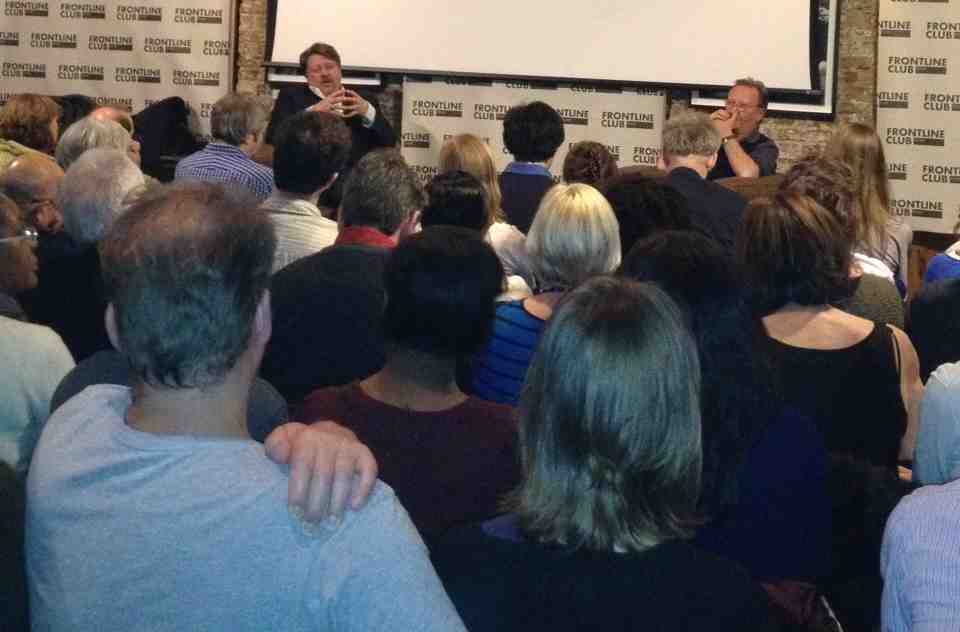
A sell-out crowd last night gathered at the Frontline Club for an exclusive screening of Robert Mugabe… What Happened?, followed by a question and answer session with the film’s director and producer.
The documentary, which premiered at last year’s Encounters South Africa International Documentary Festival, gives a historical account of Mugabe and his role as leader of Zimbabwe.
As the title suggests, its main aim is to discern how this once promising leader of 1980, who played a huge role in the liberation from white majority rule of the country, became the violence-inciting dictator of 2012.
The first question put to the duo, by the Frontline Club’s documentary programmer Sophia Loukaides, was why they had chosen to make this film.
“Well,” said director Simon Bright, “I came from an unusual minority – I was white Zimbabwean and was against the colonial, white supremicist government of Ian Smith. When the Rhodesian war started I had to leave the country, but was given the opportunity to go back when Mugabe came into power – he was my hero.
“I went back to work for the ministry of agriculture and it was an incredibly exciting time – rebuilding the new Zimbabwe. The place was really humming."
“But by 2004, I was stuck in prison. I had to ask the question: what happened? What happened to this dream? I personally blame Mugabe for destroying an African renaissance.”
The movie made clear the views on this matter by many Zimbabweans who experienced Mugabe’s rule from the outset, 32 years ago. Quoting one of the film’s interviewees, a member of the audience asked: “Do you agree that Mugabe has only ever been interested in power?”
Michael Auret, the film’s producer, said: “I feel like he had the preconditions to become a psychopath. He had a tough childhood and then he wasn’t allowed to attend the funeral of his own child."
“He had to fight for power during the Rhodesian war. For me, I would have believed he was a hero turned villain if it weren’t for Gukurahundi, which proves he’s been slaughtering people since 1982.”
With several people in the audience who had experienced Mugabe’s rule first hand, including ninenty-year-old Lawrence Vambe who had been at school with the leader, there were several questions about relevant aspects of history that weren’t included in the film.
When asked why the roles of the Catholic Church, the British government and the early colonisation of the country were not explored further in the film, the pair were frank and honest.
“The editing of the film took a lot longer than it should’ve done,” explained Auret. “I was obsessed by historical accuracy, but we also needed to get a dramatic narrative structure.”
Bright added: “I can see your points – they are important factors, but you can’t cover everything in a film.We already had trouble squeezing in as much as we did.”
]]>In 1980 when Zimbabwe became one of the last African countries to win independence, smart and charming Robert Mugabe seemed poised to lead the country through a smooth transition from white minority rule.
He impressed leaders and people around the world with his intelligence, articulate speeches, and was deemed one of the great African leaders.
For the first 15 years the country enjoyed growing prospertity.
Fast forward to 2012. Mugabe is a controversial figure known for his ruthless response to any oppositon and there is little trace of the leader that brought hope to an entire country and region.
Director Simon Bright takes us on a journey through Mugabe’s difficult childhood, his role in opposing the white-minority rule goverment of Ian Smith and his imprisonment for 10 years before his rise to power. The film asks why Mugabe is so reluctant to leave power and sets out to piece together the answer to the question…"what happened?"
Director: Simon Bright
Producer: Michael Auret
Year: 2011
Length: 84′
]]>Former Egyptian President Hosni Mubarak returns to court on Monday. Along with his sons Alaa and Gamal he appears charged with premeditated murder in connection with the deaths of protesters during the 25 January revolution.
Monday also sees the publication of Japan’s Q2 stats. The country’s GDP shrank 3.7 per cent in Q1, largely attributed to the 11 March disasters, and a similar decline is expected as the country copes with power shortages following the nuclear crisis.
It’s the turn of Europe to brace itself for GDP figures on Tuesday, with the official publication of the euro zone GDP figures. Publication comes amid recent fears growing over the global economy and the recent agreement to give Greece a second bailout.
Eyes are drawn to the International Criminal Court on Wednesday, as former UN employee Callixte Mbarushimana appears charged with five counts of crimes against humanity in the Democratic Republic of Congo in 2009. Mbarushimana is also believed to have been involved in the Rwandan genocide, but has never been charged over the atrocities.
Angola also hosts a summit of the Southern African Development Community in Luanda on Wednesday. The two-day affair is expected to focus on Zimbabwean President Robert Mugabe and his refusal to fully implement the Global Political Agreement, as well as the recent fuel protests in Malawi.
Pope Benedict XVI makes an apostolic journey to Madrid on Thursday, to attend a gathering of Catholic youth to mark World Youth Day. Visit includes a Holy Mass at Cuatro Vientos Airport on 21 August.
In the UK, thousands of students learn what their future holds when A Level results are published on Thursday, and students scramble for (often) oversubscribed university places.
Friday sees the last day in office for Romanian Health Minister Attila Cseke, who tendered his resignation earlier this month following a dispute over funds for his brief. Under Romanian law Cseke had to continue his post for 15 days at a maximum until Prime Minister Emil Boc nominated a successor.
On Saturday the UN Panel of inquiry, led by former New Zealand Prime Minister Geoffrey Palmer, is expected to release its report. The report has been delayed several times, most recently from 27 July, and could well be postponed again.
The 2011 Homeless World Cup begins on Sunday, giving homeless and socially marginalised players from across the world the opportunity to represent their country at the beautiful game.
On Sunday a national memorial service takes place in Norway, commemorating the 77 people who were killed in the 22 July Oslo bombing and Utoya shootings. Ceremony takes place in Oslo Spektrum and was announced by Prime Minister Jens Stoltenberg ‘to take care of each other and show compassion’.
]]>Zimbabwe’s leaders have been locked in a shaky power sharing coalition since opposition leader Morgan Tsvangirai was sworn in as Prime Minister in January 2009. This agreement followed a period of violence and turmoil after the 2008 elections, which Robert Mugabe is widely believed to have stolen.
President Mugabe is now pressing for fresh elections in 2011, despite MDC leader Tsvangirai saying that they could not take place without reforms and constitutional review.
Analysts fear that Zimbabwe could be marred by violence in a repeat of 2008, when Mugabe lost the popular vote, but forced a win in a runoff election. With the military, police and state apparatus on his side there is little chance that Mugabe would allow a remotely free or fair election would likely ensure his removal from power.
Join us at the Frontline Club with a panel of experts to discuss what the coming year holds for Zimbabwe – could there be a fair election, or will violence and intimidation again escalate?
Chaired by Gerry Jackson, founder of SW Radio Africa – the independent Zimbabwean radio station that broadcasts to Zimbabwe on shortwave and worldwide via the internet. She has been reporting on Zimbabwe for over 25 years.
With:
Geoff Hill, bureau chief in Johannesburg for The Washington Times and author of The Battle for Zimbabwe and What Happens After Mugabe?;
Chofamba Innocent Sithole, Zimbabwean journalist and community organiser;
Blessing-Miles Tendi, author of Making History in Mugabe’s Zimbabwe: Politics, Intellectuals and the Media;
George Shire, cultural theorist, political analyst and reviews editor for “Soundings”, a journal of politics and culture.
]]>In every corner of the globe, there are journalists in jail or being actively harassed: from Azerbaijan to Zimbabwe, Burma to Uzbekistan, Cuba to Eritrea.
The statement went mostly unnoticed in Azerbaijani media and public more preoccupied with deadly rampage at State Oil Academy which left 13 people dead. However, local oppositional newspaper Yeni Musavat in an article about this statement describes an infamous image of Zimbabwe that persists in Azerbaijan and asks:
]]>…Zimbabwe is infamous here, as it is infamous in the world. This country is infamous for its hyperinflation, massive unemployement, massive famine and widespred illnesses. Now, it seems Zimbabwe has problems with media also.
However, let’s see what is more fair: a comparison of our country to Zimbabwe, or mentioning of Zimbabwe together with Azerbaijan. That is, who should be offended when compared to other.
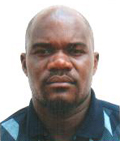
Wilf Mbanga, a Frontline Club regular and editor of The Zimbabwean Weekly, writes about Press freedom in The Guardian on the eve of World Press Freedom Day. Wilf highlights the cases of Freelance photojournalist Anderson Shadreck Manyere who will be spending World Press Freedom Day on the run,
Last week, Manyere was eventually released on bail. But the two Movement for Democratic Change officials arrested and released with him were arrested again 48 hours later, with no warrant. And the police are hunting Manyere.
His experience is not unique. Many journalists operating in Mugabe’s Zimbabwe have suffered in the past decade. Kidnapping, arbitrary arrest, torture, constant harassment ; terror tactics – and even murder – are all tactics used by the regime to retain a strangle-hold on the press. Edward Chikomba was kidnapped by state agents last year and his tortured body was found dumped in the bush a few days later.
Freedom of the press has always been elusive in Zimbabwe. At independence in 1980 the new government inherited a well-oiled state broadcasting network and bought the country’s largest newspaper company within months of taking power. link
We continue to update the news on Manyere and other journalists in Zimbabwe on the @frontlineblog Twitter stream. Please follow us.
Photograph of Anderson Shadreck Manyere taken from the Association of Zimbabwe Journalists.
]]>