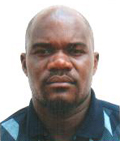
Wilf Mbanga, a Frontline Club regular and editor of The Zimbabwean Weekly, writes about Press freedom in The Guardian on the eve of World Press Freedom Day. Wilf highlights the cases of Freelance photojournalist Anderson Shadreck Manyere who will be spending World Press Freedom Day on the run,
Last week, Manyere was eventually released on bail. But the two Movement for Democratic Change officials arrested and released with him were arrested again 48 hours later, with no warrant. And the police are hunting Manyere.
His experience is not unique. Many journalists operating in Mugabe’s Zimbabwe have suffered in the past decade. Kidnapping, arbitrary arrest, torture, constant harassment ; terror tactics – and even murder – are all tactics used by the regime to retain a strangle-hold on the press. Edward Chikomba was kidnapped by state agents last year and his tortured body was found dumped in the bush a few days later.
Freedom of the press has always been elusive in Zimbabwe. At independence in 1980 the new government inherited a well-oiled state broadcasting network and bought the country’s largest newspaper company within months of taking power. link
We continue to update the news on Manyere and other journalists in Zimbabwe on the @frontlineblog Twitter stream. Please follow us.
Photograph of Anderson Shadreck Manyere taken from the Association of Zimbabwe Journalists.
]]>To mark World Press Freedom Day, we’ll be debating the state of press freedom at the Frontline Club this morning. We start at 10am GMT May 1. The debate will cumulate in an audience vote on the motion “Governments at war are winning the battle of controlling the international media”. Taking part will be Jeremy Dear, National Union of Journalists, Andrew Gilligan, Evening Standard columnist, Alan Fisher, Al-Jazeera London correspondent, James Shea, Director of Policy Planning in the Private Office of the Secretary General NATO, Sharif Nashashibi, of Arab Media Watch, Norbert Mbu-Mputu, a former UN worker in DRC, writer and journalist. The debate will be moderated by William Horsley – Association of European Journalists.
UPDATE: Tim Unwin live blogged the event from the floor. And following up on some of the points raised, Amy Stillman offers her thoughts and selected quotes,
“People tend to think that if a tree falls in the forest, and an American broadcast network isn’t there to record it, did it really fall?”
We don’t just need the BBC or the Times, Fisher explains, now there are many other places to go. Of course it helps that Fisher represents one of those “other places”, coming from the emerging trend-setting news channel Al Jazeera.
My own two cents to be added to the debate is that while there are local journalists that have access to conflict zones which western media is often prohibited from, for example during the recent conflicts in Gaza and Sri Lanka, do we actually ever hear what they have to say? link
In addition, Annabel Symington, winner of the UNESCO World Press Freedom student journalism competition, adds her thoughts,
Today’s debate at the Frontline Club never quite got to this point because it was too Western-centric, a fault that Andrew Gilligan, Evening Standard columnist, acknowledged and apologised for.
Press freedom is not a beacon that the established Western press searches for alone, but something that unites, or should unite, all journalists. And the ‘free press’ hurdle is not reached if journalists don’t use one another and benefit from one another’s knowledge and information.
Governments will try to use the media. And the media needs to fight that. But, in my opinion, the most effective weapon against government propaganda is a media community that shares informaiton, knowledge and experience to search for the truth and to report the story. link
Robert Sharp adds his take on the debate and World Press Freedom Day on his blog,
]]>My feeling is that the truth of the motion depends on what we include as “international media”. If we are talking just about established, authoratitive news outlets, then maybe the “ayes” have it. However, if we include bloggers and citizen journalists in the definition, then maybe the “noes” are closer to the truth.
There is also the distinction between “combat operations”, when real time reporting seems to go in favour of governments at war, and after the event reporting, when more facts and viewpoints emerge. The established news organisations have the edge in the heat of battle, and alternative, dissenting voices emerge only over time. link