The acclaimed book chronicles the work of the Frontline news agency, founded by journalists Rory Peck, Peter Jouvenal, Vaughan Smith and Nicholas Della Casa.
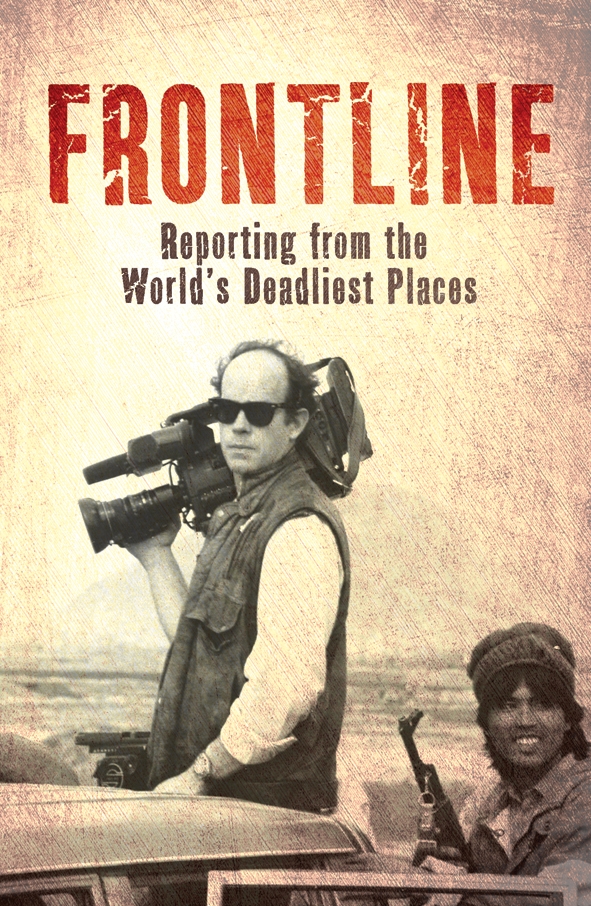 First published in 2005, the latest edition features a foreword from BBC world affairs editor John Simpson, who writes that the book is “the history of a moment in television news, which was brief enough, yet so bright it will stay in the minds of everyone who experienced it, like staring into a torch-beam on a dark night.”
Frontline Television’s reporters were motivated to document the true horrors of war and courageously went where other news organisations feared to tread. Risking everything to show the truth, they travelled the world’s most dangerous places in a quest to live life to the full, a quest some paid for with their lives. (Two of FTV’s founders, Peck and Della Casa, are now dead: killed in action.)
Between them, this colourful collection of adventurers and ex-army officers captured some of the key images at the end of the Cold War, and the fractured, fissile world which emerged.
The way they lived and died was an anachronism; they were eccentrics who might have been happier fighting wars in the British Empire a century before. Instead, they brought back pictures from the worst war zones the late twentieth century had to offer. And it suited them.
For the men of Frontline, how things were done was as important as what was done. All four of the founders, and those they recruited, shared the same panache, wit, and disdain for authority, planning the next trip to the Hindu Kush in the bar of the Ritz.
Their story reads like a latter-day Rudyard Kipling adventure. But while their lives may have been lived as if they were still playing the Great Game, they also cared passionately about their work and the truth it conveyed.
Part Bang Bang Club, part Flashman, Frontline is the gripping story of lives lived to the full in some of the worst places on earth.
The book can be purchased by visiting this link.
***************
Praise for Frontline:
“Loyn does a terrific job. His methodical, journalistic approach is perfect for grounding out a yarn that nobody would dare make up” Time Out – Book of the Week
“A gripping story, splashed with devil-may-care colour and scarcely credible tales of derring-do” The Guardian
“Girls, booze, physical hardship and flying bullets … Loyn keeps his narrative rattling along nicely” Daily Mail
“Barnstorming non-fiction. Every page is full of the kind of chutzpah, grit and valour that makes your own nine-to-five seem gut-wrenchingly futile.” Arena
“Hugely entertaining … the nearest thing to a Victorian adventure romp of empire against a background of fine marijuana, ‘Hotel California’, and the wheep and chirrup of satellite technology” Literary review
]]>]]>“Once I began to live permanently in Iraq, there was nothing more astonishing for me than coming back to Britain and seeing everybody carrying on as normal” Poole explains. “I’d get on a plane in Amman and would be on the tube in about four and a half hours. For the first few days, I’d derive complete wonder and fascination at every day normalities of life back in England…It was kind of good to know that despite everything, things were carrying on as normal back home.”” link
]]>There are fraught depictions of the war reporter pack as a collective of romantic, exhausted and nervous journalists living in squat conditions, filing stories in secret from satellite phones or laptops and self-medicating with “whatever booze, drug, or quick lay is at hand.” Many of his colleagues are killed. Another ends up homeless, then in a mental institution.
Watson seems beyond redemption. He’s living a life he knows isn’t good for him, and he’s hooked on the adrenaline and sense of purpose. In his prologue, he says the initial thrill of courting danger “is long gone,” and he is “left looking into the lifeless eyes of bodies that have piled up in my mind, ruefully wondering why I’m still alive.” link

UALR Public radio tells the stories of five women in five different wars. The audio broadcast begins with a female war reporter,
]]>Carolin Emcke is a war correspondent and the author of “Echoes of Violence: Letters from a War Reporter.” She tells Steve Paulson that what war survivors ask for most often is the chance to tell her their stories. link
In an enlightening interview, Wattie describes his experience in combat with Canadian soldiers, and tells the stories that most Canadians haven’t heard. He discusses his experience with Afghan civilians, and how much the country has changed since his previous visit in 2003 link
You’ll find the podcast listed here under October 1, 2008. Although, one commenter called apophis is none too kind about the talk,
]]>“A wonderful piece of PR for the Canadian Army, or propaganda for the uninformed citizens. Meanwhile Karzai is negotiating with the Taliban, trying to negotiate a peace deal, a sellout for the Canadian soldiers who have given their lives. How many censors had to give their approval for this story to published. Thank you Chris (pollyanna) Wattie for your dull boring article, I can’t wait for the comic book.” link
]]>To be a professional war correspondent means, in my view, that you have to be a certain type of person – often, but not always, addicted to danger.
You can become psychologically hooked on the adrenaline ‘hit’, the camaraderie, the black humour, the furious anger with those who inflict such suffering on others, and the fierce bursts of exhilaration when you escape official obstruction or, indeed, death.
All of which affords the addict an emotional high that ordinary life can rarely provide.
The hit is so powerful (and I’ve experienced it myself) that coming home to gas bills and school concerts and all the mundanity of normal life can feel like going cold turkey.
You can become tetchy, impatient, unable to deal with a child’s problems at school – because you’ve been somewhere where you’ve just interviewed the mother of a child who has been repeatedly raped, or someone who has been forced to become the killer of a loved one, or someone who is dying in a shack, covered in flies.
The fact is that war junkies really only feel at home with fellow war junkies. They form a freewheeling, nomadic tribe who speak the same language, share the same experiences, and feel the same instant, if often competitive, affinity with one another.
It has been my privilege to work alongside them, and with so many others who have helped me over the years.
No foreign correspondent, basking in by-lined glory, should ever forget those who were imprisoned, or were tortured, or died in the cause of helping us tell an often indifferent world about its many dark, savage corners.
One of the duties of journalism is to shine a torch into those dark places, and to expose its coldness and cruelty to the bright, clear and humanising light of day.

John D. McHugh, Frontline Club member and regular in these parts, has his latest short film from Afghanistan up on The Guardian website. He to a member of a the US army Medevac team about the day to day job of helping the wounded and the dying. John says he has a lot more footage from Afghanistan that The Guardian is not using for his diary. He promises to put the rest on his personal blog in the near future,
I have realised that they havenâ€
t been using lots of the stuff Iâ€
John also has a new audio slideshow, alos focussing on Medevacs, up on The Guardian.
]]>]]>One of the questions I am frequently asked is: ”What is the most dangerous thing that’s happened to you?” But I find it impossible to classify ”dangerous”. Is it worse to be shot at by a drunk at close range than to have a knife held to your throat by a slightly psychotic drunk? Discuss. How about mortars landing round your vehicle versus machine-gun fire directly on to it? link
]]>“I reached out to at least 60 guys (for submissions), and 30 of them still said, “I don’t want to talk about it,’ or, “I don’t think I have anything to share,’ ” Carl said. Those who did share offered perspectives through which readers can understand the soldiers’ viewpoints. The book contains submissions from 29 other people, in lengths ranging from a short poem to 20 pages. link
War correspondents are often portrayed as psychologically damaged men whoâ€
Less booze, more cup of tea seems to be the ticket
]]>