

The death penalty was re-instated in the United States in 1976. Since then, for every ten people that have been executed, one person has been released from death row after spending an average of ten years in isolation. One For Ten is an online documentary series telling the stories of these innocent people.

This crowd-funded series is being made live on the road; shot in one day, edited the next, and uploaded overnight. The team is spending five weeks travelling from New York City to Las Vegas, releasing two films a week. In the process the filmmakers rely on their online community to provide interview questions, music, artwork and to share the films online in order to reach a wide audience.

Fresh from the road, we will welcome co-directors Will Francome and Mark Pizzey, producer Laura Shacham and executive producer Christopher Hird to present a selection of their short documentaries. This will be followed by a discussion on the pros and cons of creating short web-documentaries, online distribution and crowd-funding. They will share their strategies for building online communities and grass-roots marketing. We will be looking at how much input they received from their online community, and to what extent it helped shape the result.
Directed by William Francome and Mark Pizzey
Produced by Megan Garner and Laura Shacham
Year: 2013
Between the Lines was a three-day festival that took place at Rich Mix from 1 to 3 March. In a series of follow up events we continue to explore the challenges facing documentary makers, investigative journalists and citizen reporters in the new media landscape.
Presented by:


Supported by:


On October 22 the Frontline Club hosted the London Premiere of The Invisible War, followed by a Q&A with Emmy-nominated producer Amy Ziering.
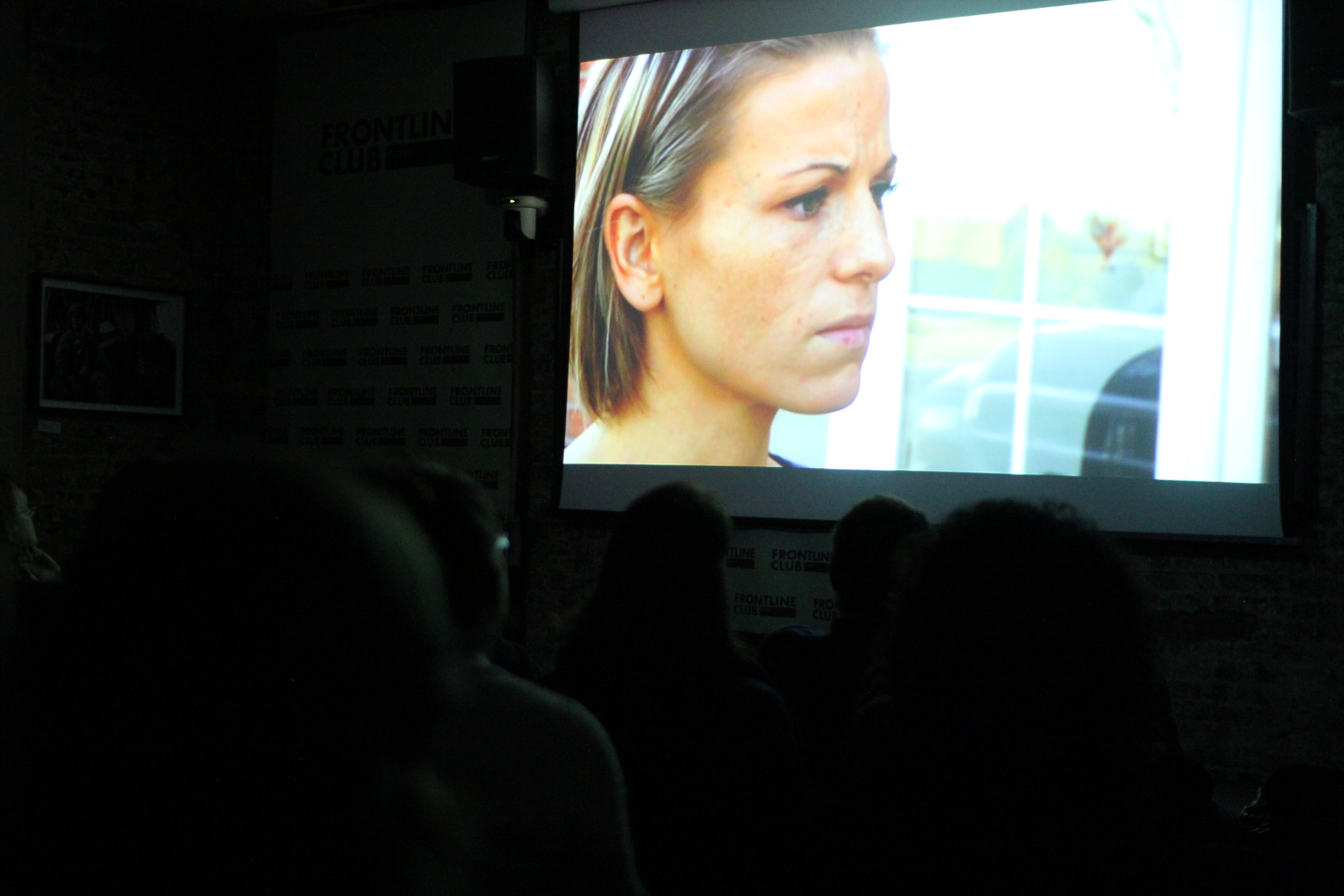
The Invisible War explores the devastating emotional and physical effects of sexual assault within the US military. In the Q&A producer Amy Ziering, explained how the emotional side of the film was balanced with the intellectual content through the differing, but complimentary approaches, that she and director Kirby Dick brought to the project:
“What I think is reflected [in this film] is that I came to it with a really intense emotional and passionate connection to each and every one of the survivors, I was mostly liaising and interacting with them more than he [Kirby Dick] was, and he came to it with an incredible sense of just outrage, moral outrage at [the] injustice. The film not only packs a powerful emotional punch but it also has a really, really substantial and intellectual argument, and I think it reflects both of our strengths in that way.”
One issue of injustice in particular that the film tackles is the inward looking nature of the American military judicial System:
“I wasn’t aware of the extent to which the American military judicial system sort of only answers to it’s own and really, you don’t have recourse outside … it is astonishing.” Admitted Ziering.
The strong influence of an individual’s Commander in the way that a sexual assault case is dealt with, she said, was something they particularly wanted to address through the film. Bias in favor of the attacker who may have close ties to the Commander is common, which means that the only channel for seeking justice is shut off. The campaign surrounding The Invisible War however, advocates for the military to be accountable to civillian authorities as an alternative:
“We are pushing now to try and get the military to acknowledge that oversight would actually only make them a stronger institution … that’s the message we are trying really hard to articulate.”
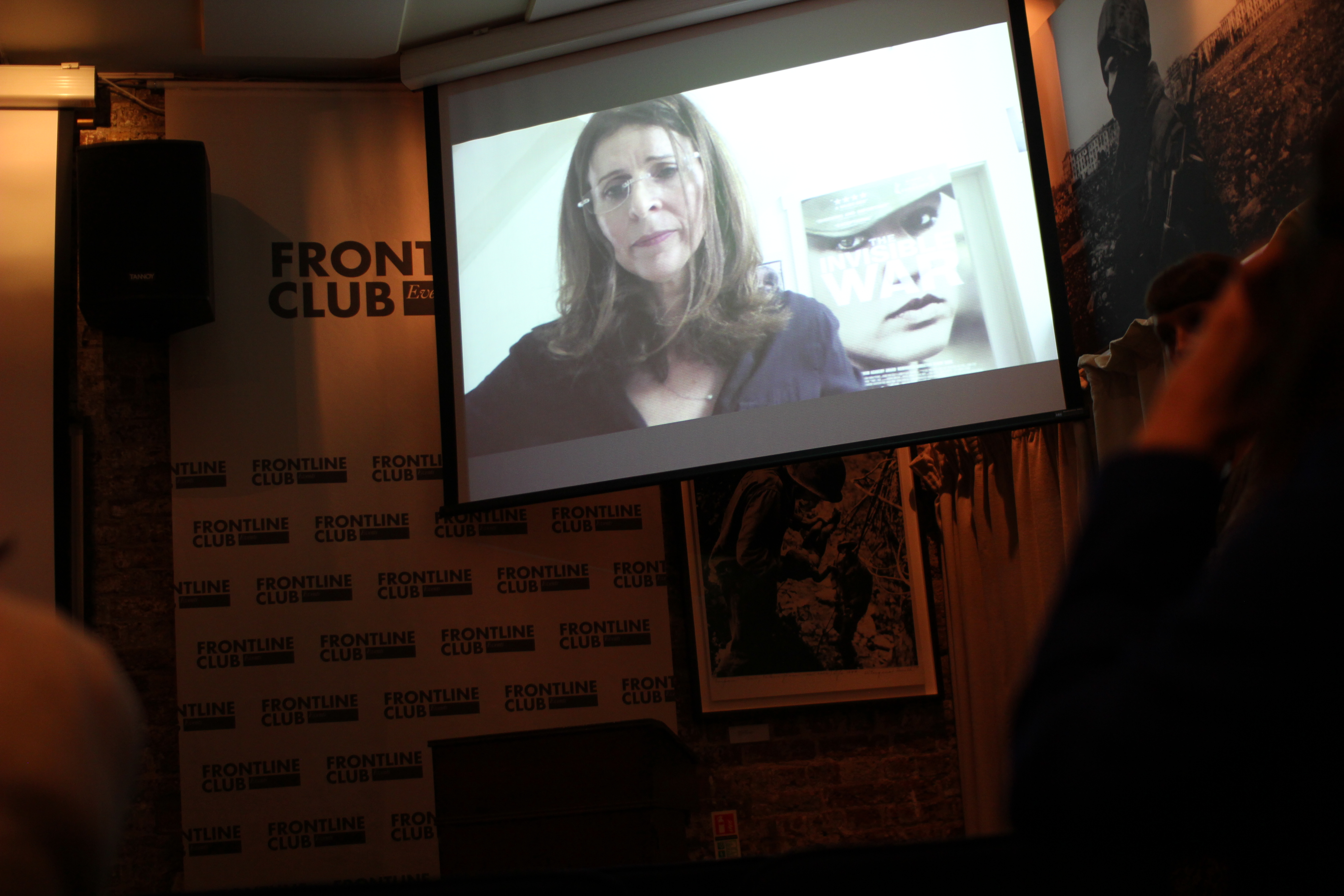
On being asked if there has been change in the aftermath of the film’s release, Amy Ziering was able to say yes. Through targeted screenings following the initial burst of interest when The Invisible War won the 2012 Sundance Film Festival Audience Award, they had reached several influential military figures:
“In doing my research I’d heard that you can legislate, can do grass roots, but if you don’t get the leadership on board in the military – nothing’s going to change … so to make a long story short eventually four of the five Joint Chiefs have now seen it including the head of the Joint Chiefs, General Dempsey.”
This, in turn, has affected policy and changed attitudes she explained:
“The army is embracing the film and we are on almost every army base – they bought it as a training tool.”
As a last note, Amy Ziering invited audience members to host screenings of their own:
]]>“You never know who knows someone and it really makes a difference.”
"There’s a definite lack of leaders [today]," documentary producer Richard Symons commented to a Frontline Club audience on 8 October. "Where are they?"
Symons had just screened the third film in his and Joanna Natasegara’s series The Price of Kings, which explores the weight of leadership. Previous films have focused on Yasser Arafat and Shimon Peres.
One true leader, the latest Price of Kings film suggests, has been Oscar Arias, two-time President of Costa Rica.
In 1987, he famously defied American and Soviet insistence – "an incredible amount of pressure," one aide put it – that Costa Rica pick a side in the Cold War proxy battles that were tearing Central America apart.
"I had to fight Ronald Reagan and Mikhail Gorbachev," Arias reflects in the film. "It was not gonna be easy, to say to Goliath, ‘well, here’s David, little David, but we’re gonna fight for our convictions, for our principles, for our ideals."
Peace was Arias’ ideal. With no military behind him – Costa Rica’s disbanded in 1948 – he nonetheless broke from Washington and Moscow to bring ideologically-opposed Central American leaders to a negotiating table.
"Dial back to 1986," Symons said, "if you looked at those guys and what was going on in their countries, Arias must have been absolutely off his tits to think he could even get them on the phone!"
The Esquipulas Peace Agreement resulted, settling bloody conflicts that raged between Kremlin- and American-backed groups fighting for power over Nicaragua, El Salvador and Guatemala. His efforts earned him the 1987 Nobel Peace Prize.
"In person, he’s an oddly persuasive man," Natasegara shared. "He’s not necessarily hugely charismatic, and yet there’s something right about what he says, and you see how he could have convinced them."
In 2006, Arias risked his legacy by serving once more as Costa Rica’s President; the film shows how his dogged support for an unpopular mining project left his reputation among Costa Ricans in tatters.
Today, he campaigns – so far unsucessfully – for an International Arms Treaty that would halt the flow of weapons from idustrialized nations to the third world.
"Use the dividends of peace," Arias says simply, "[and] the world would be quite different, it seems to me."
After the screening, an audience member wondered why so many people in the film, even those very close to Arias, did not speak entirely positively about him. Natasegara answered,
"Ironically, I think apart from two people in the film […] everybody was very warm about him. And I think that’s what’s nice […] that they feel so much trust in him that they can speak openly about his flaws […] So if they speak badly towards him, it’s only because he allows this kind of openness."
The trailer for The Price of Kings: Oscar Arias can be seen here.
]]>