On Friday 19 June 2015, the Frontline Club held a screening of the genre-defying Those Who Feel the Fire Burning, an experimental film focusing on the experiences of those who risk their lives in order to reach the shores of Europe. The audience was joined by co-producer Katja Draaijer for a discussion following the screening.

Producer Katja Draaijer
On the film’s experimental narrative structure, Draaijer said: “It was always clear from the beginning that he [director Morgan Knibbe] wanted to tell the story from the perspective of a ghost. That’s why he used style elements from fiction films.”
“On the news we see all the numbers,” said Draaijer, “but he didn’t want to portray them [the refugees] as victims, but for we as an audience to experience what it is to be a refugee. That’s why he wanted to tell it from the perspective of a refugee himself.”
Asked by an audience member about the myriad languages spoken the film’s protagonists, Draaijer explained:
“Most of the time he [Knibbe] didn’t understand what was said. For the Arabic we had an Arabic translator… What he was really doing was intuitive, just really following them around. He didn’t care, really, about what they were saying. He just wanted to show the people what they do. How they cook, how they live. And that’s what he did. Sometimes he thought, ‘OK I have enough’ and turned the camera away. In the editing we found out that that really worked that way. It wasn’t so much about what they were telling us, [but] more about their experiences at the time.”

An audience member asked what personal impact the filmmaking process had on the director.
“When he started he was only 22,” replied Draaijer. “He wanted to help everyone by giving them money. So that was the first thing I said, ‘Don’t help these people by giving them money, you can help in another way.’
“I think after Lampedusa he was really emotional, for a long time… He wants the whole world to see it.”
For more information about the film and upcoming screenings, visit the Those Who Feel the Fire Burning Facebook page.
]]>On Monday 27 January a large audience gathered at the Frontline Club for a screening of Mark Cousins’ contemplative essay-film Here Be Dragons, followed by a Q&A with the director, via Skype, and with producer Don Boyd, founder of HiBROW.

Producer Don Boyd
Here be Dragons assumes the form of an intimate travelogue, tracking the director’s week-long stay in Albania as a jury member of Tirana’s 13th international film festival. Cousins explores Albania’s current cinematic culture, notably the plight of the national film archives, which sit in a state of disrepair, whilst reflecting on wider questions of trauma, history and memory in the context of post-communist Albania. Here Be Dragons interweaves shots of Tirana, namely the Pyramid of Enver Hoxha and other architectural remnants of the former totalitarian regime, with old film clips – emphasising Cousins’ sentiment that “to look is to travel”.
An audience member opened the post-screening discussion by noting the sense of “sadness” and “greyness” that, in his opinion, pervaded the film, and asked Cousins whether this was representative of present-day Albania.
Cousins responded that his aim was to document the “emotional landscape” of the nation and to capture the “balance between happy and sadness which you find in many places”.
“If you spend time in Albania, you do find that it is a kind of post-traumatic world. . . . It has had so many dreams thrust upon it, and so many of those dreams ended up to be empty dreams. And so people aren’t sure what to believe.”
He concluded that while the overall melody of Here Be Dragons was one of sadness, “there is a hopeful tune there, especially amongst the young people”. Cousins later pointed out that compared to all the Albanian films produced in the last five years, which he had watched in his capacity as a jury member of the Tirana International Film Festival, Here Be Dragons remained less bleak.
Boyd then paid tribute to the “phenomenal knowledge of the cinema” in which Cousins’ rooted his work, adding that the director balanced his filmic enthusiasm with “his considerable intellect . . . which is so rare in modern cinema”.

Director Mark Cousins joins the Q&A via Skype
Another member of the audience, who had travelled to Albania on numerous occasions, asked whether dealing with a little-known subject matter involved a greater responsibility on the part of the filmmaker, as film plays a crucial role in the shaping of a nation’s identity. Cousins echoed this sentiment with his statement that “film legacy is a kind of autobiography of a nation”. The audience member also enquired as to the reaction that the film provoked in Albania, in particular from viewers outside of the creative community.
Cousins responded that Here Be Dragons had inspired an extremely positive reaction from Albanian viewers, with one critic naming it “the best film ever made by a foreigner about Albania”. Boyd confirmed the film’s positive reception, and stated that he found the Albanian people to be “sensationally not bleak . . . and really positive about what they call their ‘experiment’ to do with the future, and they felt that Mark’s film was a metaphor for what had gone before”.
A member of the audience asked Cousins to comment on the level of engagement of young Albanians with their national history, and their relationship to Albania’s past and future. Cousins responded:
“Most people [in Albania], young and old, realise that they have a toxic history. But one of the reasons why I think that I felt strongly that I wanted to make this film, was that I realised that every country has a toxic history. . . . England, Ireland and Scotland all have toxic histories. Right down the road from me there are big, fancy houses built from the slave trade . . . so I think there is a sense of solidarity in common humanity.”
Cousins concluded from his ‘study of looking’ that, with regard to the future, young Albanians had “a degree of optimism, but a massive amount of caution, and that’s what I tried to capture in the film”.
Cousins closed the discussion with an impassioned response to an audience member’s suggestion that the film expressed a certain sympathy for Hoxha’s communist dictatorship:
“I absolutely believe in equality, I absolutely believe that . . . the idea of serfdom . . . is one of the biggest crimes in history. Anything that tried to redress that, started out good. However, I ended up furious with Hoxha before I went there. . . . He poisoned this principle which is so important for emancipation and equality around the world.”
To find out more about the current plight of the Albanian Film Archive, and the work of activists to restore it, visit the site of the Albanian Cinema Project.
To watch the trailer for Here Be Dragons, and to keep up to date on upcoming filmic collaborations between Mark Cousins and Don Boyd, visit the website of HiBROW, and click here to follow the film on Facebook.
By Alan Selby
The advent of new media has seen an increasing pressure placed upon journalists to become multidisciplinary, but often to the detriment of each medium. During an evening moderated by David Campany, reader in photography at Westminster University, writer A. A. Gill and photographer Tom Craig mounted an impassioned defence of collaborations between photographers and writers. The duo were speaking in the lead up to a new exhibition of their work, a collection of 20 of Craig’s unseen photographs accompanied by text from Gill, which is opening at the Flaere Gallery in March.
The audience were guided through an eclectic series of images from Gill and Craig’s travels, which have taken them from the blistering heat of Chad to the freezing depths of the Arctic. As their presentation began, Craig explained that his dissatisfaction with the news media was a driving force behind their collaboration:
“I was becoming disillusioned with the imagery that I was seeing appearing in the news and feature print media. The reason for that was I felt increasingly individual photographers were going to places with very specific agendas. They had a photograph in mind before they even got there… I think it’s a dangerous place to be in, because it represents a place where it’s very difficult to be impartial.”
Discussing the unique marriage of text and imagery that the pair have produced, Craig added:
“I believe that the power of the image and the written word are great on their own, but they’re a lot greater when they’re combined… I’m at an advantage, I can tell the quieter story because I know there are other things that will be said about it.”
Craig provided the foil to Gill’s inimitable sense of humour throughout the evening and, despite claiming that Craig’s interests amounted to taking photographs of people taking photographs, and of the backs of people’s heads, Gill praised his approach:
“What you want is a photographer who’s aware of himself, and aware of changing the dynamic he is in. Tom does that, he’s very sensitive.”
In response to questions from the floor, the pair discussed how they first met on assignment in Chad, and how they approach the assignments that they undertake. As the proceedings reached their conclusion, Gill offered up his own evaluation of their work together:
“What we do gets rarer and rarer, because a lot of journalists now are expected to take their own pictures. A lot of us are expected to have phones that can take print ready pictures. Then there’s everything that’s happening on the internet: everybody is a photographer, and everybody is a journalist. What you have is this babel of karaoke news. I feel like we’re a Farrier and a Thatcher, we’re doing two jobs that are from the last century, but that’s what we do, and we do it well. When we do it well I don’t think there’s anything else that can touch it.”
Watch the event here:
]]>One of my assignments was gathering multimedia materials about clean water in rural villages. The filming schedule included a slight detour to pop by a Dogon village, about 80 km out of Mopti, to shoot the opening of a new village water pump. Hmm… so on the way there me thinks the potential shot list will probably be something like officials clad in safari suits, ribbon cutting, water pumping, speeches, and as usual, loads of children going completely nuts in front of the camera held by me – a slightly sun burnt bloke wearing a faded Hong Kong Rugby Sevens bucket hat circa 2000. Perhaps best just to get my shots quickly and move on because geepers it’s hot in the midday sun and I’m already dreaming of a ice-cold panache back at the hotel followed by a tasty fillet of local Niger capitaine.
Well, that was the plan until a volley of gun fire erupted as I arrived. And no, not a war over the new water pump, but the welcome from Dogon…um… warriors.
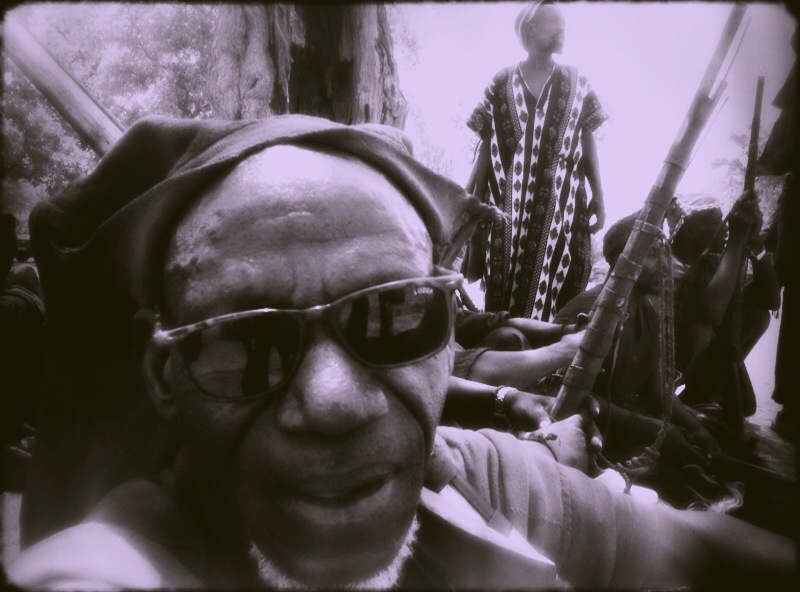 Maybe it’s just the boy in me, but these fellows and their muskets, some sporting some home-made-retro-fitting mods, seemed far more interesting to film than the opening of a water pump. Apologies to any avid readers of Jane Defence Weekly but I didn’t look close enough to note any particular make of musket.
I did note that most men carried gun powder in a small pouch, tin or plastic bottle. Out comes a ramming rod to pack the powder down in the barrel. And thankfully no shot was used as weapon discipline in the ranks was a rather casual affair.
At one point the firing became so intense that someone from the official party dashed over to respectfully ask for a cease-fire so the official speeches could be heard.
Dogon Musketeers in Mali from fieldreports on Vimeo.
By coincidence, while I was in Mali, the annual Operation Flintlock was underway – a large regional military training exercise.
I’m assuming that the Malian army is using more up-to-date weapons than muskets in their training with US Special Forces, but correspondents covering the exercise saw that there seems to be a big gap in military training and basic skills… including knowing how to drive a vehicle.
]]>A U.S. Special Forces instructor leans toward a steering wheel, showing some 50 Malian soldiers gathered around an army pickup how a passenger should take control of a car if the driver is killed in an ambush.
The elite Malian troops look on, perplexed. "But what can we do if we don’t know how to drive?" asks Sgt. Amadou, echoing many of his colleagues’ concern.
There are a few laughs, but the Malians are not joking; most of their unit does not know how.
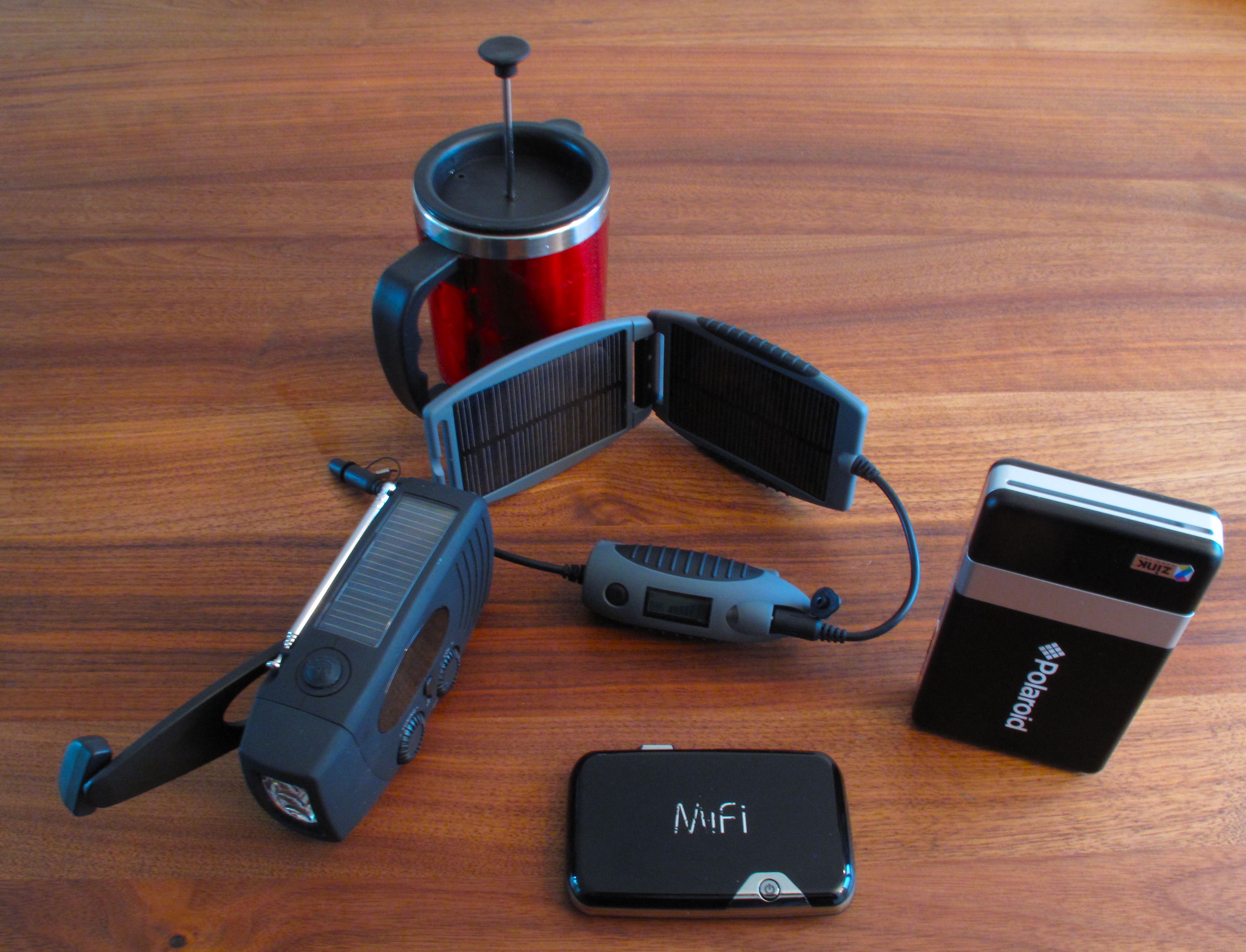
1. Novatel Mifi 2352 portable wireless hotspot
Stick in a SIM card to access a 3G network and start surfing the net via wifi. This little wonder lets you connect up to 5 devices by wifi. I gave the Mifi 2352 a good workout earlier this year in Iraqi Kurdistan using the Mobitel 3G network. It won a lot of praise my co-producers wanting to get online quickly. It turned literally anywhere we were into an instant internet cafe.
2. PowerMonkey eXplorer Solar Charger
Recharge on the run. Christian Payne aka @documentally has a good review of the PowerMonkey on his BushTech blog. It’s a practical device for recharging small devices. I often carry the battery pack to give my iPhone or Nokia a boost. The array of included adaptors makes this gadget quite versatile. Anyone using a Kodak pocket video camera such as a Zi8 might be interested to know that the battery pack will charge the camera battery (slowly) or work as an external power source. I have yet to test how long you can film using the PM on a full charge. As for the solar panels, I’m going to Mali shortly for a filming assignment so I’m keen to use the solar panels to help keep some small gadgets charged up.
3. Solar powered + wind up radio-torch + mobile phone charger
I love radio. I usually take quite a bulky Sony short-wave radio on my travels. But if I want to travel lighter and I know the BBC World Service is available locally on AM or FM then I usually opt for a small Walkman transistor set. But a couple of months ago a small all-in-one radio caught my attention. For 12 euro I thought it was worth giving a go and either it would do what it says on the tin or I’d give it away. No regrets. It’s quite rugged and is staying in the kit bag for the time being – perhaps a one-year after test would be useful to see how it holds up. The AM/FM radio works fine with loudspeaker or headphones. The LED torch is reasonably bright and fine for flapping around during power cuts (though I still carry a mini Maglite). The solar panel charges both the radio and torch. And as for the most interesting part of the unit – the wind-up crank handle – well I’m happy to report that it’s not a gimmick. After a couple of quick revolutions it begins charging not only the torch and radio, but via a short cable, just about anything accepting a 5 volt DC charge. Think mobile phone, iPhone and even a Mifi. Ok, it’s going to be an emergency situation that you need to charge your phone by a crank handle, but you never know… The one I bought in Germany was under the brand Moorhead. But I’ve noticed the same/similar model is sold under other brands elsewhere. It comes with several small adaptors for charging. I have a little bag for these adaptors (they’re all mixed up with the similar PowerMonkey adaptors) but I wish there was a little cubby hole in the unit to store the cable and the adaptor I would use the most. The unit can also be charged up by a USB port connected to a computer or another battery source.
4. Polaroid Pogo photo printer
The crowd pleaser. In combination with a mobile phone or digital camera via USB, the Polaroid Pogo is a pocket-sized photo printer. It really makes a difference if you’re working in a visual medium to be able to offer someone a photo on the spot – about the size of a business card. Result? Smiles all round. I used to cart around a small Canon printer that plugged into a car ciggie-lighter, but the Pogo is much more portable, powered by a rechargeable battery and there’s no mucking around with ink. However, keep in mind you can’t directly print with the iPhone – Apple has crippled the iPhone’s bluetooth for sending photo files. Nokia, no problem. It’s a pity really as it would be brilliant to use some iPhone photo editing apps such as PS Mobile in tandem with the Pogo.
5. Stainless steel coffee plunger
OK, perhaps the title of this post should of read four gadgets and one life saving utensil… but good coffee is technical. When an espresso machine is not within coo-ee, I’m certainly up for any local brew whether it’s a Turkish coffee, a glass of mint tea or chay with the teaspoon standing upright in a small mountain of sugar. But, I get irritable if I have to stare at a tin of instant coffee and consider the words freeze-dried. So if coffee is likely to be a problem on a trip I bring my own coffee and a portable plunger. Probably the best 10 euro I’ve spent on travel kit. The one pictured below is from Jack Wolfskin and it does the job for two cups. I’d like to find a slightly larger one for three cups – a "crew" model, then everyone is happy
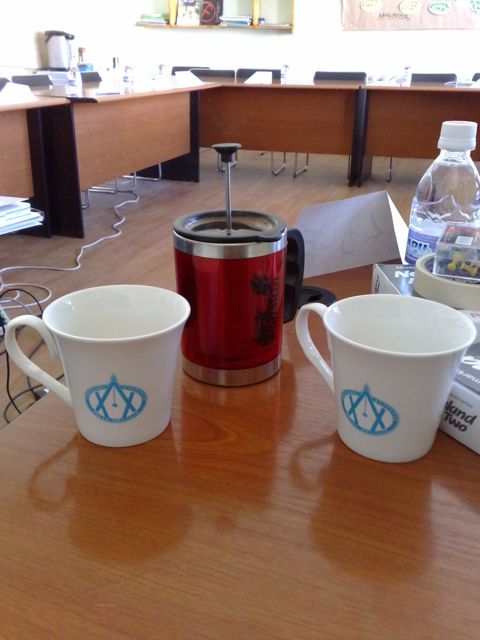
Coffee breaks at the Press Institute of Mongolia improved dramatically!
]]>

Steve McCurry is one of my favourite photographers. Famous for his images of Asia, his work is always a pleasure to come back to. His richly-textured collection South Southeast is one of just a handful of photo books to have carved out a space on the small bookcase in our living room. Perhaps more importantly, he captured the iconic photograph of Sharbat Gula (or "Afghan Girl") which made the cover of National Geographic and made both McCurry and Afghanistan worldwide stars.
Anyway, McCurry, very much a man of the film age, has started a digital-era blog. If I’m honest (and I’m no-one to judge) it’s a comically bad effort. By that I mean it looks awful – straight off a basic WordPress template and with several bits of the pre-fillled text and descriptions left in place. There aren’t even any pictures. But there are words, wise words, and for that I’ll be checking Steve’s blog regularly for updates. Take the latest entry, for example, titled simply Becoming a Photographer:
When people ask me how they can become a photographer, I almost never mention cameras, lenses, or technique. I say, ‘If you want to be a photographer, first leave home.’ As Paul Theroux, a great writer and friend, further advises, “Go as far as you can. Become a stranger in a strange land. Acquire humility. Leaving home really means that the photographer (or writer) has to wander, observe, and to paraphrase Theroux, concentrate on people in their landscape. That is what I try to achieve in my pictures.
Anyone who can quote Paul Theroux when offering life advice is just fine by me. And there is hope in the comments, too: an intelligent query or two and a reply from the great McCurry himself. Perhaps the clunky, lo-fi look of the blog makes the photographer’s point for him: it’s not the medium, it’s the message that’s important.
]]>In a brothel in Fernando Po, which is part of Equatorial Guinea. I was reporting on the Nigerian civil war and there were no hotel rooms left. It was the day that television had arrived in this Spanish colony and all the Africans were sitting there watching bullfights; it was pretty extraordinary. link
Not sure I can cap that however, I have unwittingly stayed in two brothels in my time – accompanied by my wife I might add. Once in Cambodia and once in South Korea. There’s a very fine line between hotel and whorehouse in some places. Although the wierdest was probably a hammock in a mosquito ridden guardhouse next a lake filled with crocodiles in the south of Vietnam.
]]>