The sheer scope and significance of the revelations is shocking. Among them are great abuses of power, corruption, lies and war crimes. Yet there are still some who insist WikiLeaks has "told us nothing new". This collection, sourced from a range of publications across the web, illustrates nothing could be further from the truth. Here, if there is still a grain of doubt in your mind, is just some of what WikiLeaks has told us:
* American planes bombed a village in Southern Yemen in December 2009, killing 14 women and 21 children (see Amnesty)
* The Secretary of State’s office encouraged US diplomats at the United Nations to spy on their counterparts by collecting biographic & biometric information (see Wired.com)
* The Obama administration worked with Republicans to protect Bush administration officials facing a criminal investigation into torture (see Mother Jones)
* A US Army helicopter gunned down two Reuters journalists in Baghdad in 2007 (see Reuters)
* US authorities failed to investigate hundreds of reports of abuse, torture, rape and even murder by Iraqi police and soldiers (see the Guardian)
* In Iraq there were scores of claims of prison abuse by coalition forces even after the Abu Ghraib scandal (see the Bureau of Investigative Journalism)
* Afghan President Hamid Karzai freed suspected drug dealers because of their political connections (see CBS News)
* Israeli Prime Minister Benjamin Netanyahu expressed support for the concept of “land swaps” (see Yahoo News)
* The United States was secretly given permission from Yemen’s president to attack the Al-Qaeda group in his country (see the Guardian)
* Then-Secretary of Defence Donald Rumsfeld and his top commanders repeatedly knowingly lied to the American public about rising sectarian violence in Iraq beginning in 2006 (see the Daily Beast)
* The US was shipping arms to Saudi Arabia for use in northern Yemen even as it denied any role in the conflict (see Salon.com)
* Saudi Arabia is one of the largest origin points for funds supporting international terrorism (see the Guardian)
* A storage facility housing Yemen’s radioactive material was unsecured for up to a week (see Bloomberg)
* Israel destroyed a Syrian nuclear reactor in 2007, fearing it was built to make a bomb (see the Sunday Times)
* Top officials in several Arab countries have close links with the CIA (see the Peninsula)
* Swiss company Trafigura Beheer BV dumped toxic waste at the Ivorian port of Abidjan, then attempted to silence the press from revealing it by obtaining a gagging order (see WikiLeaks)
* Pakistan’s government has allowed members of its spy network to hold strategy sessions on combating American troops with members of the Taliban (see the New York Times)
* A stash of highly enriched uranium capable of providing enough material for multiple "dirty bombs" has been waiting in Pakistan for removal by an American team for more than three years (see CBS News)
* US military Special Operations Forces have been conducting offensive operations inside Pakistan, despite repeated denials from US officials (see the Nation)
* China was behind the online attack on Google (see ZDNet)
* North Korea is secretly helping the military dictatorship in Myanmar build nuclear and missile sites in its jungles (see CBS News)
* The Indian government "condones torture" and systematically abused detainees in the disputed region of Kashmir (see CBS News)
* The British government has been training a Bangladeshi paramilitary force condemned by human rights organisations as a "government death squad" (see the Guardian)
* BP suffered a blowout after a gas leak in the Caucasus country of Azerbaijan in September 2008, a year and a half before another BP blowout killed 11 workers (see the Guardian)
* Saudi Arabia’s rulers have deep distrust for some fellow Muslim countries, especially Pakistan and Iran (see CBS News)
* Saudi Arabia’s King Abdullah repeatedly urged the United States to attack Iran (see the Guardian)
* Iranian Red Crescent ambulances were used to smuggle weapons to Lebanon’s militant Hezbollah group during its 2006 war with Israel (see CBS News)
* Dozens of US tactical nuclear weapons are in Germany, the Netherlands and Belgium (see * The Libyan government promised "enormous
repercussions" for the UK if the release of Abdel Baset al-Megrahi, the Lockerbie bomber, was not handled properly (see CBS News)
* Pope Benedict impeded an investigation into alleged child sex abuse within the Catholic Church (see MSNBC)
* Sinn Fein leaders Gerry Adams and Martin McGuinness carried out negotiations for the Good Friday agreement with Irish then-prime minister Bertie Ahern while the two had knowledge of a bank robbery the Irish Republican Army was planning to carry out (see CBS News)
* Anglo-Dutch oil giant Royal Dutch Shell PLC has infiltrated the highest levels of government in Nigeria (see the Guardian)
* A US official was told by Mexican President Felipe Calderon that Latin America "needs a visible US presence" to counter Venezuelan President Hugo Chavez’s growing influence in the region (see Yahoo News)
* Cuba’s economic situation could become "fatal" within two to three years (see Business Week)
* McDonald’s tried to delay the US government’s implementation of a free-trade agreement in order to put pressure on El Salvador to appoint neutral judges in a $24m lawsuit it was fighting in the country (see the Guardian)
* British officials made a deal with the US to allow the country to keep cluster bombs in the UK despite the ban on the munitions signed by Gordon Brown (see Politics.co.uk)
* The British government promised to protect America’s interests during the Chilcot inquiry into the Iraq war (see the Guardian)
* The US government was acting on behalf of GM crop firm Monsanto in 2008, when the US embassy in Paris advised Washington to start a military-style trade war against any European Union country which opposed genetically modified (GM) crops (see the Guardian)
* Pfitzer tested anti-biotics on Nigerian children, contravening national and international standards on medical ethics (see Medical News Today)
* Prisoners at Camp Delta (Guantanamo Bay) were denied access to the Red Cross for up to four weeks (see the Telegraph)
* More than 66,000 civilians suffered “violent deaths” in Iraq between 2004 and the end of 2009 (see the Telegraph)
* Russia is a “virtual mafia state” with rampant corruption and scant separation between the activities of the government and organised crime (see the Guardian)
* The Obama administration tried to “sweet-talk” other countries in to taking Guantanamo detainees, as part of its (as yet unsuccessful) effort to close the prison (see the New York Times)
]]>
Ok, here at Frontline we don’t know exactly what will happen in the unpredictable worlds of journalism and warfare over the coming years.
But we can reveal how everyone will be describing the future.
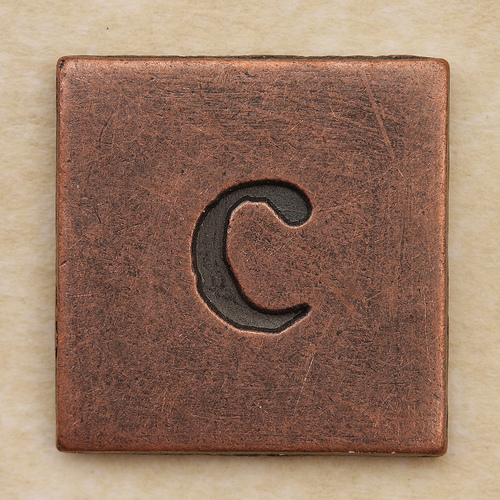
Military and media experts have gazed into their respective crystal balls (or maybe they’re sharing the same one due to respective budget cuts) and have decided that whatever does happen in these uncertain times it will almost certainly begin with the letter C.
The Ministry of Defence’s Green Paper* on defence policy has identified "five Cs" to describe the nature of future conflict:
Photo: Leo Reynolds, Flickr.
]]>The Iranian Election was the moment when Twitter “exploded into our consciousness as a really powerful newsgathering tool” Adrian Wells told the Frontline Club earlier this week. Sky’s Foreign Editor was discussing how media organisations cover ‘news black holes’ with Richard Sambrook, Head of Global News at the BBC, and Jean Seaton, professor of Media History at the University of Westminster.
Twitter and Iran
Sky used Cover It Live to feed the tweets of Iranian twitterers directly onto their news website. Commenting on the difficulties of verifying material on Twitter, Wells said Sky spent a lot of time digging and only used the feeds of twitterers who were “relevant”, “topical” and “were there”. He said Sky had to “weed out” inaccurate twitterers and tracked down one Iranian twitterer to Streatham, Southern Iran London. (Which must have been a disappointment).
Of course, the location setting on Twitter is user-controlled and at one point during the protests there was a call for twitterers around the world to confuse the Iranian authorities by changing their location to Tehran. Not ideal for the journalist trying to make sense of what was going on.
Despite Sky’s best efforts and general confidence that they could identify authentic twitterers, Wells admitted that he couldn’t be absolutely sure of who was twittering. He also said he did not know if twitterers had been informed that their accounts were being permanently displayed on Sky’s website during the crisis.
Sky’s use of Twitter was important to their coverage of Iran because foreign correspondent, Tim Marshall was asked to leave the country. Wells said Sky ‘didn’t have many options’ and turned to user generated content and material being published on Twitter.
The BBC encountered similar problems. Richard Sambrook had started the discussion by outlining the background to Jon Leyne’s eviction from Iran. Highlighting Iran’s sensitivity to domestic rather than international media coverage, Sambrook said the Iranian authorities started to fall out with the BBC when Persian TV started broadcasting inside Iran.
He said the authorities also put pressure on news agencies and the Associated Press told the BBC that Persian TV could not use AP material. Reuters, on the other hand, ignored the threats and continued to provide Persian TV with reports.
During the protests, the BBC were receiving between 6 and 8 video clips a minute from Iranians. A journalist from Persian TV in the room noted that journalists at the station spent hours rewinding and playing video to try to verify its authenticity.
Sambrook said there was a number of verification concerns and security issues, while balancing the story was also a problem as President Mahmoud Ahmadinejad’s supporters were less likely to publish online.
(I’d be interested to know if this was a feature of English-language participation rather than ‘online’ per se. Harvard’s study of the Persian blogosphere suggests there are a wealth of blogs that might support Ahmadinejad.)
I did find that some kind of strange balance on Iran could be achieved if you watched different media outlets. I remember the rather bizarre experience of watching the BBC’s live TV pictures from the large pro-Ahmadinejad rally which was organised by the Iranian authorities next to a screen following relevant hashtags on Twitter of a smaller concurrent opposition protest.
At that moment in time, I was witnessing two completely different stories and looking at only one or the other would have provided a very distorted picture. Because of the nature of English language Iranian twittering there was less concern with the pro-Ahmadinejad rally, or if there was it wasn’t positive, while reporting restrictions imposed on the BBC by Iran made it difficult for them to cover the opposition protest on the BBC. Although they did manage it to some extent.
‘Embedding’ in online culture to verify material
Various other underreported areas of the world were identified during the discussion including Africa, Burma, Afghanistan, Gaza, Tibet, North Korea, Sri Lanka and Darfur.* In the context of Iran, Jean Seaton maintained that the fundamental principles of verifying material remained the same as in the past.
This argument has a number of merits, although I think Kate Day’s piece in the Telegraph provides the beginnings of a more practical approach to how social media could be used when trying to report areas that are difficult to access. Unfortunately these ideas were not really discussed at the Club:
“Journalists need to do more to plug into the networks that exist around a subject (or a place) as a routine part of their working life rather than joining the conversation as a big story breaks. In this case, someone with a deep knowledge of the Iranian blogosphere would at least have trusted sources from within these networks to help them make a more sophisticated judgement about the reliability of the content coming from users. They would better understand the method of communication as well as knowing more about the forces at play.
No editor would send a novice to the lobby and expect them to separate the story from the spin on their first day. Equally, journalists need to do more to understand the context and nuances of communities online before they have a hope of separating interesting gems of information from the noise.”
Essentially journalists need to be ’embedded’ in online culture in order to make best use of the material coming out of places that are difficult to access through other means.
Building trust and relationships with sources is what journalists have always done; the information potential of the Web demands that they also do so in the online field, particularly if that process one day helps a journalist to provide a vital window on an underreported story.
*Did I hear anyone mention South America?
]]>