Warning: Cannot modify header information - headers already sent by (output started at /home/dh_ueu9qi/beta.frontlineclub.com/wp-content/themes/frontline3.6/functions.php:1) in /home/dh_ueu9qi/beta.frontlineclub.com/wp-includes/feed-rss2.php on line 8
strategic communications – Frontline Club http://www.beta.frontlineclub.com Championing Independent Journalism Mon, 03 Sep 2012 13:45:07 +0000 en-US hourly 1 https://wordpress.org/?v=6.9.4 Admiral Mullen’s social media strategy http://www.beta.frontlineclub.com/admiral_mullens_social_media_strategy/ http://www.beta.frontlineclub.com/admiral_mullens_social_media_strategy/#respond Thu, 06 May 2010 18:12:13 +0000 http://www.beta.frontlineclub.com/dev/?p=3135 The Public Affairs Office looking after Admiral Mullen has revealed his social media strategy for 2010 by sticking it up on Slideshare. Admiral Mullen is the Chairman of the Joint Chiefs of Staff for US forces and admitted a while ago that his wife reminded him to use his Twitter account.
 
Some interesting bits and pieces in this document.
 
1. The observation that "social media is quickly becoming the mainstream media".
 
2. The document notes that "the lack of official engagement" on Admiral Mullen’s numerous social media sites has been caused by the "difficulty of interacting without impersonating the Chairman online" and the sheer volume of comments, inquiries and questions. This "defeats the purpose of the medium" but the Public Affairs team hope these difficulties are "not insurmountable".
 
3. Currently, then, Admiral Mullen uses these sites to transmit information, gather the resulting commentary as "a snapshot or anecdote of the effectiveness of the message" and to "track trending issues or public opinion".
 
4. So for 2010 the plan is to engage more online particularly through Facebook and the Chairman’s Corner Blog. Though this won’t be Admiral Mullen’s job – it will be handed to Public Affairs Officers. Admiral Mullen has been asked to personalise his Twitter feed by providing two tweets a month on non-work related activity.
 
5. The Public Affairs team want to use Admiral Mullen’s existing social media platforms to begin to "drive the online conversation" and more closely align them with existing media operations – turning emails, letters and pronouncements into blog posts for example. 
 
More details below…
]]>
http://www.beta.frontlineclub.com/admiral_mullens_social_media_strategy/feed/ 0
24/7 media world undermines use of force, says UK Minister http://www.beta.frontlineclub.com/247_media_world_undermines_use_of_force_says_uk_minister/ http://www.beta.frontlineclub.com/247_media_world_undermines_use_of_force_says_uk_minister/#respond Thu, 14 Jan 2010 11:59:03 +0000 http://www.beta.frontlineclub.com/dev/?p=3113 Rammell.jpg

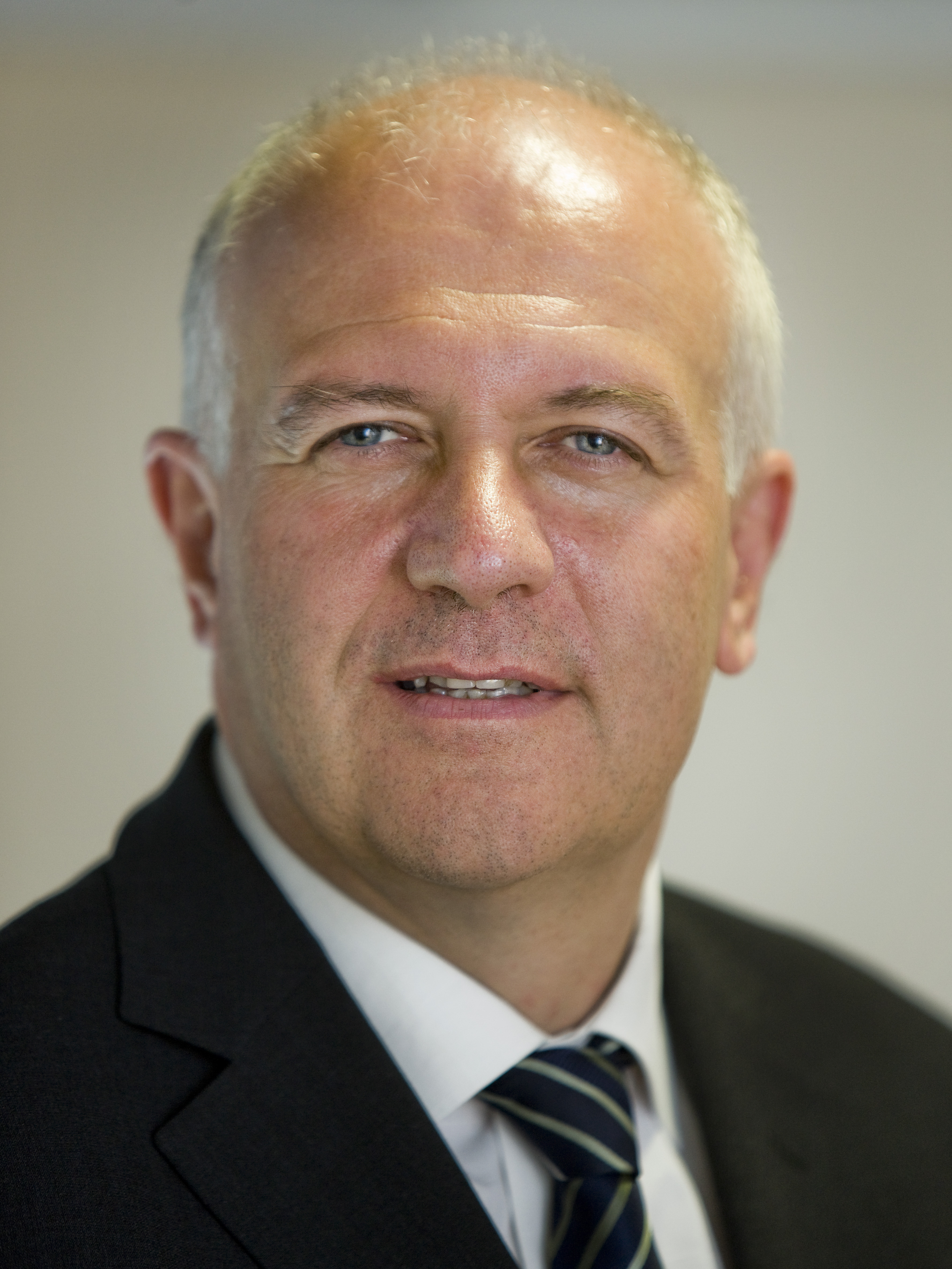
The Armed Forces Minister, Bill Rammell, delivered a speech yesterday in which he expressed his concern that the information age had fundamentally altered the conditions in which Britain could "project power" in the world.

Talking at the Institute of Public Policy Research, Rammell noted that there were many positive benefits from the development of "access to worlds of information" and the ability to instantly contest knowledge on comment streams, blogs and chat rooms.

But he referred to the significant difficulties created by a culture of real-time media, "blanket cynicism", and "individual rights":

"To a public that is used to getting answers at the click of a button, when the answers from government are complex, take time coming or are incomplete in order to protect sensitive security details, the response is too often cynical and disbelieving." 

He said there was a particular problem for Defence when it comes to tackling crisis situations where the response might impact on the safety of military personnel, "issues of operational security" or "the success of a mission".  

Paradoxically, he claimed that despite increased access to information and respect for the Armed Forces, the public lacked understanding of "the reality of how they [the Armed Forces] need to operate as an effective military force".

Contrasting Britain’s risk-averse domestic culture with the inherent dangers of military operations, he said "this is particularly true when it comes to understanding how decisions are made on where, when and how British forces are deployed, and understanding how the Armed Forces face and manage the risk of death and injury on operations".

If the gap in understanding was not bridged, Rammell claimed, Britain would not be able to rely on public support to sustain wars in the national interest in the future.

To address these problems, Rammell believed the media had a responsiblity "to set out properly the complexity of the situation our forces face and consider carefully how to protect information that could prejudice the success of military operations or endanger our personnel".

He said much of what correspondents say is absorbed by a relentless 24/7 media cycle which is always looking for new information and alternative angles.

Rammell also admitted more "cultural change in the MoD" is needed in the way it "responds to events" and "manages information".

He urged the MoD to "embrace more readily and more rapidly the new dynamics of transparency that new technology and new mediums provide".

While there have been some interesting experiments in this area, there is much ground to be made up.

A recent Defence Academy paper written by MacKay and Tatham stated, for example, that institutional learning within the MoD "is not helped by regulations that prevent senior officers from sharing information and ideas through external new media such as blogs and websites, and the architecture of internal MoD computer networks that do not facilitate blog type discussion".

Rammell might also have made a case for employing some media specialists, or re-allocating some resources to these communication roles (as I understand the defence budget is very tight at the moment).*

Again, to quote Mackay and Tatham:

"UK Armed Forces have no professional information operations practitioners, no media operators or professional psychological specialists. In their place, well meaning and enthusiastic amateurs are seconded from every branch of the military for two- or three-year tours, who do their best with minimal training but who are unlikely to return to such duties again."

Looking at this issue from outside the MoD it is important not to underestimate the challenges of institutional change, and those of the real-time media world, to military organisations. They are significant.

But with the problems adequately identified is not time to accelerate the pace of change, not least because the US Military has already shown how some of it might be achieved, and perhaps more importantly because it might play a role in the success of British operations? 

Updated:

*One of my colleagues at King’s disagrees. He says "the military doesn’t need better media officers, it needs officers, especially senior ones, with a good understanding of influence."

Photo: MoD/Crown Copyright

]]>
http://www.beta.frontlineclub.com/247_media_world_undermines_use_of_force_says_uk_minister/feed/ 0
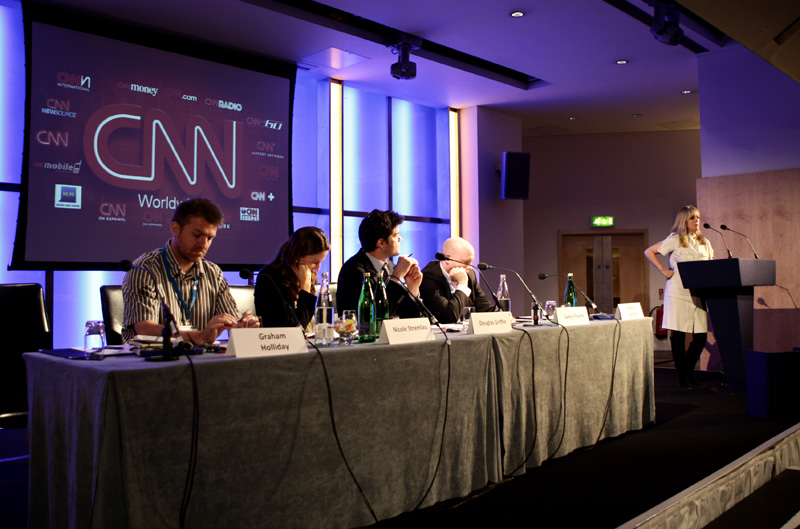
Strategic Communications: New Media http://www.beta.frontlineclub.com/strategic_communications_new_media/ http://www.beta.frontlineclub.com/strategic_communications_new_media/#respond Thu, 25 Jun 2009 14:13:41 +0000 http://www.beta.frontlineclub.com/dev/?p=3064 CCN New Media Lr1.jpg

Here in the bunker – it is a rather swish conference room but there’s a serious shortage of natural light – we’ve been looking at new media and strategic communications. In a moment, three themes from the session and the morning’s discussion. 
But if you want a frankly more interesting general overview of what the conference is all about, you’d be well advised to click here and take a look at this post by Rohan Jayasekera, Associate Editor of the Index on Censorship.
 
Newsgathering from Iran
 
Mainstream media news teams have been “utterly overwhelmed” by the volume of information that has been coming in from the streets of Tehran. Twitter and Facebook have been used as a tip-off service and Youtube has provided a lot of video content.
 
Processing material is proving to be a mammoth task but news organisations cannot afford to ignore social media and are developing procedures to sift and verify. Experts and contacts on the ground are brought in to help verify material and translators can help identify different dialects.
 
In short, the experience of covering Iran was described as nothing less than a revolution. (As a history student, who was always warned against the frivolous use of the term ‘revolution’, I’d be cautious. But you know that already.)
 
Communicating Afghanistan
 
The problem is not that governments are not using digital tools, but their use of them exacerbates the fact that they don’t have a clear narrative about what they are trying to achieve in Afghanistan. One speaker was particularly critical of the approach taken in Afghanistan whereby international forces entered the country and then tried to work out what they were supposed to be doing there.
 
On the other hand, it was claimed that the Taliban have a simple message that is easily understood by the local population. Concern was expressed that NATO is losing the information battle – something we’ve heard on numerous occasions before.
 
Echoing thoughts that were touched on yesterday, one speaker said NATO should have begun to produce their own media content a long time ago and that ventures like NATO TV and a recent foray into the Twittersphere were steps in the right direction.
 
But it seems that NATO still has plenty of work to do in developing an effective social media strategy. (I do miss things but the fact that I’d never heard of NATO TV for example suggests something’s not quite right.)     
 
Learning from history in Africa
 
An interesting view was expressed that it was important to get away from the ‘Them and Us’ frame often used by speakers at the conference, whereby ‘the West’ goes into places and churns out messages to ‘them’.
 
It was pointed out that in African nations governments have long thought about how to use communication tools with varying degrees of success. Indeed, concern was expressed that the Somali government has focused attention on the international media rather than providing local journalism for Somalis.
 
Photo: Albany Associates All Rights Reserved
]]>
http://www.beta.frontlineclub.com/strategic_communications_new_media/feed/ 0
Strategic Communications: Day 2 http://www.beta.frontlineclub.com/strategic_communications_afternoon_session_summary/ http://www.beta.frontlineclub.com/strategic_communications_afternoon_session_summary/#respond Thu, 25 Jun 2009 09:10:54 +0000 http://www.beta.frontlineclub.com/dev/?p=3063 Albany Conf 56.JPG

If you were following the blog yesterday I decided to enjoy the sunshine…

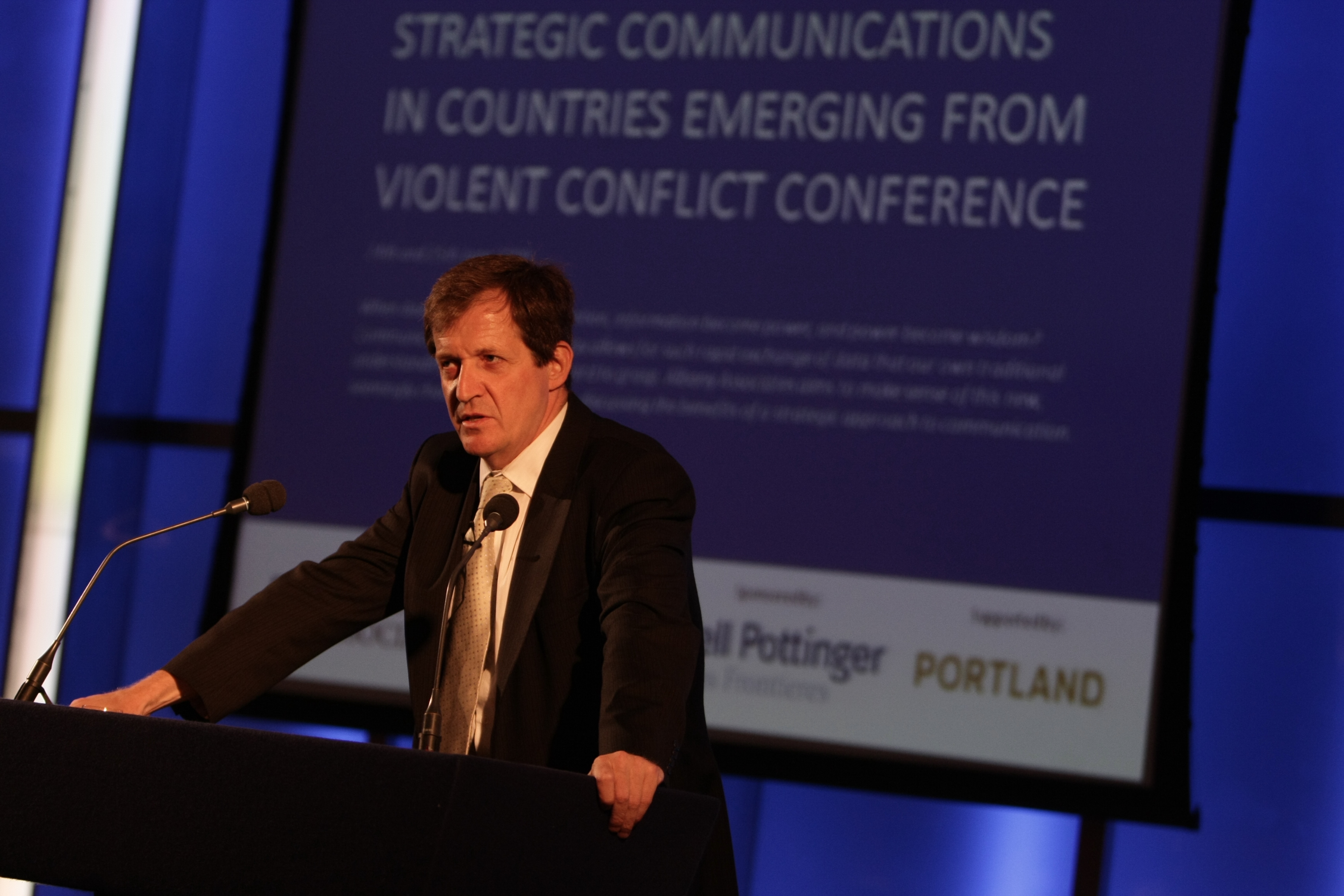
Here’s a photo of Alastair Campbell addressing the conference yesterday. After a question and answer session with Campbell on various topics including Iraq, Kosovo and Afghanistan, we moved onto a panel discussion on how to make a communications strategy work in places like Northern Ireland, Uganda and Darfur.

On the menu today we have:

– Jamie Shea, the current Special Advisor to the NATO Secretary General.

– A panel on strategic communications and new media including an appearance from Frontline Blogger, Graham Holliday.

– A consideration of the place for media development and regulation.

– "A view from the field" – practitioners examine how organisations like the UN, NATO, the AU and NGOs have approached communications.

– A conference plenary drawing some conclusions.

Photo: Albany Associates, All Rights Reserved.

]]>
http://www.beta.frontlineclub.com/strategic_communications_afternoon_session_summary/feed/ 0
Strategic Communications: Morning session summary http://www.beta.frontlineclub.com/strategic_communications_morning_session_summary/ http://www.beta.frontlineclub.com/strategic_communications_morning_session_summary/#respond Wed, 24 Jun 2009 16:21:48 +0000 http://www.beta.frontlineclub.com/dev/?p=3062 …so there’s been a bit of a delay getting the necessary wireless access, but we’re good to go now.
 
We’re also under the Chatham House Rule so observations will be general rather than specific.
 

This morning we’ve been hearing about how the new media landscape has profound implications for the area of strategic communications. ‘Citizen journalists’ can produce and distribute information with a speed that cannot be matched by the lumbering bureaucracies of complex organisations.

 
Most recently, graphic images of the crisis in Iran have found their way to millions of viewers across the world despite the best efforts of the Iranian regime to control information.


The new speed and flexibility of communication networks also have implications for Western democratic governments and institutions. Organisations are struggling to find the right balance between the time pressures of filling the information space and the (sometimes painstakingly) slow task of verifying the facts on the ground.  
 
Difficulties are compounded in situations where public policy is being carried out by a variety of departments, countries or international organisations. ‘Turf wars’, egos, and departmental independence hinder effective communication.
 
It was noted that in the UK there is no coherent national communications strategy, while in Afghanistan countless parties are responsible for distributing messages about the conflict and reconstruction efforts. 
 
Military, international and non-governmental organisations acknowledged that they have plenty to learn from communication failures in the past and as participants in a media arena that is undergoing profound change.
 
But it’s perhaps straightforward to identify the problems in theory, far more difficult to implement solutions in practice. Especially when it seems that what is required is a wholesale change in the communications culture within, and across, sprawling bureaucratic organisations.
 
That’s where we got to this morning, but better refocus on the afternoon session. I’ll try and get another summary up later…(or I might throw it all in and enjoy the sunshine). 


]]>
http://www.beta.frontlineclub.com/strategic_communications_morning_session_summary/feed/ 0