On Monday 19 October, the Frontline Club was joined by a panel of experts to discuss the increasingly necessary journalism model of cross-border collaboration. Gavin MacFadyen, director of the Centre for Investigative Journalism and visiting professor at City University, moderated the event, which was held in partnership with the Romanian Cultural Centre in London and Frontline Club Bucharest. The panel shared their own varied experiences of cross-border investigations and discussed the potential impact and many challenges inherent in this model of journalism. Stefan Candea, investigative journalist and co-founder of the Romanian Centre for Investigative Journalism, The Black Sea and Sponge, began by raising a point that recurred throughout the discussion, that journalists must often now circumvent mainstream media outlets to publish investigative reports on independent platforms.
MacFadyen also commented on the current state of the press, which has led to many cross-border journalists self-publishing or collaborating with new independent platforms to share their work. “There has never been a period in my long time in journalism – 40 years – where I’ve seen anything like the surveillance, the censorship, the omission in the editorial process, which is now completely commonplace. What’s omitted from stories is far more important that what is censored.”
The discussion also covered the notion of a “bought press”, in which journalists are employed to serve the interests and advance the agenda of certain official bodies or corporations.
Craig Shaw, British journalist and fellow at the Centre for Investigative Journalism in London, commented on the benefits and practicalities of working with journalists from other countries. He commented that it is often the case that British journalists do not speak other languages, which consequently limits the scope of their investigations, but pointed to their journalistic value of being based in the UK – “a front door for financial corruption.”
Stephen Grey, special correspondent on the global enterprise team at Reuters news agency and author of Ghost Plane and Operation Snakebite, likened the process of a cross-border story gaining momentum to two students at opposite ends of the room during a school assembly beginning a slow clap that quickly catches on.
Grey said that when it comes to the impact of a journalistic investigation, there is “a power in things coming from different directions.”
A member of the audience raised the subject of ethics in journalism, with regards to undercover investigations.
Crina Boros, an investigative reporter at Greenpeace UK and a trainer specialising in data-driven reporting and transparency laws, spoke of the different approaches taken by media outlets for undercover journalism.
She commented: “There’s an acceptable amount of deception that you can practice. Investigative journalism doesn’t have to do with undercover, but it is part of it… You don’t have to become a detective.”
Following an audience question, the panel discussed the process of investigating corruption in collaboration with journalists from other countries.
Grey said: “There’s always a confusion between being Eurosceptic and investigating corruption… The wider problem is that there is this ungoverned space.”
Cross border investigative journalism discussion @frontlineclub power of publishing outside your country… pic.twitter.com/eH9izBdCQO
— Camilla Horrox (@CamillaHorrox) October 19, 2015
With the potential impact of cross-border collaborative journalism comes risk and potential obstacles. The speakers discussed issues relating to trust of other team-members, centralised structures, how to deal with multiple sources and data dumps, and accountability.
Shaw commented: “Data does very strange things to journalists.. It’s often like a soap opera. There’s an issue of propriety and it causes a lot of complications… It works better in smaller groups.”
]]>When money, politics, abuse of power and corruption reach across borders, transnational networks of journalists become key to an open, accountable and democratic society. Cross-border investigations such as Swiss Leaks and Tobacco Underground have caused public outcry, and in many instances have led to legislative changes and the prosecution of those under investigation.
This game-changing journalism model is increasingly facilitated by the rise of digital tools, access to international databases and the ability to bypass restrictive national freedom of information laws. However, cross-border collaboration is facing its own challenges, from funding opportunities to logistical issues and disparate journalistic cultures.
In an event in partnership with the Romanian Cultural Centre in London (RCC) and Frontline Club Bucharest, a panel of experts will be discussing what it takes to expose stories that spill across borders, as well as the potential obstacles and impact involved.
This discussion will be moderated by Gavin MacFadyen, director of the Centre for Investigative Journalism and a visiting professor at City University.
The panel:
Crina Boros is an investigative reporter at Greenpeace UK and trainer who specialises in data-driven reporting and transparency laws. Her portfolio includes Swiss Leaks, the abuse of migrant workers, victim compensation and money laundering. She has led the Thomson Reuters Foundation’s first international index on women’s rights, and has reported for the BBC, Exaro News, and OffshoreAlert.
Stefan Candea is an investigative journalist, and co-founder of the Romanian Centre for Investigative Journalism (CRJI), The Black Sea – a lifeboat for journalism in the region – and Sponge, an open and collaborative media innovation lab for Eastern Europe. A member of the International Consortium for Investigative Journalism, he also teaches investigative journalism at University of Bucharest and was the 2011 Carroll Binder Nieman Fellow at Harvard University. His cross-border investigative stories on organised crime won several international awards. Currently he’s working at EIJC on his PhD research analysing the structures of cross-border investigative networks.
Stephen Grey is a special correspondent on the global enterprise team at Reuters news agency. He is author of Ghost Plane, an account of the CIA rendition program, and Operation Snakebite, on the war in Helmand, Afghanistan. His most recent film was “Kill/Capture” for PBS Frontline. He has won several awards, including the Overseas Press Club award in 2006 for human rights reporting and the Kurt Schork Award for International Reporting in 2010.
Craig Shaw is a British journalist and fellow at the Centre for Investigative Journalism in London. Specialising in cross-border corruption and human rights, he previously worked for the International Consortium of Investigative Journalists on the global “Offshore Leaks” investigation which helped lift the veil on the secretive world of tax havens. Shaw’s reports have been published in leading international news media such as The Guardian, The Sunday Times, Sydney Morning Herald, L’Espresso, Der Freitag and the Thomson Reuters Foundation.
The Romanian Cultural Centre in London (RCC) is an independent association promoting Romanian culture abroad since 1994. It is funded by The Ratiu Family Foundation (RFF), which supports projects relating to civil society, democracy, arts and culture in Romania, the UK and the US.
Frontline Club Bucharest operates as part of the charitable Frontline International Partners project, and organises regular talks, documentary screenings and workshops in order to engage communities in Romania in critical thinking about international affairs and the media.

]]>
Are the kill/capture missions in Afghanistan effective? That was one of the key focuses of our First Wednesday discussion last night.
The evening began with a short clip from Kill/Capture a film made by investigative journalist and author Stephen Grey about the United States’ unprecedented campaign of targeted killing of militants in Afghanistan.
Grey said that the target rate was "by and large" accurate: "But the question is ‘how big is the error rate and what is the effect of that, because obviously you are talking about lethal methods." Up to 12,000 raids had been carried out by special forces in the last year, Grey said.
Questions were asked by the audience about the legality and the morality of the campaign, which Emal Pasarly, of the BBC’s Afghan section said had made the security situation "far worse" since it was announced five years ago.
Only two major Taleban commanders had been killed since NATO announced its new strategy in 2006: Mullah Akhtar Mohammed Osmani who was rumoured to be on his way from Pakistan to negotiate with the Afghan government and Mullah Dadullah.
"Back in 2006, most of Afghanistan was largely peaceful and you could go from Kabul to Helmand without any problem. Now you have to be mad, or anxious or God knows what," he said.
The suggestion that the strategy had been counter-productive was backed up by Kate Clark, senior analyst for the Afghanistan Analysts Network, who said the strategy was "reckless" at a time when the focus should be on peace. Command and control had broken down as a result of the operations, she claimed:
"The problem is that senior field level commanders are being killed and captured… so you get a much weaker Taleban control of fighters on the ground," she said.
"You get younger, more radical commanders taking their place, who tend to be more abusive and more extreme and the Taleban can no longer control the foreign forces, who again are more abusive towards the local population and more difficult to control."
Lieutenant General (Retd) Sir Graeme Lamb, countered that the strategy had brought about change in the Taleban’s tactics because they had "headed off to the hills" and were therefore less intimidating to the local people:
"In this case you tend to gauge initiative shift when you see the opposition not pushing back harder but having to a new way of doing business and that is exactly what we’re seeing on a multiple series of levels"
Dr Tim Bird, author and lecturer at the Joint Services Command and Staff College and the Defence Studies Department, King’s College London, said he was concerned that the tactical temptation to to target those who are effective against you would override the approach of reconciliation and integration:
"An indicator would be if we were leaving alive very effective Taleban commanders who we could talk to. There is a very strong temptation to target those insurgents who are tactically effective against our forces."
]]>
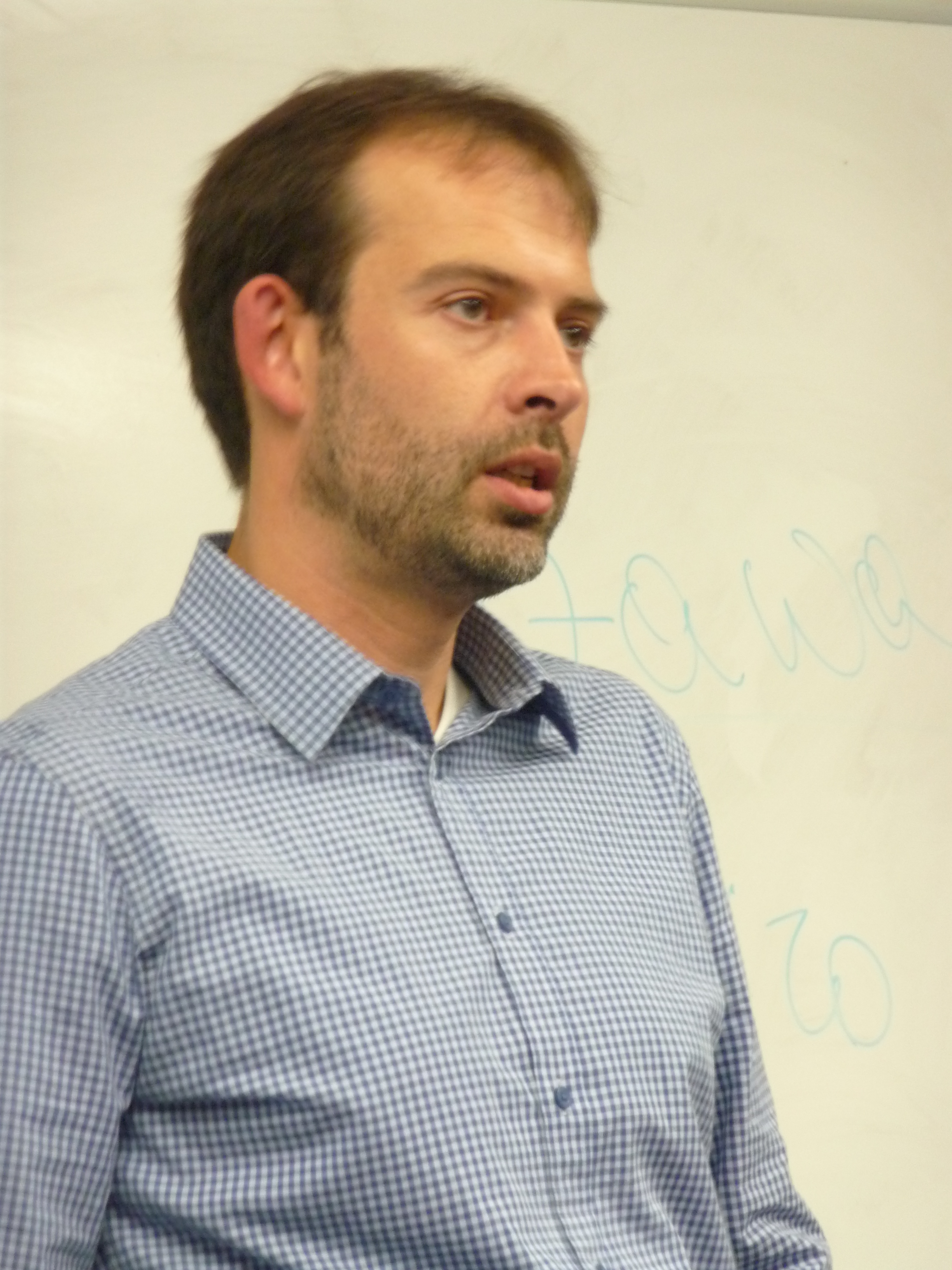 Grey was talking to the War Studies Department at King’s College London yesterday about his latest thoughts on the situation in Afghanistan having spent some time with 2 Yorks and the US Marine Corps.
Over the summer, Grey identified a change in approach in Helmand province. Previously British troops were going into villages, seizing control and then pulling out, unable to provide durable security. Now, he said, there is an acceptance that areas have to be held for the long term.
Troop levels in Helmand have increased significantly with the arrival of the US Marines, but Grey noted that the area of operations has also been extended.
As a result, he claimed there is still not sufficient troop density to succesfully implement the ‘clear, hold and build’ strategy. He suggests NATO will need extra troops just to hold the areas they now control.
Grey said the Afghan National Army (ANA) is improving but not at a rate that will enable them to take control of the country in the near future. ANA soldiers are very tired, he said.
As a journalist, it’s not really Grey’s role to come up with solutions. But he did offer a few thoughts on this topic.
He recognised that the British Army was adapting very quickly. Some soldiers, he met spoke of a transformation in culture. Grey identified the most important change as a recognition that the political aspect of the wider strategy could not simply be left to other government agencies like the Foreign Office (FO) and the Department for International Development (DFID). But this process of adaptation needed to continue and he wondered whether the pace of change was sufficient in the face of an enemy who was also adapting.
Grey suggested that greater openness and better information sharing might help in this regard citing John Robb’s notion of ‘open-source warfare’. Rather like open-source software hackers, the power of the insurgent lies in their ability to organise, share information and collaborate at much greater speed than their bureaucratic enemies.
He also wondered if there could be a ‘hippocratic’ formulation of counterinsurgency warfare, whereby one of the rules is ‘first, do no harm‘. Though quite how this would work is difficult to see given that Grey himself acknowledged that counterinsurgency operations are usually far less ‘fluffy’ than they can sometimes be reported. It is still about killing insurgents as well as building schools.
Even if the focus here is ‘do no harm to civilians’ that’s still problematic: the questions ‘who are Taliban?’ and ‘who are the civilians?’ are not always easy ones to answer. Grey said the official Afghan government and informal Taliban government often operate in parallel in Helmand.
Finally, Grey implied that security could only be achieved through the establishment of tribal security, whether that be through tribal security forces, or political deals with tribal leaders. (He’s not the only one advocating this position.) His support for an approach with a "lighter touch" is based on his belief that the current strategy could only lead to the garrisoning of the whole of southern Afghanistan.
]]>
Stephen Grey will be at the Frontline Club tonight to discuss his investigative journalism work in Helmand province, Afghanistan. As usual, if you can’t make it to the club in person, we’ll be streaming the event live on the Frontline Club live channel and in the video pane above. Frontline blogger Daniel Bennett will be at the event and will be blogging it using Coveritlive (above) and taking questions. We start at 7pm GMT/11am PST and we hope you can join us,
To research his new book – Operation Snakebite – he dug deeper into the events he witnessed, returning to Helmand and to Kabul and interviewing more than 200 British and American troops, plus officials, to reconstruct not only a gripping battle story but to make wider findings. He will be discussing this, and also what the British really make of working with President Karzai, the true story of talking to the enemy, revelations over ‘takedown’ operations conducted by US and British special forces, crucial equipment shortages and the unresolved tensions between Whitehall and the frontline. link
You can watch the discussion in the video below and see Daniel Bennett’s original liveblog in the pane at the top of this post.
]]>