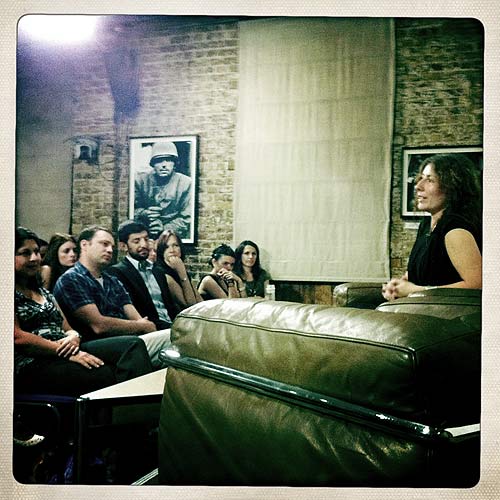
For the first in our series we will screen The Trap, a film that explores how prisons and jails have become a recruiting ground for human traffickers in the States, taking incarcerated women into pimp-controlled prostitution. The film will serve as a platform to open up to a discussion on the phenomenon in the US as well as sex trafficking testimonies from the UK.
For the past 18 months, The Guardian has been investigating the role of the criminal justice system in feeding vulnerable women into America’s thriving domestic sex trafficking industry. With unique access in Florida, Massachusetts, and Chicago, the film follows the stories of women caught in the trap of criminal exploitation and incarceration and those trying to stop some of America’s most vulnerable women from falling under the control of human traffickers. Including encounters in Texas with convicted human traffickers and correctional officers who expose the fault lines that are allowing women to be released from prison straight into the arms of pimps and sex-buyers.
Directed and produced by: Annie Kelly and Mei-Ling McNamara
Director of photography: Alex Healey
Editor: Agnieszka Liggett
Executive producer Laurence Topham
Run Time: 30 mins
Chair
Juliana Ruhfus is an award-winning journalist, filmmaker and interactive producer. She currently works as the the senior reporter for Al Jazeera English’s “People & Power” strand. Juliana joined Al Jazeera English in early 2006 and was part of the team that launched and defined the new channel and the People & Power strand in particular. In November that year her film about Liberian ex-combatants was chosen to introduce the channel’s programming content the day the channel went on air. Nearly 40 films later she has gone undercover in Turkmenistan and in Cambodian orphanages, produced the five part “Corporations on Trial” series, and her two-part investigation into the trafficking of Nigerian women for the Italian sex-trade is one of the most-watched People & Power episodes ever. In 2013 Juliana was named as one of the top 100 journalists covering armed violence by Action on Armed Violence (AOAV).
Speakers
Annie Kelly is a journalist, editor and filmmaker reporting on human rights, global development and social affairs for The Guardian and The Observer. She is also the editor of the Guardian’s multi-award winningModern Slavery in Focus series.
Dorcas Erskine was National Coordinator of the Poppy Project and prior to that the Director of Policy, Advocacy and Programmes at ActionAid. Her background is in working as a specialist on preventing and supporting women who have experienced violence, most recently in the Middle East. She started her career in the UK parliament and in corporate firms before joining the non-profit sector. Amongst other organisations, she worked with ActionAid Tanzania, the International Rescue Committee and a charity supporting female victims of trafficking.
Hazel Thompson is an award-winning British photojournalist. In the last decade, she has taken up assignments worldwide in over 40 countries for media organisations such as The New York Times, ABC News, Stern Magazine, Vogue, FIVE News, The Sunday Times, Observer Magazine, Le Monde 2 and Politiken. Her book ‘Taken’ is a photo documentary published in 2014 documenting Hazel’s life’s work, to investigate and expose the disturbing truth around India’s sub-culture of sex trafficking. Hazel immersed herself into Mumbai’s sex trade since 2002, and during this time she spent over 6 months living in Kamathipura, gaining unprecedented access into the second largest sex district in Asia. The result is an extraordinary glimpse into the secrets of Mumbai’s red light that reveals the moving real-life stories of girls tricked, trafficked and sold into 21st century sex slavery.
]]>
This discussion will ask: what ethical concerns arise when documenting the experiences of survivors of sexual violence, and how can journalists best help bring perpetrators to justice? Should journalists covering the issues of sexual violence and sex trafficking complete specified training?
With a focus on Syria our panel will be mapping out what is being done to help individuals and communities affected by sexual violence, and discuss ethical practices for journalists reporting on the topic and engaging with survivors.
Chaired by Liz Ford , deputy editor of the Guardian’s Global development website. Liz leads on women’s rights and gender equality issues. She was previously editor of the Guardian’s Katine website, and before that worked on the Guardian’s education desk.
Speakers (Full panel announced soon):
Lauren Wolfe is an award-winning journalist who has written for publications from The Atlantic to The New York Times. She is also a columnist at Foreign Policy magazine and on the advisory committee of the International Campaign to Stop Rape & Gender Violence in Conflict. Previously, she was the senior editor of the Committee to Protect Journalists, where she broke ground on the issue of journalists and sexualised violence. She studied at Wesleyan University and Columbia’s Graduate School of Journalism, and is the recipient of the 2012 Frank Ochberg Award for Media and Trauma Study and four Society of Professional Journalists awards. Action on Armed Violence listed her as one of the “Top 100 Most Influential Journalists Covering Armed Violence.”
Marie Forestier is an independent journalist and researcher. She is currently a visiting fellow at LSE Centre for Women, Peace and Security, researching sexual violence against Syrian women committed by pro-regime forces. Marie has been a correspondent in Istanbul, Turkey, covering Turkey, the Syrian crisis, Iraq and Iran for various television and radio stations, such as ARTE, RTS, France 2. In 2015, Marie directed a documentary about sexual crimes committed in Timbuktu, Mali in 2012-2013 and the victims’ quest for justice. Front 2009 to 2011, Marie was a correspondent in Kabul, Afghanistan.
Belinda Goldsmith is an award-winning journalist who has reported and led news teams from more than 20 countries on political, financial and general news. She is Editor-in-Chief of the Thomson Reuters Foundation, the charitable arm of the world’s leading provider of news and information. In this role, she runs a global team of nearly 30 journalists and a large network of stringers covering the world’s under reported stories, focusing on humanitarian issues, women’s rights, climate change, corruption and good governance. She also plays a key role in the editorial content for the annual Trust Women Conference, the Thomson Reuters Foundation’s global event dedicated to putting the rule of law behind women’s rights through concrete action.
Hillary Margolis is a researcher in the Women’s Rights Divisions at Human Rights Watch. Her work focuses on violence against women and girls, including sexual violence in conflict, interpersonal and domestic violence, and protection risks for female migrants, refugees and asylum-seekers. Most recently, she has conducted research on migrants and refugees arriving in Italy via Libya, and on sexual violence by armed groups in the Central African Republic conflict. Her previous work at Human Rights Watch includes documentation of the impact of the Syrian conflict on women and girls, including exploitation and harassment in refugee settings, abuse of women in detention, and risks facing female activists and household heads.