In 2012, the brutal gang rape on a Delhi bus of a 23-year-old medical student, who later died from her injuries, made international headlines and ignited protests. India’s Daughter is an impassioned plea for change and a tribute to a remarkable and inspiring young woman. The film explores the compelling human stories behind the incident and the political ramifications in India.
BAFTA winning filmmaker Leslee Udwin, herself a victim of rape, went to India inspired by the protests against sexual assault. With an all Indian crew, she got exclusive, first time on camera interviews with the rapists and defence attorney.
This month India’s government banned the film while the BBC moved their planned broadcast up by days and ignited a new controversy.
Following the screening we will be joined by director Leslee Udwin and others to discuss the international reactions to the film, the aftermath of the Indian broadcast ban, and the greater issue of gender based violence.
Yasmin Ali Bhai Brown is a journalist who has written for The Guardian, Observer, The New York Times, Time Magazine, Newsweek, The Evening Standard, The Mail and other newspapers and is now a regular columnist on The Independent and London’s Evening Standard. She is also a radio and television broadcaster and author of several books exploring immigration, feminism, and race relations.
Directed by: Leslee Udwin
UK/India 2015
Runtime: 62 minutes
 This screening is presented with the help of iProbono.
iProbono is a non-profit network connecting lawyers to civil society organisations and activists. The network’s global outreach enables the legal community to engage in projects from around the world and allows organisations to source assistance both locally and across jurisdictions.
As part of its free speech campaign in India, iProbono is representing Leslee Udwin and ‘India’s Daughter’.
]]>On Monday 14 July, the Frontline Club hosted a screening of Seeds of Hope, a documentary which focuses on the effect of rape in Eastern Congo, where it has become a widely used weapon of war. The film centres around one woman, Masika, who is herself a victim of rape, and her determination to provide a centre for recovery and sanctuary for other women who have been raped, as well as taking in many children who have either been orphaned or rejected due to their violent origins.

Director Fiona Lloyd-Davies speaking at the Frontline Club.
The film opens with a shocking statistic: 48 women are raped every hour. Seeds of Hope attempts to humanise this figure by documenting the lives of women living in Masika’s centre. The centre is a shelter for victims and, over time, has managed to develop livelihoods for the women who live there, in the forms of farming and sewing.
The film reveals how endemic rape has become in the Democratic Republic of Congo and during conversations with members of the military explains not only how they use rape as a weapon, but also how it has become an almost standard part of military practice.
Director Fiona Lloyd-Davies described how, as a filmmaker who has covered different wars, the use of rape in conflicts was not new. She was, however, shocked by “the frequency, the violence, the level of violence against women” when she visited the region. She described how, when she first visited in 2001, rape was frequent, but did not seem to have a structure or real pattern, and was still random. By the time of a next visit in 2005, she was appalled by the accounts she heard:
“Very organised rape camps. . . . It seemed to have shifted and become much more organised, . . . they talked about having name calls . . . and it seems that many girls get taken and they’re led into the forest for several weeks to quite remote areas where the militias have got their camps, and they’re kept there until they escape.”
Lloyd-Davies explained to the audience that many soldiers had been arrested and put on trial in November 2013 in Minova for the charge of rape. Out of the 40 that were originally charged, one soldier died before the trial and five never appeared in court as they were still able to work, and were deployed with their units. The final verdict took place in May 2014, where only two soldiers were found guilty of rape as a war crime. She described this lack of justice as “virtual impunity”. As the risk of punishment is so low, there is no deterrent for soldiers to stop committing these crimes:
“If they know that they (may have) done it before, they may not have; they may have seen, or heard of friends do it before [or] their colleagues in the army, and with so little justice and with this virtual impunity, there is a sense . . . that they can get away with it.”
One audience member enquired after the director’s personal safety while making this film; as a low budget documentary the crew was very small, and she was filming in a dangerous and violent area. Lloyd-Davies explained that 2011, when she did most of her filming with Masika in Minova, was a “very quiet time”, and that she was staying at a priest’s house. She then told the audience that she had been attacked in Minova, but went on to say that she has been back to Minova since then, and intends to go back again.
She also discussed how the situation is improving in terms of the stigma attached to rape and the treatment of rape victims. The film discusses how many of the women were rejected by their families after they were raped, which is the reason that many of them found their way to Masika’s centre. One of the questions from the audience was whether any improvements or developments have been made, and Lloyd-Davies described the work that many NGOs are carrying out within villages, working with village elders, to address the stigma and encourage communities to view rape victims differently, which has meant that more rape victims have been able to come forward and receive the help that they need.
Information on future screenings of Seeds of Hope can be found on the film’s website here.
]]>
In the eastern Democratic Republic of Congo, Masika Katsuva, herself the victim of multiple rapes, has rescued some 6,000 women and children. Her centre provides medical and psychological help, and she also works with the women to cultivate maize and bean crops to have an independent life.
Filmmaker Fiona Lloyd-Davies follows Katsuva and the centre’s inhabitants, as they reshape their lives to build a new future. The film also speaks with the perpetrators, among them soldiers from the Congolese army, who give extraordinarily open testimony as to why they rape and their attitudes toward their horrific acts.
Directed by Fiona Lloyd-Davies
Duration: 71′
Year: 2013
On Tuesday 3 June, with just a week to go until the start of the Global Summit to End Sexual Violence in Conflict, the Frontline Club hosted a fully booked event on preventing and responding to sexual violence in conflict, with specialist reference to the Democratic Republic of Congo (DRC).

From left: Liz Ford, Sarah Cotton, Serge-Eric, Fiona Lloyd-Davies and Dr Juliet Cohen at the Frontline Club.
In her opening statement, Dr Juliet Cohen, head of doctors at UK-based charity Freedom from Torture, said:
“I don’t know how many of you have ever been on a demonstration, felt compelled to write to the newspapers or protest in some way publicly. I went to a demonstration last year about the legal aid authority cuts and I could go and stand on the soapbox and say my piece and be identified by my name. I could be photographed, I could stand in the crowd afterwards and when it was time to leave, I could just walk away and go home knowing that nothing would happen to me. . . . What’s so chilling is to find how dangerous it is for some people in other countries to do what seems like such a simple thing.”
Cohen added a statistic which the panel itself found astonishing:
“I don’t think it’s widely known but in this country Home Office statistics show that almost 90% of victims of rape never disclose to the police and around 38% tell no-one at the time of the crime.”
After the opening statements from the four panelists the question and answer session began. The chair of the discussion, Liz Ford, deputy editor of The Guardian’s Global Development website, asked why we need this upcoming conference on sexual violence when we have already had six UN resolutions since 2000 in some way related to the issue of sexual violence.
Fiona Lloyd-Davies, a filmmaker who has been working in DRC since 2001, answered:
“Is anything concrete going to be achieved after all this talking, after people have come all this way? Because . . . as all of us know here, whether it’s in Shabunda or Minova . . . there are women and men and children who every night are terrified that the perpetrators will come again. . . . It’s a great opportunity but something concrete has to happen. . . . Is it really possible to make concrete policy decisions about reforming the Congolese judiciary in half an hour?”
In response, Sarah Cotton, the public affairs and communications advisor for the International Committee of the Red Cross (ICRC) Mission in the UK and Ireland, said:
“Firstly, there’s a lot to be said for continuing to bang the drum. . . . There has to be a degree of realism about what can be achieved but it’s being spoken about and this is going to be extremely high level. There is a lot of energy that’s gone into this conference and its an issue – and we are all here today because it’s an issue – and we’re not dealing with it well.”
For more info about the @end_svc conference next week. More info about Fiona's film #seedsofhope head to http://t.co/oO0fNbVy6C ^OSJ
— Studio 9 Films (@Studio9films) June 3, 2014
When the discussion was opened to questions from the audience, the panel were asked whether systematic rape in countries like DRC is a problem that would be better addressed by tackling the root causes of the conflict there. Serge-Eric, co-founder and member of the Survivors Speak OUT! (SSO) network, replied:
“At the SSO network that is the first thing that we spoke about when it was asked to us. . . . The first thing that the women came up with was, ‘Look, the real problem in the Congo is the conflict going on into the Eastern Congo.’ Because of that conflict going on in the Eastern Congo, we tend to think [rape] only happens in that particular area, yet you found women that live in Kinshasa that’s been the victim of rape as well. . . . By holding the government to account, . . . ending that war means we can have a better way of preventing that happening again to the girls of Congo.”
The panel were also asked about whether the perpetrators of this horrific systematic rape in the Congo were aware of the damage that these actions were inflicting. Lloyd Davis said:
“Of course they understand. Rape has been used as a weapon of war for thousands of years so, yes they do. I think sometimes its opportune. One of the very significant things about the Minova rapes was that some of them said that they were angry that they had been forced to withdraw from Goma leaving their own families vulnerable. So they were worried about the consequences of what was going to happen to their wives and children . . . yet they took their anger and frustration out on the women of Minova.”
Serge-Eric also commented saying:
“I think we already covered that a bit by saying that torture is not by mistake, rape is not by any mistake, it’s not by any coincidence. It’s a very calculated act which tends to either put terror into the person who you might be hurting or trying to silence the person. I will not be accepting that someone, because they feel angry somewhere, will go and just rape someone – it doesn’t just happen but it’s a very manipulative act.”
Cohen also added:
“The intention of the torturer is to destroy their sexuality and their future, to destroy their virginity, their ability to marry, many people believe that they won’t be able to have children after they’ve been raped. Male victims of rape are told, ‘Now I’m making you a woman, so you won’t be able to be a man anymore, now you’ll be gay.’ . . . That’s the intention of this kind of torture, it’s to destroy people’s sexuality and their future.”
Watch and listen back here:
]]>The event on the 8 February at the Frontline Club was a screening of Justice for Sale, followed by a Q&A with Femke van Velzen, one half of a documentary duo – twin sisters who make up IF Productions. For Femke and Ilse, this is their third film about the Democratic Republic of Congo. The Q&A was moderated by Sandra Whipham of the BritDoc Foundation as Justice for Sale was part of the Good Pitch Europe in 2011.
The film exposes the less seen and more controversial side of the issue of sexual violence in the country, looking at breaches of justice for the perpetrators rather than the victims. The van Velzen sisters’ first two documentaries brought light to the widespread problem of sexual violence in the country, largely from the perspective of its victims.
The audience was interested to know how the film makers came to represent the other side of the story. Van Velzen answered:
“Journalists that go to the Congo write about the victims. But most of the time that is it and they move on. It takes a very long time to find the deeper layers. For us it was really valuable to stay there longer, to really get to the point of seeing it from different points of view. To make a film about a perpetrator was really interesting.”
Justice for Sale examines the corruption rife in Congo’s justice system through the narrative of one lawyer’s attempts to pick apart the case of a young man sentenced to 10 years imprisonment for rape.
“It is interesting how we came across this story. Since 2006 there was this new law so people could actually be convicted of rape, and in 2008 we got the opportunity to follow a military court case for a couple of days. This story stood out. We were not lawyers but I was convinced that on the basis of what was presented he should never be convicted.”
At first, the filmmakers were unsure how to use the footage and whether this case had been an exception or was was an example of what was happening on a more regular basis.
“We then organised two workshops where we showed it to different human rights lawyers and NGOs. They all responded that this is not just one case, it is happening on a larger scale. We then realised this is something we have to dive into”.
One of the most illuminating questions of the night asked how the lawyer – Claudine, who had originally campaigned for the law against rape in 2006 – felt about a film that picked holes in the progress made against sexual violence.
“For Claudine, sexual violence is a huge problem, but if you are dealing with the justice system you have to be clear about everything or it can really endanger the law. The purpose of the documentary is to open a discussion; to show the other side of the coin and that’s what makes the documentary interesting. The NGOs all reacted in very different ways. But some were relieved that they could now debate this side of the story.”
Visit IF Productions to find out more about the trilogy and to learn about the Mobile Cinema Foundation that Ilse and Femke van Velzen have launched as part of their multi-media outreach strategy that includes radio campaigns, soap operas and cartoons.
]]>[vimeo clip_id=”29681484″ width=”360″ height=”225″]
Congolese human rights lawyer Claudine Tsongo investigates the case of Masamba, a soldier convicted of rape. She discovers that his trial was corrupt and unfair. In her journey to obtain justice, she uncovers a system where the basic principles of law are virtually ignored.
Questions are raised about the role of the international community and non-governmental organisations within the Congolese judicial system. Does their financial support cause justice to be for sale?
Justice for Sale is the third film by filmmakers Ilse van Velzen and Femke van Velzen covering different aspects of sexual violence in the Democratic Republic of Congo. Fighting the Silence (2010) explores the consequences for rape victims and in Weapon of War (2009) military perpetrators talk about rape as a war crime.

Directed by Ilse van Velzen and Femke van Velzen
Duration: 60′
Year: 2011
 The twin sisters Ilse and Femke van Velzen are internationally recognized, award-winning filmmakers. Through The Mobile Cinema they reach out to local communities by bringing back their films as educational tools to lift people out of inequality and violence.
On October 22 the Frontline Club hosted the London Premiere of The Invisible War, followed by a Q&A with Emmy-nominated producer Amy Ziering.
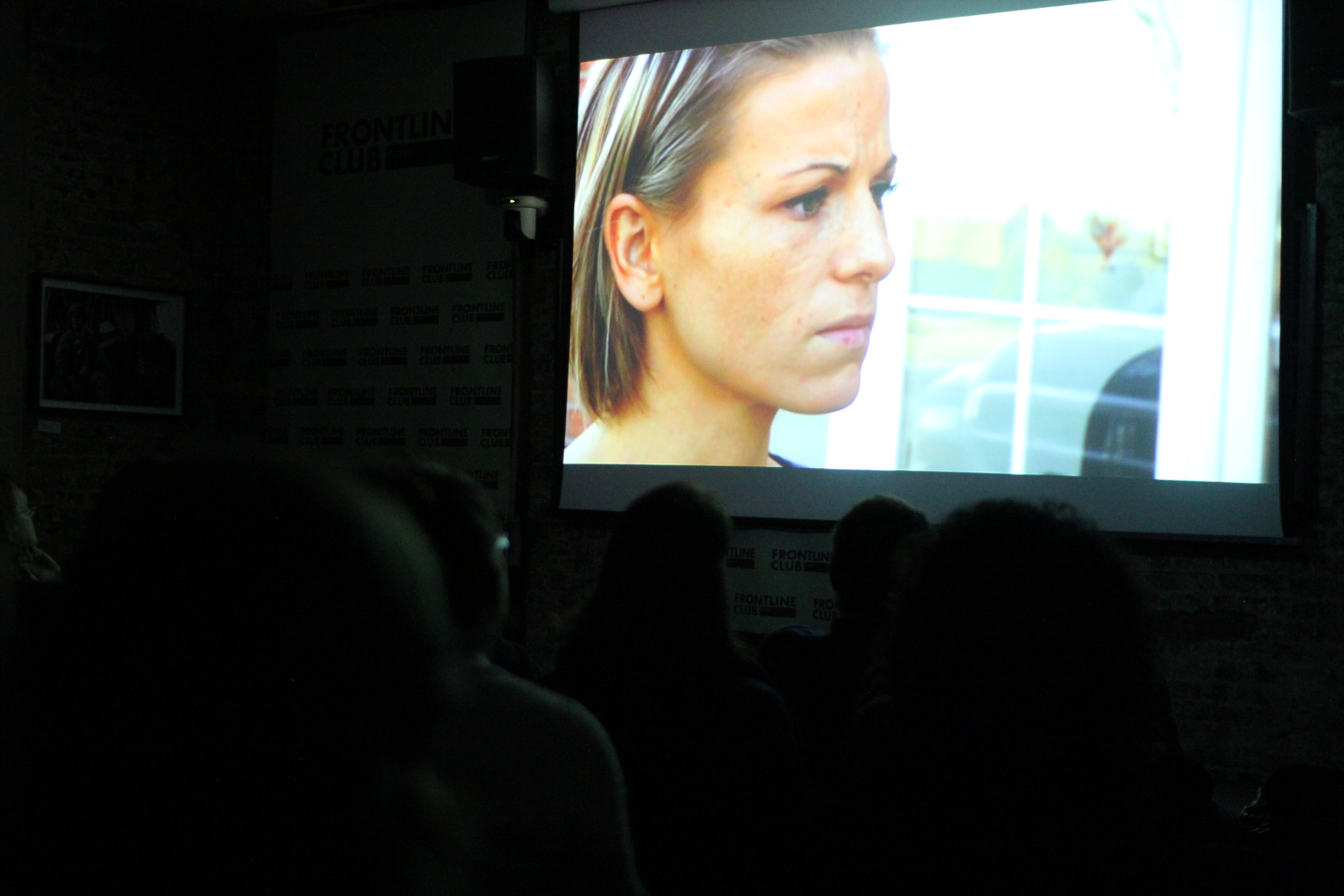
The Invisible War explores the devastating emotional and physical effects of sexual assault within the US military. In the Q&A producer Amy Ziering, explained how the emotional side of the film was balanced with the intellectual content through the differing, but complimentary approaches, that she and director Kirby Dick brought to the project:
“What I think is reflected [in this film] is that I came to it with a really intense emotional and passionate connection to each and every one of the survivors, I was mostly liaising and interacting with them more than he [Kirby Dick] was, and he came to it with an incredible sense of just outrage, moral outrage at [the] injustice. The film not only packs a powerful emotional punch but it also has a really, really substantial and intellectual argument, and I think it reflects both of our strengths in that way.”
One issue of injustice in particular that the film tackles is the inward looking nature of the American military judicial System:
“I wasn’t aware of the extent to which the American military judicial system sort of only answers to it’s own and really, you don’t have recourse outside … it is astonishing.” Admitted Ziering.
The strong influence of an individual’s Commander in the way that a sexual assault case is dealt with, she said, was something they particularly wanted to address through the film. Bias in favor of the attacker who may have close ties to the Commander is common, which means that the only channel for seeking justice is shut off. The campaign surrounding The Invisible War however, advocates for the military to be accountable to civillian authorities as an alternative:
“We are pushing now to try and get the military to acknowledge that oversight would actually only make them a stronger institution … that’s the message we are trying really hard to articulate.”
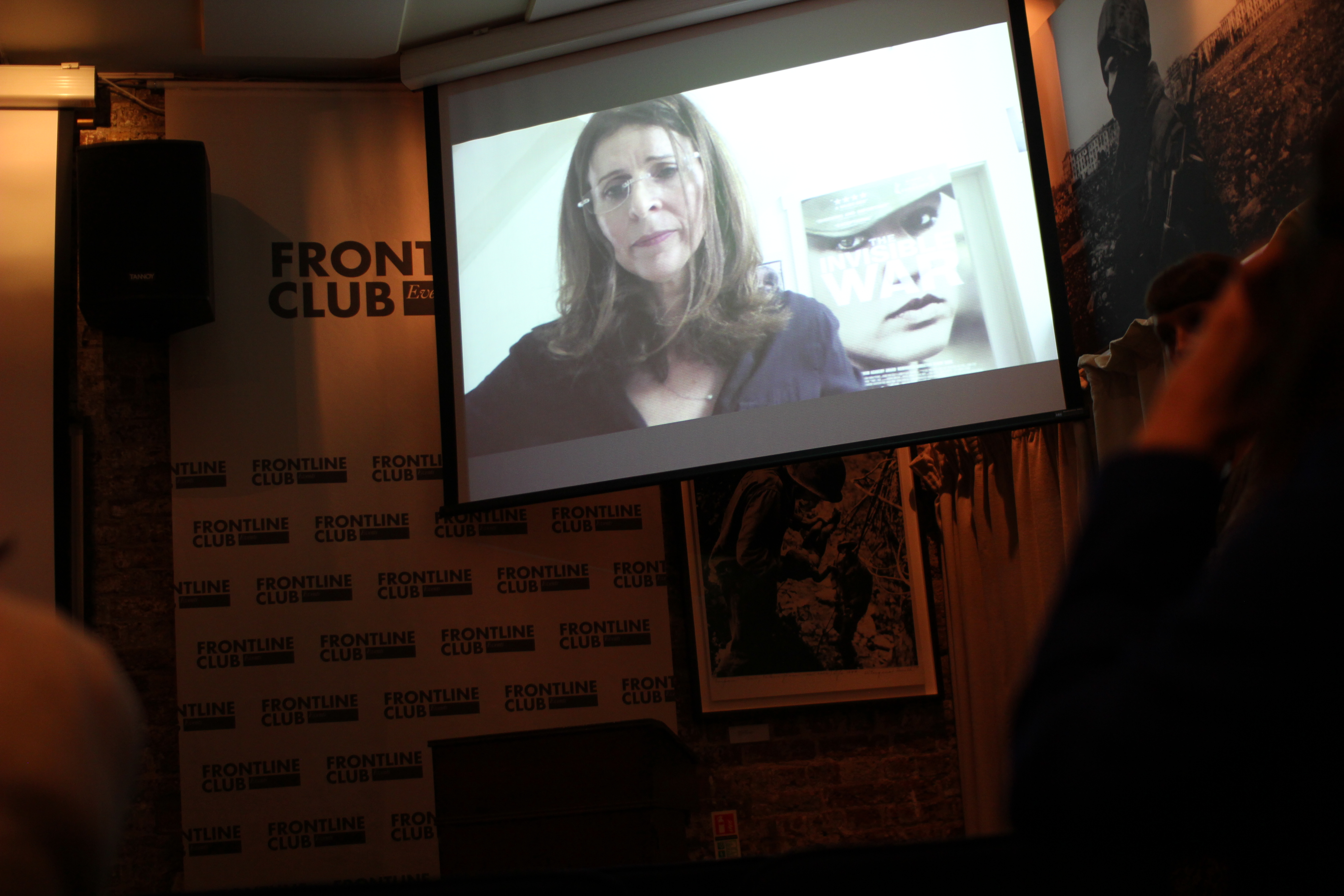
On being asked if there has been change in the aftermath of the film’s release, Amy Ziering was able to say yes. Through targeted screenings following the initial burst of interest when The Invisible War won the 2012 Sundance Film Festival Audience Award, they had reached several influential military figures:
“In doing my research I’d heard that you can legislate, can do grass roots, but if you don’t get the leadership on board in the military – nothing’s going to change … so to make a long story short eventually four of the five Joint Chiefs have now seen it including the head of the Joint Chiefs, General Dempsey.”
This, in turn, has affected policy and changed attitudes she explained:
“The army is embracing the film and we are on almost every army base – they bought it as a training tool.”
As a last note, Amy Ziering invited audience members to host screenings of their own:
]]>“You never know who knows someone and it really makes a difference.”
Today, a female soldier serving in the US army is more likely to be raped than killed or injured by enemy fire. An estimated 30 percent of servicewomen and at least one percent of servicemen are sexually assaulted during their enlistment; not by the enemy, but by fellow soldiers. Most victims keep quiet in the absence of recourse outside the chain of command. In many cases the person they were obliged to report the assault to was either involved or friends with the assailant.
The Invisible War, by Oscar and Emmy-nominated director Kirby Dick and Emmy-nominated producer Amy Ziering, reveals the extent of sexual assault in the armed forces and investigates the institutions that cover it up.
Interviews with retired and active service members, scholars and legal experts paint an alarming picture of the extent of the problem today. It is the emotional testimonies of victims, conducted by Ziering that form the core of the documentary, and show the profound personal and social consequences of these acts.
Winner of the 2012 Sundance Film Festival Audience Award
Directed by Kirby Dick and produced by Amy Ziering
Duration: 95
Year: 2011
It was standing room only as an energetic audience gathered for the Frontline Club’s monthly showpiece First Wednesday. Chaired by the BBC’s ever exuberant Paddy O’Connell, a panel of political experts and commentators tackled the state of play as the US gears up for the Presidential election on 6 November.
Following Mitt Romney’s controversial response to the attacks on the US missions in Egypt and Libya, proceedings opened with an inspection of the candidates’ foreign policy credentials. The speakers discussed his British blunder when he suggested London was unprepared for the 2012 Olympics and his strong rhetoric over Russia. Referring to the latest Romneyshambles, Channel 4 News’ Felicity Spector argued that foreign policy is one of the incumbent’s strengths:
“This could be just the kind of incident that changes people’s minds. … One of the criticisms that Obama brought forward at his convention speech is that Mitt Romney’s very inexperienced at foreign policy. Obama’s had those four years in the White House, taking those 3 am calls making difficult decisions. He now feels that he’s allowed to make that kind of criticism.”
Alex Spillius of the Daily Telegraph suggested that foreign policy could prove decisive come November:
“It was meant to be an economy election but because the race is so tight small factors could make a key difference and Romney’s messing up foreign policy. I don’t think he’s got the measure of how to deliver his policy yet. Obama killed Osama and that’s a huge score.”
The panel agreed that the state of the American economy is of utmost importance for the majority of American voters. Stacy Hilliard, former vice chairman of Republicans Abroad UK stated that the Obama camp is attempting to avoid discussion of economic policy.
“I saw the Democratic convention and it sounded like a Baptist revival. They were talking about issues that people don’t talk about when they go to the polls. The fact that they don’t talk about the economy suggests that they’re afraid to. Every person who spoke talked about abortion.”
Chair of Democrats Abroad UK Robert Carolina responded with a staunch defence of Obama’s economic legacy.
“The United States’ auto-industry was saved by government intervention. That was a tremendously good investment that helped to save the economy and save Detroit, Chrysler and General Motors. Let’s not forget that half of the entire debt is attributable to over spending by George W. Bush.”
Yet this message has proved difficult to sell to the electorate in the past and the panel agreed that this is the main worry for the President.
As the evening progressed, an engaged audience opened debate on specific battles that will be fought over the next 8 weeks, including immigration, socio-cultural issues including gay marriage, rape, race and religion. However the panel came full circle and agreed that it will most likely be economic policy that will secure the next President his place in the Oval Office.
Watch the full debate here:
]]>
By Jasper Smith
As eurozone leaders continue efforts to counter turmoil in the financial markets, a team of inspectors from the IMF and EU are due to arrive in Athens on Monday to assess Greek efforts to sort out their public finances.
Across the Atlantic, Tuesday sees Dominique Strauss-Kahn back in court in New York on rape charges stemming from an incident back in May at the Sofitel Hotel. Prosecutors are said to be considering dropping charges due to supposed weaknesses of his accuser’s testimony.
Also Tuesday, Liberians vote in a referendum on proposed changes to the West African nation’s constitution.
Back in Europe, French President Nicolas Sarkozy is due to finalise plans on Wednesday to reduce his country’s deficit. Sarkozy was forced to return suddenly from holiday amid (apparently unfounded) rumours that France would be the next major economy to lose its triple A credit rating.
In Jerusalem, outspoken Republican commentator Glenn Beck is scheduled to hold his ‘Restoring Courage’ rally.
Meanwhile, at its headquarters in Ethiopia, on Thursday the African Union is holding a pledging conference to raise funds for the ongoing humanitarian crisis in the Horn of Africa.
At the International Criminal Court in The Hague, closing arguments are due to wrap up on Friday in the case against Thomas Lubanga, alleged leader the Union of Congolese Patriots. He faces war crimes charges over allegedly conscripting child soldiers in the DRC.
Saturday sees the ‘Tea Party Express’ bus tour kick off with a rally in Napa, California.
Finally, on Sunday, captured Israeli soldier Gilad Shalit turns 25. Hamas has held him since 25 June, 2006 when he was just 19.
]]>