Alarmed by the recent infringements on press freedom in Somaliland I decided to find and join the union for journalists in the country. I applied to SOLJA… No that’s not slang for an armed group but the actual acronym of the Somaliland Journalists Association. When I picked up the letter confirming my membership I was surprised to read that I was also upgraded to ‘UK representative’ for the union. Despite my added security, I had to be careful about what I filmed and who I spoke to.
I soaked in the city life and acclimatised to power cuts and the bleating of sheep and goats on residential roads. Hargeisa has so many stories of its own to tell. It is a city that bears the scars of the onslaught against it by former President Siad Barre. It has also become a kind of haven for people fleeing conflict in the south. There also many economic and political refugees from Ethiopia’s different ethnic groups. Many of these people live in squalid huts made out of tins and rags often in contrast to a lavishly decorated villa next door.
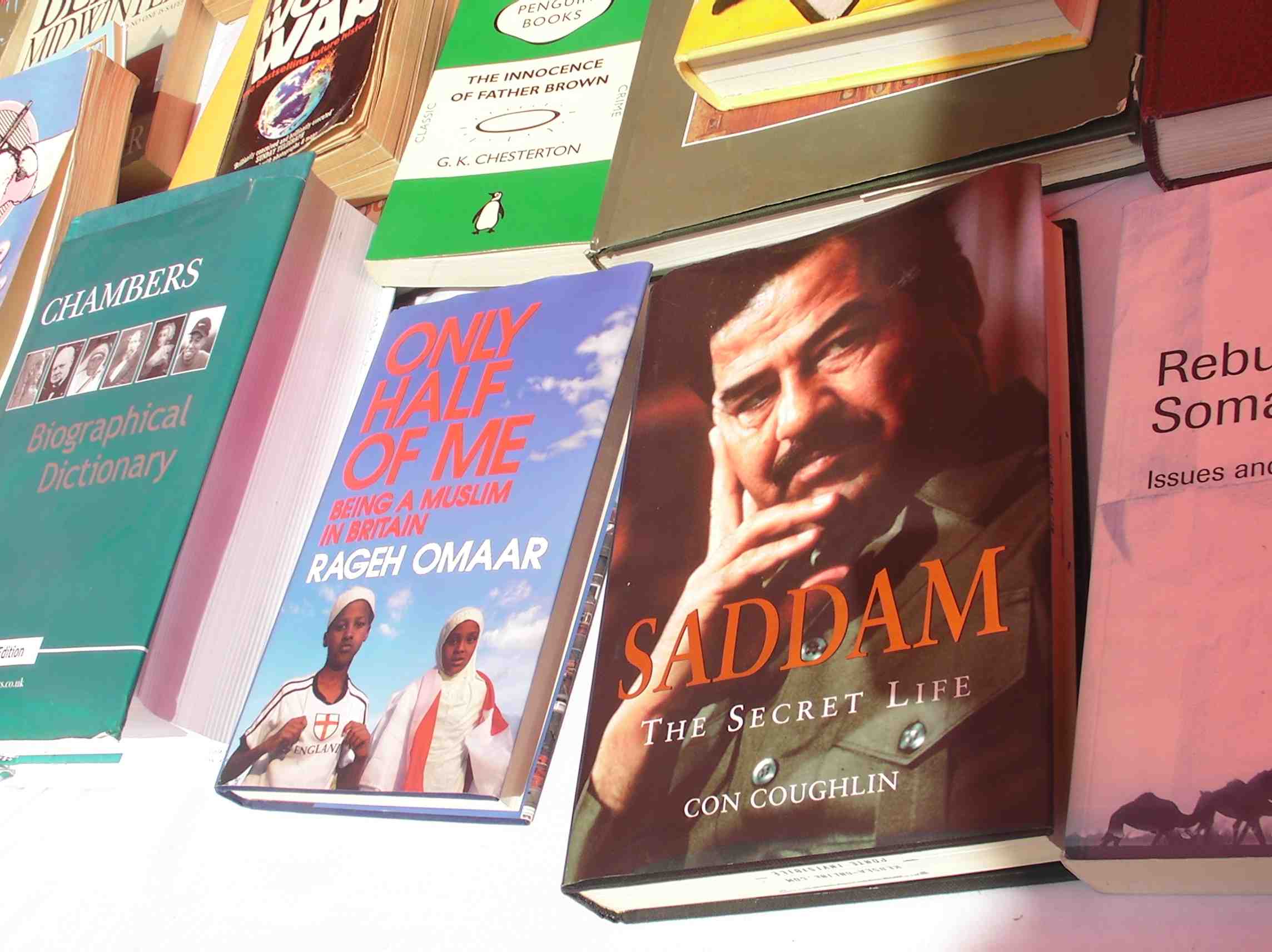
Hargeisa seems to be dotted with countless NGOs and charities that do not appear to be operating. The UN presence however is highly visible in Somaliland. The World Health Organisation also operates in Hargeisa but the WHO compound is rather eerily known locally as the ‘Twin Towers’. Hopefully this is a reference to the two identical buildings in the compound and not a warning of any kind. I attended the International book fair and found many of the Somali language books sold there several dollars cheaper downtown on the very same day from the sponsor’s own bookstore. Each dollar is about $7,000 Somaliland Shillings. My favourite moment at the fair was finding the Somali born journalist Rageh Omaar’s autobiography right next to a biography on Saddam Hussein. Omaar was famously dubbed ‘Scud Stud’ for his BBC coverage of the Iraq war and Saddam Hussein’s downfall.

I wanted to stay longer in Hargeisa and visit an orphanage, meet a contact from the University of Hargeisa and interview a government advisor whom I had arranged to meet. But I found myself stranded in Somaliland due to the sudden collapse of the airline I was booked with.
My priorities changed to – How to get out of an internationally unrecognised country where there is no embassy, no refund, insufficient funds for another ticket and no official word on what’s happening. My journey out of Somaliland seemed more hectic, more tiring and more confusing than my nostalgic trip into the country.
]]>
Somali born journalist Rageh Omaar and director Paul Sapin made Lost Boys, a 27- minute documentary, in four days. The film explores Somali youth inter-gang violence in London. The murder of 18-year-old Mahir Osman in January 2008 by a Somali gang made Clan Elders realize they had lost touch with the younger generation and violence was spiralling out of their control. It was time for the community as a whole to ask itself why second generation Somali men were underachieving and spilling their blood on London streets.
Led by Somali community worker Ahmed Elmi, the film takes us through a series of interviews with gang members and with elders who have taken up patrolling the streets at night. The interviewers also speak with both families of the bereaved and of the murderers. The questions that arise are those typically posed to second-generation immigrants- lost in the space between the "homeland" to which their parents are still attached and the "new land" in which their future is inscribed. Neither here nor there, they struggle to find meaning and identity.
Britain’s Somali community is diverse: the elders who chew Khat (the Somali leaf, legal in Britain, that provides stimulation among its users) and discuss Somalia; successful Somali drug dealers; and young Somalis without jobs or role models who succumb to a pattern of violence and reprisals in which they can finally prove their worth.
This documentary sets itself to break the silence that has shrouded theses issues. It launches a debate within the community pointing at its own responsibility and offers a glimmer of hope by reuniting the families of the criminals with those of their victims. "Where blood has been shed, let something grow". It nevertheless remains a snapshot rather than an in-depth study and its point of view is limited to that of the men. As such, it leaves the audience beckoning more explanations and a deeper understanding of the causes at stake.
After the film, screened at the Frontline Club, the debate continued with the observation of a Somali viewer who noted the huge discrepancy between Somali immigrants in the UK and those in the USA, the latter a thriving community. According to him, one of the major problems was the aid bestowed by the British government on the Somali émigrés. The American notion of "sink or thrive" has, in his view, forced the communities there to succeed, whereas the welfare system in the United Kingdom has condoned a lack of action.
So how can Somali inter-gang violence subside? By giving a voice to the unrepresented Somali youth, the documentary sparks questions and closes with a plea to end the "myth of return" and tackle the reality of Somalis living in London. The film implies that British Somalis must work together to create a stronger sense of community, integration and dialogue.
Reviewed by Charlotte Goldsmith is a documentary film maker based in London.
]]>