This screening will be followed by a Q&A with director Adam Sjöberg.
I Am Sun Mu documents the life and work of North Korean defector and pop artist ‘Sun Mu.’ In North Korea, Sun Mu was a prolific propaganda artist for Kim Jong-un’s regime. After swimming to safety and beginning a new life in South Korea, Sun Mu turned his skills against the North Korean regime, satirising those who he once worshipped.
Sun Mu means ‘no lines’ or ‘no boundaries’ in Korean and became the political pop artist’s pseudonym as he rose to visibility. With the Chinese government keeping a close eye on him and the threat of execution looming over his head, Sun Mu is forced to conceal his face and name out of fear for the safety of those he left behind.

His artwork is brightly coloured and bold, but the price for creating political paintings could be fatal. During an exhibition in Beijing, Sun Mu’s friends and family find themselves in danger. Meanwhile, Chinese and North Korean authorities surround the exhibition, banning anybody from entering the space. Artists are interrogated and Sun Mu is forced to once again flee for safety in South Korea.
Gaining remarkable access to a notorious figure who must carefully guard his identity, director Adam Sjöberg brings us into a private world, revealing the stakes involved in countering the North Korean regime.
I Am Sun Mu had its UK Premiere at the 2015 Raindance Film Festival.
Directed by: Adam Sjöberg
Runtime: 86’
Country: South Korea/United States/China
By: Ivana Davidovic
When the United Nations was founded after World War II it embodied the world’s hopes for a more peaceful and just world. Since it’s noble founding, wars and human rights abuses have continued unabated, throwing a spotlight at the UN’s role in keeping the peace and building a fairer world for all.
Has the UN managed to stick to its founding principles?
The US documentary maker Ami Horowitz went on a search for some answers in his harrowing and sometimes darkly humorous documentary U.N. Me.
Featuring interviews with with former U.N. ambassador John Bolton, former CIA Director James Woolsey, former U.N. weapons inspector Charles Duelfer, Nobel laureate Jody Williams, and others, U.N. Me exposes incompetence, denial and corruption at the highest levels of the organisation.
From the corruption-tainted Oil for Food Programme in Iraq to the catastrophic and deadly unwillingness to intervene in Rwanda and Darfur, Horowitz portrays the UN more as a clubhouse for the dictators and tyrants who sit on its various Councils, than the world’s most distinguished humanitarian organisation.
Not everyone at the Frontline Club’s screening agreed with Horowitz’s analysis and the author was subjected to some vigorous questioning during the Q&A session.
One member of the audience likened Horowitz to Ali G, the satirical character invented and performed by Sacha Baron Cohen, wondering whether it would have worked better to adopt a more serious approach when questioning, for example, a Sudanese Ambassador.
Horowitz responded:
“Politicians are trained to avoid the questions directly or just to lie. He spent about five to seven minutes talking about nothing relating to the questions, I had unusable video. I would have loved to have made a straight up documentary of real power all the way through, but I am a slave to the market and the market wants something a little bit comical at times.”
There was also strong criticism from another member of the audience who dismissed the film as a “US-Republican pro-Israeli critique of the UN – a piece of propaganda,” that did not focus sufficiently on Israel or America.
Horowitz defended his editorial decisions, however:
“When you weigh the problem of Israel, he UK and the US with what Sudan, North Korea and Iran are doing, I think it is a fairly simple conclusion who’s worse. These are some of the worst players. These are evil governments. North Korea – it’s a gulag. Would you not agree with it?”
Several current and former UN workers among the audience were more positive about the film. Responding to suggestions that there should be more detailed analysis of why the UN behaved the way it did and possible solutions, as well as an examination of the “total immunity and impunity as UN staff are outside of all national laws,” Horowitz said:
“We made a difficult decision not to talk about the solutions, for several reasons. You make a 90 minute movie and you can’t give that sort of a subject 15 minutes at the end. We tried and it sounded trite.
I want people to feel empowered, upset and to come up with their own way of solving the problem.
I am very much split. I am not one of those who calls for eradication of the UN. I think it should pursue the vision and the values from its charter."
]]>
As a daring and impassioned journalist with a decades-long career, John Pilger has inspired and motivated many to ensure human rights and preserve unfiltered truth.
From films such as Year Zero: The Silent Death of Cambodia (1979) to The New Rulers of the World (2001), he has unrelentingly made this his commitment. This continues with his newest film, The War You Don’t See (2010). In this work, Pilger masterfully presses against those who weaken journalism’s efficacy in the current political climate.
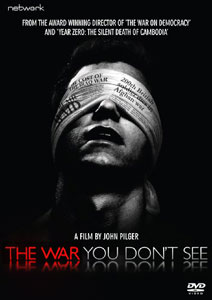
Complementing previous works such as Noam Chomsky’s book on media manipulation, Manufacturing Consent (1988), and Adam Curtis’s films on mass psychology and the politics of fear, The Century of the Self (2002) and The Power Of Nightmares (2004), Pilger lends his experience in media to answer similar questions posed in those works about the role of public relations and media in war, journalists in the advancement of a war agenda and the reporting of war crimes. At its conclusion, the message is and clear: when searching for the truth, always challenge the official story.
Truth be told, The War You Don’t See is remarkably relevant to today’s world. At first, Pilger’s effort details the history of public relations and fuses it with the current backdrop of the dual wars in Afghanistan and Iraq. Concepts such as propaganda and media manipulation are analysed as means of conveying official truths about war.
In a tense and demanding manner, the film’s images of bullet-riddled buildings, explosions and death in Baghdad, Kabul and Palestine shatters the viewer’s outlook on mainstream media like glass. Interviews are conducted in a powerful face-to-face manner that pulls no punches. To that end, it includes a soundtrack of simple yet beautiful orchestral passages that add to the film a solemn character. In total, it makes The War You Don’t See offers a rewarding viewing experience will be detailed more greatly below by theme.
Public Relations: The Facts Don’t Matter Anymore
In The War You Don’t See, the early machinery of media propaganda is detailed at length. From the 1910’s and 20’s work of Walter Lippmann and Edward Bernays, who improved techniques of public relations during the First World War to the Bush and Blair “Shock and Awe” doctrine of in the Iraq invasion of 2003, an understanding of the role of social psychology acts as a foundation to Pilger’s argument.
War Drums Beating
With UK/US official narratives, press releases and statements intertwining with the supposed objective reporting of Western media, the co-opting of the Fourth Estate for official purposes becomes apparent. In his familiar manner of grilling those in power, Pilger highlights government-PR inspired news and the media circus that it generates.
“…I’m not the vice-president in charge of excuses“ – a former CBS anchor Dan Rather
With the cordial commentary and praise of American and British journalists about their country’s leadership in times of hardship, the interest of media to portray conflicts in a favorable manner to governments and business is apparent.
Embedding or In Bed?: Journalists in the Game and Made for TV moments
“…I didn’t really do my job properly. …One didn’t press the most uncomfortable buttons hard enough…” – Rageh Omaar, former BBC world affairs correspondent
According to the film, current wars instigate media circuses and plenty of carefully orchestrated photo ops. In the run up and early years of the Iraq war, the mainstream media appears as a complicit tool of elite power interests, backing prevailing government views despite dissent or independent journalism that strayed from pro-war narratives, or their accompanying iconic images.
Everlasting Images
In occupied Iraq, the tumbling of Saddam’s statue in Baghdad and the placing of an American flag on his head “…gave no sense of the bloody conquest of Iraq that was already underway.” Against the jubilation and news clips of war proponents glorifying American weapons and military might, Pilger places shots of buildings in ruins, adults facing hardship and wounded and killed children.
Independent Journalism Vs. the “Propaganda of Fear”?
Like in his other films, another motif common to the work is the scale of suffering of ordinary people. To that effect, the work of independent journalists Mark Manning and Rana al Aiouby‘s during the Battle of Fallujah, Iraq is featured. It deviates from the official and mainstream portrait of events, using examples from history like Wilfred Burchett’s detail of an Atomic plague, or Dahr Jamail’s revealing and horrific footage of the torture of Iraqi citizens in the second Gulf War.
The propaganda of fear is described as having begun as early as the Vietnam War. To Pilger, it is “…the blueprint for the wars of today” in Afghanistan in Iraq. Pilger asserts: “…As in previous wars, public memory of the Vietnam war was greatly influenced by Hollywood”. In keeping with the tradition of films that aggrandise government war efforts, Iraq war movies attempt to inspire a masculine, aggressive, and staunchly supportive viewpoint of an occupation, with the on-screen Western powers nearly always championing a noble cause against a dim-witted and ultimately unsuccessful enemy effort.
“Modern democracies don’t leave marks” – Phil Shiner of Public Interest Lawyers
Other parts of the Wars We Don’t See also include soldiers abusing Iraqi civilians secretly on tape, as embedded journalism is the point of view of the troops, not the civilians. With that being the case, atrocities by coalition forces can be concealed, shrouding the views of afflicted peoples in official, sanitised manner. The disconnect between western audiences and those announced in death tolls is apparent, as the press “plays down the carnage”, and distinguishes between unworthy and worthy victims, with the latter bizarrely labeled peculiar for disapproving of having their houses invaded and loved ones killed.
A Major Deception
““If you look at every war, or every coup, or every regime that Britain is supporting or involved in…it’s usually accompanied by an increasingly sophisticated public relations operation by the Government…” – Mark Curtis, British historian
Another aspect of the invisible war includes no accountability of media personnel. Able to spit factoids or spin events, governments, acting as information machines, take the view that if journalists are not particularly supportive to their accounts, they could be frozen out of the access, as the apparatus “…would make life harder for them.” This implies why important dissenters to war aren’t heard, for example, Charles Hanley’s analysis of WMD sites and Scott Ritter’s detail of completely eliminated weapon sites in Iraq before Gulf War Two began.
The Narrative of Mainstream Journalism
Pilger encounters the reaction of mainstream media participants that seek to downplay any observed complicity. In this effort, he does not go unchallenged. ”It’s not up to me to make a judgment.” says one Britis
h journalist to Pilger. “We’re there to report what their claims are and hold them up to scrutiny, and to investigate.” Just the same, in this film, investigative journalism is portrayed as a bulwark against conflict.
Preventing wars?
As the film progresses, the media spin of governments is documented as an example of the War We Don’t See. In some countries, after a government crime is committed, intimidation from embassies not to reveal damaging information to host countries covering the incident is apparent. Spokesmen from guilty governments act as spinsters, offering official lies as truth, using doctored sources to strength their claims. Commentators convince the public to go along for the ride.
The UK and US Government reaction to WikiLeaks
According to Pilger, just as some governments spin the truth, the Obama Administration and British Ministry of Defence have attacked “truth-tellers” WikiLeaks, Julian Assange and others who deviate from the official narrative or spectrum of discourse and punditry. To stress this point, Pilger reveals a leaked secret British Government file which sees investigative journalists involved with the propagation of WikiLeaks’ source material as a threat to be neutralised by various means. Leaked material, such as the 2010 release of “Collateral Murder”, is described as an example The War You Don’t See.
“The Public is a threat that needs to be countered…”
"…The more information the public has, the more difficult it is for them (governments) to pursue policies that maybe are abusive of human rights or involving supportive a repressive regime.” – Mark Curtis, British historian
Perhaps what’s most important about this film is its simple message. For John Pilger, the mainstream Fourth Estate is not doing its job properly. Whereas independent journalists are able to articulate the truth in a sophisticated manner, mainstream sources remain disinterested in their work. Time and again, they prefer baseless information, sound bytes and sensational footage of clamoring crowds that rouse emotion to the hard tasks journalists must perform. In Pilger’s final remarks in the film, what remains clear is that more than ever, uncompromised, brave journalism is needed in our world, always challenging the official story, in his words, “however patriotic it appears, or however seductive or insidious it is.”
]]>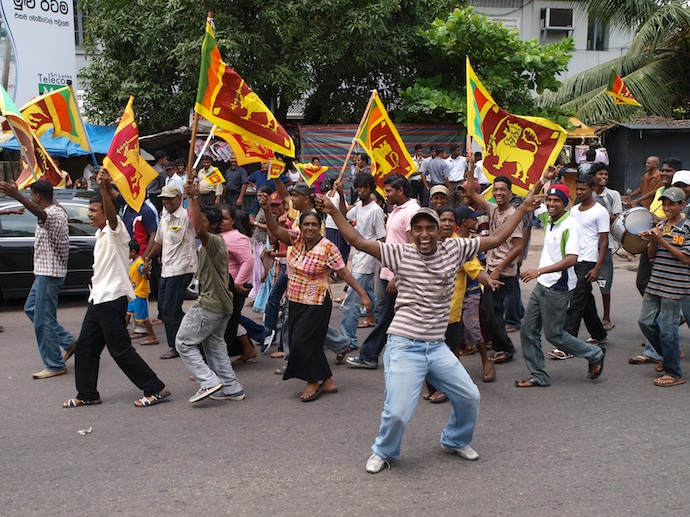 Also on the MoD website, and just about everywhere else, is President Mahinda Rajapakse’s instructions to his subjects on how to celebrate the victory over the LTTE without hurting anyone’s feelings. “Magnanimous Mahinda” has a good ring to it, and to be fair, most of the 100,000-plus crowd in Friday’s flag-filled festivities to honour the country’s war heroes behaved far better than the man in the cafe. Not all did, though. After a few hundred metres of the parade had passed came the less-than-magnanimous effigies of dead LTTE leader Velupillai Prabhakaran. Closely followed, perhaps by coincidence, by the not entirely media-friendly government minister Mervin Silva.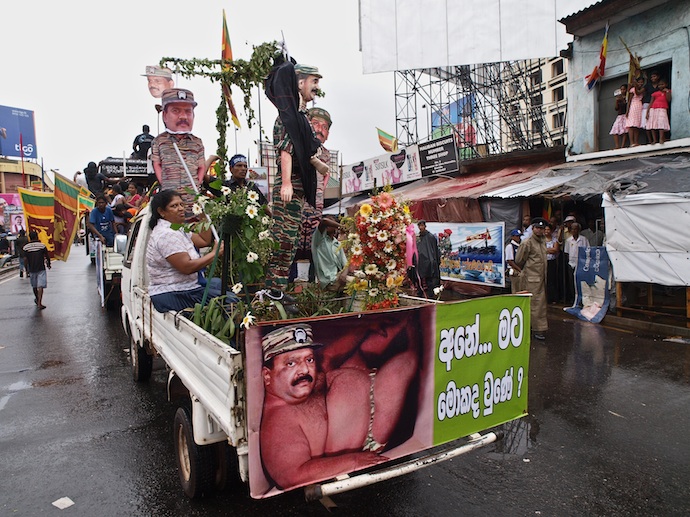

As
Israel continues its incursion into the Gaza Strip in response to
recent rocket attacks by Hamas, there has already been some interesting
discussion about media coverage of the conflict.
A few days ago one of my colleagues at King’s posted a piece about the increasing strategic importance of the media in conflict.
Citing a paper by Lawrence Freedman, David Betz concludes:
“The IDF (Israeli Defence Force) clearly understands
that the campaign will be fought and lost in the informational realm
and it is clearly investing much effort in that direction.”
The Israelis have dropped leaflets on Gaza, made telephone calls to residents, started a Youtube Channel, and appear to be active on Twitter.
But critics have suggested that by refusing to allow Western
journalists into Gaza, the Israelis are in danger of undermining their
own efforts.
Robert Fisk suggests
that unsubstantiated reports from “Palestinian voices – as opposed to
those of Western reporters – are now dominating the airwaves.”
While he acknowledges that this might represent “a new form of
coverage – letting the participants tell their own story”, he is
concerned that both the narratives of Hamas and the Israeli government
cannot be checked and challenged due to the media blackout.
On the other hand, Yacoov Lozowick, author of Right to Exist, A Moral Defense of Israel’s Wars,
doesn’t seem convinced of the value of reporting from Gaza and feels
Israel’s decision to block media access has been vindicated:
“The possibility that reporters with deadlines to meet – even
Israeli ones, all the others even more so – could march into the battle
zone and have anything useful to tell us, is, frankly, remote. The best
they’d be able to do is point at rubble, recent or not, and
breathlessly tell about the tremendous havoc the IDF is wreaking; then
they’d troop off to the Shifa hospital in Gaza and interview the
civilian casualties (alas, there are many of them) without ever
recognizing which of the uniformed personnel are hiding Hamas leaders,
nor where the steps down to the bunker are.”
Paul Reynolds on the BBC website has also highlighted the
difficulties of understanding what is going on, even when you have
video evidence. He reports on how an Israeli video which claimed to show rockets being loaded onto a lorry before it was destroyed, has been challenged
by a resident of Gaza. Ahmed Sanur says the truck belonged to him and
members of his family and workers were moving oxygen cylinders from his
workshop.
Photo: Zoriah, www.zoriah.net,
Militant fighters train to launch rockets in Gaza, August 2008. Zoriah
has a selection of other great photos from his recent trip to Gaza on
his blog which are well worth checking out.