In January 2013, filmmaker Laura Poitras was several years into the making of a film about abuses of national security in post-9/11 America when she started receiving encrypted emails from someone identifying himself as “citizen four”, who was ready to blow the whistle on the massive covert surveillance programmes run by the NSA and other intelligence agencies. In June 2013, she and reporter Glenn Greenwald flew to Hong Kong for the first of many meetings with the man who turned out to be Edward Snowden. She brought her camera with her. The film that resulted from this series of tense encounters is absolutely unique in the history of cinema: a 100% real-life thriller unfolding minute-by-minute before our eyes.
Directed by Laura Poitras
Duration: 120′
Year: 2014
Citizenfour will be released in cinemas across the UK on Friday 31 October. More details here.

Tuesday 30 July 2013, 7:00 PM – Side by Side

For almost one hundred years there was only one way to make a movie: photochemical film. Over the last two decades a digital process has emerged to challenge this initial form of filmmaking. At a moment when digital and photochemical filmmaking coexist, Side by Side explores what has been gained, what is lost, and what the future might bring.
Tuesday 6 August 2013, 7:00 PM – The Pirate Bay: Away from Keyboard

The largest and most famous torrent website in the world, The Pirate Bay, quickly became one of many antagonists of the entertainment industry. The three Swedish founders face $13 million in damage claims by the media establishment. TPB-AFK chronicles a historic drama beyond the copyright debate and tells a human story torn by cyberwar.
Tuesday 20 August 2013, 7:00 PM – The Human Scale FULLY BOOKED

The Human Scale: it’s a ticking time bomb. In the next 40 years the number of people living in cities will nearly double. There is not enough time to build the necessary infrastructure to accomodate all of us. According to revolutionary Danish city planner Jan Gehl, even the largest of megacities must be re-thought, re-designed and re-sized to the human scale.
This screening will be followed by a Q&A with director Andreas M. Dalsgaard
Tuesday 27 August 2013, 7:00 PM – Google and the World Brain FULLY BOOKED
 Google and the World Brain connects the central story of Google Books with fundamental issues related to the Internet – privacy, copyright, data-mining, downloading and surveillance. Through interviews with experts from across the world we learn about the implications of one of the most ambitious and simultaneously controversial projects ever conceived on the Internet.
This screening will be followed by a Q&A with director Ben Lewis.
Tuesday 3 September 2013, 7:00 PM – Rewind This! BOOK NOW

Home video changed the way the world consumed films. Low cost equipment and the rise of VHS created unprecedented opportunities for the film industry. Rewind This! looks at media consumption, zero budget filmmaking, unchecked global piracy and an exploding film industry, through the rise and fall of VHS. Developments that laid the foundation for today’s digital culture.
Tuesday 30 July 2013, 7:00 PM – Side by Side
Tuesday 6 August 2013, 7:00 PM – The Pirate Bay: Away from Keyboard
Tuesday 20 August 2013, 7:00 PM – The Human Scale BOOK NOW
[vimeo clip_id=”67638874″ width=”400″ height=”225″]
Tuesday 27 August 2013, 7:00 PM – Google and the World Brain BOOK NOW
Tuesday 3 September 2013, 7:00 PM – Preview: Rewind This! BOOK NOW
]]>In 1937 H.G. Wells predicted the creation of the “World Brain” – a giant global library that contained all human knowledge, which would lead to a new form of higher intelligence. Seventy years later the realisation of this dream seemed to be underway, as Google started scanning millions and millions of books for its Google Books website. With over half these books still in copyright, authors and publishers across the world launched a campaign to stop Google. Climaxing in a New York courtroom in 2011.


In Google and the World Brain, director Ben Lewis connects the central story of Google Books with fundamental issues related to the Internet – privacy, copyright, data-mining, downloading and surveillance. Through interviews with experts from across the world, we learn about the implications of one of the most ambitious and simultaneously controversial projects ever conceived on the Internet.
Directed by Ben Lewis
Duration:
89′
Year: 2013
For more information about the film you can go to the official website or like the facebook page.
This screening is part of a summer season looking at the way technological changes are shaping the way we document the world and interact with it. See the full programme here.
]]>https://soundcloud.com/frontlineclub/the-trade-off-individual
Privacy of the individual, secrecy of the state and national security have been in sharp focus in past weeks due to the leak of material from the US’s National Security Agency (NSA).
It has been revealed that under the so-called Prism programme millions of phone calls have been gathered and Internet use has been monitored on a massive scale. In the UK there are suggestions that the Government Communications Headquarters (GCHQ) has also accessed the material.
The chairman of the Intelligence and Security Committee, Conservative MP Sir Malcolm Rifkind, told BBC Radio 4’s Today programme “in order to protect the public that does require, as President Obama said in Washington, some intrusion on privacy in certain circumstances”. The murder on 22 May of Drummer Lee Rigby reignited calls for the draft communications data bill to be re-examined.
As the debate about individual privacy, state secrecy and national security continues, we will be joined by a panel of experts to ask whether it is possible to strike a balance. Are we moving towards a surveillance state or is the idea of online privacy a myth?
Chaired by Mark Urban, diplomatic and defence editor for BBC Two’s Newsnight. He is the author of several books including Big Boys’ Rules: The SAS and the Secret Struggle Against the IRA, The Tank War and Task Force Black: The explosive true story of the SAS and the secret war in Iraq.
The panel:
Sir Malcolm Rifkind is MP for Kensington and chairman of the Intelligence and Security Committee. In 1990 he became Secretary of State for Transport and in 1992 Secretary of State for Defence. From 1995-97 he was Foreign Secretary. He was re-elected as a Member of Parliament in May 2005 for Kensington and Chelsea. He was elected as Member of Parliament for Kensington in May 2010. He served as the Shadow Secretary of State for Work & Pensions and Welfare Reform until December 2005.
John Kampfner is adviser to Google on freedom of expression and culture. He is an author, broadcaster and commentator specialising in UK politics, international affairs, media and human rights issues. Previously he served as chief executive of Index on Censorship from Sept 2008 until March 2012 and was editor of the New Statesman from 2005-2008. He is the author of a number of books including, most recently, Freedom For Sale.
John Naughton is a senior research fellow at CRASSH, emeritus professor of the public understanding of technology at the Open University, vice-president of Wolfson College, Cambridge and an adjunct professor at University College Cork. He is director of the Wolfson Press Fellowship Programme and a well-known newspaper columnist, writing the Observer’s Networker column. He is author of a well-known history of the Internet A Brief History of the Future and most recently From Gutenberg to Zuckerberg: what you really need to know about the Internet.
Helen Margetts is the director of the Oxford Internet Institute (OII), a department of the University of Oxford investigating individual, collective and organisational behaviour online. Her research focuses on digital governance and politics, investigating the dynamics of online relationships between governments and citizens, and collective action on the Internet. She is the co-author of Paradoxes of Modernization: Unintended Consequences of Public Policy Reform; The Tools of Government in the Digital Age; and Digital Era Governance: IT Corporations, the State and e-Government. She currently holds an ESRC professorial fellowship entitled The Internet, Political Science and Public Policy, is editor-in-chief of the journal Policy and Internet and sits on the Advisory Board of the Government Digital Service in the Cabinet Office.
]]>A packed audience filled the Frontline Club forum on 23rd October to hear a panel tackle the question: In whose hands should internet governance be entrusted? Chaired by the Chief Executive of Index on Censorship Kirsty Hughes the event, in association with BBC Arabic, featured: Icelandic MP Birgitta Jónsdóttir; developer for The Tor Project, Jacob Appelbaum; independent media technology consultant, Karl Kathuria and director at the Cyber Security Centre Dr Ian Brown.
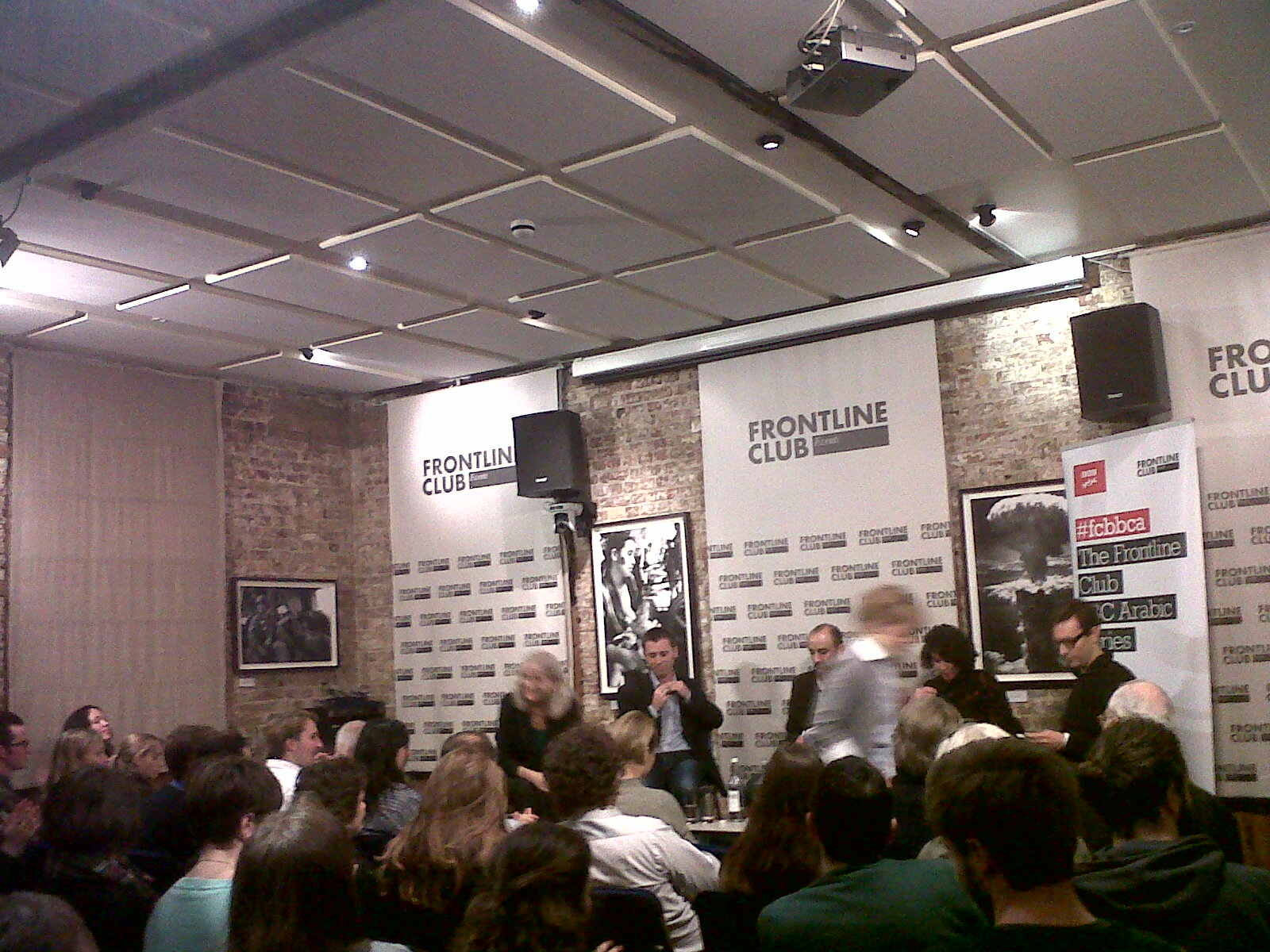
Dr Ian Brown kicked off proceedings by describing the distribution of power over cyberspace. Referring particularly to ICANN (Internet Corporation for Assigned Names and Numbers) which runs the international domain name system and although it is a “international facing” it is governed by US laws.
“Is it fair that this one powerful country the US should have such say over something that is a global resource?… Since so many large internet companies; the Googles, the Facebooks, the Twitters and so on, that are becoming increasingly important in internet governance debates, are headquartered in the US or at the very least have significant exposure to the US, and US law and case law has very firmly said that the behaviour of companies… with any assets exposed to the US had better watch out when it comes to their behaviour elsewhere in the world because there have been a number of US laws applied to the behaviour of these companies elsewhere in the world”
Karl Kathuria then moved on to discuss the censorship of information by governments from a more optimistic viewpoint, describing his time at the BBC on access to users in Iran and China:
“People were still able to get access to that content anyway, people are always looking for the content… its average everyday people who are reaching out.”
Birgitta Jónsdóttir has misgivings on calls for further global internet governance:
“Shouldn’t we have a global freedom of information act?… it is impossible… it would destroy the internet as it is today… maybe we need to start to look at this differently.”
Jacob Appelbaum, a core member of the anti snooping software Tor described the rise of cyber snooping and the oppression it can bring:
“Surveillance is a support system for violence.”
“What we see is a massive expansion of authoritarianism across the globe, even in so called free countries… the mere fact that it has gone so far and the American government has become so brazen.. is an incredibly bad sign, because in a lot of ways the US has led the world in these matters.”
“Freedom from suspicion is part of the necessity for feeling free… we should look at Facebook as stasi-book, and we should look at human data as human data-traffic. It is not a problem of over there-istan, it is a problem over here.”
Birgitta Jónsdóttir discussed the Iceland Modern Media Initiative as a solution to internet governance and excessive cyber snooping, and its uptake by the Icelandic Government to turn Iceland into a “safe haven” for freedom of information.
“Take the same concept as if you were to create a tax haven, so why not create the same for a freedom of expression and speech haven… if you have one country that sets the standard [other countries will rise to it]. I have a dream for a ‘Scandinavian Shield’… as the Scandinavian countries now have a good idea of the importance of these rights to bring the laws into the 21st century.”
Dr Ian Brown finished on a note about public uptake of new technology that can divert around any governmental snooping, “encouraging people to use the tools that already exist is the first step”.
View reaction to the debate on Twitter: #fcbbca, or watch the debate as it happened below.
]]>
In Iran it is reported that the government are building a national intranet that adheres to Islamic values and is isolated from the World Wide Web, in the UK the government is proposing a communications bill that will see an increase in monitoring of emails and social media by the police and intelligence agencies'.
With companies' interests lying in the commercial gains of data and governments' in the ability to monitor populations, join us as we ask to whose hands internet governance should be entrusted.
]]>
In Iran it is reported that the government are building a national intranet that adheres to Islamic values and is isolated from the World Wide Web, in the UK the government is proposing a communications bill that will see an increase in monitoring of emails and social media by the police and intelligence agencies’.
Authoritarian states have long seen the freedom of the internet as a threat and have tried to restrict it, but recent develops suggest a move towards increased tracking and control of what the public do and see online across the world.
With companies’ interests lying in the commercial gains of data and governments’ in the ability to monitor populations, join us as we ask to whose hands internet governance should be entrusted.
Chaired by Kirsty Hughes, the Chief Executive of Index on Censorship – an international freedom of expression non-governmental organisation. Previously she has worked at Chatham House, IPPR, the European Commission and most recently she was head of Global Public Policy and Advocacy at Oxfam and Senior Associate Fellow at the Centre for International Studies, University of Oxford. Twitter: @IndexCensorship
With:
Birgitta Jónsdóttir MP, a member of the Icelandic Parliament for The Movement and chairperson of the International Modern Media Institution. She has worked as a volunteer for various organisations including WikiLeaks, Saving Iceland and Friends of Tibet in Iceland. Prior to becoming an MP she has been an activist, writer, first icelandic woman to work as web developer and publisher. Twitter: @birgittaj
Jacob Appelbaum, an accomplished photographer, software hacker and world traveler. He works as a developer for The Tor Project and trains interested parties globally on how to effectively use and contribute to the Tor network. He is a founding member of the hacklab Noisebridge in San Francisco where he indulges his interests in magnetics, cryptography and consensus based governance. He was a driving force in the team behind the creation of the Cold Boot Attacks; winning both the Pwnie for Most Innovative Research award and the Usenix Security best student paper award in 2008. Additionally, he was part of the MD5 Collisions Inc. team that created a rogue CA certificate by using a cluster of 200 PlayStations funded by the Swiss taxpayers. The “MD5 considered harmful today” research was awarded the best paper award at CRYPTO 2009. Twitter: @ioerror
Karl Kathuria, an independent media technology consultant, specialising in Internet distribution and streaming media. Prior to this, he spent over 10 years at the BBC, managing the distribution of World Service Internet content to a global audience. In this role, he faced the challenge of delivering news content into countries where censorship is prevalent. As a result of these efforts, he was invited to the Munk School of Global Affairs in Toronto to work with the Citizen Lab team in 2011 on an independent research project. During this period, he studied the effects of the BBC’s content distribution strategies in China and Iran, and made recommendations for the propagation of circumvention software into these markets. His current projects include working with Psiphon Inc., the Canadian provider of network software aimed at preserving security, privacy, and access to content that may otherwise be blocked.
Dr Ian Brown, associate Director at the Cyber Security Centre and Senior Research Fellow at Oxford Internet Institute (OII). His work focuses on public policy issues around information and the Internet, particularly privacy, copyright and e-democracy. He also works in the more technical fields of information security, networking and healthcare informatics. He has consulted for the US Department of Homeland Security, JP Morgan, Credit Suisse, Allianz, McAfee, BT, the BBC, the European Commission, the Cabinet Office, Ofcom, the National Audit Office and the Information Commissioner’s Office.
]]>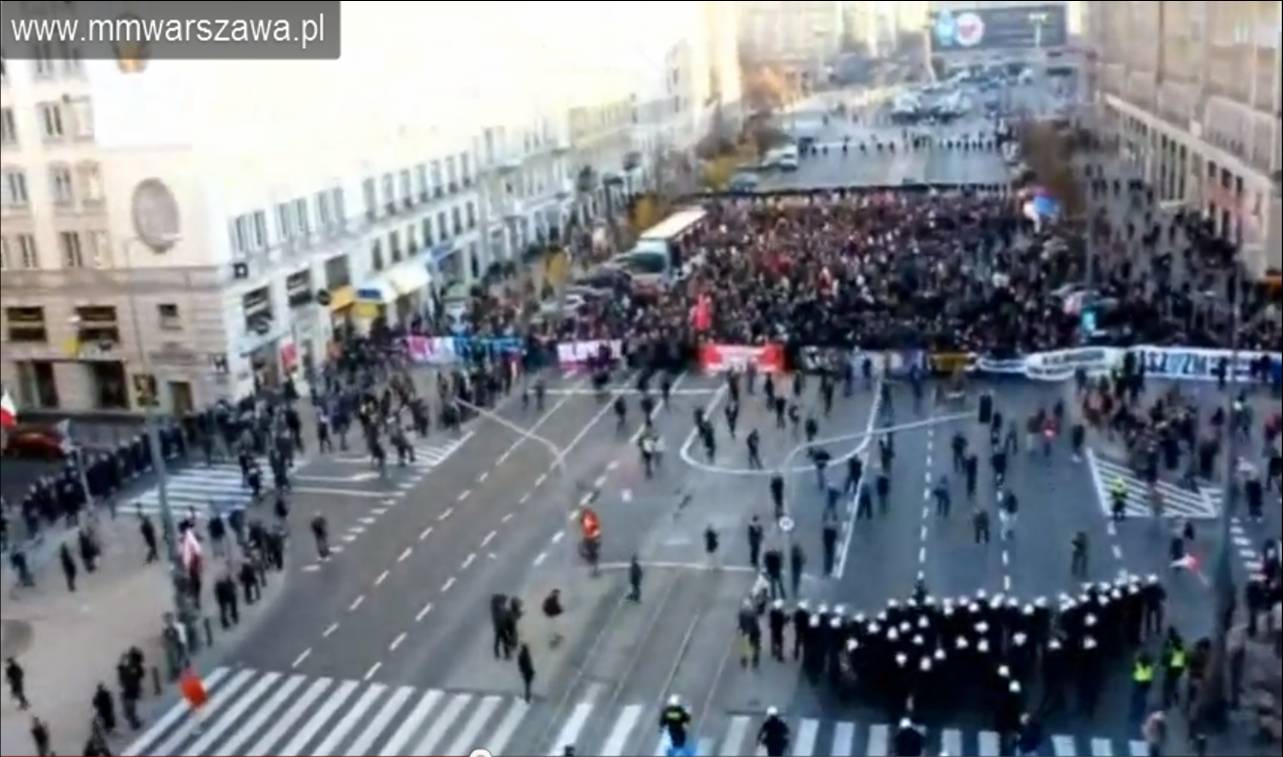
In November 2011, Polish firm RoboKopter filmed striking images of a political demonstration in Warsaw using a video camera attached to a drone or unmanned aerial vehicle (UAV).
The New York Times heralded the footage as signalling the arrival of ‘drone journalism’. Since then, we haven’t seen many newsgathering drones in UK skies, but we might well be seeing them some time soon.
Drones have been receiving more attention in recent months usually in the context of military operations. The Bureau of Investigative Journalism has been tracking the controversial use of drone strikes by the US military in Afghanistan, Pakistan and Africa. It has also emerged that the RAF were flying US drones during the conflict in Libya last year.
But much smaller UAVs – whether fixed wing or rotary – are now being used in civilian settings not for targeted killing but for image gathering. Last week, BBC Newsnight explored some of the issues around civilian drones and earlier in the year, Al Jazeera English filmed a training exercise with the German fire brigade which showed how UAVs could support firefighting.
I understand that several media organisations in the UK have already started to explore how they could use UAVs for newsgathering.
UAVs for Aerial Newsgathering
Aerial footage is not new of course, but UAVs are much smaller than helicopters allowing them to provide imagery from previously inaccessible locations.
The fact that they are unmanned also means there is no risk to a journalist or pilot. The latest models are being equipped with high definition technology allowing them to potentially provide stunning footage of national celebrations, political protest, natural disasters and conflict.
Safety, legality and ethics
The use of UAVs for newsgathering nevertheless raises a host of practical, legal and ethical issues. Question marks remain over safety concerns and the reliability of the technology, although the UAV industry is developing features such as an automatic ‘return to base’ function if the battery runs out or the operator loses control.
Legally, there is already a fairly well-established regulatory framework in place in the UK for flying UAVs which is outlined in guidance issued by the Civil Aviation Authority (CAA).
But this is an evolving area. The CAA’s chapter on ‘Civil Operations, Approval to Operate [UAVs]’ was completely rewritten in the latest guidance for August 2012. The requirements for ‘the licensing and training of United Kingdom civil Remote Pilots have not yet been fully developed’ and there is no European-wide standard to test UAV pilot competency.
It is likely that larger media organisations will look to fully licensed and CAA approved UAV operators to provide them with a newsgathering capability or apply for their own licenses to operate UAVs. But there is no particular reason why smaller organisations or individual ‘citizen’ ‘drone’ ‘journalists’ couldn’t do the latter and attempt to gather their own footage.
Gizmodo recently featured the (intriguingly named) Spy Hawk RC Glider which allows you to record video from the sky for a mere £250. With a battery life of 15 minutes it’s unlikely to have any heavyweight journalistic applications but we can expect the cost of more sophisticated equipment to come down.
Ethically, UAVs are likely to compound longstanding editorial dilemmas. It is not hard to imagine scenarios in which the deployment of UAVs for newsgathering is likely to directly invade individuals’ privacy or indirectly facilitate ‘collateral intrusion’.
These concerns might need to be balanced against a ‘public interest’ defence in a situation where it is deemed that the footage reveals serious wrongdoing.
News organisations might then face requests from other organisations for access to video footage. Only last year, the Metropolitan Police asked UK media organisations to handover footage of the London riots, but the police have already been exploring the deployment of their own UAVs and are likely to continue to do so in the future.
Indeed, in a rather strange – but perhaps not unrealistic vision of the future – it is possible to envisage a stand off between a fleet of media-operated UAVs and their police counterparts at the site of a protest or emergency. Newsgathering sorties might have to be coordinated or argued over with ‘rival’ UAV operators or interested parties.
Another possible scenario which raises some profound questions is the use of UAVs in the context of conflict. What would happen if a news organisation flew a UAV from Jordan over the border into Syria? Will opposition activists of the future be streaming live video footage to YouTube shot with UAVs?
Newsgathering UAVs coming soon?
Until now, these have been hypothetical debates set out in ‘future scenarios’ by interested thinkers and there has not been much visible evidence of UAVs being deployed by media organisations in the UK.
But recently I’ve been in contact with several people from the media and UAV industries. Behind the scenes discussions are taking place about UAVs for newsgathering and I think we can expect to see major developments in this area within a year and perhaps even by the end of 2012.
It would not be a surprise to see UAV footage being played out on air in the near future and maybe we’ll run into some of these other issues before too long as well. So watch this space – the one just above your head.
]]>The day after a public intervention from MI5 Director General Jonathan Evans, a panel as divided as it was well-informed, debated the merits of the government’s draft Communications Bill. The Frontline Club was packed and the feisty discussion began with each specialist setting out their pitch.
Professor Anthony Glees, billing himself as the “skunk at the picnic”, was unapologetic in his support for the proposals, which he said would merely extend powers that the security services already have to include newer forms of technology. Eschewing the arguments that have characterised the debate in the national press, he stated that:
“A lack of trustfulness is the real problem here. The Bill, I’m entirely comfortable with it, I have no problem with it. In fact I’d want my money back if our security community did not attempt to extend on to the new media the things that already exist.”
Liberty’s Isabella Sankey offered a robust response. Denouncing the Bill as “rotten to the core”, she argued that it would infringe on principles of privacy and that if it were to fall into malicious hands, communications data could be extremely damaging.
David Davis MP joined Sankey with a scathing attack on the Bill, claiming the government had “the wrong aim, it was moving in the wrong direction and was starting from the wrong place.” Whilst supportive of the security agencies, Davis specified that the databases that will be created:
“[…] would be a honey pot. Not just of interest to the agencies but to every divorce lawyer in the country, paparazzi who might want to Ping where you are so they can come and photograph you. This is facilitating a breach of everybody’s privacy to almost no beneficial effect.”
Jamie Bartlett from think-tank Demos countered Davis’ argument, suggesting that British society regulates some forms of snooping and that privacy is not an absolute right – on some occasions being breached in the interests of national security. Bartlett was less troubled by security services increasing their powers than he was by the unregulated internet, controversially proposing that the Bill in some respects doesn’t go far enough:
“A police officer, a civil servant, anybody else can spend five minutes online and probably learn much more about you than he or she ever would do under the powers of this Bill. There are loads of serious questions here that I don’t think the Bill begins to address.”
The Q&A session was filled with poignant questions, including some on the effectiveness of the proposals when smart hackers are already able to use proxies and the “deep web” to hide their identity. The prospect of a generation of coders is sure to raise new dilemmas for future governments.
As for the here and now, the panellists left the stage having accepted that the public don’t currently foster much trust in the police, MPs or the security services and that this is something that needs to change if there’s to be a sensible, engaging debate on the proposals.
Watch the full event here:
By Thomas Lowe
It could have made no sense.
But with a gently-gently approach to explaining new apps and why they exist, the gap between the journo geeks and the journo technophobes was momentarily bridged – with a little help from the BBC’s technology correspondent Rory Cellan-Jones.
Empowerment:
Former photographer for the dailies, Christian Payne, went on vacation in 2005 to spend time with the Kurdish Peshmerga. Here he says how new technology at the time allowed him to “bypass the mainstream media.”
“I was a photographer for the dailies and I got frustrated with the amount of editors between my images and the final piece of work. So I decided to go to Iraq for a holiday.
“Every time I was blindfolded and taken to a new place I would look down and write secret base 1… I had a dumb phone, but by texting my coordinates home I knew that my last position would always be noted.”
So, technology can empower journalists in far off places where it can provide some form of security. But what about when it comes to daily, non-stop use of social media? Tom Barfield, site editor and community manager at Demotix, a citizen journalism new wire, says new technology is a journalist’s bread and butter:
“I think this is absolutely what [they] should be doing and what [they] have always done is develop contacts and developed relationships and trusted sources of information.”
Yet apps, and the technology that goes with them, are not just the preserve of journalists. Ryan Schlief, program manager for Witness says the important issue is practical application:
“it’s not about hi-fi or low-fi, it’s about ‘wow’ this is a really great tool that’s going to help someone out with the specific purpose they have in mind.”
He nodded to an example in Cairo where Witness trained some members of a community living in a slum there how to use cameras. This, he says, allowed them to take their message “into their own hands.”
Privacy:
The panel agreed on the need to protect sensitive or personal information. Payne says risks come with the benefits of using new methods of communication:
“I think technology’s moving faster than peoples’ awareness of how valuable and dangerous it can be… It only took the regime in Syria to upload pictures of protestors on Facebook for people to start tagging their friends.”
Sam Carlisle, developer of the Sukey app, a tool for protestors following demonstrations in real time, says the basic fault lies with the phone manufacturers:
“The makers of these [phone] devices haven’t necessarily considered your privacy or empowerment through setting up their devices – it’s not a concern for them.”
“They want to create profit… It’s really people jail-breaking and working to create after-market community tools that are allowing you to do something different with the platform other than what it was originally created for.”
Luddites:
To the question you can always rely on: whereto for professional journalists in these hyper-connected times? Payne again:
“…If they can’t get their stories out there quicker than the man on the street… with their phone in their pocket, they should be sitting to receive it going “ok, let’s do something long form around it and let’s add some credibility to [it].”
A positive note to end on with no mention of the moderator’s famous pink socks.
]]>By Nicole Hunt
This week begins and ends with big trials, with German businessman Gerhard Gribkowsky’s high-profile corruption trial kicking things off in Munich on Monday. The former BayernLB risk manager is accused of accepting a £28m bribe during the 2006 sale of the bank’s shares in Formula One holding company SLEC. The shares were sold to CVC Capital Partners; Bernie Ecclestone, who runs F1 on behalf of CVC, is expected to testify on Gribkowsky’s behalf during the trial.
In other big testimony news, British lawyer David Mills is scheduled to testify at Italian Prime Minister Silvio Berlusconi’s bribery trial in Milan, where Berlusconi is accused of paying Mills £350,000 in exchange for favourable testimony in court cases in 1997 and 1998.
On Tuesday, a Paris court is expected to rule on whether former News of the World reporter Neville Thurlbeck and his employers, News Group Newspapers, breached French privacy and defamation laws by publishing his 2008 article about former FIA president Max Mosley’s sex life.
Moving away from the courts for the mid-week, the annual EU-China Summit takes place in Tianjin, with EU High Representative for Foreign Affairs Catherine Ashton leading the EU delegation and human rights and trade expected to dominate the agenda.
The UN Population Fund (UNFPA) releases its State of the World Population 2011 report on Wednesday, five days before the world’s population is set to hit seven billion.
Wednesday is also the first of two interesting days at the European Parliament, as MEPs vote on the EU’s 2012 draft budget in Strasbourg. The budget controversially includes a 4.9 per cent spending increase while the euro zone debt problems increase and member states are paring back domestic spending.
On Thursday, the Parliament’s Conference of Presidents unveils the winner of this year’s Sakharov Prize for Freedom of Thought, which last year went to Cuban dissident Guillermo Harinas Hernandez, who was unable to collect his prize in December because he was not allowed to leave Cuba. This year’s nominees include five Arab Spring activists (nominated jointly), including: Tunisian Mohamed Bouazizi, whose self-immolation on 17 December 2010 was the catalyst for the region’s pro-democracy protests; Egyptian youth activist Asmaa Mahfouz; Libya’s longest-serving prisoner of conscience, 77-year-old Ahmed al Zubair Ahmed al Sanusi ; Syrian activist Razan Zeitouneh; and Syrian cartoonist Ali Farzat.
Irish voters go to the polls to elect their President for a seven-year term, as well as to have their say in two referendums on constitutional amendments, one of which would allow a reduction in judicial salaries while the country tries to cut costs. A by-election also takes place in Dublin West, following the death of former Finance Minister Brian Lenihan on 10 June.
The three-day Commonwealth Heads of Government meeting begins in Perth, Australia on Friday. The Queen, who is wrapping up an 11 day visit to the country, official opens proceedings.
Italy holds the last of three bond auctions this week, hoping this month’s offering of three and 10 year bonds will garner more interest than previous auctions, which have received a lukewarm response as the country’s debt rating has been downgraded.
In Iran, President Mahmoud Ahmadinejad celebrates his 55th birthday.
Israel’s social justice movement, which held sporadic protests in the summer and set up a tent city on Tel Aviv’s Rothschild Boulevard, has called for mass demonstrations on Saturday to protest rising living costs in the country.
Kyrgyzstan’s long-awaited presidential election takes place on Sunday. Following widespread rioting in April 2010, President Kyrmanbek Bakiyev’s leadership collapsed, and Rosa Otunbayeva’s interim government took over. Elections were initially scheduled for October 2010, but were later put off for a year as Otunbayeva officially took over as President; she is not permitted to run in this election.
Local elections also take place in Colombia, where the mayoral race in the capital of Bogota where former Mayor and Green Party candidate Enrique Peñalosa leads polls. Unsuccessful Presidential candidate Antanas Mockus, who abandoned his own mayoral bid, has thrown his support behind Independent candidate Gina Parody, but it remains to be seen whether his backing will be enough to put her ahead of Peñalosa.
Bahrain’s Royal Commission of Inquiry into political unrest earlier this year is due to issue its findings. The Commission includes Egyptian UN war crimes expert Mahmoud Cherif Bassiouni, Canadian ICC judge Philippe Kirsch, British human rights lawyer Nigel Rodley, Iranian lawyer Mahnoush Arsanjani and Kuwaiti law expert Badira al Awadi.
Finally, former Egyptian President Hosni Mubarak could return to court in Cairo, depending on the outcome of a 22 October Appeals Court hearing. If the court rules against a motion requesting that Mubarak’s trial venue and judge be changed, his murder trial is scheduled to resume on Sunday. However, if the court approves the motion, the trial is likely to be delayed while a new venue and judge are arranged.
]]>