On Tuesday the Royal Institution of Great Britain was flooded with both aspiring and established photojournalists who had come to hear 13 photojournalists from the prestigious VII Photo agency.
Vaughan Smith, the Frontline Club’s founder, started proceedings by giving a brief overview of the challenges facing modern photojournalism. He explained that the decline of the traditional news model means that photojournalists cannot expect the kind of investment they once had from the print media, but that this development can be viewed in positive terms because they “can define the future of journalism”.
Smith believes that freelance journalists can take a more prominent place within the media landscape through social media and the Internet, and the members of VII Photo are doing just that. An agency “by photographers for photographers” they are “helping to change the media landscape”.
The first discussion of the morning was lead by Max Houghton, editor of Foto8 magazine, who was joined by two of VII Photo’s founders, Christopher Morris and Ron Haviv, and long time members Seamus Murphy and Franco Pagetti.
Firstly, Houghton wanted to know how their work has evolved over the years. They all agreed that they had become more thoughtful in their practice, but they had differing views on how they and their work fitted into the new media landscape.
Ron Haviv asserted that “new tools are enabling us to become full authors”, and that a lesser dependency on print media is liberating the photographer from the constraints placed by picture editors.
Conversely Christopher Morris has “struggled with the new marketplace” and has had to reinvent himself as a fashion photographer. He explained that in the past large media corporations would fund lengthy projects abroad, whereas now photographers are forced to turn to methods including crowd funding and self-financing.
The second panel lead by the London College of Communication’s Paul Lowe was comprised of VII Photo co-founder Gary Knight, alongside Ashley Gilbertson, Anastasia Taylor-Lind and Ron Haviv. Their discussion began with the role of mentoring and education within the field of photojournalism. Ron Haviv stated that “its integral to all…photojournalists’ to give some thing back to the next generation.
Anastasia Taylor-Lind, who was mentored by Haviv, felt that she gained invaluable guidance from the experience and his “generosity of ideas”.
Gary Knight expressed his hope that “a greater diversity of people and communities” would begin to engage with photography, in the hope of opening up the field of photojournalism to new perspectives.
Paul Lowe then asked the panel whether research prior to shooting a project was important. All agreed that it was essential, with Ron Haviv asserting that the journalism aspect of photojournalism is often ignored, but that in fact it is essential:
“the more knowledge we have of what we’re photographing the better”
Ashley Gilbertson agreed but explained that invariably all one’s research takes on a different meaning when you are actually in the field, and that covering a story ends up being very “organic process”.
The discussion was concluded with a question from the audience on the importance of a formal education in photography. Anastasia Taylor-Lind explained that her extensive education – the completion of a BA, MA, numerous workshops and a mentoring scheme had been incredibly useful in her development as a photojournalist. While Ashley Gilbertson felt that his lack of formal education meant that his progression into a “thinking photographer” was slower than his peers, and that he had to force himself into academia later in life.
Gary Knight emphasised the importance of a rounded education, because he believes that to be a good photojournalist “you need to be a thinking person”.
The final panel of the day, moderated by the director of VII Photo in New York Stephen Mayes, included VII Photo members Venetia Dearden, Ed Kashi, Tomas van Houtryve, Gary Knight, Donald Weber and Jon Jones, the director of photography at The Sunday Times.
Mayes opened the discussion with an optimistic interpretation of the current climate faced by photojournalists. He believes that photographers are in a better place to get funding because they are liberated from the previous “monolithic model”. At present there is not just one “singular solution” but instead many ways to fund work. He concluded that “the greatest challenge” faced by photojournalists is “the challenge of imagination”.
The panel members then described their own wildly different approaches to funding projects. Jon Jones and Gary Knight collaborated on the compilation of a book of photographs from the Bosnian conflict. They described raising half of the $35,000 needed from licensing and the rest from crowd funding through social media and personal emails.
Donald Weber explained that his approach to funding projects was through corporate and private sponsors. Consequently he has “complete freedom and control” over his work, something he would have to relinquish if being paid by a magazine.
Tomas van Houtryve felt that he didn’t “want to be held hostage” by the constraints of a commission. He therefore looked to individuals to help him fund his book Behind the Curtains. Through his website and blog he was able to interact with his audience throughout the process of shooting the project, which gave his backers “a sense of investment beyond the financial”.
The corporate world, as Venetia Dearden explained, has the resources to fund work. Therefore photographers need to look for companies that have “a natural fit” with their work. In her case it was the fashion brand Mulberry. Her relationship with them was forged after they saw her project ‘Somerset Stories’. Mulberry, which has strong connections with Somerset, have gone on to publish three of her books, as well as commissioning a book to celebrate 40 years of Mulberry.
She urged fellow photographers to find “imaginative and resourceful” ways to fund their projects.
]]>By Alan Selby
The advent of new media has seen an increasing pressure placed upon journalists to become multidisciplinary, but often to the detriment of each medium. During an evening moderated by David Campany, reader in photography at Westminster University, writer A. A. Gill and photographer Tom Craig mounted an impassioned defence of collaborations between photographers and writers. The duo were speaking in the lead up to a new exhibition of their work, a collection of 20 of Craig’s unseen photographs accompanied by text from Gill, which is opening at the Flaere Gallery in March.
The audience were guided through an eclectic series of images from Gill and Craig’s travels, which have taken them from the blistering heat of Chad to the freezing depths of the Arctic. As their presentation began, Craig explained that his dissatisfaction with the news media was a driving force behind their collaboration:
“I was becoming disillusioned with the imagery that I was seeing appearing in the news and feature print media. The reason for that was I felt increasingly individual photographers were going to places with very specific agendas. They had a photograph in mind before they even got there… I think it’s a dangerous place to be in, because it represents a place where it’s very difficult to be impartial.”
Discussing the unique marriage of text and imagery that the pair have produced, Craig added:
“I believe that the power of the image and the written word are great on their own, but they’re a lot greater when they’re combined… I’m at an advantage, I can tell the quieter story because I know there are other things that will be said about it.”
Craig provided the foil to Gill’s inimitable sense of humour throughout the evening and, despite claiming that Craig’s interests amounted to taking photographs of people taking photographs, and of the backs of people’s heads, Gill praised his approach:
“What you want is a photographer who’s aware of himself, and aware of changing the dynamic he is in. Tom does that, he’s very sensitive.”
In response to questions from the floor, the pair discussed how they first met on assignment in Chad, and how they approach the assignments that they undertake. As the proceedings reached their conclusion, Gill offered up his own evaluation of their work together:
“What we do gets rarer and rarer, because a lot of journalists now are expected to take their own pictures. A lot of us are expected to have phones that can take print ready pictures. Then there’s everything that’s happening on the internet: everybody is a photographer, and everybody is a journalist. What you have is this babel of karaoke news. I feel like we’re a Farrier and a Thatcher, we’re doing two jobs that are from the last century, but that’s what we do, and we do it well. When we do it well I don’t think there’s anything else that can touch it.”
Watch the event here:
]]>The Frontline Club was treated to an explosion of colour, culture, festivity and debate as photojournalist Jeremy Hunter explored the “DNA of countries” through pictures.
Hunter described how he began travelling as part of his job as a foreign correspondent for NIR-TV in Tehran. Although not employed as a photographer he always carried his camera along.
Today his unique portfolio of photographs spans 35 years and 65 countries, and captures images of festivals and cultural ceremonies in some of the most remote regions of the planet.
As he introduced Hunter, moderator Paddy O’Connell of BBC Radio 4’s Broadcasting House warned:
“What he’s captured is dying… what we are going to see is endangered.”
Hunter added:
“I’ve now got an archive of material which I think is…historic because so many of the celebrations I’ve been to…will probably not continue in the near future.”
Hunter’s passion led him to North Korea, one of the world’s most inaccessible and secretive societies. He arrived just before the death of Kim Jong-il for the August Arirang festival.
The slide show unveiled the largest stadium in the world which, he says, has a seating capacity of 150,000. It also revealed “truly extraordinary mosaics” of flags, flowers and even the Pyongyang skyline – created by 50,000 teenagers holding up flipcharts.
The stark images that followed of Ethiopian tribal rituals, ceremonies and festivities – including those of women being whipped and mutilated – sparked a debate on the ethical considerations of paying natives to pose for these pictures.
Hunter admitted:
“The Mursi (tribe) are now become almost a sort of freak show… because people like me have been there, have photographed them and have their put their images on the website and as a result of that, tourism has absolutely grown to such a degree. When I first went there there were only about 2,000 tourists a year, there are now an estimated 30,000.”
Commenting on an image in Ethiopia showing the words “Jesus will never let you down” scrawled across a galvanised door, Hunter said:
“Jesus has definitely arrived…. The missionaries are there, baptisms are taking place… and I think that very soon they will no longer be animist and they will be brought into the church, and at that point I think that some of these practices -particularly the circumcision of the girls and indeed the scarification and the cutting of the lower lip – is all likely to change.”
This encouraged other questions about Hunter’s motives for documenting these remote practices.
O’Connell asked:
“Do you hate the fact that you spoil a culture by photographing it…?”
In Hunter’s conclusion he said:
]]>“The whole… archive of work is called ‘Let’s Celebrate: exploring the DNA of the world’s cultures through their festivals, rituals and celebrations’…. My role has been, in fact, to record these over a period of 35 years and I’m recording … what continues to happen. So actually it’s a…piece of historical and archival material that I think will have a place in the future.”
A decade ago, photographer Jocelyn Bain Hogg got under the skin of organised crime for his book The Firm which portrayed the lives of the gangsters, pimps and prostitutes who roam Britain’s shadowy underworld.
The VII photographer has revisited the UK’s gangland to complete his recent three-year project The Family looking at a younger, more chaotic generation and the decaying empire of the British mob. By providing an intimate window on their criminal lives, Bain Hogg gives a rich picture of the UK’s crime scene and the new characters who orchestrate it.
Jocelyn Bain Hogg started his photography career as a unit photographer on film sets after studying Documentary Photography at Newport Art College. He shot publicity for the BBC and photographed fashion before moving into documentary projects and editorial assignments. His work has been included in numerous publications, including Vogue, Vanity Fair, the Sunday Times, The Independent, The Observer, GQ and Le Monde. He is a member of the VII photo agency.
He will be in conversation with journalist and documentary filmmaker Sean Langan.
The Family is available to pre-order from the Foto8 website.
]]>
Forty percent of Egyptians live on less than $2 a day, and Egypt receives an average of $2 billion a year in foreign aid. Yet millions of people are preparing to migrate away from the centre of Cairo and into newly constructed suburbs for the super rich.
Jason Larkin, a photojournalist, and Jack Shenker, the Guardian’s Egypt correspondent, spent two years collaborating on Cairo Divided, an in-depth project documenting this increasing disparity between rich and poor in Egypt’s capital.
Larkin presented the work in an event moderated by Max Houghton, co-editor of 8 magazine and once his photojournalism tutor at the University of Westminster. He gave an astonishing insight into what was largely an unreported area of the world until this year’s uprisings (of which Shenker’s coverage won an award). His real concerns were for what was going on in plain sight, but not being discussed at all by either the public or the media. He said:
"This is the largest city in the middle east, and five million people could move into these new districts, which represent an area twice the size of central Paris on either side of Cairo. Villas are fetching between $700,000 and $1.4 million each, but the average wage is around £20 a month – it’s astonishing that there are enough people who can afford these plots, but they do exist. Some of these developers have $80 million in deposits before they’ve even dug the land. This is an exit strategy, but only for a few people. This is what we wanted to explore."
In addition to presenting and discussing some of the most telling images from his time in Cairo, he also spoke about some of the issues facing photojournalists today, and the difficulty in getting Cairo Divided published:
"Magazines and newspapers tend to follow each other, and I wanted to present a different side of the story. The Guardian and Internazionale Magazine both eventually published versions of it, which helped recoup some of the costs, but it had already been rejected by National Geographic, The New Yorker and Harper’s Bazaar – some of the few places that would have been able to publish it in its full form."
"You have to prepare yourself for what you do and don’t want in life – you’re constantly travelling, and not making much money. Everybody talks about the death of photojournalism, and whilst I enjoy it I do wonder if it’s sustainable – you can’t rely on it to pay the rent. I was taking commissions and working all over the place alongside the project in order to fund it."
And although Larkin laments the troubles facing photojournalists, he takes solace in the fact that as a free publication Cairo Divided has reached thousands of people in its full form. He now hopes that once the dust settles, the Egyptian people will be able to explore the issues themselves through the Arabic translation of the work that they have made available.
Copies of Cairo Divided are available to pick up from the Frontline Club’s reception desk.
]]>Over the past century, in common with many capital cities, Cairo’s population has increased exponentially. In recent years luxury private developments have popped up in the desert surrounding Cairo, making room for Egypt’s business elite with backing from the Mubarak regime. The boom in the construction of wealthy suburbs away from the chaos of the over-crowded city is sharply underlining the vast gap between rich and poor in Egypt.
Photojournalist Jason Larkin chose these desert construction sites as the subject for his latest project, Cairo Divided. His two-year collaboration with journalist Jack Shenker has produced a long-form essay, accompanied by Larkin’s pictures, which has challenged traditional publication methods. Larkin will be speaking at the Frontline Club about photographing Cairo Divided and the means through which it was published.
Released just before the much-anticipated November elections in Egypt, the publication is a free paper supported by academic institutions, cultural centres, architectural organisations and Panos PICTURES. Its production is a novel attempt to bring long-form journalism and photojournalism to a wider audience.
The talk will be moderated by Max Houghton, Course Leader of the MA in Photojournalism at the University of Westminster and co-editor of 8 magazine. Larkin was one of Houghton‘s first students at the University of Westminster and she takes a particular interest in photographic projects that combine images with the written word.
Jason Larkin is a British photojournalist who specialises in under-reported issues in the Middle East and Africa. He was recently awarded the Arnold Newman New Portraiture Award.
]]>Espen Rasmussen, Norwegian photographer and picture editor for Norway’s largest daily, Verdens Gang, has spent nearly seven years compiling the TRANSIT project. TRANSIT documents the plight of some of the 43 million refugees and displaced people around the world today. On the run from conflict, political persecution or natural disasters, desperate people, uprooted from their communities, undertake arduous journeys to find safety for themselves and their families. From the displaced of the war in Georgia, to the Janjaweed who kill and rape in Darfur, Rasmussen traveled to 10 different countries, recording the lives of individuals trying to make new lives for themselves after fleeing their homes, and the hardships that set them on the run.
TRANSIT has been featured in the Wall Street Journal and the Independent amongst other publications and is currently on display at the Nobel Peace Centre in Oslo. Updates about exhibitions and articles relating to the project can be found on the TRANSIT Facebook page. Copies of the TRANSIT book will be for sale at a signing after the event.
Rasmussen has won multiple awards including two at World Press Photo and is represented by London based agency, Panos Pictures.
]]>Photographer Toby Smith recently spent two months in China producing his latest project, China’s New Energy Pioneers. He will be presenting his photography and discussing China’s environmental record in an event moderated by Jim Footner of Greenpeace.
Covering 11 provinces, Toby Smith‘s work took him to coal mines, wind farms and hydro-electric plants while capturing the landscapes and people implementing the Communist Party’s latest Five Year Plan.
Announced in March 2011, the new Plan is significant in its attempts to address escalating energy and environmental problems. A cap on coal dependency, ambitious targets for non-fossil fuel energy sources and a drive towards more renewable sources of energy reflect the Communist Party’s intentions to aim for a cleaner, greener kind of growth.
With new power stations connecting to the grid in the People’s Republic of China at a rate of one per day, how China chooses to fuel its booming economy is one of the most important questions for the world of today, and of the future.
Toby Smith is a contemporary reportage photographer and director of Roof Unit, a collective of photographers based in East London. He specialises in environment and energy matters.
Smith’s feature stills and video work has been published by National Geographic, the Guardian, TIME, the New York Times and the BBC among others.
Moderator Jim Footner manages the Climate Change Team of Greenpeace UK. Over the past nine years, he has worked on climate and energy issues for Greenpeace in various parts of the world including Asia. He led the Greenpeace campaign against new coal fired power stations in the UK, and co-ordinated the use of the Rainbow Warrior as part of an oil spill response team in Lebanon after the most recent conflict.
Footner is also a trustee on the UK board of the French charity Development Workshop France, which specialises in resilient architecture and design in some of the world’s most hostile environments.
]]>The devastation in Port-au-Prince following January’s earthquake sent harrowing images of its victims around the world.
Inigo Gilmore and David Levene were among the scores of journalists whose job it was to document the suffering and chaos in the aftermath of the earthquake.
Following an exhibition of his work from both before and after the earthquake in aid of the Disasters Emergency Committee’s Haiti Earthquake Appeal, David Levene, Guardian photographer and video-journalist, will be joined on the Frontline stage by Inigo Gilmore via video link from Haiti. These two accomplished journalists will be in conversation with Roger Tooth, head of photography for the Guardian.
The discussion will focus on the role of photographers and videojournalists in such tragedies and the decisions that are made about what is published.
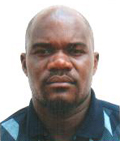
Wilf Mbanga, a Frontline Club regular and editor of The Zimbabwean Weekly, writes about Press freedom in The Guardian on the eve of World Press Freedom Day. Wilf highlights the cases of Freelance photojournalist Anderson Shadreck Manyere who will be spending World Press Freedom Day on the run,
Last week, Manyere was eventually released on bail. But the two Movement for Democratic Change officials arrested and released with him were arrested again 48 hours later, with no warrant. And the police are hunting Manyere.
His experience is not unique. Many journalists operating in Mugabe’s Zimbabwe have suffered in the past decade. Kidnapping, arbitrary arrest, torture, constant harassment ; terror tactics – and even murder – are all tactics used by the regime to retain a strangle-hold on the press. Edward Chikomba was kidnapped by state agents last year and his tortured body was found dumped in the bush a few days later.
Freedom of the press has always been elusive in Zimbabwe. At independence in 1980 the new government inherited a well-oiled state broadcasting network and bought the country’s largest newspaper company within months of taking power. link
We continue to update the news on Manyere and other journalists in Zimbabwe on the @frontlineblog Twitter stream. Please follow us.
Photograph of Anderson Shadreck Manyere taken from the Association of Zimbabwe Journalists.
]]>