On Tuesday the Royal Institution of Great Britain was flooded with both aspiring and established photojournalists who had come to hear 13 photojournalists from the prestigious VII Photo agency.
Vaughan Smith, the Frontline Club’s founder, started proceedings by giving a brief overview of the challenges facing modern photojournalism. He explained that the decline of the traditional news model means that photojournalists cannot expect the kind of investment they once had from the print media, but that this development can be viewed in positive terms because they “can define the future of journalism”.
Smith believes that freelance journalists can take a more prominent place within the media landscape through social media and the Internet, and the members of VII Photo are doing just that. An agency “by photographers for photographers” they are “helping to change the media landscape”.
The first discussion of the morning was lead by Max Houghton, editor of Foto8 magazine, who was joined by two of VII Photo’s founders, Christopher Morris and Ron Haviv, and long time members Seamus Murphy and Franco Pagetti.
Firstly, Houghton wanted to know how their work has evolved over the years. They all agreed that they had become more thoughtful in their practice, but they had differing views on how they and their work fitted into the new media landscape.
Ron Haviv asserted that “new tools are enabling us to become full authors”, and that a lesser dependency on print media is liberating the photographer from the constraints placed by picture editors.
Conversely Christopher Morris has “struggled with the new marketplace” and has had to reinvent himself as a fashion photographer. He explained that in the past large media corporations would fund lengthy projects abroad, whereas now photographers are forced to turn to methods including crowd funding and self-financing.
The second panel lead by the London College of Communication’s Paul Lowe was comprised of VII Photo co-founder Gary Knight, alongside Ashley Gilbertson, Anastasia Taylor-Lind and Ron Haviv. Their discussion began with the role of mentoring and education within the field of photojournalism. Ron Haviv stated that “its integral to all…photojournalists’ to give some thing back to the next generation.
Anastasia Taylor-Lind, who was mentored by Haviv, felt that she gained invaluable guidance from the experience and his “generosity of ideas”.
Gary Knight expressed his hope that “a greater diversity of people and communities” would begin to engage with photography, in the hope of opening up the field of photojournalism to new perspectives.
Paul Lowe then asked the panel whether research prior to shooting a project was important. All agreed that it was essential, with Ron Haviv asserting that the journalism aspect of photojournalism is often ignored, but that in fact it is essential:
“the more knowledge we have of what we’re photographing the better”
Ashley Gilbertson agreed but explained that invariably all one’s research takes on a different meaning when you are actually in the field, and that covering a story ends up being very “organic process”.
The discussion was concluded with a question from the audience on the importance of a formal education in photography. Anastasia Taylor-Lind explained that her extensive education – the completion of a BA, MA, numerous workshops and a mentoring scheme had been incredibly useful in her development as a photojournalist. While Ashley Gilbertson felt that his lack of formal education meant that his progression into a “thinking photographer” was slower than his peers, and that he had to force himself into academia later in life.
Gary Knight emphasised the importance of a rounded education, because he believes that to be a good photojournalist “you need to be a thinking person”.
The final panel of the day, moderated by the director of VII Photo in New York Stephen Mayes, included VII Photo members Venetia Dearden, Ed Kashi, Tomas van Houtryve, Gary Knight, Donald Weber and Jon Jones, the director of photography at The Sunday Times.
Mayes opened the discussion with an optimistic interpretation of the current climate faced by photojournalists. He believes that photographers are in a better place to get funding because they are liberated from the previous “monolithic model”. At present there is not just one “singular solution” but instead many ways to fund work. He concluded that “the greatest challenge” faced by photojournalists is “the challenge of imagination”.
The panel members then described their own wildly different approaches to funding projects. Jon Jones and Gary Knight collaborated on the compilation of a book of photographs from the Bosnian conflict. They described raising half of the $35,000 needed from licensing and the rest from crowd funding through social media and personal emails.
Donald Weber explained that his approach to funding projects was through corporate and private sponsors. Consequently he has “complete freedom and control” over his work, something he would have to relinquish if being paid by a magazine.
Tomas van Houtryve felt that he didn’t “want to be held hostage” by the constraints of a commission. He therefore looked to individuals to help him fund his book Behind the Curtains. Through his website and blog he was able to interact with his audience throughout the process of shooting the project, which gave his backers “a sense of investment beyond the financial”.
The corporate world, as Venetia Dearden explained, has the resources to fund work. Therefore photographers need to look for companies that have “a natural fit” with their work. In her case it was the fashion brand Mulberry. Her relationship with them was forged after they saw her project ‘Somerset Stories’. Mulberry, which has strong connections with Somerset, have gone on to publish three of her books, as well as commissioning a book to celebrate 40 years of Mulberry.
She urged fellow photographers to find “imaginative and resourceful” ways to fund their projects.
]]>
Photograph: Adam Ferguson
David Hoffman opened the tumultuous year that was 2010 with a talk that ran the gamut of his career covering civil disobedience and protests. The Magnum photographer and a close friend of David‘s, Chris Steele-Perkins, moderated the event.
In March, Ed Kashi spoke about his work in the Niger Delta with senior feature writer at the Observer, Sean O’Hagan. Soon after he spoke at the Club, we were thrilled to learn Ed had been welcomed into the fold at the VII photography agency.
In the midst of election fever in the UK, Guardian photographer David Levene and picture editor Roger Tooth took time out to reflect on the Haiti earthquake and David’s first foray into disaster photography. Inigo Gilmore, a video journalist working for Channel 4, was Skyped in from Port au Prince and answered questions from the audience about the situation on the ground, three months after the earthquake.
Later in the year Dana Popa spoke about her moving project entitled not Natasha about trafficked Moldovan women and the sex trade. Her work had already made a powerful picture essay for the Spring edition of the Frontline Broadsheet. Mark Sealy, the director of Autograph ABP who had commissioned her project, moderated the event with aplomb.
Daniel Schwartz gave a talk in summer about his varied work in Central Asia. Moderated by one of Steppe magazine’s editors Mitchell Albert, Schwartz’s pictures conjoured up the atmosphere of the endless dusty steppe lands that stretch from the Caspian sea to the Tien Shan mountains bordering China. A special blog post on the difficulties local photographers experience in Uzbekistan was written in the lead up to the event.
In July, we were delighted to play host to Ian Parry Scholarship judging session. The award was set up by Aidan Sullivan, Vice President of Photo Assignments for Getty Images, and esteemed judges such as Don McCullin and Jon Levy makes hosting the judging process a true honour.
Reporting from the Vietnam war provided the basis for August’s talk to mark 35 years since the end of the Vietnam war. This event featured not just photographer Patrick Chauvel and clips from his film Rapporteur de Guerre featuring photographers Larry Burrows and James Nachtwey, but also writer Jon Swain and CBC reporter and author of The Cat from Hue, John Laurence. The event was moderated by ITN reporter Michael Nicholson and the evening began with a clip from his series Back to the Front.
Two members of a close-knit photography collective, Anna Kari and Guilhem Alandry spoke at the Club just after returning from Visa pour l’image in Perpignan. Documentography‘s unusual methods of working together and the difficulties and benefits of cooperating to produce photojournalism lead to an intriguing discussion moderated by LCC’s Jennifer Pollard.
In October, the opportunity arose to hold two very different photography events. Teun Voeten’s Tunnel People provided the subject matter for a very popular event. The recent updated release of his book about the underground communities that lived under the streets of Manhattan made fascinating subject matter for a discussion about anthropology and journalism ethics. Colin Jacobson, formerly the Senior Lecturer at Westminster University moderated the event. Teun’s angelic son made an appearance on stage during the event.
Also in October John G Morris spoke at the Club about an extraordinary period in his career working as LIFE magazine’s London picture editor during the Second World War. Recently released images from Hiroshima and Nagasaki provided the backdrop for his talk about a career that spanned the majority of the 20th Century and hasn’t come to an end yet. Alexander Lindsay acted as moderator for the event.
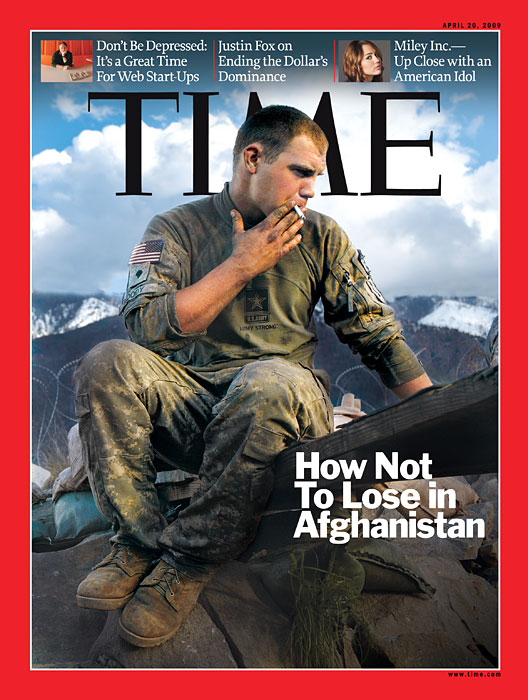
Adam Ferguson wrapped up this year’s In the Picture events on the eve of Remembrance Day with a striking but thoughtful look at the war in Afghanistan. The story of his swift progression this year from young photographer to World Press Photo winning war journalist was told with the help of moderator Simon Robinson and some spectacular photographs.
If you enjoyed any of the In the Picture events in 2010, please join us for the first photography event of 2011 on the 18th of January: In the picture: Orphaned and Ostracised – HIV in Africa with Carol Allen Storey. Any suggestions for future photography events at the Frontline Club should be sent to flora.carmichael@www.beta.frontlineclub.com Twitter: @FloraCarmichael.
]]>
View in iTunes
Watch the event here.
By Anne Elicano
Adam Ferguson, one of the first prize winners of the World Press Photo Awards 2010, talked about being a war photographer and recent assignments in Afghanistan at the Frontline Club. Some pictures of the event taken by Chris King can be viewed below:
The first time I came under fire was in Afghanistan. We were ambushed and I hid behind a HMMWV (Humvee)…that’s (the kind of situation) where one thinks about either running for his life or take photos. I took photos.
It’s easy to romanticize the life of a photojournalist. But, in reality, it’s tough. You go on long patrols, you eat bad food, you get shot at….but one of the best things there is about being a photojournalist is getting insight into other people’s lives and in getting into situations one normally wouldn’t get into.
In Afghanistan, I’ve never been in the position where I had to think of choosing between putting my camera down and helping. And there are always army medics around (in conflict situations).
The bloodier the better. The way war is presented is very sanitized. We have to challenge the romantic notion of war. I want to explore the quiet moments in war- present the burden and the frustration. Many of the troops joined in the wake of 9/11 in the spirit of nationalism. But when the guys hit the ground, they get disillusioned with the war on terror.
The editorial line of Time magazine doesn’t interfere with my work. And they’ve been pretty brave with the kind of images of Afghanistan that they publish.
There are certain ground rules that the military makes you sign before allowing you to embed. You’re not allowed to photograph detainees. I haven’t done that but if there were an important image and it was really worth it, I would break the rules.
Sometimes the line between being a photographer and being part of the story gets blurred. You form relationships with people, for instance, when you’re on patrol. Sometimes you’d be sitting next to a gun and a soldier asks you to pass it to him… There are times when the troops go into a village and the soldiers have to go into houses. They don’t take their shoes of (as is the local custom) and I don’t too…they get stares and I get stares too. That’s when I feel like an intruder.
I try to quickly assimilate in a situation to gain the trust of people. I keep fit to keep up with the guys on patrol so they don’t feel like they have to “carry me” . We sit down and talk about cars and girls…and a pack of Marlboro Reds always helps. I stay in touch with people I form relationships with (on patrol). Some of them (the soldiers) get excited over their photos and they email me.
Visit Adam’s website at www.adamfergusonphoto.com
Listen to the podcast here:
]]>This morning he was interviewed briefly on the BBC’s World Update programme about the power of still photography, the dangers of covering events in war zones and winning the World Press Photo Spot News category.
These points and more will be discussed on Wednesday, illustrated by a slideshow of Adam’s work. You can book for the event here.
Below is a sample of his photographs:
All Frontline members have been invited to a reception and exhibition opening to mark the 10-year observance of Security Council Resolution 1325 (2000) on Women, Peace and Security.
With gender-based violence as its theme, the exhibition will feature photographs by VII photographers Marcus Bleasdale and Ron Haviv alongside Lynsey Addario and James Nachtwey.
The opening will take place on Wednesday 20 October, 2010 7pm-9pm at The Atrium, Old Building London School of Economics & Political Science Houghton Street, London WC2A 2AE.
To RSVP please email: RSVP@congowomen.org
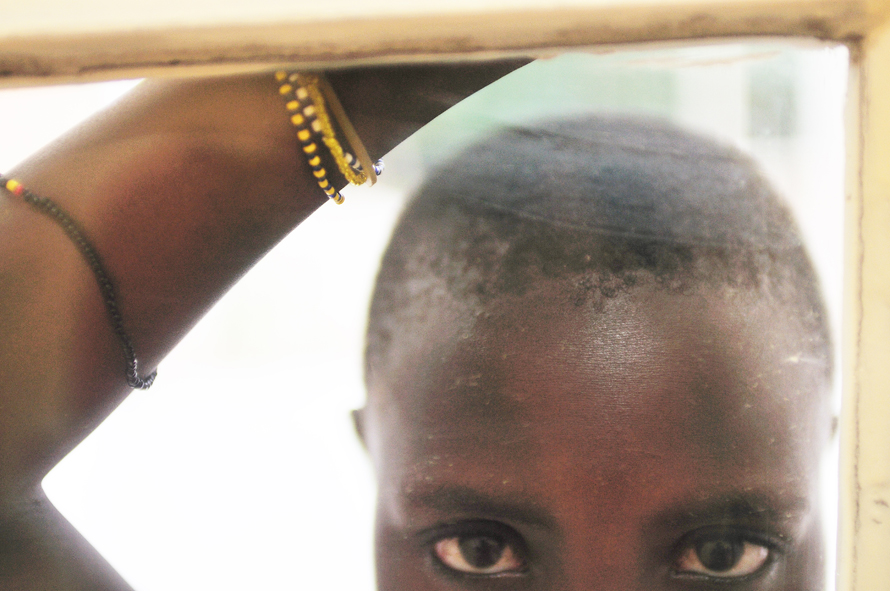
Photo credit: Lynsey Addario/VII Network
]]>