Opening the debate organised by Standpoint magazine, which took place at the Frontline Club on May 1, Standpoint Editor Daniel Johnson began by restating the motion: This house believes that Britain is more interested in doing business with Russian Oligarchs than standing up to Vladimir Putin.

L-R Peter HItchens, Tony Brenton, Daniel Johnson, Ben Judah and Roger Boyes.
Ben Judah, reporter for Standpoint from Russia and Ukraine and author of Fragile Empire: How Russia Fell In and Out of love with Vladimir Putin, asserted that, fundamentally, “British laws should not be violated.”
“The [Putin] regime functions as an asset stripping regime which rips billions and billions of dollars out of the country every year. This money is then transported out into tax havens and a vast amount ends up in Britain – under the Union Jack.”
According to Judah, of the estimated $93 billion that was laundered through Britain in 2013 only 0.26% of assets were frozen by the UK government. Although not dependent on PEPs (Putin Exposed Person), certain elite sectors of Britain’s economy are PEP-addicted: such as high-end property, commercial courts, PR agencies, London private wealth management and English public schools.
For Judah, from Blair to Osborne any attempt coming from the House of Commons to tackle shell companies, which function as offshore vehicles offering anonymity to foreign investors, has been “shot down”, demonstrating that Britain “is not interested in fighting overseas corruption”.
Tony Brenton, British Ambassador to Russia from 2004 to 2008, responded by questioning the meaning of motion and how this should affect Britain’s response to Putin.
“The line I am going to argue is that we should do business with Putin, including doing business with Oligarchs.” While acknowledging the corruption and repression within Russia, Brenton, nevertheless, argued that this should not solely dictate Britain’s response to Putin.
“Our current policy of engagement [which has been a unified western policy since 1991]… which maintains business and strengthens links has, up to a point, worked. Trade has grown, the market economy has become better established, more Russians are coming over here for good or bad reasons, and the constituency in Russia which doesn’t like the way Russia runs itself has grown steadily stronger.”
The alternative, according to Brenton, is a return to the Cold War policy of containment and the use of sanctions where, “we don’t talk to them, we don’t trade with them, we don’t let them into any organisation. We, in the words of President Obama, isolate them.”
There is a need, continued Brenton, “to look at the world from a Russia point of view,” where, since 1991, they feel that they have been “systematically neglected, humiliated and encircled”.
Roger Boyes, diplomatic editor at The Times, rejected Brenton’s belief in the need for a Russian-centric view of the current situation, instead arguing against what he believed to be the fallacy that engagement changes Russia and against the concept of Russian victimhood.
“I don’t think that Russian paranoia should be the basic principle of British foreign policy… the truth is that Putin is playing us, trying to split Europe.”
Stimulating Russia debate @StandpointMag last night with @b_judah . Notable how pro #Putinistas see Ukrainian state as irrelevant irritant
— Roger Boyes (@rogerboyes) May 2, 2014
Boyes warned of the dangers of this current situation of interdependency.
“There is too much of this ‘leaning in’ towards Putin – seeing an extraordinary interweave between Russia’s commercial interests and our own humble role as the concierge of the Oligarchs.”
“The point is… why are rich Russian’s coming to Britain? Because Russian courts are rubbish, because Russian schools are very limited. The kind of things that a Russia with money wants and wants to invest in are not there. He has been denied these things. By making it more complex for him to do that, by restricting their visa access we are saying stay where you are, invest your money at home and improve your own civic society and your own social structure. We can help the Russians in their path into the post-Putin era. It is an act that will not only recover our self respect but also help Russia find a way forward.”
Challenging this assertion, Brenton rejected Boyes’ claim. “We are not going to change the internal dynamics of Russian politics. What we can do is stand firmly critical of their appalling human rights records… but we actually make it harder if we enable Putin to stand up and look like a Patriot.”
“More important, if we want to help the Russian people, is to get out of the Ukrainian quagmire, and begin trading with them and relating to them.”
In response to this analysis, Judah reasserted the responsibly for the situation in Ukraine at Putin’s need for a quick victory to boost his own decreasing popularity. Forming a direct correlation between the stripping of Russia’s assets, the removal of money into British offshore accounts, a lack of investment in Russia and the Ukraine crisis, Judah related the means by which to combat the spread of Putinism with “stopping the moral degeneration of Britain”.
Suggesting the need to impose emergency checks on Russian cash buyers and the establishment of new regulators on high-end oversees investment, Judah stated that “you could in fact be helping by imposing tougher anti-Russian standards at home”.
Rejecting this policy as an unwarranted return to a cold war mentality of containment, Brenton concluded that the most effective way of removing Putin is rather through the process of engagement, “by developing these social links that will eventually undermine him from below”.
Ultimately, he concluded that if you are going to start closing down these links with Russia, and by extension – if you are morally consistent – with China, Saudi Arabia and Nigeria you have to realise that “we depend on these countries to give us employment and prosperity.”
“It is a big bad dirty world out there and you need to get your hands dirty if you are going to make any kind of living at all in it.”
Catch up with the video and podcast:
https://soundcloud.com/frontlineclub/140501-in-hock-to-the
]]>
The annual Orwell Prize rewards journalists who most closely follow George Orwell’s aim of making “political writing into an art”.
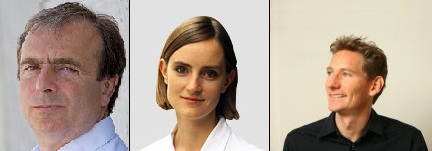
And it’s that art we’ll be celebrating on Wednesday 12 May at an exclusive panel discussion with three writers shortlisted for this year’s prize. Here we look at the life and work of our special guest speakers:
Peter Hitchens has more than 25 years of experience in journalism, spent variously as a foreign correspondent in Moscow and Washington DC, a political reporter and defence specialist. He has also written five books, his most recent being an anti-religious polemic, The Rage Against God.
His conservative political conviction led him to resign from his previous post at the Daily Express and move to The Mail on Sunday as a columnist, reporter and blogger. Among Peter Hitchens‘ longlisted articles were a “what if?” feature asking what the world would be like if the Berlin Wall had not fallen in 1989 and an analysis of why Canada is withdrawing from the war in Afghanistan yet UK troops are staying put.
Here’s an interview with Hitchens about his most recent book:
Amelia Gentleman writes on social affairs for The Guardian and previously contributed to The Observer and International Herald Tribune. As a foreign correspondent in New Delhi she received first prize at the 2007 Human Rights Press Awards.
Her thought-provoking reportage – such as this fascinating look at life in an elderly care home and this piece on a child protection unit – provides a unique view on British life and society that goes far beyond the facts and figures of press releases and spin, using human stories to tell the tale.
Here’s a passage from Amelia Gentleman’s piece on social deprivation, written in 2009, ten years after Tony Blair promised to eradicate child poverty by 2020:
Shopping at Morrisons doesn’t take very long. Louise has a simple formula: don’t buy anything that costs more than £1. This week, the budget bananas are finished, and the regular packet costs £1.29, so she doesn’t buy bananas. The cheap potatoes are also sold out, so she doesn’t buy potatoes […]
‘It would be nice, on occasion, to buy them something on a whim – treats, cakes and biscuits. But if you do, you know you’re going to have to turn the heating off,’ she says. Her face is pallid, and she has grey patches of exhaustion beneath her eyes.
John Arlidge is a freelance journalist who regularly contributes to the Sunday Times, as well as Conde Nast titles in the US. He received his nomination for extensive report from inside Goldman Sachs, which provided a rare glimpse into what he calls “the best cash-making machine that global capitalism has ever produced”. An excerpt on the greed-driven culture Goldman fosters in its staff:
Goldman Sachs isn’t nicknamed “Goldmine Sachs” for nothing. There’s so much of the stuff sloshing around that in an average year a good investment banking partner will make $3.5m, a good trading partner $7-10m and a management committee member $15-25m. Some 953 employees got bonuses of at least $1m in 2008.
One former Goldman banker describes the culture as ‘completely money-obsessed. I was like a donkey driven forward by the biggest, juiciest carrot I could imagine. Money is the way you define your success. There’s always room — need — for more. If you are not getting a bigger house or a bigger boat, you’re falling behind. It’s an addiction.’
To watch the full event, click here.
]]>Tonight at the Frontline Club we’ll be talking with journalist, author and broadcaster Peter Hitchens about how British politics lost its way. A subject Peter dissects in his most recent book, The Broken Compass How British Politics. We start at 7pm GMT/11am GMT. As usual, if you can’t join us in person at the Club, please come and watch live on the Club Events page or on the Frontline Club live channel. John Kampfner, editor of the New Statesman until 2008 now Chief Executive of Index on Censorship will chair the discussion,
]]>Peter Hitchens talks about the need for a new political compass in a world where traditional boundaries between the Left and Right no longer exist. Left-wingers backed the invasion of Iraq and Tories campaign for civil liberties yet conventional wisdom insists on operating as if the age-old divisions between political parties still apply, argues journalist, author and broadcaster Peter Hitchens.
In his new book The Broken Compass How British Politics lost its way, Peter Hitchens, who writes for the Mail on Sunday, argues that the real divide is between politicians and the electorate and is both a threat to Parliament and to society. Peter Hitchens takes on the “conformist media” for continuing to adhere to such obsolete notions of Left and Right and calls for the re-establishment of proper adversarial politics based on principle.
Peter Hitchens is a journalist, author and broadcaster who worked on the Daily Express for most of his career. He resigned on principle in protest at the takeover by Richard Desmond and now writes for the Mail on Sunday. link