One of the first BBC journalists to start a blog, Mason said during a Reflections event at the Frontline Club last week that he “kind of got” the internet even before he worked at Computer Weekly.
"I got what it could do, it’s the network,” said Mason, who remembers reading the now "famous" article New Rules for the New Economy by Wired founding executive editor Kevin Kelly when it was first published in the magazine in 1997.
"It’s the article now," said Mason. "What does he say? The key innovations in the last ten years have not been in the structure of computers but in the links between them. And that’s the take off point, for me, for the third or fourth, whatever you want to call it, industrial revolution.
"I’d written about the network and its power as a computer journalist and commentator but then suddenly to see social networking. To me it’s the future of our profession, it’s the future of what we do. I was determined to pile into it."
Encouraged by the then Newsnight editor Peter Barron, Mason started his blog Idle Scrawl in the run up to the 2005 G8 conference at Gleneagles and “relentlessly persevered with it”.
While the response elsewhere in the BBC was less enthusiastic – someone in the IT department said that it was not “in the BBC universe” – the blog attracted a wide readership and was twice nominated for the Orwell Prize.
Most significantly what it – and later Twitter did "exponentially" – was increase Mason’s ability to hold a conversation with the audience.
“You’re in a conversation with the audience way before you do your uber journalism, which is your piece,” said Mason.
Mason used one of his blog posts “Dubstep rebellion” about protests in London in December 2010 to illustrate how his mainstream media journalism is now shaped and informed by social media.
“Within about two hours of it going up a bloke had sent me a detailed refutation of the fact that the music on the riot was Dubstep and in fact, within a day, someone had produced a playlist of 10 tracks that were played."
Mason discovered that the music being played during the protest was in fact Grime and its importance to people taking part derived from the fact it was banned from “all the champagne popping black clubs” in London.
"That’s something I’ll know in future and that’s why social media is important, it’s about detail," said Mason.
But the importance of social media is “about way more than the MSM stuff” said Mason, who like growing numbers of people, now follows key journalists and activists on Twitter to find out information before it’s in “the news”.
As Twitter becomes more populated by journalists they will be experimenting with different ways of using it, predicted Mason, who explained his use of the "Twitter Splurge" when the Guardian reported that the Eurozone had agreed a deal on Greek debt. Mason was filming in the United States and didn’t have time to writes a blog post, so tweeted 10 points that formed a "little article" and provoked comments from other financial journalists.
Mason also predicted get there will be greater cooperation between journalists, bloggers and tweeters, with "little coalescences" forming and working together.
The labour historian also demonstrated the role a specialist journalist can play in not only reporting events, but in providing context for others in the network:
He recalled how he asked an Egyptian blogger what she knew about Egyptian history and discovered that she hadn’t heard of the former Egyptian president Gamal Abdel Nasser.
“And yet she’s one of the leading bloggers in the revolution,” he said.
Similarly, young British activists he spoke to who used the hashtag #solidarity had never heard of the Polish trade union Solidarnosc or the union anthem “Solidarity Forever".
"You can also bring that aspect to the people involved in the struggle," said Mason.
]]>
By Rebecca Omonira-Oyekanmi
Paul Mason, the music teacher turned Newsnight economics editor, shared some trade secrets at the Frontline Club last night as part of its Reflection series in association with the BBC College of Journalism.
Mason, whose first live report for the BBC was on 9/11 in 2001, told interviewer Matthew Eltringham, editor of the BBC College of Journalism website, that as well as being driven by explaining "people, planet and profit", his reporting was about "learning all the time".
Mason grew up in Leigh, Greater Manchester and attended a Catholic grammar school where a big focus was brass band. "I was a child musician," he said, which is why it seemed natural for him to study music at Sheffield University.
In a bid to escape music and try something new, Mason studied politics as a second subject. It was some time later, after years of teaching and writing music, that Mason discovered a passion for journalism. "I never liked teaching. I loved telling stories," he said.
Even before he started at Reed Elsevier during the 1990s, Mason already had an idea about what good journalism should do.
A reporter has to record detail. Whether or not at the time it seems relevant. I love the observation of detail. You can’t do that in a one-minute package, though the best of my colleagues can.
To illustrate the point Mason chose a clip from an early report by the journalist Ray Gosling on life inside the Whittingham Hospital asylum in Lancashire.
When we were kids in Greater Manchester, Ray Gosling was the most brilliant reporter. When I first became a journalist, I thought this is what you should be doing.
What Gosling shares with two other journalists Martin Adler and George Orwell, is an "unflinching gaze" and the abilty to capture the unadorned truth, said Mason.
Mason chose a short clip Adler shot in Iraq, whch showed the fear and confusion that clouded US solidiers relations with ordinary Iraqis. "That’s the kind of journalism you should aspire to. It confronts you with lots of things at once."
When asked, Mason said such work could be created at the BBC and challenge "group think" culture. That is why there are so many layers, with programmes like Panorama, Newsnight and Radio 4’s Today, he said.
"One of the reasons is so you can bring the whole pallet of reaction."
While fascinated by the craft of reporting, Mason is also enthusiastic about the way social media is changing news reporting.
When the internet came along it was like Christmas to me. Long before I was a journalist I got what it could do.
He was the first BBC journalist to start a blog, despite being told by bosses that such things were "not in the BBC’s universe". Since then Mason has built a huge presence throught both his blog and on Twitter, where he is followed by more than 18,000 people.
Engaging with his audience online "informs my journalism", Mason said. But, he added, the rise of 24-hour-news and social media also means journalists have to raise their game. Instead of just news bulletins, "we have to have instant analysis, instant Panorama".
]]>BBC Newsnight’s Economic Editor Paul Mason joined the BBC in 2001, making his first live appearance the day of the 9/11 terrorist attacks. He covered the collapse of Lehman Brothers live from outside its New York HQ in September 2008. Since then he has “hardly stopped for breath”, reporting on the social and economic impact of the global meltdown from the mean streets of Gary, Indiana to the elite salons of Davos.
Paul Mason will be at the Frontline Club in conversation with Matthew Eltringham, editor of the BBC College of Journalism website and events to discuss a career which has seen him cover the corporate scandals at Enron and Worldcom and stories as diverse as Hurricane Katrina, gang violence on Merseyside, the social impact of mobile phones in Africa and the rise of Aymara nationalism in Bolivia. His groundbreaking reports on the rise of China as an economic power won him the Wincott Award in 2003.
The author of two books Live Working or Die Fighting, How the working class went global and Meltdown: The end of the age of greed, Paul Mason was one of the BBC’s first bloggers and has twice been nominated for the Orwell Prize.
]]>Tomorrow evening, join us for July’s Club Quiz with quizmaster David Dickinson, a historical crime writer and former editor of Newsnight.
Screenings in the week ahead include Page One: Inside the New York Times,a portrait of the paper that looks at the current crisis in journalism.
For August’s First Wednesday we will be joined by a panel of experts and journalists to examine the situation in Syria, where just yesterday another 16 people where killed in an apparent escalation of a security crackdown in Homs. As the uprisings and crackdowns continue we will be looking at the possible outcomes for the people of Syria.
Michael Herr’s memoir of his time as a correspondent for Esquire magazine from 1967 to 1969, first published in 1977, was described as the best to have been written about the Vietnam War.
And the best piece of advice Mason received during his career?
It was a lesson from a feature writing tutor at Reed Business Information in the 1990s who taught him about the "nut graf".
The nut graf is the part of the story that reveals the story’s content and message and explains its significance as a news story. It’s called the nut graf because, like a nut, it contains the “kernel,” or essential theme, of the story. You can read more about the nut graf here.
The Reflections events at the Frontline Club are a great opportunity to hear about the craft of journalism from the experts.
ITV News’ Bill Neely’s discussion with VIn Ray was full of insight , as were those by other Reflections interviewees, including Lindsey Hilsum and Nick Robinson, who also reflect on what makes good television reporting.
If you want to hear more from Paul Mason, the BBC Newsnight’s economics editor about the lessons he’s learnt during his careers and the work of those journalists who inspired him, then book now for the latest in our Reflections series on Wednesday. Paul Mason will be in conversation with Matthew Eltringham, editor of the BBC College of Journalism website and events.
]]>Join us for what should prove to be a fascinating discussion between BBC Newsnight’s Paul Mason and acclaimed playwright Sir David Hare, whose recent play The Power of Yes wrestled with the causes of the 2008 financial crisis.
From his "ringside seat" as economics editor Paul Mason‘s book Meltdown: The End of the Age of Greed is a blow by blow account that begins with the collapse of Lehman Brothers and the bailout package of October 2008, seeking to explain how we got there.
In an updated edition Paul Mason explores the impact of this development on capitalist ideology and politics. We are delighted that Sir David Hare who carried out meticulous research for his play on the financial crisis will be with us to discuss the events of 2008 and seek to make sense of the state of capitalism today.
Does the Demotix citizen journalism agency offer a model for the future or will it simply undercut the professionals? Love them or hate them, Demotix has made its mark on the industry. Our networking party tonight offers the opportunity to meet Demotix CEO Turi Munthe and hear about their work as well as network and enjoy some complimentary drinks.
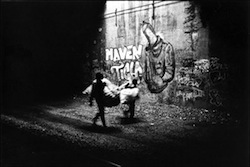
Tomorrow we have Dutch photographer Teun Voeten who will be discussing his insightful photography project which documents the lives of people living under Manhattan in its network of tunnels.
Next week at the Club we have two events which we hope will help throw light on key issues in the wake of tomorrow’s spending review: Who better to discuss the current economic crisis than BBC Newsnight economics editor Paul Mason and playwright David Hare, both of whom have explored in different ways the 2008 banking crisis and its causes.
Then we have a panel discusssion that will focus on the international development budget and the planned changes to be made by the coalition government.
]]>Tonight we’ll be in discussion with Paul Mason, BBC Newsnight’s Economics Editor, about the financial crisis as we ask the question – Is this the end of the age of greed? Paul will be talking with Michael Wilson, Business Editor of Sky News. As usual, we’ll be livestreaming the event on the Events page and on the Frontline Club live channel. We start at 7pm GMT/11am PST tonight April, 23,
]]>Paul Mason talks about the ongoing financial crisis that has brough the global economy to the brink of depression. Gordon Brown hailed the result of deregulation as the ‘golden age’ of banking in the UK. Mason will give insights into how deregulation is at the heart of the collapse of the banking system in September and October 2008 and how it led to expanded subprime mortgage lending, an uncontrollable derivatives market, and the lethal fusion of banking and insurance.
In his latest book Financial Meltdown and the end of the Age of Greed Mason goes on a journey from the trading floors of the New York and London stock exchange, to the meeting rooms of HBOS and Lehman Brothers and the minds of senior government officials. Meltdown explores the roots of the US and UK’s financial hubris, documenting the real-world causes and consequences, from the Ford factory, to Wall Street to the City of London. link