
Winner of the Orwell Prize for Books 2014, Alan Johnson MP will be in conversation with David Davis MP about how politics can shape lives, and how personal histories can shape one’s political values. The debate will be chaired by the director of the Orwell Prize, Professor Jean Seaton.
Alan Johnson is the Labour MP for Kingston upon Hull West and Hessle, and former Home Secretary. He won the Orwell Prize 2014 for This Boy, his autobiographical account of growing up in post-war London.
David Davis is the Conservative MP for Haltemprice and Howden and former Shadow Home Secretary.
The Orwell Prize 2015 will be launched at this debate, including a new prize for ‘Reporting Britain’s Social Evils’, supported by the Joseph Rowntree Foundation. Further details will be made available.
This event has a limited capacity, so please register here and arrive early to be sure of a seat. We cannot guarantee places.
6.00pm Drinks
6.30pm Launch of the Orwell Prize 2015 and annoucement of judges
6.45pm Debate with Alan Johnson and David Davis
]]>
The annual Orwell Prize rewards journalists who most closely follow George Orwell’s aim of making “political writing into an art”.
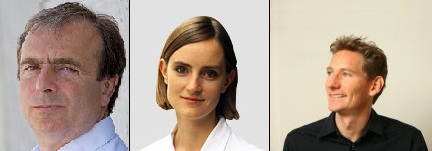
And it’s that art we’ll be celebrating on Wednesday 12 May at an exclusive panel discussion with three writers shortlisted for this year’s prize. Here we look at the life and work of our special guest speakers:
Peter Hitchens has more than 25 years of experience in journalism, spent variously as a foreign correspondent in Moscow and Washington DC, a political reporter and defence specialist. He has also written five books, his most recent being an anti-religious polemic, The Rage Against God.
His conservative political conviction led him to resign from his previous post at the Daily Express and move to The Mail on Sunday as a columnist, reporter and blogger. Among Peter Hitchens‘ longlisted articles were a “what if?” feature asking what the world would be like if the Berlin Wall had not fallen in 1989 and an analysis of why Canada is withdrawing from the war in Afghanistan yet UK troops are staying put.
Here’s an interview with Hitchens about his most recent book:
Amelia Gentleman writes on social affairs for The Guardian and previously contributed to The Observer and International Herald Tribune. As a foreign correspondent in New Delhi she received first prize at the 2007 Human Rights Press Awards.
Her thought-provoking reportage – such as this fascinating look at life in an elderly care home and this piece on a child protection unit – provides a unique view on British life and society that goes far beyond the facts and figures of press releases and spin, using human stories to tell the tale.
Here’s a passage from Amelia Gentleman’s piece on social deprivation, written in 2009, ten years after Tony Blair promised to eradicate child poverty by 2020:
Shopping at Morrisons doesn’t take very long. Louise has a simple formula: don’t buy anything that costs more than £1. This week, the budget bananas are finished, and the regular packet costs £1.29, so she doesn’t buy bananas. The cheap potatoes are also sold out, so she doesn’t buy potatoes […]
‘It would be nice, on occasion, to buy them something on a whim – treats, cakes and biscuits. But if you do, you know you’re going to have to turn the heating off,’ she says. Her face is pallid, and she has grey patches of exhaustion beneath her eyes.
John Arlidge is a freelance journalist who regularly contributes to the Sunday Times, as well as Conde Nast titles in the US. He received his nomination for extensive report from inside Goldman Sachs, which provided a rare glimpse into what he calls “the best cash-making machine that global capitalism has ever produced”. An excerpt on the greed-driven culture Goldman fosters in its staff:
Goldman Sachs isn’t nicknamed “Goldmine Sachs” for nothing. There’s so much of the stuff sloshing around that in an average year a good investment banking partner will make $3.5m, a good trading partner $7-10m and a management committee member $15-25m. Some 953 employees got bonuses of at least $1m in 2008.
One former Goldman banker describes the culture as ‘completely money-obsessed. I was like a donkey driven forward by the biggest, juiciest carrot I could imagine. Money is the way you define your success. There’s always room — need — for more. If you are not getting a bigger house or a bigger boat, you’re falling behind. It’s an addiction.’
To watch the full event, click here.
]]>It was standing room only upstairs at the Frontline club. Amongst an impressive gathering of British writing talent were past winners of the prize Polly Toynbee and novelist Delia Jarret-Macauley, along with Will Hutton, Richard Brooks, Marina Warner and many others. Filmmaker Mike Radford, (Il Postino and 1984), cartoonist Martin Rowson, and Today editor Ceri Thomas were also crammed in, beside publishers, academics, and MPs (I think I even spotted the deputy governor of the Bank of England). Orwell’s biographer Bernard Crick – who introduced the evening – and Orwell’s son Richard Blair, ensured the prize remains closely linked with the author. A lot of people clearly still believe in the importance of Orwell’s aim, ‘to make political writing into an art’.
‘The great enemy of clear language’ Orwell wrote, ‘is insincerity’. You could not accuse Peter Beaumont of that. His pieces from Iraq are direct, candid, and often visceral. As with this horrifying article about the ‘hidden victims’ of the war – Iraqi women: ‘They came for Dr Khaula al-Tallal in a white Opel car’ Beaumont writes, ‘after she took a taxi home to the middle class district of Qadissiya in Iraq’s holy city of Najaf. She worked for the medical committee that examined patients to assess them for welfare benefit. Crucially, however, she was a woman in a country where being a female professional increasingly invites a death sentence. As al-Tallal, 50, walked towards her house, one of three men in the Opel stepped out and raked her with bullets.’
Presenting the prize (to the deputy editor of the Observer since Beaumont was, of course, abroad), judge Francis Wheen congratulated a strong field that included Martin Bright, for politically provocative and prescient journalism in the New Statesman, John Rentoul, for being prepared to defend the defenceless (Tony Blair included); Jonathan Freedland for his writing in the Guardian and for a profoundly insightful piece about Ariel Sharon in the New York Review of Books, Steve Richards of the Independent, and Peter Hitchens – more for his delightfully frank foreign dispatches than his ‘fire and brimstone’ Mail columns (read, for example, his article on ‘Iran – a nation of nose jobs, not nuclear war’).
Newsnight’s award for broadcast journalism was a first for the Orwell. But in a time when news organisations are cutting foreign correspondents and reducing the resources available to original journalism, Newsnight’s continued commitment to international reporting well deserves recognition. The judges, said Norma Percy, “did not set out to award this prize”‘, but felt Newsnight to be the “most precious and authoritative home for proper reporting of important stories, beautifully crafted by journalists of rare distinction”.
Hennessy’s winning book captured another aspect of Orwell’s best political writing – the ability to combine high politics with the everyday. Along with the other judges Professor Steve Jones said he could not fault political history writing at its finest. Having it so Good manages to couple insights from the Cabinet table with beach holidays and ice cream. Receiving the prize, Hennessy said he “wanted to save the 1950s from the satirists” of the sixties – the sharp tongues of Beyond the Fringe and TW3 who so successfully lampooned but also demeaned MacMillan’s decade.
Professor Jean Seaton, who took over as Chair of the Orwell this year, said it was Orwell’s ‘brilliant and uncomfortable independence of mind and generous decency’ that she wanted the prizes to celebrate. Orwell ‘always did proper journalism’ Seaton said, and ‘found truths no one had noticed. It is this reflective reporting that I want the prize to value – and his extraordinary legacy of great language used always in the battle against cant.’ When prize inflation makes many awards ever more superficial, thank goodness intelligence, depth, decency and general stroppiness are still being recognised and rewarded.
]]>