

The Mediterranean Growth Initiative and the International Crisis Group will be partnering to host an evening at the Frontline Club. The Greater Mediterranean region, from Southern Europe, to North Africa and Levant are at particularly high risk to political and economic insecurity and this has far reaching consequences for the rest of Europe. A trend towards greater inequality in the region is a harbinger for current crises such as migration and extremism to worsen, particularly as the Mediterranean is Europe’s frontline to Africa and the Middle East. However, Europe can act decisively and reverse the trend with economic clarity. What mitigations to political risk might result from increased opportunities for young entrepreneurs, available investment capital dependent on good governance, or burgeoning growth rates? What do the economics of conflict teach us about the current situation and how can trends towards insecurity be reversed? The panel comprised from both organisations will discuss the trade and economic factors feeding the crises in the region and prospects for the Mediterranean, Europe and Britain.
Moderator
Dr Claire S pencer – Senior Research Fellow, Middle East and North Africa Programme, Chatham House Dr Claire Spencer is Senior Research Fellow in the Middle East and North Africa (MENA) Programme and Second Century Initiative at the foreign policy institute Chatham House. In this role, she works with the Director on new initiatives. Prior to this she was Head of the MENA Programme at Chatham House for 8 years, which she expanded significantly, having previously served as Head of Policy for the Middle East and Central Asia for the development agency Christian Aid. Until 2001, she was Deputy Director of the Centre for Defence Studies at Kings College, University of London, where she set up and ran the Mediterranean Security Programme.
Speakers
Cleopatra Kitti –Founder Mediterranean Growth Initiative
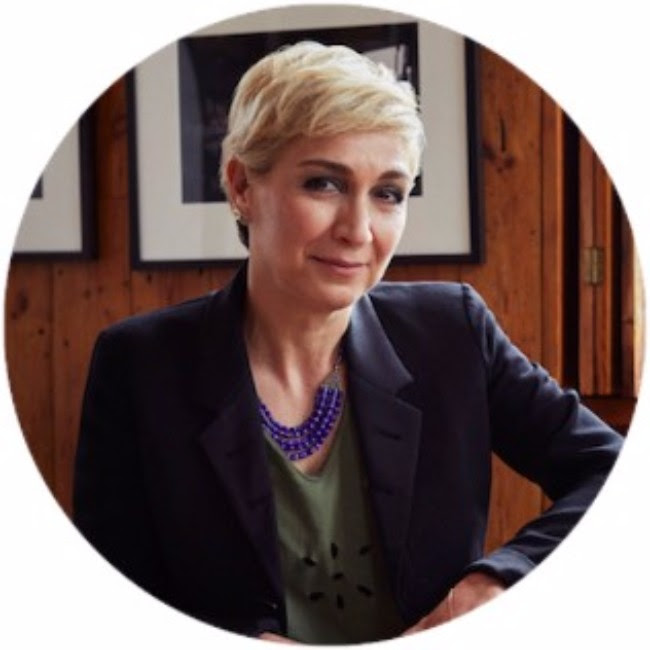 |
The MGI refocuses the lens on the Mediterranean through data and analysis; it is aimed at investors, policymakers, and analysts, as well anyone who wants to gain an in-depth understanding of the region and its potential. Cleopatra is a certified independent director and an advisor to government and corporations on governance, problem solving and growth strategies.
Comfort Ero – Africa Program Director International Crisis Group
 |
Comfort Ero has been Crisis Group’s Nairobi-based Africa Program Director since January 2011. She previously worked with Crisis Group as West Africa Project Director. As Program Director, Comfort oversees projects covering South, West, Central and the Horn of Africa. She has a PhD from the London School of Economics, University of London. Comfort also sits on the editorial board of various journals, including International Peacekeeping.
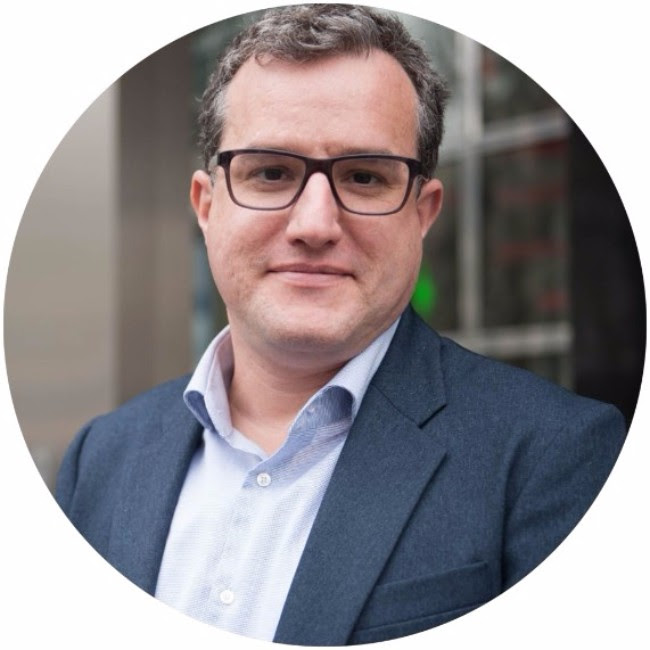 |
Issandr El Amrani oversees Crisis Group’s North Africa Project. Prior to joining Crisis Group, he was a writer and consultant on Middle Eastern affairs based in Cairo. His reporting and commentary on the region has appeared in The Economist, London Review of Books, Financial Times, The National, The Guardian, Time and other publications. He has also advised leading investment firms and NGOs on the region.
Geoff D. Porter – Founder, North Africa Risk Consulting Dr. Geoff D. Porter is the founder and managing director of North Africa Risk Consulting, Inc., a consulting firm specialising in political and security risk in North Africa. North Africa Risk Consulting’s clients include multinational corporations as well as US government agencies. Prior to establishing North Africa Risk Consulting, Dr. Porter was the Director for Middle East and Africa at a political risk consulting firm.
]]>https://soundcloud.com/frontlineclub/americas-shifting-foreign
As Barack Obama enters the second year of his second and final term in office, he faces considerable foreign policy challenges. The US position on Syria and the controversy over the attack on the US embassy in Benghazi, Libya are weighing on the president. There is a notable attempt by the Obama administration to make a strategic pivot towards Asia and away from the Middle East.
Join us as we dissect Obama’s foreign policy ambitions, exploring the shifts in focus and how they are playing out. Will he achieve his second term goals? Can he successfully pull focus to Asia or will the conflict in Syria direct attention back to the Middle East?
The Obama administration is making considerable efforts to redefine American power, through domestic reforms that the president calls “nation-building at home” and substantial shifts in foreign policy. We will be looking more widely at the attempts to rebuild America’s global strength.
Chaired by author, journalist and broadcaster Michael Goldfarb. He has worked for NPR and the BBC, and has written for Global Post, the Guardian, The New York Times and The Washington Post.
The panel:
Kim Ghattas has been the BBC’s State Department correspondent since 2008, and travels regularly with the Secretary of State. She is author of the recently published The Secretary: A Journey with Hillary Clinton from Beirut to the Heart of American Power. She was previously a Middle East correspondent for the BBC and the Financial Times, based in Beirut. Her work has also appeared in TIME magazine, the Boston Globe, NPR, and The Washington Post.
Professor Michael Cox is founding co-director of LSE IDEAS and professor of International Relations at LSE. He has held appointments at The Queen’s University of Belfast, California State University at San Diego, The College of William and Mary in Virginia, the Department of International Politics, Aberystwyth, The Catholic University of Milan, the University of Melbourne, and the Centre for Defence and Strategic Studies in Canberra, Australia. He is general editor of two successful book series Rethinking World Politics and Cold War History. He is author, editor and co-editor of several books including The Rise and Fall of the American Empire: From Bush to Obama, US Presidents and Democracy Promotion, US Foreign Policy and Soft Power and US Foreign Policy.
Dana Allin, is senior fellow for US foreign policy and transatlantic affairs, and editor of Survival: Global Politics and Strategy at The International Institute for Strategic Studies (IISS). He is professorial lecturer at the Paul H. Nitze School of Advanced International Studies (SAIS), of the Johns Hopkins University in Washington D.C., and adjunct professor of European studies at the SAIS Bologna Center. He is author and co-author of five books including, most recently, The Sixth Crisis: Iran, Israel, America, and the Rumors of War and Weary Policeman: American Power in an Age of Austerity.
Nick Schifrin is a foreign correspondent for ABC News based in London. Previously he was the ABC News Afghanistan-Pakistan correspondent and bureau chief based in both Kabul and Islamabad, from 2008 until 2012.
]]>BBC Middle East correspondent from 1995 and Middle East editor since 2005, award-winning journalist Jeremy Bowen has spent much of the past two years documenting the game-changing moments in the history of the Middle East. He will be joining us in conversation with Samir Farah of BBC Arabic to discuss this historic era, which he documents in his new book The Arab Uprisings: The People Want the Fall of the Regime.
Bowen will be reflecting on the extraordinary heady days of early 2011, talking about the thoughts and feelings of the people involved, and how different situations evolved in the varying countries touched by the uprisings. As well as describing the atmosphere on the ground he will give us an insight into the political context, history and the evolving landscape of the Middle East.
]]>By Alan Selby
Much has happened since this time last year. The 15th of February 2011 saw the first Libyans take to the streets of Benghazi against a brutal dictatorship which ruled over them for 42 years. The events that followed sent shockwaves around the world, led to a NATO intervention and culminated in victory for the Libyan people, albeit at a heavy cost. An estimated 30,000 people lost their lives during the campaign and the dust is still settling following Muammar Gadaffi’s death four months ago.
A panel came together at the Frontline Club to discuss how far Libya has come, as well as what the future holds. A tone of cautious optimism prevailed as each member of the panel delivered their own frank assessment of the work of the National Transitional Council (NTC), as well as its ability to uphold the promise of democracy for the people of Libya. Ian Black, The Guardian’s Middle East editor, steered a discussion which exposed differing views on the NTC’s work to date.
Ahmed Gebreel, deputy head of the Libyan embassy in London, suggested that “The NTC has been established for less than a year, with limited resources, and they’re doing their best.”
However, Khaeri Aboushagor, a Libyan writer and spokesman for the Libyan League for Human Rights, made his view that the NTC has a lot of work to do abundantly clear:
The reality sometimes hits us in the face. The ex-prime minister recently said that Libya is not a functioning state, has no proper army, no proper police and that the militias run the show… Democracy is not just elections. It’s much broader and deeper than that. We have to recognise this, if we deny that problems exist it won’t work.”
Carsten Jurgensen, Libya researcher for Amnesty International, echoed this view as he made reference to human rights abuses which have taken place in detention centres:
“What struck us was that those who committed the abuses were quite open about it… No investigations are conducted. The judiciary is totally weak. Prosecutors say that they can’t go and interrogate the chiefs of the militias. It’s quite worrying.”
The panel also suggested that post traumatic stress is now a real issue facing many of the young men who must now try to re-integrate with society and rebuild their country. However, Dr. Faraj Najem, a Libyan writer and historian, made it clear that the damage runs much deeper than at first glance:
I was horrified when I heard that 400 women were raped, but then it was announced that 8000 women had suffered. We need help from psychologists and social workers. We need to reinvent a culture where we can talk openly about the sexual violence that these women suffered for no reason.”
The panel largely agreed that it will be a long road to recovery, as Rana Jawad, a Tripoli-based BBC journalist and author of Tripoli Witness, observed:
]]>“Overall I am optimistic of the journey Libyans will take, but I don’t doubt for a second that it will be extremely difficult. Anyone who thinks it will happen in the next year or two is quite delusional. It’s a very long process and it’s going to take a long time, but ultimately Libyans are striving for it.”
For the first #FCBBCA event of 2012 we will be marking one year since the beginning of what has become known as the "Arab Spring" by bringing together some of the leading digital activists and bloggers across the region.
For this special event we will be asking bloggers and digital activists to select a panel that they believe are the key voices of the uprisings across the Arab region.
Further details of this remarkable event will be available in December.
]]>
For the first #FCBBCA event of 2012 we will be marking one year since the beginning of what has become known as the "Arab Spring" by bringing together some of the leading digital activists and bloggers across the region.
For this special event we will be asking bloggers and digital activists to select a panel that they believe are the key voices of the uprisings across the Arab region.
Further details of this remarkable event will be available in December.
]]>Maryam Al-Khawaja from the Bahrain Center for Human Rights comes from a family of activists, many of whom have been on the receiving end of the police brutality in the Kingdom.
So much so that she joked that “Bahrain should adopt family cells in prisons, so family members could spend some time together.”
Her sister Zainab, aka @angryarabia, was arrested on 15 December during a non-violent sit-in west of Manama. She is one of tens of thousands of women of the revolution.
“Bahrain revolutions is at least 50 per cent made-up and led by women,” says Maryam Al-Khawaja, “It has been breaking a stereotype of Muslim women, according to which they need to have a certain personality if they dress a certain way.”
Al-Khawaja described seeing a video of a traditionally dressed Muslim woman, in the early days of the Bahrain revolution, spraying a graffiti which fully illustrated the steely determination behind the abaya.
“Even if men stop, women will continue.”
Al-Khawajawarned that the revolution in Bahrain was far from over, despite some seemingly positive developments.
Bahraini government set-up an Independent Commission of Inquiry, which was supposed to investigate human rights violations. However, “it is dangerous precedent,” said Al-Khawaja:
“We have an authoritarian regime setting up their own Commission of Inquiry. They will use this report to sweep under the carpet all the human rights violations that they have committed.
“I don’t think we would have had the same reaction had Mubarak visited London in January 2011. King Hamad and his son came to London a few days ago. His son still has the allegations of torture against him.
“And yet, there was no huge outcry from the international community. All because of this, so called, human rights report.”
Al-Khawaja was also critical of the media coverage of Bahrain because even well-minded journalists often refer to the uprising there as a “Shia revolution.”
“People came out demanding dignity, human rights and freedom against an oppressive regime. It has nothing to do with them being Shia or Sunni.
Iran is another country where women have been no strangers to revolutions. It also acts as a warning how they can be let down by the exact causes they are so passionately fighting for.
The women’s contribution to the Iranian revolution of 1979, which saw the overthrowing of the Shah, was “rewarded” by curbs on their rights and the interpretation of Sharia law was adopted.
Sussan Tahmasebi worked at grassroot levels for 11 years in her native Iran on promoting women’s rights and strengthening of the civil society.
She is a founding member of the award-winning One Million Signatures Campaign, which collects signatures of Iranians who support an end to gender-biased laws in the country.
Tahmasebi stressed that women in Iran are better educated than men and the average age of marriage was 25. Women are doctors, lawyers, teachers – active participants in the civil society – all of which defies Western stereotypes of women in the Middle East.
“Of the background of the repressive laws that had been adopted 30 years ago, you have a very strong society with women’s presence. Iran has one of the strongest women’s movements in the region.”
During her work in Iran, but also throughout the Middle East and North Africa, Tahmasebi noticed that the greatest challenge for women who advocate for their rights is the “discourse of culture and religion versus human rights.”
“We must remember that human rights and Islam are not mutually exclusive.
“We need to really advocate for a civil law, which takes into consideration universal human rights standards. Because they are universal. They are not only Western. They are just as much Islamic as they are Christian.”
Tahmasebi talked of the danger of women and their rights being sidelined once the political revolutions in the Arab world are over.
She said that the Western world cited “cultural reasons” in their frequently hands-off approach to women’s rights. However, the risk is that the Arab world will fail the democracy test.
“No democracy is going to be a democracy when 50 per cent of the population have half of the rights of the other 50 per cent”
When asked about the political rise of the Islamist parties in post-revolution Arab world, Tahmasebi said:
]]>“It is still better than the dictatorships we had before. But, what makes me nervous is that some of these Islamic parties are not clear on the specifics. We need to ask questions like What do you think about polygamy? Can you see women in high positions? We need to hold these people accountable.
“These countries have a golden opportunity to to draft constitutions. They need to draft laws that they can defend to their daughters, their children, in 30 years time.”
Leila Ahmed, who is the Victor S. Thomas Professor of Divinity at the Harvard Divinity School, will be joining us at the Club in conversation with Azadeh Moaveni, Iranian-American writer, journalist and author of Lipstick Jihad, to discuss her new book A Quiet Revolution: The Veil's Resurgence, from the Middle East to America and her surprising discoveries about Muslim women, Islamism and democracy.
]]>
You can watch this event live from 7pm here and we will be live-tweeting on @frontlineclub. The hashtag for this event is #fcveil.
Raised in Cairo in the 1940’s, by a generation of women who never wore the veil or headscarf, Leila Ahmed set out to discover why so many women now wear the veil, and what this shift means for women, Islam and the West.
Leila Ahmed, who is the Victor S. Thomas Professor of Divinity at the Harvard Divinity School, will be joining us at the Club in conversation with Azadeh Moaveni, Iranian-American writer, journalist and author of Lipstick Jihad, to discuss her new book A Quiet Revolution: The Veil’s Resurgence, from the Middle East to America and her surprising discoveries about Muslim women, Islamism and democracy.
At a time when both Islamist and democratic forces are dramatically changing the Middle East, Leila Ahmed’s analysis of the resurgence of the veil from Egypt to Saudi Arabia challenges many assumptions about women’s rights and activism.
Leila Ahmed was the first professor of Women’s Studies in Religion at Harvard University and is author of Women and Gender in Islam.
]]>
Videos that were circulated after the fall of President Hosni Mubarak showing state TV bosses being chased out of their offices and journalist strikes appeared to herald a new era in Egypt.
In Libya, hackers have attacked the state broacaster’s website and scenes of people throwing their shoes at the screen in a mark of disrespect are reported to have taken place in Libya as they did in Egypt and other countries where the media is regarded as an instrument of government.
The state-controlled TV channels, radio, newspapers and magazines were re-casting themselves as champions of radical change, while just days before the protestors in Tahrir Square had been ignored or denounced.
But can a leopard change its spots? Already there has been criticism of Egyptian broadcasters and newspapers for stirring up xenophobia and for remaining hostile to the pro-democracy movements.
What is required in order that a genuine revolution takes place in the media – not only in Egypt but in other countries where autocrats have used it to bolster their power? What happens in countries such as Iran where control of the media remains absolute?
Join us at the Frontline Club when we will be discussing what the future holds for state media, the impact of channels such as Al Jazeera and BBC Arabic, and the ways that people are using the internet and other social media to circumvent that power.
The discussion will be chaired by author and broadcaster Tom Fenton.
With:
Faisal J. Abbas, London-based journalist, blogger and social commentator. He writes regularly for Huffington Post on Middle Eastern affairs and has worked with several leading Arab media outlets such as Asharq Al Awsat, where he established and edited the paper’s weekly ‘Media Supplement’, Al Hayat and Future Television of Lebanon;
Dina Matar, senior lecturer in Arab Media and Political Communication at SOAS;
Hugh Miles, award-winning investigative journalist specialising in the Middle East and North Africa, author of Al Jazeera: How Arab TV News Challenged the World and Playing Cards in Cairo and contributing editor of the American University in Cairo’s Centre for Television Journalism media journal;
Ayman Mohyeldin, Middle East-based correspondent for Al Jazeera English.
Picture credit: BRQ Network
]]>These were two themes that emerged from April’s First Wednesday discussion last night, which focused on the way that the West was being forced to adapt its foreign policy by events in the Middle East and North Africa.
In a discussion that was very much lead by questions from the floor, one audience member commented that countries in the Middle East have in the past been viewed as pariah states or stooges by the West. Now that people movements are seeking "a plain, simple democracy" can they trust that the West genuinely wants the same?
Jane Kinninmont, senior research fellow, Middle East and North Africa Programme at Chatham House, said Tunisa and Eypt are "potentially a great opportunity" for the West to offer genuine support to real democratic transitions through political support, training, legal advice, help finding assets and economic support including debt relief:
There seems in Egypt to be particular demand for investment and for guarantees, under writing of investments that will create jobs. Jobs are going to be absolutely key to Egypt’s success.
I do very much hope that Western policy makers do take that opportunity and don’t decide that they fear the Muslim Brotherhood so much that they would prefer another disguised military government.
Barak Seener, research fellow, Middle East Studies at the Royal United Services Institute for Defence and Security Studies argued against democratisation and instead for liberalisation.
Classical Islam has a system of consultations, in Arabic there is no word for democracy, they have justice, they have consultations. Why should we impose a Western style of democracy on the Middle East. There doesn’t need to be a clash of civilisations if consultations are working in sync with Western democracies.
The panel, including Libyan writer and historian Dr Faraj Najem, largely supported intervention in Libya:
We have had a regime which for the last 42 years has not liked the word democracy and has denied its people personal freedom and also development and has pillaged the country’s riches.
A regime which is not just lethal to its own people – we saw what happened in Locherbie, the French airplane over Niger and also in Chad, causing too many problems to its neighbours, Tunisia, the Egyptians and the Saudis. A regime that even sponsored a coup in Fiji.
So it’s a regime which is very dangerous and what’s particularly dangerous is that it’s not just the father, it’s the seven sons who are taking over and a daughter who is also very dangerous.
But should we expect more interventions in the new world order that is emerging? What of countries like Syria, Bahrain and Yemen?
Dr Noel Brehony CMG, research associate at the London Middle East Institute at SOAS and author of a recent book on Yemen said that it was unlikely that a precedent for intervention had been set:
It’s very important to remember that we are talking about 19 or 20 different countries that are all different and the pace of what’s happening in each country and their trajectories will be different. I think in Saudi Arabia, for example, it will be very slow.
There was a consensus on Libya, it was a very clear situation. I don’t know whether we will see the same in Yemen, where you’ve got the opposition parties, you’ve got the people on the streets who are all united in wanting to remove [Ali Abdullah] Saleh but arevery divided among themselves. Anything there would be very messy indeed.
Syria is a very strong regime and it will have to react in some way to what’s going to happen but I hope that we can do that through diplomatic and other pressure. They are all learning, these regimes from each other. That’s why we are seeing economic concessions being made, these promises of political change.
For further discussion on whether opposition movements in Yemen and Bahrain are justified in feeling betrayed by the international community for failing to do anything to reign in regimes there, the importance of Saudi Arabia to the West, morals v self interest and a great deal more, listen to the podcast here or download from itunes.
]]>Next Tuesday a collective of photographers will be discussing their experiences documenting poverty on their doorstep in the UK. On Wednesday a panel of experts will be discussing state media in the Middle East and North Africa, looking at its role in post-revolution countries, the influence of Al Jazeera and BBC Arabic and the power of the internet and social media to circumvent media power.
Our screenings in the week ahead include Oscar nominated GasLand looking at the cost paid for the search for natural energy production and Sex, Death and Gods offering an unseen glimpse into the lives of a little understood sect of Hinduism. ]]>