The panel discussion ‘What Does Trump’s Presidency Mean for the Rest of the World?’ on 25 November clearly highlighted this as it careened wildly, swerving from the global implications and election autopsies, to passionate debates over racism and fascism.

Journalist and author Laurie Penny damned the evening as a ‘normalising’ discussion about ‘a fascist’. Echoing this, Shelina Janmohamed (a commentator on Muslim social and religious trends) urged the audience to think about the framing of the stories told. ‘The way we talk about identity,’ she argued, referring to the coverage of the trial of Jo Cox’s murderer, ‘…affects real peoples’ lives’. There is a potential ‘ripple’ effect on women’s rights movements globally, she argued, legitimising misogyny as ‘locker room talk’, disregarding women’s place in society, and signalling that it’s okay to talk about your daughter in ‘repulsive’ ways.
Trump’s rhetoric around climate change has some fearing the death of climate politics. He talks about ‘setting free coal,’ says Steven Erlanger, London bureau chief for the New York Times. But, this won’t go far: ‘No one’s going to invest in coal, it’s not worth their money,’ Erlanger argued. Many countries are ‘invested in a cleaner world’ for their own reasons, so ’just because the president thinks it can happen’ it doesn’t mean it will.

Having previously referred to NATO as ‘obsolete‘, will Trump oversee a shift in the global security landscape? Dan Roberts, The Guardian’s Washington bureau chief, argued Europe will be ‘looking after itself’: for Trump, world security isn’t ‘an American problem’. Erlanger demurred, pointing out that the USA’s NATO membership isn’t altruistic, but in American ‘interests’. President of the British International Studies Association, Inderjeet Parmar, agreed, ‘I don’t think America’s retreating’.
Author, broadcaster, and the chair of the event, Michael Goldfarb asked if Trump caught a ‘wave’ that’s sweeping the world. There is a ‘systemic’ element, Parmar mused; the populist surge is the ‘unravelling of an order’ unable to sustain the ‘Western’ dream. But did Trump’s supporters see themselves as part of a larger wave? One audience member disagreed, arguing that many who voted for Trump sought a conservative supreme court, and didn’t consider the ‘world economy’ or ‘globalism’.
To what extent Trump fulfils his campaign promises remains to be seen. ‘The office has a moderating influence’ argued Alex Sundstrom of Republicans Overseas UK, he will ‘tack to the centre to get stuff done’. Janmohamed disagreed, arguing that his appointees are ‘proof that he’s going to make good on those statements.’ Parmar, however, saw compromise ahead. ‘The education of Donald Trump is going to be the title of a really great book,’ he quipped, ‘that education began as soon as his election was through.’
]]>
Frontline Club founder Vaughan Smith chats with Ben De Pear of Channel, 4, Marcus Mabry of The New York Times, freelancer Emma Beals, and AFP’s David Williams.
As many major news organisations close foreign bureaus, freelancers are called on more and more to cover global conflicts. They face risks often without the structure, training and resources that come with having a large media outlet behind you.
Continuing a conversation that began at the end of October in New York at the Overseas Press Club of America (OPC), Vaughan Smith, founder of the Frontline Club, spoke with leading editors at the club in London on Tuesday 18 November. They discussed the importance of pay to reflect risk, training, and new ways of determining how much responsibility for freelancers news outlets should take on.
Joining Smith were David Williams, deputy global news editor at Agence France-Presse (AFP); Marcus Mabry, editor at large for The New York Times and president of the Overseas Press Club of America (OPC); Ben De Pear, editor of Channel 4 News; and Emma Beals, a multimedia independent journalist covering Syria and Iraq and member of the board at the Frontline Freelance Register (FFR).
New Standards
How freelancers are folded in to media organisations vary from outlet to outlet, so what should best practice look like?
“There’s an inverse relationship between the amount of control and the amount of responsibility they should take on for that person,” Beals said of the freelancer–editor relationship.
“We commission people in a very clear way. They have to take a hostile environment awareness course. We have to know them,” said De Pear. “Do you trust this person, are they trained, will this person deliver something we will put on television?” he said are important questions they ask, adding, “the Arab Spring was a bit of a nightmare. Libya was a fantasy war zone. Anyone who had a camera flew in.”
“I think the future is more to incorporate regular freelancers into our structures,” said Williams, pointing out that they made a tough decision after two of AFP’s top editors met with freelancers on the Turkish–Syrian border in 2012. “We will not accept production from freelancers where we don’t dare to venture ourselves,” he said, “we don’t want to encourage freelancers to take risks that our own journalists won’t take.”
Better Pay = Safety
Marginal wages for a story from a conflict zone don’t allow freelancers to invest in much needed training and equipment, argued Beals and many from the audience.
“You have to pay them more than $300 for 1,000 words in Syria,” she said. “It’s a professional work force with unprofessionalised wages. The pay is about safety,” Beals added, noting a recent story had her covering her expenses, which were twice the rate she was getting paid, up front with a promise of reimbursement months later.
Treating freelancers like a member of the AFP team under a new approach, said Williams, means they have more financial backup. “We bring them into the same structure that an AFP reporter would have. Generally they should have the same benefits.”
Smith said he is astounded by the number of freelancers he meets who have not been on a hostile environment training course. “We did a survey of freelancers at FFR,” he said, “a third said they thought that the editors they dealt with didn’t give a fig about their safety.”
You can watch the talk and listen again online here:
]]>By Charlotte Eyre
Original and innovative content will remain the keystone of the news industry as the media machine progresses, David Carr said in a discussion with Richard Gizbert on Monday.
At our First Wednesday Special, discuss the cultural and political changes set in motion by the events of 9/11 ten years ago and look ahead to the next decade.
We’ll also be discussing extremism, Somalia, photography in transit and the cult of youth in newspapers and there’s also a great opportunity to hear from industry veterans Martin Bell and the New York Times‘ David Carr and Richard Gizbert of Al Jazeera English.
Our screenings include a double bill of films by John D. McHugh, a special preview of The Debt, insight into the world of teenage miners in Bolivia and human trafficking in Nigeria.
Go to our website for further details of all the talks and screenings, PLUS a preview reading of Bang Bang Bang, a multimedia storytelling masterclass with Brian Storm and third party events on remembering 9/11 and on investigative journalism.
Follow us on Twitter and catch up on any events you missed on the Forum blog or download our podcasts on iTunes.
]]>
The performance of James and Rupert Murdoch before the parliamentary committee yesterday will play out in the United States where allegations of payoffs to police could put News Corporation in violation laws prohibiting American firms bribing foreign officials. The US Justice Department is currently investigating.
There’s a blow by blow account here of the spat that began with a column by David Carr in Monday’s New York Times questioning the future of Rupert Murdoch and News Corps.
It continued yesterday with Bret Stephens comparing the publishing of Wikileaks to the News of the World in his column.
"Both, in short, are despicable instances of journalistic malpractice, for which some kind of price ought to be paid," he wrote.
Referring to the risks Zimbabwe’s prime minister and opposition leader Morgan Tsvangirai faced as a result of the release of diplomatic cables last year, Brett writes:
"Seen in this light, the damage caused by WikiLeaks almost certainly exceeded what was done by News of the World, precisely because Mr. Assange and his media enablers were targeting bigger -if often more vulnerable – game. The Obama administration went so far as to insist last year that WikiLeaks "[placed] at risk the lives of countless innocent individuals -from journalists to human rights activists to soldiers." Shouldn’t there be some accountability, or at least soul-searching, about this, too?"
Denying that his column was "shilling for Rupert Murdoch", Brett continues that he has "nothing but contempt for the hack journalism" of some of the Murdoch titles.
"But my contempt goes double for the self-appointed media paragons who saw little amiss with Mr. Assange and those who made common cause with him, and who now hypocritically talk about decency and standards. Their day of reckoning is yet to come."
Yesterday Rebekah Brooks sought to implicate The Guardian in widespread use of private detectives, claiming that the newspaper was top of a list published in 2006 (p11). In fact the daily newspaper was not on the list, although its sister paper The Observer, was ninth on the list below the News of the World, but above the Sun, with 103 transactions identified.
Our event next week looking at the phone hacking scandal, ethics and tabloid journalism is fully booked but you can watch it live here.
]]>The sheer scope and significance of the revelations is shocking. Among them are great abuses of power, corruption, lies and war crimes. Yet there are still some who insist WikiLeaks has "told us nothing new". This collection, sourced from a range of publications across the web, illustrates nothing could be further from the truth. Here, if there is still a grain of doubt in your mind, is just some of what WikiLeaks has told us:
* American planes bombed a village in Southern Yemen in December 2009, killing 14 women and 21 children (see Amnesty)
* The Secretary of State’s office encouraged US diplomats at the United Nations to spy on their counterparts by collecting biographic & biometric information (see Wired.com)
* The Obama administration worked with Republicans to protect Bush administration officials facing a criminal investigation into torture (see Mother Jones)
* A US Army helicopter gunned down two Reuters journalists in Baghdad in 2007 (see Reuters)
* US authorities failed to investigate hundreds of reports of abuse, torture, rape and even murder by Iraqi police and soldiers (see the Guardian)
* In Iraq there were scores of claims of prison abuse by coalition forces even after the Abu Ghraib scandal (see the Bureau of Investigative Journalism)
* Afghan President Hamid Karzai freed suspected drug dealers because of their political connections (see CBS News)
* Israeli Prime Minister Benjamin Netanyahu expressed support for the concept of “land swaps” (see Yahoo News)
* The United States was secretly given permission from Yemen’s president to attack the Al-Qaeda group in his country (see the Guardian)
* Then-Secretary of Defence Donald Rumsfeld and his top commanders repeatedly knowingly lied to the American public about rising sectarian violence in Iraq beginning in 2006 (see the Daily Beast)
* The US was shipping arms to Saudi Arabia for use in northern Yemen even as it denied any role in the conflict (see Salon.com)
* Saudi Arabia is one of the largest origin points for funds supporting international terrorism (see the Guardian)
* A storage facility housing Yemen’s radioactive material was unsecured for up to a week (see Bloomberg)
* Israel destroyed a Syrian nuclear reactor in 2007, fearing it was built to make a bomb (see the Sunday Times)
* Top officials in several Arab countries have close links with the CIA (see the Peninsula)
* Swiss company Trafigura Beheer BV dumped toxic waste at the Ivorian port of Abidjan, then attempted to silence the press from revealing it by obtaining a gagging order (see WikiLeaks)
* Pakistan’s government has allowed members of its spy network to hold strategy sessions on combating American troops with members of the Taliban (see the New York Times)
* A stash of highly enriched uranium capable of providing enough material for multiple "dirty bombs" has been waiting in Pakistan for removal by an American team for more than three years (see CBS News)
* US military Special Operations Forces have been conducting offensive operations inside Pakistan, despite repeated denials from US officials (see the Nation)
* China was behind the online attack on Google (see ZDNet)
* North Korea is secretly helping the military dictatorship in Myanmar build nuclear and missile sites in its jungles (see CBS News)
* The Indian government "condones torture" and systematically abused detainees in the disputed region of Kashmir (see CBS News)
* The British government has been training a Bangladeshi paramilitary force condemned by human rights organisations as a "government death squad" (see the Guardian)
* BP suffered a blowout after a gas leak in the Caucasus country of Azerbaijan in September 2008, a year and a half before another BP blowout killed 11 workers (see the Guardian)
* Saudi Arabia’s rulers have deep distrust for some fellow Muslim countries, especially Pakistan and Iran (see CBS News)
* Saudi Arabia’s King Abdullah repeatedly urged the United States to attack Iran (see the Guardian)
* Iranian Red Crescent ambulances were used to smuggle weapons to Lebanon’s militant Hezbollah group during its 2006 war with Israel (see CBS News)
* Dozens of US tactical nuclear weapons are in Germany, the Netherlands and Belgium (see * The Libyan government promised "enormous
repercussions" for the UK if the release of Abdel Baset al-Megrahi, the Lockerbie bomber, was not handled properly (see CBS News)
* Pope Benedict impeded an investigation into alleged child sex abuse within the Catholic Church (see MSNBC)
* Sinn Fein leaders Gerry Adams and Martin McGuinness carried out negotiations for the Good Friday agreement with Irish then-prime minister Bertie Ahern while the two had knowledge of a bank robbery the Irish Republican Army was planning to carry out (see CBS News)
* Anglo-Dutch oil giant Royal Dutch Shell PLC has infiltrated the highest levels of government in Nigeria (see the Guardian)
* A US official was told by Mexican President Felipe Calderon that Latin America "needs a visible US presence" to counter Venezuelan President Hugo Chavez’s growing influence in the region (see Yahoo News)
* Cuba’s economic situation could become "fatal" within two to three years (see Business Week)
* McDonald’s tried to delay the US government’s implementation of a free-trade agreement in order to put pressure on El Salvador to appoint neutral judges in a $24m lawsuit it was fighting in the country (see the Guardian)
* British officials made a deal with the US to allow the country to keep cluster bombs in the UK despite the ban on the munitions signed by Gordon Brown (see Politics.co.uk)
* The British government promised to protect America’s interests during the Chilcot inquiry into the Iraq war (see the Guardian)
* The US government was acting on behalf of GM crop firm Monsanto in 2008, when the US embassy in Paris advised Washington to start a military-style trade war against any European Union country which opposed genetically modified (GM) crops (see the Guardian)
* Pfitzer tested anti-biotics on Nigerian children, contravening national and international standards on medical ethics (see Medical News Today)
* Prisoners at Camp Delta (Guantanamo Bay) were denied access to the Red Cross for up to four weeks (see the Telegraph)
* More than 66,000 civilians suffered “violent deaths” in Iraq between 2004 and the end of 2009 (see the Telegraph)
* Russia is a “virtual mafia state” with rampant corruption and scant separation between the activities of the government and organised crime (see the Guardian)
* The Obama administration tried to “sweet-talk” other countries in to taking Guantanamo detainees, as part of its (as yet unsuccessful) effort to close the prison (see the New York Times)
]]>In Generation’s End: A Personal Memoir of American Power after 9/11, Scott Malcomson recalls his work at the New York Times as foreign-affairs op-ed editor during 9/11 and the invasion of Afghanistan, then as an advisor to the UN’s Sergio Vieira de Mello until his death in the bombing of the UN headquarters in August 2003
This was the period when America’s "baby-boomer" generation came out from under the shadow of the greatest generation and faced its decisive test on the world stage. As George Packer writes in his foreword: “These two years contain all the decisions that would set in motion the larger era.”
Malcomson, currently foreign editor of the New York Times Magazine, will be joined on stage at this exclusive event at the Frontline Club by New York Times’ London bureau chief, John F. Burns, a two-time Pulitzer prize winner. Articles commissioned by Malcomson have won numerous awards, including a Pulitzer Prize and a National Magazine Award.
To reserve a seat kindly rsvp to Karyn Caplan at karyn@iwpr.net.
]]>"The Afghan War Diary [is] an extraordinary secret compendium of over 91,000 reports covering the war in Afghanistan from 2004 to 2010. The reports describe the majority of lethal military actions involving the United States military.
"We hope its release will lead to a comprehensive understanding of the war in Afghanistan and provide the raw ingredients necessary to change its course."
"A huge cache of secret US military files today provides a devastating portrait of the failing war in Afghanistan, revealing how coalition forces have killed hundreds of civilians in unreported incidents, Taliban attacks have soared and Nato commanders fear neighbouring Pakistan and Iran are fuelling the insurgency."
Watch the Guardian’s live blog for further developments. Includes a link to a video interview with Wikileaks founder Julian Assange.
"The documents, made available by an organization called WikiLeaks, suggest that Pakistan, an ostensible ally of the United States, allows representatives of its spy service to meet directly with the Taliban in secret strategy sessions to organize networks of militant groups that fight against American soldiers in Afghanistan, and even hatch plots to assassinate Afghan leaders."
"The war logs expose the true scale of the Western military deployment — and the problems beleaguering Germany’s Bundeswehr in the Hindu Kush."
U.S. Response
Statement by National Security Advisor General James Jones:
"The United States strongly condemns the disclosure of classified information by individuals and organizations which could put the lives of Americans and our partners at risk, and threaten our national security…These irresponsible leaks will not impact our ongoing commitment to deepen our partnerships with Afghanistan and Pakistan; to defeat our common enemies; and to support the aspirations of the Afghan and Pakistani people."
Reaction from Pakistan
Telegraph report including comments from Pakistan envoy:
"Ambassador Husain Haqqani called the release of the file by web whistleblower site Wikileaks "irresponsible," saying it consisted of "unprocessed" reports from the field.
""The documents circulated by Wikileaks do not reflect the current onground realities," Mr Haqqani said in a statement."
Taliban Tactics
Journalist David Axe looks at an incident from June 2007.
Nothing New?
"So, do these documents tell us something intrinsically new? No.
"But they do provide a mine of rich empirical detail, which will allow campaigners and even enterprising scholars interested in this area to w[e]ave narratives about war-fighting and the civilian experience of war.
"Where the documents show the coalition to have been ‘naive’ (the word the BBC kept using), it might prove to be an opportunity or a point of departure for learning lessons. One would hope that it doesn’t take the repeated actions of this campaigning website to prompt it; and one also has to hope that they haven’t done more harm than good."
"Scoop!"
Wikileaks and the media
"Wikileaks takes new approach in latest release of documents", Washington Post.
"The interaction between "traditional" and "new" media is the most immediately arresting "process" aspect of this event," James Fallows, The Atlantic.
Jay Rosen, Press Think, The "first stateless news organisation"
David Clinch: "The leak itself is the headline"
"Story behind biggest leak in intelligence history", Nick Davies, The Guardian.
]]>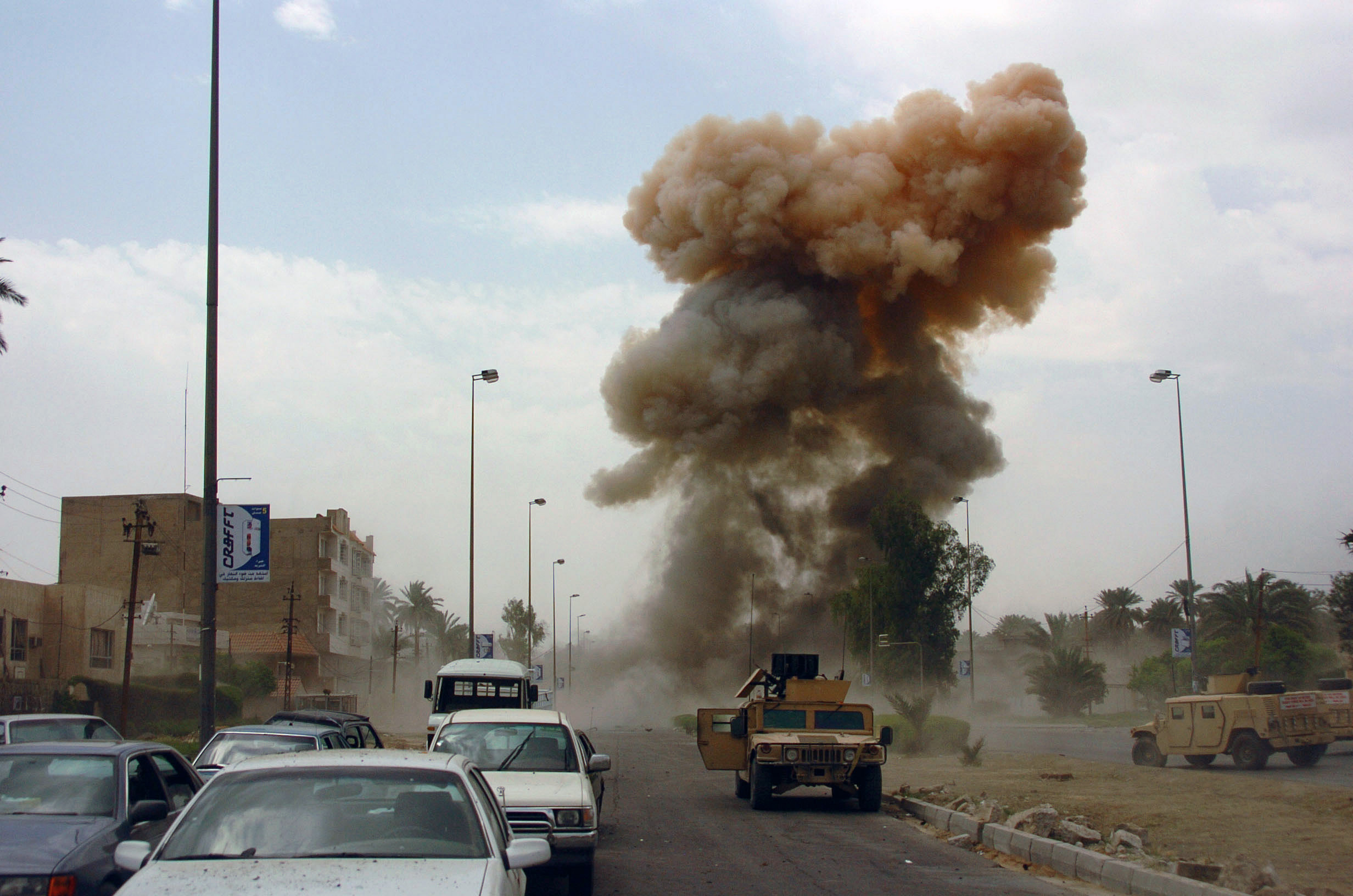 Earlier today I came across an interesting blog post by Holly Pickett who recently finished her seven week rotation as the New York Times bureau photographer in Baghdad. She says:
"It is nearly impossible to photograph the aftermath of a car bomb or street battle. In most cases, the scene is blocked by police, and cameras are simply not allowed. The government has decided that published photographs of deadly bombings aid the cause of insurgents."
I posed the implicit question in Pickett’s post on Twitter: Is the Iraqi government right that such photos aid the cause of the insurgents? And a follow up one: Is censorship always wrong?
Matthew Shorter had an interesting take on the issue from the top of a bus somewhere. (I’ve added in a few letters here and there from his original tweets.) While he thought such photos would help insurgents he also felt…
"…suppressing an image completely would be wrong; and the problem with context is that "social objects" acquire their own so perhaps the ideal scenario is for enough context to be embedded in the image.
"But it is very difficult to police in an open society. And I feel the danger of glorifying violence is less than the danger of suppressing information."
On this final point, I do tend to agree with Matthew but things might look different from the streets of Baghdad, where according to Pickett:
]]>"…fear lingers. Seven years of brutal violence have left their mark here. Iraqis are haunted by bombings, kidnappings, murders and gun battles. They don’t trust the government, the media or each other."
As his paper, Khimkinskaya Pravda, wrote about the dealings of local officials and questioned party policy on a range of issues, so the pressure on his life increased. After his car was blown up, the New York Times says Beketov was brutally assaulted:
"…he was savagely beaten outside his home and left to bleed in the snow. His fingers were bashed, and three later had to be amputated, as if his assailants had sought to make sure that he would never write another word. He lost a leg. Now 52, he is in a wheelchair, his brain so damaged that he cannot utter a simple sentence."
To say Russia doesn’t have a particularly positive record on media freedom is an understatement.
According to Reporters Without Borders five journalists were killed in Russia in 2009, the murder of Anna Politkovskaya remains unsolved, and other journalists have faced libel suits and physical intimidation.
The organisation describes the country as "one of the world’s most dangerous countries for independent journalists".
]]>