Blackberry Messenger, Google Maps, YouTube and other less conventional information hubs were put under scrutiny on the 21 January at the Frontline Club. Richard Pendry, a journalist and lecturer at the University of Kent, chaired the fully booked discussion titled: The Changing Face of News Gathering.
Well-versed in the art of unconventional news gathering and distribution, were a panel of speakers including; Eliot Higgins author of the Brown Moses Blog; Malachy Browne, news editor of Storyful; and Trushar Barot assistant editor at the social media and User Generated Content (UGT) at BBC News. The fourth panellist, whose true identity remained hidden, was the charity Videre’s head of operations who was referred to as Greg.
The categorisation of news gathering as traditional or non-traditional was flagged as problematic from the start. When asked if he considered himself a non-traditional reporter, Browne said:
“The source of information that we receive a few years ago would have been considered non-traditional, its primarily social media content that we work with… Its the application of traditional news values and journalism values to a new form of information.”
Browne continued,
“Storyful was founded on the idea that you can draw news from the noise… We filter the social web in a way so that we are able to monitor it very effectively.”
It was made clear that individuals are becoming citizen journalists by generating valuable content and presenting it to the public. Higgins is a good example of this, he became a well known journalist by gathering information on the weapons being used in Syria. Through online channels he effectively accessed and deciphered information which confirmed an arms smuggling route from Croatia through Jordan to the opposition fighters.
Barot gave us some perspective from within the BBC on the advancements of social media:
“Its changed a lot. Four years ago just finding a reporter who would take Twitter seriously as a journalistic tool was not easy… Now we have hundreds of reporters on Twitter.”
He went on to mark the 2011 UK riots as a point when Twitter really came into its own in conveying news as it happened. Barot said:
“As well as being a source of pictures, videos and eye-witness accounts we were feeding in real-time intelligence in terms of our news desks.”
Unlike some of the others’ approach, Greg’s organisation Videre, whose motto is “Seeing is Believing”, goes back to first-hand evidence collecting for various media and human rights organisations. Run like a secret intelligence core, Videre’s reporter’s identities’, as well as the information they collect, remain untraceable and their carefully gathered information is given away for free. Pendry outlined a potential concern:
“How does anyone know if any of this stuff is true? There is no transparency at all so it completely depends on everyone trusting you and the people that work with you.”
When asked why Videre does what it does, Greg answered simply, “To try to do good.”
It was made clear that the credibility of information and how to verify it is an issue which plagues new media sources. Higgins demonstrated how he pieced together information from anonymous Libyan footage to effectively map events. The already media savvy audience were eager to hear more tips on geo-location technology which Browne went on to outline. He emphasises the importance of investigating three questions; the source, date and location.
Browne went on to provide an example as to how his team of experts confirmed recent footage coming out of Dariya, Syria as well as how they traced the author of a video posted during the Boston Marathon bombing.
With the boundaries of investigative journalism being pushed in this way, the question of privacy became essential. Barot highlighted:
“Something these social media companies are pushing towards is that actually there is nothing wrong in being open and that privacy is a bit of an illusion.”
Evidently in Videre’s case privacy must be upheld at all costs and Greg summarised the high-tech low-tech balance well, he said:
“To understand when to use the the technology which enables you and when using it puts you and other people in danger.”
While exploring the open media platforms available to journalists is essential in todays world, Barot warned of the growing number of closed social media tools such as chat applications. While Barot could not predict what future technology in the media world would look like, he confirmed a far wider spread of mobile technology. He concluded:
“That is one of the things that is definitely going to be a big change over the next 18 months as mobile technology becomes so much more ubiquitous in the developing world.”
Watch or listen to the event here:
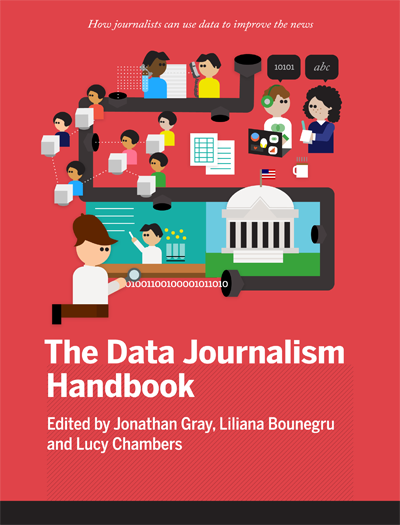
]]>In the data journalism realm, there is the Data Journalism Handbook:
School of Data provides courses in how to source and visually present data.
A final resource to watch and try is from the Codecademy startup, which provides free tutorials in how to use HTML, CSS, Javascript, jQuery, Python and several APIs including YouTube.
]]>This event is organised by Reuters Institute for the Study of Journalism. Followed by a drinks reception.
Egypt’s revolutionary uprising in 2011 raised important questions about the kind of journalism that would be viable in the country’s changing political dynamics.
Suddenly the output of bloggers, online radio and social media news operations, which had all formed part of the groundswell of action against dictatorship and repression, posed an explicit challenge to journalists in state-run and commercial media companies who were more directly subject to government controls.
In this launch event for her new book, Naomi Sakr looks at recent transformations in Egyptian journalism, exploring diverse approaches to converged media and the place of participatory cross-media networks in expanding and developing the country’s body of professional journalists.
Naomi Sakr will present her new book Transformations in Egyptian Journalism: Perspectives on News Work after the January 25 Revolution.
With:
Naomi Sakr, Professor of Media Policy at the Communication and Media Research Institute (CAMRI), University of Westminster, and Director of the CAMRI Arab Media Centre.
Dr Walter Armbrust, Hourani Fellow and University Lecturer in Modern Middle Eastern Studies at the University of Oxford. He is a cultural anthropologist whose research interests focus on popular culture and mass media in the Middle East. He is the author of Mass Culture and Modernism in Egypt, and editor of Mass Mediations: New Approaches to Popular Culture in the Middle East and Beyond. Dr Armbrust is currently working on a cultural history of the Egyptian cinema.
Mustafa Menshawy, formerly the Cairo-based BBC Arabic Service correspondent from the beginning of the Egyptian Revolution. He also reported from Libya before the fall of the Gaddafi regime. Menshawy won the Lorenzo Natali Prize for the best worldwide investigative journalism articles in 2006 and was shortlisted for the Kari Blackburn New Talent Award in 2008. He reported from areas far afield such as India and Thailand. He produced two documentaries from the BBC including a controversial one on the Financial Crisis in Dubai. Menshawy is now in London finishing his PhD on cultural claims of collective memory.
]]>Based on the Popcorn.js library, Popcorn Maker allows users to pull web-based elements like video, text, images and maps into a timeline. This is an early version of the Popcorn Maker but it is promising because it uses open standards like CSS and HTML 5, is free to use and is browser-based. This sets it apart from proprietary tools such as Flash.
This is an example of what the young hosts of WNYC’s Radio Rookies made with Popcorn Maker:
http://popcorn.webmadecontent.org/y7_
You can remix the Radio Rookies’ piece here to get a sense of how Popcorn Maker works.
]]>19.00 Keynote speaker: Gavin Sheppard, marketing director, Media Trust.
19.30 Panel discussion: The future of newsgathering and the changing media landscape
Change in the media landscape is constant. Technology and new media has enabled both journalists and citizens on the street to actually break news themselves. With a smart phone or iPad, one can discover, capture footage and report news instantly.
Journalism has entered the digital revolution – the age of mobile and crowd sourced street reporting. With the emergence of citizen journalists becoming a trusted source, how will media organisations adapt their newsgathering methods and maintain readership?
Consider media reports from countries like Sierra Leone or Syria. The authorities have not shown any responsibility to protect journalists or those independently newsgathering and reporting from the scene. According to the Committee to Protect Journalists, ten journalists have been killed in Syria since November 2011 – two of which were British nationals working as independent newsgatherers. What can be done to ensure the safety of citizen, independent and career journalists?
Moderated by:
Nikki Bedi, a television and radio presenter of Indo-Anglian descent, began her career in Mumbai as both a stage and television actress. Spotted by Channel 4 she moved into broadcasting and has worked in India, the U.S.A and now the UK; hosting her own chat show on Star TV, film shows for Universal’s channel The Studio and NOW TV and she now works for the BBC. She is a regular interviewer alongside Clive Anderson on Radio 4’s Loose Ends, works on Radio 2, can be seen on To Buy Or Not To Buy on BBC1 and currently presents her own nightly radio phone-in show Nikki Bedi on BBC London 94.9. She can also be seen reviewing the papers on Sky News.
With:
Paul Lewis, special projects editor for the Guardian. He joined the Guardian as a trainee is 2005 after studying at Cambridge University and Harvard University. He currently runs teams of journalists at the newspaper working on a range of investigations. He recently led Reading the Riots, a major research project into the causes and consequences of the England riots, in collaboration with the London School of Economics. London-based he lectures across Europe about the use of social media in journalism and teaches a masterclass in investigative reporting. This year he was nominated for both Reporter of the Year and the Orwell Prize for Journalism, named Reporter of the Year at the British Press Awards 2010 and won the 2009 Bevins Prize for outstanding investigative journalism.
Matthew Eltringham, editor of BBC College of Journalism. He was previously Assistant Editor of Interactivity and Social Media Development at the BBC. He developed programmes to bring social media skills to all journalists within BBC News and extended the BBC’s involvement in social media. In 2005 he set up the user-generated content (UGC) Hub – an innovative award-winning team that has developed expertise in digital editorial engagement with social media and user-generated content.
Mark Evans, head of home news at Sky News. He has been a journalist for 20 years, working in local, regional and national newspapers before joining the TV world with Sky News in 2001. Since then Sky News has further developed into a multi-platform organisation, leading the way in the provision of news for the web, radio, hand-held technology and in HD on TV. His position as head of home news puts him on the news front line, pushing those innovations while maintaining Sky News’ second-to-none record in editorial content.
Gavin Sheppard, marketing director at Media Trust and Community Channel, he leads the organisation’s marketing and communications services, including training and resources, media volunteers and Press Association partnership Community Newswire. In 2009 he launched Media Trust’s pioneering digital media work with communities across England, Community Voices, which is currently working throughout the UK. He has more recently also led on the development of a UK-wide community reporters network newsnet, which will support the production and distribution of quality local news over the next three years.
Ravin Sampat, editor at Blottr. He previously worked within the editorial team at DMGT on their local community hubs LocalPeople and ThisIs. Prior to this, he spent two years in India working as the editor of a lifestyle magazine, freelance copywriting and consulting. He is currently leads the editorial team at Blottr, and is responsible for curation of editorial content and recruiting new contributors.
In partnership with Media Trust.

Photo credit: Emma Suleiman
]]>With over one hundred million ‘views’ the Kony 2012 video has started a far-reaching debate on the aims and value of a production seen by many as an over-simplification of complex situation.
Produced by the NGO ‘Invisible children’, the video calls for military intervention to “stop Kony and disarm the LRA”.
Host Paddy O’Connell of BBC Radio 4’s Broadcasting House was on the hunt for controversy – which is exactly what he found.
Perhaps the most scathing comments on the video came from film-maker and journalist Callum Macrae.
“Low and behold the world has paid attention and I’m hating every minute of it… This is a dreadful, I’m afraid, campaign. But nonetheless very important and we need to discuss it.”
Macrae says the unwavering focus on Joseph Kony puts him ill at ease.
“We shouldn’t be lowering ourselves to the level of Kony or the people who see him as an African bogeyman, we should be looking at the issues that are raised by it.”
Mareike Schomerus, of LSE’s Justice and Security Research Programme agreed that focusing entirely on Kony is a dangerous simplification.
“If you go into LRA controlled areas and actually stay there it becomes clear that the situation is actually much more complex than elevating just one man to the position of superpower…
When I talk, especially to military men,… and I say to them ‘do you honestly really believe that that one man can be responsible for messing about… 5 national armies and 3 UN missions and the US army, and the French army and sometimes the Israeli army.”
Programmes Director for the charity War Child, Amanda Weisbaum also casts a critical eye on the content of the video.
“They did 30 minutes of filming and they didn’t really do any history surrounding it or any complexities surrounding it… but yes I would have loved the 100 million hits”
But how then do people kindle an interest for African issues? Asks Benjamin Chesterton of production company DuckRabbit.
“Do you think we all start with PHDs?… we have to start somewhere… a percentage of [these people that watched the video] will go away and find out more… and maybe do something more than sitting around debating it.”
Poet and musician of Ugandan descent, Musa Okwonga rejects this out of hand.
“It’s utterly patronising to say that children can’t handle complexity… people followed complex narratives involving multiple characters over seven books with Harry Potter”
The idea put forward by the video that military intervention is the only solution held no water for the panel.
“The lessons of history” says Macrae, “are that it’s always gone wrong; it’s always scatter gun and it’s always brought more havoc”
Watch the full event here:
]]>By Thomas Lowe
It could have made no sense.
But with a gently-gently approach to explaining new apps and why they exist, the gap between the journo geeks and the journo technophobes was momentarily bridged – with a little help from the BBC’s technology correspondent Rory Cellan-Jones.
Empowerment:
Former photographer for the dailies, Christian Payne, went on vacation in 2005 to spend time with the Kurdish Peshmerga. Here he says how new technology at the time allowed him to “bypass the mainstream media.”
“I was a photographer for the dailies and I got frustrated with the amount of editors between my images and the final piece of work. So I decided to go to Iraq for a holiday.
“Every time I was blindfolded and taken to a new place I would look down and write secret base 1… I had a dumb phone, but by texting my coordinates home I knew that my last position would always be noted.”
So, technology can empower journalists in far off places where it can provide some form of security. But what about when it comes to daily, non-stop use of social media? Tom Barfield, site editor and community manager at Demotix, a citizen journalism new wire, says new technology is a journalist’s bread and butter:
“I think this is absolutely what [they] should be doing and what [they] have always done is develop contacts and developed relationships and trusted sources of information.”
Yet apps, and the technology that goes with them, are not just the preserve of journalists. Ryan Schlief, program manager for Witness says the important issue is practical application:
“it’s not about hi-fi or low-fi, it’s about ‘wow’ this is a really great tool that’s going to help someone out with the specific purpose they have in mind.”
He nodded to an example in Cairo where Witness trained some members of a community living in a slum there how to use cameras. This, he says, allowed them to take their message “into their own hands.”
Privacy:
The panel agreed on the need to protect sensitive or personal information. Payne says risks come with the benefits of using new methods of communication:
“I think technology’s moving faster than peoples’ awareness of how valuable and dangerous it can be… It only took the regime in Syria to upload pictures of protestors on Facebook for people to start tagging their friends.”
Sam Carlisle, developer of the Sukey app, a tool for protestors following demonstrations in real time, says the basic fault lies with the phone manufacturers:
“The makers of these [phone] devices haven’t necessarily considered your privacy or empowerment through setting up their devices – it’s not a concern for them.”
“They want to create profit… It’s really people jail-breaking and working to create after-market community tools that are allowing you to do something different with the platform other than what it was originally created for.”
Luddites:
To the question you can always rely on: whereto for professional journalists in these hyper-connected times? Payne again:
“…If they can’t get their stories out there quicker than the man on the street… with their phone in their pocket, they should be sitting to receive it going “ok, let’s do something long form around it and let’s add some credibility to [it].”
A positive note to end on with no mention of the moderator’s famous pink socks.
]]>By Alan Selby
The advent of new media has seen an increasing pressure placed upon journalists to become multidisciplinary, but often to the detriment of each medium. During an evening moderated by David Campany, reader in photography at Westminster University, writer A. A. Gill and photographer Tom Craig mounted an impassioned defence of collaborations between photographers and writers. The duo were speaking in the lead up to a new exhibition of their work, a collection of 20 of Craig’s unseen photographs accompanied by text from Gill, which is opening at the Flaere Gallery in March.
The audience were guided through an eclectic series of images from Gill and Craig’s travels, which have taken them from the blistering heat of Chad to the freezing depths of the Arctic. As their presentation began, Craig explained that his dissatisfaction with the news media was a driving force behind their collaboration:
“I was becoming disillusioned with the imagery that I was seeing appearing in the news and feature print media. The reason for that was I felt increasingly individual photographers were going to places with very specific agendas. They had a photograph in mind before they even got there… I think it’s a dangerous place to be in, because it represents a place where it’s very difficult to be impartial.”
Discussing the unique marriage of text and imagery that the pair have produced, Craig added:
“I believe that the power of the image and the written word are great on their own, but they’re a lot greater when they’re combined… I’m at an advantage, I can tell the quieter story because I know there are other things that will be said about it.”
Craig provided the foil to Gill’s inimitable sense of humour throughout the evening and, despite claiming that Craig’s interests amounted to taking photographs of people taking photographs, and of the backs of people’s heads, Gill praised his approach:
“What you want is a photographer who’s aware of himself, and aware of changing the dynamic he is in. Tom does that, he’s very sensitive.”
In response to questions from the floor, the pair discussed how they first met on assignment in Chad, and how they approach the assignments that they undertake. As the proceedings reached their conclusion, Gill offered up his own evaluation of their work together:
“What we do gets rarer and rarer, because a lot of journalists now are expected to take their own pictures. A lot of us are expected to have phones that can take print ready pictures. Then there’s everything that’s happening on the internet: everybody is a photographer, and everybody is a journalist. What you have is this babel of karaoke news. I feel like we’re a Farrier and a Thatcher, we’re doing two jobs that are from the last century, but that’s what we do, and we do it well. When we do it well I don’t think there’s anything else that can touch it.”
Watch the event here:
]]>A packed house at The Frontline Club heard Matt Frei regale them with tales from his long and illustrious career. The former BBC Washington correspondent, recently poached by Channel 4 News, was on fine form as he spoke to former BBC executive Vin Ray about more than 20 years with the BBC:
“The BBC is mother, and it’s been a very good mother to me, but now and again it’s a good idea to leave mother and elope with a mistress. I’ve always admired Channel 4 because it’s a cross between current affairs and news. Newsnight with a bit more of a newsy edge at a decent hour. I’ve had my eye on it for some time, and I guess they may have had their eye on me for some time.”
The event was delivered in conjunction with the BBC College of Journalism, as part of the ongoing Reflections series in which journalists including Alex Crawford, Jon Snow, Bill Neely and Martin Bell have discussed their experiences as journalists.
Frei spoke of the time he met Bell in Serbia, during the Bosnian war, and the valuable lessons that he took from him:
“He taught me the craft of television. It’s a very strange craft because it’s more about what you deny yourself than anything else, he said: ‘If you can’t say it in one minute and 42 seconds you can’t say it. Don’t bother.’”
Delivering his reflections alongside a series of memorable video clips, he discussed some of the high and low points of his career, including his coverage of the fall of the Berlin wall:
“I was told by a famous American journalist that this was the best story I would cover, and that it was all downhill from here. He was sort of right – it was such a happy event.”
He also spoke of some less orthodox approaches to stories, including one particular experience during his time in Rome:
“Giorgio Armani was accused of bribing the financial police. I got an interview by saying I was a fashion journalist for the BBC – I said I wanted to talk about hemlines and colours. Halfway through the interview he turned to me and said, ‘You know **** all about fashion, don’t you?’ I said, ‘Did you pay the money?’ He said, ‘Yes, in brown paper bags.’”
With regard to the challenges facing the next generation of young journalists Frei expressed some optimism:
“I think the challenges are going to be the same: find a story, tell it well and make sure somebody is going to pay you for it. If you’re starting out now you have an incredible range of tools at your disposal – much better than the tools we had, and cheaper.”
The issue of social media was subsequently raised, and the question of what it meant for the future of sending journalists like him around the world – particularly in light of the numerous journalists who have recently been killed and injured whilst reporting from warzones:
“I don’t think most serious organisations are thinking social media will replace what they have. It’s just another source of information – if you can’t get into Syria but you have evidence on your mobile phone you’re going to use it.”
As the evening drew to a close he discussed his only regret, the fact that he had to cover the Iraq war from Washington:
“I never went to Iraq, and in some ways I wish I’d covered it. In some ways talking about it from Washington makes you a bit of a fraud: unless you’ve seen the impact of policy on the ground you can’t really talk about it.”
Watch the full event:
]]>By Will Turvill
The Frontline Club last night hosted a lively and informative discussion on what the future might hold for Italian media in the post-Berlusconi era.
The event was hosted by BBC Radio 4 presenter Steve Hewlett who was joined on the panel by four Italians and an Anglo-Italian lecturer from the London School of Economics.
First attempting to determine the state of the media prior to Silvio Berlusconi’s resignation in November, Paolo Mancini, professor at the University of Perugia, claimed the common belief about the Prime Minister’s control is overstated:
“There is a common wisdom that Italy does not have a free press – but it does,” he said. “I’m not a fan of Berlusconi, but I don’t think he controlled the media fully.”
In agreement with him was University of Milan academic Gianpietro Mazzoleni, whose research interests lie in media policies and political communication:
“I share [Mancini’s] scepticism about this common knowledge. He tried to limit the freedom of this media, yes, but he did not succeed.”
“Of course Berlusconi didn’t control everything,” said the LSE’s Damian Tambini, who suggested that host Hewlett had taken the wrong approach to the issue:
“The more interesting question for us to answer,” Tambini proposed, “is did he control too much? The answer is yes.”
Marco Niada interjected that the former Prime Minister’s fall came not only due to the “eurocrisis”, but because he failed to take control of all the media:
“He is unable to control new forms of media,” said Niada, a former London bureau chief of the political and financial Italian daily Il Sole 24 Ore. “He started to be undermined by new media – social networking defeated Berlusconi.”
Although the panel was in agreement that Berlusconi would be unlikely to return to the strength he once was, none could say exactly what the future might hold for the media under his replacement Mario Monti.
“Italy has a new government,” said ANSA journalist Mattia Bernado Bagnoli, “We are only now starting to appreciate how things work in a normal country.”
]]>