The film is divided into six chapters, with the first two focusing on the kidnappings and murders of countless women in the Mexican cities of Juarez and Ecatepec. From there, the film reveals that these abductions go further; journalists, union leaders, social justice activists and priests are among the many victims of cartel-related violence. The most damning parts of the documentary come when the federal and state governments’ involvement in these atrocities is revealed.
An audience favourite, Elie’s beautifully shot and original film has won numerous awards including the FACT:AWARD at CPH:DOX 2019, Grand Prize for Best Canadian Feature at Montreal International Documentary Festival 2018 and Audience Award & Special Mention at FICUNAM 2019.
The screening (duration: 152′) will be followed by a short Q&A with the director, moderated by award-winning filmmaker James Jones.
Speakers
Julien Elie made his film debut in 2002 with The Last Meal, his first documentary about the death penalty in Texas. Several years later, after many travels in Mexico, he decided to do a film about the surge of violence in this country. Dark Suns is his first film in fifteen years.
]]>On Thursday 12 November, award-winning reporter Sandra Rodríguez Nieto spoke with author and journalist for the Observer and the Guardian Ed Vulliamy about life and death in Juarez, the Mexican murder capital of the world.
The evening at the Frontline Club began with a touching dedication to a close friend and colleague of Rodríguez‘s, Arnando Rodriguez, “who was brutally and horribly murdered… He became a symbol of our profession at its most noble.”
Rodríguez cited the murder as a turning point for her: “After Armando got killed, it was just the opposite reaction to fear [for her colleagues at El Diario]. We were committed to keep on writing, to honour him.”
Death became a part of Rodríguez and her colleagues’ everyday conversations while working as a crime reporter for El Diario de Juárez. “We started to share our last wills: ‘If I get killed, don’t let anybody open my coffin’.”
In her latest book, The Story of Vicente, Who Murdered His Mother, His Father and His Sister: Life and Death in Juarez, Rodríguez uses 16-year-old Vicente’s murder of his entire family to highlight how a culture of impunity has destabilised Mexican society.
Rodríguez said: “Vicente might be a sociopath but he convinced two other kids from different backgrounds to help him… and that killing a family was totally easy. When I asked him why, his answer was a revelation for me: ‘Because this is Juarez; this is Mexico’.”
The culture of impunity in Juarez, and Mexico as a whole, is a topic that dominated much of the discussion. Rodríguez was adamant that “we have not just a problem of violence but of impunity, sending the message that killing is easy… and these kids are internalising this environment. A whole generation of kids in Mexico believe that murder is basically legal.”
Rodríguez made clear the extent of corruption in Mexico. She noted that “there is no single institution that you can trust… Not the police, not the army, not the judiciary.”
She expressed her deep belief that a lack of prosecution for crimes is central to the continuation of violence: “If a state doesn’t prosecute crime, it’s sending the message that human life isn’t worth it and that’s the tragedy of the country.”
She also highlighted the multi-layered and interweaving nexus of corruption in Mexico. “Corruption doesn’t start with the bottom of society, it starts at the top and spreads to the bottom.” When she questioned the state attorney in Juarez about an FBI indictment in which eleven out of twenty cartel members were found to be former police officers, he told her: ”I don’t prosecute organised crime – it’s not my business.”
You can’t sustain a society where.. you work you don’t make money, you get killed nobody cares but that’s Mexico.” @frontlineclub — Molly (@mollykathleenv) November 12, 2015
But Vulliamy also noted the hypocrisy present in much of the discourse on Mexico. “I always get wary of sitting in London talking about endemic corruption in Mexico. HSBC was caught laundering money and none of them went to jail either.”
Rodríguez also pointed out the injustice of the divide between neighbouring El Paso, Texas, and Juarez: “One is the safest place in the US, the other is the murder capital of the world.“ This is because “when narcos in El Paso want to kill, they do it in Juarez.”
When questioned about legalisation, Rodríguez strongly criticised the war on drugs. “The first killer in Mexico is diabetes caused by the consumption of sugar… That’s the drug that’s killing Mexican people.”
She continued: “I want to challenge the narrative of the war on drugs. It’s obviously not working… the prohibition is totally wrong.”
Following an audience question on the role of community solidarity and development, Rodríguez sounded a note of hope. “Juarez is full of grassroots movements. Juarez surprised the country by the level of organisation among the people.”
Among the audience was Labour leader Jeremy Corbyn, who said: “Frontline performs a fantastic service of giving voice to journalists who are reporting what many are afraid to. Sandra Rodríguez is one of many who does this. We need to get out there what happens when governments fail to deal with the deep corruption of both banking and narco trafficking.”
One Mexican audience member was moved to tears when thanking Rodríguez for her valuable work in exposing the endemic corruption and violence in her country: “You and good journalism: that’s the solution. We will change Mexico with people like you.”
]]>By Nicole Hunt
Ilich Ramirez Sanchez, better known as Carlos the Jackal, goes on trial in Paris on Monday accused of complicity in the deaths of 11 people. The charges relate to bombings in France in 1982 and 1983. Carlos is already serving a life sentence for the 1975 murder of two French security agents and a Lebanese informant; he rose to prominence after orchestrating an armed raid on OPEC’s Vienna headquarters that same year, during which three people were killed.
In Brussels, euro zone Finance Ministers hold their monthly meeting. Tensions are expected to be high following last week’s will-they-or-won’t-they discussions on a referendum on the new EU bailout deal.
The meeting continues into Tuesday when non-euro zone EU members join their counterparts for yet more talks.
The second round of Liberia’s presidential election is also on Tuesday, with the country set to find out whether incumbent President and newly-anointed Nobel Peace laureate Ellen Johnson-Sirleaf will serve another term or be replaced by former UN envoy William Tubman.
Dmitry Medvedev, Angela Merkel, Francois Fillon and Mark Rutte attend the opening ceremony for the Nord Stream 1 Pipeline in Lubmin, Germany. The gas pipeline connects Northern Europe to Russia via the Baltic Sea.
The International Energy Agency publishes its annual World Energy Outlook on Wednesday, which projects energy supply and demand worldwide through to 2030.
In Paris, the International Commission for the Conservation of Atlantic Tunas (ICCAT) convenes to discuss the recommended catch limits for bluefin tuna. The meeting follows a report last month which found that overfishing was rampant, with 140 per cent more bluefin meat entering the market than was reported from the Mediterranean alone.
News Corporation’s James Murdoch is back in front of the UK Parliament’s Culture, Media and Sport Committee on Thursday. The Committee recalled Murdoch to question him about testimony he gave at a hearing on 19 July, when he appeared alongside his father Rupert, which was contradicted by witnesses at subsequent hearings.
With all eyes nervously watching the global financial markets, the Federal Reserve Bank of Chicago and the European Central Bank hold their annual International Banking Conference on Thursday and Friday.
The New 7 Wonders Foundation announces the new seven wonders of nature on Friday, following a world campaign that has seen them visit 28 finalists sites and has encouraged people to vote for their favourites.
Meanwhile, the Special Tribunal for Lebanon, the UN tribunal set up to investigate the assassination of former Lebanese Prime Minister Rafiq al Hariri, holds a public hearing to decide whether to try in absentia four Hezbollah members indicted in the case.
The United States hosts the APEC Economic Leaders Meeting in Honolulu on Saturday, followed by the North American Leaders’ Summit with Mexican President Felipe Calderon and Canadian Prime Minister Stephen Harper on Sunday.
Candlelight vigils are held in London, Cape Town and Mariestad, Sweden, in memory of Anni Dewani on the first anniversary of her death. Dewani was murdered in an apparent carjacking while on honeymoon in Cape Town last year. Her husband Shrien was subsequently implicated in her death, and is currently appealing his extradition to South Africa to face charges.
]]>Unidentified armed men on Thursday night killed Raja Asad Hameed, senior reporter of a local English daily. The incident took place at 10pm, when the armed men came to Hameed’s house and rang the doorbell. When he opened the door, the men shot and killed him. A large number of journalists from Islamabad and Rawalpindi rushed to the Central Hospital and took Hameed’s body to his residence. link
UPDATE: The Crime Investigation Agency (CIA) and Sadiqabad Police have launched an investigation into the murder.
“The crime scene has been properly preserved with footage and drafting and police have also recorded statements of some eye-witnesses,” they said.
“Hameed’s mobile phone data of two hours before his killing has been also collected through mobile detection system and if investigators failed to establish any link with the culprits with the help of this data they would compile a comprehensive investigation record of last 48 days including mobile phone calls and his routine life to trace the culprits,” said the sources. link
Journalist murder cases are rarely solved in Pakistan and concerns were recently raised as to the worsening situation for journalists in the country. Meanwhile Prime Minister Yousuf Raza Gilani announced a donation of 0.5 million rupees to the family of Hameed.
]]>]]>The BBC failed my sister, then subjected us to years of anguish in an effort to hide the facts – and now they are escaping press scrutiny.
Since the murder of my sister, BBC senior producer Kate Peyton, in Mogadishu in February 2005, the behaviour of her employer towards her family has been increasingly evasive and vindictive. The Corporation struggled to eliminate consideration of its own actions from the coroner’s inquest two weeks ago, withheld crucial evidence until the very last minute, and even now is busy misrepresenting the coroner’s findings. And so far they seem to be getting away with it.


Kate was shot in the back by a passing gunman on the day of her arrival in Mogadishu. She was supposed to be producing some stories with a colleague, Peter Greste. It was the first time they had worked together, and neither had ever worked in Somalia. Despite initial reports that her injury wasn’t life-threatening, Kate died from internal bleeding hours after reaching hospital. She was 39.


Sadly, the coroner was not able to hear the testimony of journalists with specialist knowledge of Somalia, like Aidan Hartley, who has filmed in Mogadishu for Channel 4’s Unreported World strand. Kate had four days to decide to accept the trip and complete the risk assessment process and logistical arrangements. Hartley says that he spends ‘literally months’ planning a trip to Mogadishu: ‘You can’t just go charging in there’. We spoke to several journalists with similar expertise who said the same thing; unfortunately none were willing to go public, for fear of upsetting their paymasters. It seems Hartley might have been willing to risk ruffling the feathers of his bosses – unfortunately we were unable to make contact with him in time for the hearing. In the event the coroner, Dr Peter Dean, found that the risk assessment had been ‘thorough’ – a reasonable conclusion based on the evidence he was able to hear.


More troublingly for the BBC, the coroner also found that it was ‘abundantly clear’ that Kate had not wanted to go on the trip, and had felt unable to refuse only because she feared it might affect the renewal of her contract. In the months preceding her death, Kate’s relationship with her immediate boss had all but broken down. She had approached colleagues in London about problems with the management of the Johannesburg bureau that were already known to others in the BBC hierarchy (as was stressed to me at her funeral by a senior correspondent). But nothing was done about her concerns. By the time she died, Kate had become deeply disillusioned about her ability to improve the circumstances of her work.


Her boss suggested the Somalia trip to her only a few hours after he had questioned her commitment to the job. The BBC has repeatedly stressed the sanctity of any employee’s right to refuse a dangerous assignment. But Kate felt that her freedom to exercise this right was severely compromised. As the coroner found, Kate took on the trip because of the extreme pressure she was under.


In the months following Kate’s death, we asked that a statement be obtained from her boss giving a full account of the deployment. After some initial prevarication, I received an email from Fran Unsworth, head of Newsgathering, making the extraordinary assertion that any investigation of the role of Kate’s boss in the deployment was ‘neither necessary nor appropriate’.


Fortunately, in June 2006, the coroner made it clear that, on the contrary, statements from her boss and others would be of central relevance to the inquest. And, sure enough, the BBC furnished the necessary statements – two years later. In fact, the statement from Kate’s boss wasn’t even taken until January of this year: almost three years after the events recalled.


That was only the beginning of our struggle to get the BBC to take issues around Kate’s deployment seriously. After a series of delays, the inquest was due to be heard at the end of July this year. It had been agreed by all parties that it should explore two areas: the quality of the risk assessment, and the question of whether Kate was pressured to take the assignment. Before the planned July inquest, we submitted a number of statements. These included expert testimony from Aidan White, secretary-general of the International Federation of Journalists, which supported the claim that Kate had been under undue pressure.


At this point the Corporation suddenly changed its mind about what had been agreed, insisting that only the ‘last link in the chain of causation’ should be considered by the coroner – in other words, that he should only look at events that took place after Kate landed in Mogadishu. The BBC hired ‘Leading Counsel’ to produce lengthy arguments that the coroner was exceeding his authority, and mention was made of Judicial Review. Happily, though granting an adjournment until November, the coroner was unmoved by any of this, and the scope of the inquest remained unchanged despite the strenuous efforts of BBC lawyers, right up to the beginning of the hearing last month, to prevent the coroner from examining any aspect of the Corporation’s role in the deployment.


On the first day of the hearing the BBC produced another surprise. As far back as 2005 I was assured that we had been provided with all of Kate’s emails that might have any bearing on the deployment. But on that Monday they produced a new email, written by Kate to her fiancé, and stating very clearly that she had serious concerns about the safety of the trip. It included the words: ‘I AM DROWNING’, and was very distressing for us all to read. Why had this important document been withheld by the BBC? There was no conceivable reason for disclosing it only at that point other than to make the family’s testimony more traumatic – which it achieved. And what other evidence did they keep to themselves?


In the meantime, the BBC was busy threatening the Press Association with legal action because of an interview we had given to them, released on the first morning of the hearing. My sister Rebecca was seen talking to a journalist for our local weekly newspaper, whose editor then received a bullying call from the Corporation, likewise threatening legal action if it printed anything ‘defamatory’.


At the end of the inquest, the BBC journalists who had attended throughout recorded our official statement – but failed to broadcast it or make it available on their website. If you read it, you might understand their reasoning.


But the most breathtakingly disingenuous moment in this whole drama was still to come. After the inquest the BBC posted an interview on its website with Helen Boaden, the director of BBC News. Boaden made the false claim that the coroner had made it clear that ‘the BBC did not put Kate under any pressure’. He did no such thing. While he was very clear that Kate had felt pressured into going, and outlined the very strong reasons she had for feeling that way, he left open the question of whether the BBC had placed any ‘overt or covert’ pressure on her. As the BBC knows very well, the Coroner’s Rules meant that he was unable to frame his findings in a way that would appear to apportion blame. That he did not do so is no indication that mistakes were not made. It is difficult to understand this piece of ‘misspeaking’ on Boaden’s part as an innocent error.


Boaden went on to promise, unblushingly, that the BBC would of course take onboard the coroner’s advice that it should in future ‘be very, very sensitive’ in situations where deployments to danger zones coincide with discussions about contracts. But a question the interviewer failed to put to her was this: If you had succeeded in your vigorous efforts to muzzle the coroner on the subject of the BBC’s role, how would you have learned the lessons you now claim are so important? Unfortunately, no journalist – from the BBC or anywhere else – has so far seen fit to pose this rather straightforward question.


Last week my living room filled up with a Dutch TV crew, filming for a primetime discussion of ethical issues raised by Kate’s inquest. They were particularly shocked by the persistent stonewalling of the BBC in response to our questions over the last three-and-a-half years. In the immediate aftermath of Kate’s murder the Corporation was very supportive. But since we started to ask awkward questions, we have endured an exhausting odyssey of obstruction and dismissiveness. The BBC’s withholding of crucial evidence and flat-out misrepresentation of the coroner’s findings are glaringly at odds with the inclusive image it must maintain in order to justify its receipt of large sums of public money.


It was reassuring that a Dutch TV show focusing on media ethics took an interest in our story. But it did prompt the question: Must we really leave the posing of tough questions about this episode to the Dutch? Whereas a great deal of ink has been squandered over a misjudged prank call on a late-night radio show, there is apparently a general indifference in newsrooms around the country to the bullying and obstruction meted out by Auntie to the family of one of her murdered employees.


My family are all industrial-level consumers of the BBC’s product, and staunch supporters of the licence fee. But prolonged contact with the creepy, reptilian underside of the Corporation has left us feeling exhausted and depressed in ways we could never have imagined even in the immediate aftermath of Kate’s murder.


We would like to echo NUJ secretary-general Jeremy Dear’s call to end the culture of short-term contracts in the more dangerous parts of the media industry. When travelling – and sending other people – to extremely dangerous places is part of somebody’s job, making use of the transience of their employment status as a ‘motivational tool’ is cynical and inherently dangerous.
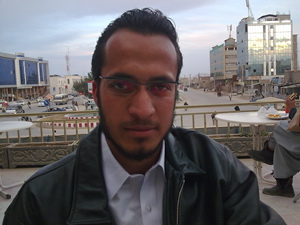
Javed Yazamy, a freelance camerman and fixer working in Kandahar in southern Afghanistan, was killed yesterday in a drive by shooting. He worked for Canadian news outlets mainly CTV News and went also went by the name of Javed Ahmed and the nickname of JoJo. The Committe to Protect Journalists sent out this statement,
]]>"We send our condolences to Jawed Ahmad’s family and friends at this time of deep loss," said Bob Dietz, CPJ’s Asia program coordinator. "CPJ had come to know Jawed and his family well over the 11 months he was held in U.S. detention at Bagram Air Base without being charged by U.S. forces. We hope that his killing will not follow the pattern of other journalists’ deaths in Afghanistan in recent years and go unsolved." link
The case against those accused of killing Russian journalist Anna Politkovskaya outside her Moscow apartment in October 2006 collapsed this Thursday as the jury aquitted all three suspects. One day later the presiding judge, Yevgeni Zubo, ordered the Russian Investigative Committee reopen the case,
“The fact that no one at all has been held accountable for this murder sends a very clear message to potential perpetrators: You can do it, and you can get away with it,” said Tatyana Lokshina, deputy director of the Human Rights Watch Moscow bureau. “Brazen killings have become almost routine in the Russian Federation.” link
Rustam Makhmudov, the man suspected of pulling the trigger, reportedly offered to turn himself in during the summer of 2008. However, he remains at large. The Guardian newspaper published a timeline of the Anna Politkovskaya murder case beginning from the day before the former Novaya Gazeta investigative journalist was killed,
5 October 2006
Anna Politkovskaya, Russia’s most famous opposition journalist, gives an interview to Radio Liberty. In it, she talks about her ongoing investigation into the Chechen president, Ramzan Kadyrov, expressing the hope that he is tried for numerous human rights abuses.7 October 2006
Politkovskaya is shot dead in the lift of her block of flats in Moscow after returning from a shopping trip. Her killer shoots her in the chest and head, then flees, leaving behind an Izh pistol equipped with a silencer. It is President Vladimir Putin’s birthday.10 October 2006
After three days of silence, Putin dismisses Politkovskaya as "insignificant". He tells the German paper Süddeutsche Zeitung that the journalist and Kremlin critic was "well-known only in the west".Late August 2007
Russia’s prosecutor general, Yury Chaika, announces that 10 people have been arrested in relation to the murder investigation. He blames the killing on a Moscow criminal gang, adding that "unfortunately" officers from the FSB – Russia’s spy agency – and police provided operational support.September 2007
The chief investigator in the case is demoted and several new officers are brought in. The investigation is handed over to a new committee headed by a rival prosecutor, Alexander Bastrykin.June 2008
Prosecutors announce that the case is ready to go to court. Six out of the 10 original suspects are quietly released.July 2008
Bastrykin says Politkovskaya’s alleged killer, Rustam Makhmudov, has escaped from Russia and is now hiding somewhere in western Europe. He fails to explain how he slipped out of the country.19 November 2008
The trial of four men accused of involvement in Politkovskaya’s assassination begins at Moscow’s military district court. The judge announces that the trial will be held in closed session in accordance with the jury’s wishes. He is forced to overturn his decision after a juror reveals that this was not true.19 February 2009
The jury is sent out to consider its verdict after closing speeches by prosecution and defence lawyers. Karina Moskalenko, a lawyer for the Politkovskaya family, suggests the defendants may have been the victims of an elaborate set-up. link
We’ll update this post and the timeline as the investigation continues. For now, I’ll leave the last word to Miklos Haraszti, the Organization for Security and Cooperation in Europe’s representative for media freedom,
]]>“Russia is a country where for years and years now, journalists who cover human rights issues and corruption are being murdered and assaulted… It has to be admitted, at the highest level of the country, that there can be no free speech in a country where the best journalists are afraid for their lives for doing their jobs.” link
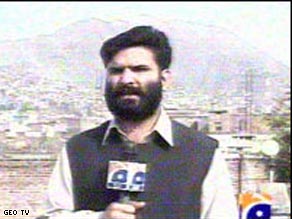
Mosa Khankhel, a journalist with GEO TV in Pakistan, was shot and killed by attackers in the Taliban controlled area of Swat valley, 100 miles northwest of Islamabad today. The attackers subsequently tried to behead him. Reporters without borders express outrage at the killing,
“We want to express our full solidarity with journalists in the tribal areas, who are once again the target of attacks and threats from extremely violent and determined groups”, the worldwide press freedom organisation said.
“Journalists in these regions who are victims of this war should also get the support of the authorities and the international community. Without that, these regions bordering Afghanistan are at risk of becoming news ‘black holes’”, it added. link
UPDATE: Feb 19 – The News in Pakistan carries an obituary today,
]]>Musa Khankhel used to tell his colleagues at The News International that he will be killed for his work as a journalist in Swat. He was right…
…Just when everyone thought peace was finally returning to Swat, the first murder after the enforcement of the ceasefire was that of a journalist. And it happened to be Musa Khankhel, who undoubtedly was one of the most courageous reporters in Swat. link
No other profession calls on its practitioners to lay down their lives for their art save the armed forces and, in Sri Lanka, journalism. In the course of the past few years, the independent media have increasingly come under attack. Electronic and print-media institutions have been burnt, bombed, sealed and coerced. Countless journalists have been harassed, threatened and killed. It has been my honour to belong to all those categories and now especially the last.
I have been in the business of journalism a good long time. Indeed, 2009 will be The Sunday Leader’s 15th year. Many things have changed in Sri Lanka during that time, and it does not need me to tell you that the greater part of that change has been for the worse. We find ourselves in the midst of a civil war ruthlessly prosecuted by protagonists whose bloodlust knows no bounds. Terror, whether perpetrated by terrorists or the state, has become the order of the day. Indeed, murder has become the primary tool whereby the state seeks to control the organs of liberty. Today it is the journalists, tomorrow it will be the judges. For neither group have the risks ever been higher or the stakes lower.
Why then do we do it? I often wonder that. After all, I too am a husband, and the father of three wonderful children. I too have responsibilities and obligations that transcend my profession, be it the law or journalism. Is it worth the risk? Many people tell me it is not. Friends tell me to revert to the bar, and goodness knows it offers a better and safer livelihood. Others, including political leaders on both sides, have at various times sought to induce me to take to politics, going so far as to offer me ministries of my choice. Diplomats, recognising the risk journalists face in Sri Lanka, have offered me safe passage and the right of residence in their countries. Whatever else I may have been stuck for, I have not been stuck for choice.
But there is a calling that is yet above high office, fame, lucre and security. It is the call of conscience.
The Sunday Leader has been a controversial newspaper because we say it like we see it: whether it be a spade, a thief or a murderer, we call it by that name. We do not hide behind euphemism. The investigative articles we print are supported by documentary evidence thanks to the public-spiritedness of citizens who at great risk to themselves pass on this material to us. We have exposed scandal after scandal, and never once in these 15 years has anyone proved us wrong or successfully prosecuted us.
The free media serve as a mirror in which the public can see itself sans mascara and styling gel. From us you learn the state of your nation, and especially its management by the people you elected to give your children a better future. Sometimes the image you see in that mirror is not a pleasant one. But while you may grumble in the privacy of your armchair, the journalists who hold the mirror up to you do so publicly and at great risk to themselves. That is our calling, and we do not shirk it.
Every newspaper has its angle, and we do not hide the fact that we have ours. Our commitment is to see Sri Lanka as a transparent, secular, liberal democracy. Think about those words, for they each has profound meaning. Transparent because government must be openly accountable to the people and never abuse their trust. Secular because in a multi-ethnic and multi-cultural society such as ours, secularism offers the only common ground by which we might all be united. Liberal because we recognise that all human beings are created different, and we need to accept others for what they are and not what we would like them to be. And democratic… well, if you need me to explain why that is important, you’d best stop buying this paper.
The Sunday Leader has never sought safety by unquestioningly articulating the majority view. Let’s face it, that is the way to sell newspapers. On the contrary, as our opinion pieces over the years amply demonstrate, we often voice ideas that many people find distasteful. For example, we have consistently espoused the view that while separatist terrorism must be eradicated, it is more important to address the root causes of terrorism, and urged government to view Sri Lanka’s ethnic strife in the context of history and not through the telescope of terrorism. We have also agitated against state terrorism in the so-called war against terror, and made no secret of our horror that Sri Lanka is the only country in the world routinely to bomb its own citizens. For these views we have been labelled traitors, and if this be treachery, we wear that label proudly.
Many people suspect that The Sunday Leader has a political agenda: it does not. If we appear more critical of the government than of the opposition it is only because we believe that – pray excuse cricketing argot – there is no point in bowling to the fielding side. Remember that for the few years of our existence in which the UNP was in office, we proved to be the biggest thorn in its flesh, exposing excess and corruption wherever it occurred. Indeed, the steady stream of embarrassing expos‚s we published may well have served to precipitate the downfall of that government.
Neither should our distaste for the war be interpreted to mean that we support the Tigers. The LTTE are among the most ruthless and bloodthirsty organisations ever to have infested the planet. There is no gainsaying that it must be eradicated. But to do so by violating the rights of Tamil citizens, bombing and shooting them mercilessly, is not only wrong but shames the Sinhalese, whose claim to be custodians of the dhamma is forever called into question by this savagery, much of which is unknown to the public because of censorship.
What is more, a military occupation of the country’s north and east will require the Tamil people of those regions to live eternally as second-class citizens, deprived of all self respect. Do not imagine that you can placate them by showering “development” and “reconstruction” on them in the post-war era. The wounds of war will scar them forever, and you will also have an even more bitter and hateful Diaspora to contend with. A problem amenable to a political solution will thus become a festering wound that will yield strife for all eternity. If I seem angry and frustrated, it is only because most of my countrymen – and all of the government – cannot see this writing so plainly on the wall.
It is well known that I was on two occasions brutally assaulted, while on another my house was sprayed with machine-gun fire. Despite the government’s sanctimonious assurances, there was never a serious police inquiry into the perpetrators of these attacks, and the attackers were never apprehended. In all these cases, I have reason to believe the attacks were inspired by the government. When finally I am killed, it will be the government that kills me.
The irony in this is that, unknown to most of the public, Mahinda and I have been friends for more than a quarter century. Indeed, I suspect that I am one of the few people remaining who routinely addresses him by his first name and uses the familiar Sinhala address oya when talking to him. Although I do not attend the meetings he periodically holds for newspaper editors, hardly a month passes when we do not meet, privately or with a few close friends present, late at night at President’s House. There we swap yarns, discuss politics and joke about the good old days. A few remarks to him would therefore be in order here.
Mahinda, when you finally fought your way to the SLFP presidential nomination in 2005, nowhere were you welcomed more warmly than in this column. Indeed, we broke with a decade of tradition by referring to you throughout by your first name. So well known were your commitments to human rights and liberal values that we ushered you in like a breath of fresh air. Then, through an act of folly, you got yourself involved in the Helping Hambantota scandal. It was after a lot of soul-
searching that we broke the story, at the same time urging you to return the money. By the time you did so several weeks later, a great blow had been struck to your reputation. It is one you are still trying to live down.You have told me yourself that you were not greedy for the presidency. You did not have to hanker after it: it fell into your lap. You have told me that your sons are your greatest joy, and that you love spending time with them, leaving your brothers to operate the machinery of state. Now, it is clear to all who will see that that machinery has operated so well that my sons and daughter do not themselves have a father.
In the wake of my death I know you will make all the usual sanctimonious noises and call upon the police to hold a swift and thorough inquiry. But like all the inquiries you have ordered in the past, nothing will come of this one, too. For truth be told, we both know who will be behind my death, but dare not call his name. Not just my life, but yours too, depends on it.
Sadly, for all the dreams you had for our country in your younger days, in just three years you have reduced it to rubble. In the name of patriotism you have trampled on human rights, nurtured unbridled corruption and squandered public money like no other President before you. Indeed, your conduct has been like a small child suddenly let loose in a toyshop. That analogy is perhaps inapt because no child could have caused so much blood to be spilled on this land as you have, or trampled on the rights of its citizens as you do. Although you are now so drunk with power that you cannot see it, you will come to regret your sons having so rich an inheritance of blood. It can only bring tragedy. As for me, it is with a clear conscience that I go to meet my Maker. I wish, when your time finally comes, you could do the same. I wish.
As for me, I have the satisfaction of knowing that I walked tall and bowed to no man. And I have not travelled this journey alone. Fellow journalists in other branches of the media walked with me: most of them are now dead, imprisoned without trial or exiled in far-off lands. Others walk in the shadow of death that your Presidency has cast on the freedoms for which you once fought so hard. You will never be allowed to forget that my death took place under your watch. As anguished as I know you will be, I also know that you will have no choice but to protect my killers: you will see to it that the guilty one is never convicted. You have no choice. I feel sorry for you, and Shiranthi will have a long time to spend on her knees when next she goes for Confession for it is not just her owns sins which she must confess, but those of her extended family that keeps you in office.
As for the readers of The Sunday Leader, what can I say but Thank You for supporting our mission. We have espoused unpopular causes, stood up for those too feeble to stand up for themselves, locked horns with the high and mighty so swollen with power that they have forgotten their roots, exposed corruption and the waste of your hard-earned tax rupees, and made sure that whatever the propaganda of the day, you were allowed to hear a contrary view. For this I – and my family – have now paid the price that I have long known I will one day have to pay. I am – and have always been – ready for that. I have done nothing to prevent this outcome: no security, no precautions. I want my murderer to know that I am not a coward like he is, hiding behind human shields while condemning thousands of innocents to death. What am I among so many? It has long been written that my life would be taken, and by whom. All that remains to be written is when.
That The Sunday Leader will continue fighting the good fight, too, is written. For I did not fight this fight alone. Many more of us have to be – and will be – killed before The Leader is laid to rest. I hope my assassination will be seen not as a defeat of freedom but an inspiration for those who survive to step up their efforts. Indeed, I hope that it will help galvanise forces that will usher in a new era of human liberty in our beloved motherland. I also hope it will open the eyes of your President to the fact that however many are slaughtered in the name of patriotism, the human spirit will endure and flourish. Not all the Rajapakses combined can kill that.
People often ask me why I take such risks and tell me it is a matter of time before I am bumped off. Of course I know that: it is inevitable. But if we do not speak out now, there will be no one left to speak for those who cannot, whether they be ethnic minorities, the disadvantaged or the persecuted. An example that has inspired me throughout my career in journalism has been that of the German theologian, Martin Niem”ller. In his youth he was an anti-Semite and an admirer of Hitler. As Nazism took hold in Germany, however, he saw Nazism for what it was: it was not just the Jews Hitler sought to extirpate, it was just about anyone with an alternate point of view. Niem”ller spoke out, and for his trouble was incarcerated in the Sachsenhausen and Dachau concentration camps from 1937 to 1945, and very nearly executed. While incarcerated, Niem”ller wrote a poem that, from the first time I read it in my teenage years, stuck hauntingly in my mind:
First they came for the Jews
and I did not speak out because I was not a Jew.
Then they came for the Communists
and I did not speak out because I was not a Communist.
Then they came for the trade unionists
and I did not speak out because I was not a trade unionist.
Then they came for me
and there was no one left to speak out for me.
If you remember nothing else, remember this: The Leader is there for you, be you Sinhalese, Tamil, Muslim, low-caste, homosexual, dissident or disabled. Its staff will fight on, unbowed and unafraid, with the courage to which you have become accustomed. Do not take that commitment for granted. Let there be no doubt that whatever sacrifices we journalists make, they are not made for our own glory or enrichment: they are made for you. Whether you deserve their sacrifice is another matter. As for me, God knows I tried.
The Sunday Leader has a farewell page with words from a great many friends, relatives and colleagues. This entry is cross posted on the From the Frontline blog.
]]>No other profession calls on its practitioners to lay down their lives for their art save the armed forces and, in Sri Lanka, journalism. In the course of the past few years, the independent media have increasingly come under attack. Electronic and print-media institutions have been burnt, bombed, sealed and coerced. Countless journalists have been harassed, threatened and killed. It has been my honour to belong to all those categories and now especially the last.
I have been in the business of journalism a good long time. Indeed, 2009 will be The Sunday Leader’s 15th year. Many things have changed in Sri Lanka during that time, and it does not need me to tell you that the greater part of that change has been for the worse. We find ourselves in the midst of a civil war ruthlessly prosecuted by protagonists whose bloodlust knows no bounds. Terror, whether perpetrated by terrorists or the state, has become the order of the day. Indeed, murder has become the primary tool whereby the state seeks to control the organs of liberty. Today it is the journalists, tomorrow it will be the judges. For neither group have the risks ever been higher or the stakes lower.
Why then do we do it? I often wonder that. After all, I too am a husband, and the father of three wonderful children. I too have responsibilities and obligations that transcend my profession, be it the law or journalism. Is it worth the risk? Many people tell me it is not. Friends tell me to revert to the bar, and goodness knows it offers a better and safer livelihood. Others, including political leaders on both sides, have at various times sought to induce me to take to politics, going so far as to offer me ministries of my choice. Diplomats, recognising the risk journalists face in Sri Lanka, have offered me safe passage and the right of residence in their countries. Whatever else I may have been stuck for, I have not been stuck for choice.
But there is a calling that is yet above high office, fame, lucre and security. It is the call of conscience.
The Sunday Leader has been a controversial newspaper because we say it like we see it: whether it be a spade, a thief or a murderer, we call it by that name. We do not hide behind euphemism. The investigative articles we print are supported by documentary evidence thanks to the public-spiritedness of citizens who at great risk to themselves pass on this material to us. We have exposed scandal after scandal, and never once in these 15 years has anyone proved us wrong or successfully prosecuted us.
The free media serve as a mirror in which the public can see itself sans mascara and styling gel. From us you learn the state of your nation, and especially its management by the people you elected to give your children a better future. Sometimes the image you see in that mirror is not a pleasant one. But while you may grumble in the privacy of your armchair, the journalists who hold the mirror up to you do so publicly and at great risk to themselves. That is our calling, and we do not shirk it.
Every newspaper has its angle, and we do not hide the fact that we have ours. Our commitment is to see Sri Lanka as a transparent, secular, liberal democracy. Think about those words, for they each has profound meaning. Transparent because government must be openly accountable to the people and never abuse their trust. Secular because in a multi-ethnic and multi-cultural society such as ours, secularism offers the only common ground by which we might all be united. Liberal because we recognise that all human beings are created different, and we need to accept others for what they are and not what we would like them to be. And democratic… well, if you need me to explain why that is important, you’d best stop buying this paper.
The Sunday Leader has never sought safety by unquestioningly articulating the majority view. Let’s face it, that is the way to sell newspapers. On the contrary, as our opinion pieces over the years amply demonstrate, we often voice ideas that many people find distasteful. For example, we have consistently espoused the view that while separatist terrorism must be eradicated, it is more important to address the root causes of terrorism, and urged government to view Sri Lanka’s ethnic strife in the context of history and not through the telescope of terrorism. We have also agitated against state terrorism in the so-called war against terror, and made no secret of our horror that Sri Lanka is the only country in the world routinely to bomb its own citizens. For these views we have been labelled traitors, and if this be treachery, we wear that label proudly.
Many people suspect that The Sunday Leader has a political agenda: it does not. If we appear more critical of the government than of the opposition it is only because we believe that – pray excuse cricketing argot – there is no point in bowling to the fielding side. Remember that for the few years of our existence in which the UNP was in office, we proved to be the biggest thorn in its flesh, exposing excess and corruption wherever it occurred. Indeed, the steady stream of embarrassing expos‚s we published may well have served to precipitate the downfall of that government.
Neither should our distaste for the war be interpreted to mean that we support the Tigers. The LTTE are among the most ruthless and bloodthirsty organisations ever to have infested the planet. There is no gainsaying that it must be eradicated. But to do so by violating the rights of Tamil citizens, bombing and shooting them mercilessly, is not only wrong but shames the Sinhalese, whose claim to be custodians of the dhamma is forever called into question by this savagery, much of which is unknown to the public because of censorship.
What is more, a military occupation of the country’s north and east will require the Tamil people of those regions to live eternally as second-class citizens, deprived of all self respect. Do not imagine that you can placate them by showering “development” and “reconstruction” on them in the post-war era. The wounds of war will scar them forever, and you will also have an even more bitter and hateful Diaspora to contend with. A problem amenable to a political solution will thus become a festering wound that will yield strife for all eternity. If I seem angry and frustrated, it is only because most of my countrymen – and all of the government – cannot see this writing so plainly on the wall.
It is well known that I was on two occasions brutally assaulted, while on another my house was sprayed with machine-gun fire. Despite the government’s sanctimonious assurances, there was never a serious police inquiry into the perpetrators of these attacks, and the attackers were never apprehended. In all these cases, I have reason to believe the attacks were inspired by the government. When finally I am killed, it will be the government that kills me.
The irony in this is that, unknown to most of the public, Mahinda and I have been friends for more than a quarter century. Indeed, I suspect that I am one of the few people remaining who routinely addresses him by his first name and uses the familiar Sinhala address oya when talking to him. Although I do not attend the meetings he periodically holds for newspaper editors, hardly a month passes when we do not meet, privately or with a few close friends present, late at night at President’s House. There we swap yarns, discuss politics and joke about the good old days. A few remarks to him would therefore be in order here.
Mahinda, when you finally fought your way to the SLFP presidential nomination in 2005, nowhere were you welcomed more warmly than in this column. Indeed, we broke with a decade of tradition by referring to you throughout by your first name. So well known were your commitments to human rights and liberal values that we ushered you in like a breath of fresh air. Then, through an act of folly, you got yourself involved in the Helping Hambantota scandal. It was after a lot of soul-
searching that we broke the story, at the same time urging you to return the money. By the time you did so several weeks later, a great blow had been struck to your reputation. It is one you are still trying to live down.You have told me yourself that you were not greedy for the presidency. You did not have to hanker after it: it fell into your lap. You have told me that your sons are your greatest joy, and that you love spending time with them, leaving your brothers to operate the machinery of state. Now, it is clear to all who will see that that machinery has operated so well that my sons and daughter do not themselves have a father.
In the wake of my death I know you will make all the usual sanctimonious noises and call upon the police to hold a swift and thorough inquiry. But like all the inquiries you have ordered in the past, nothing will come of this one, too. For truth be told, we both know who will be behind my death, but dare not call his name. Not just my life, but yours too, depends on it.
Sadly, for all the dreams you had for our country in your younger days, in just three years you have reduced it to rubble. In the name of patriotism you have trampled on human rights, nurtured unbridled corruption and squandered public money like no other President before you. Indeed, your conduct has been like a small child suddenly let loose in a toyshop. That analogy is perhaps inapt because no child could have caused so much blood to be spilled on this land as you have, or trampled on the rights of its citizens as you do. Although you are now so drunk with power that you cannot see it, you will come to regret your sons having so rich an inheritance of blood. It can only bring tragedy. As for me, it is with a clear conscience that I go to meet my Maker. I wish, when your time finally comes, you could do the same. I wish.
As for me, I have the satisfaction of knowing that I walked tall and bowed to no man. And I have not travelled this journey alone. Fellow journalists in other branches of the media walked with me: most of them are now dead, imprisoned without trial or exiled in far-off lands. Others walk in the shadow of death that your Presidency has cast on the freedoms for which you once fought so hard. You will never be allowed to forget that my death took place under your watch. As anguished as I know you will be, I also know that you will have no choice but to protect my killers: you will see to it that the guilty one is never convicted. You have no choice. I feel sorry for you, and Shiranthi will have a long time to spend on her knees when next she goes for Confession for it is not just her owns sins which she must confess, but those of her extended family that keeps you in office.
As for the readers of The Sunday Leader, what can I say but Thank You for supporting our mission. We have espoused unpopular causes, stood up for those too feeble to stand up for themselves, locked horns with the high and mighty so swollen with power that they have forgotten their roots, exposed corruption and the waste of your hard-earned tax rupees, and made sure that whatever the propaganda of the day, you were allowed to hear a contrary view. For this I – and my family – have now paid the price that I have long known I will one day have to pay. I am – and have always been – ready for that. I have done nothing to prevent this outcome: no security, no precautions. I want my murderer to know that I am not a coward like he is, hiding behind human shields while condemning thousands of innocents to death. What am I among so many? It has long been written that my life would be taken, and by whom. All that remains to be written is when.
That The Sunday Leader will continue fighting the good fight, too, is written. For I did not fight this fight alone. Many more of us have to be – and will be – killed before The Leader is laid to rest. I hope my assassination will be seen not as a defeat of freedom but an inspiration for those who survive to step up their efforts. Indeed, I hope that it will help galvanise forces that will usher in a new era of human liberty in our beloved motherland. I also hope it will open the eyes of your President to the fact that however many are slaughtered in the name of patriotism, the human spirit will endure and flourish. Not all the Rajapakses combined can kill that.
People often ask me why I take such risks and tell me it is a matter of time before I am bumped off. Of course I know that: it is inevitable. But if we do not speak out now, there will be no one left to speak for those who cannot, whether they be ethnic minorities, the disadvantaged or the persecuted. An example that has inspired me throughout my career in journalism has been that of the German theologian, Martin Niem”ller. In his youth he was an anti-Semite and an admirer of Hitler. As Nazism took hold in Germany, however, he saw Nazism for what it was: it was not just the Jews Hitler sought to extirpate, it was just about anyone with an alternate point of view. Niem”ller spoke out, and for his trouble was incarcerated in the Sachsenhausen and Dachau concentration camps from 1937 to 1945, and very nearly executed. While incarcerated, Niem”ller wrote a poem that, from the first time I read it in my teenage years, stuck hauntingly in my mind:
First they came for the Jews
and I did not speak out because I was not a Jew.
Then they came for the Communists
and I did not speak out because I was not a Communist.
Then they came for the trade unionists
and I did not speak out because I was not a trade unionist.
Then they came for me
and there was no one left to speak out for me.
If you remember nothing else, remember this: The Leader is there for you, be you Sinhalese, Tamil, Muslim, low-caste, homosexual, dissident or disabled. Its staff will fight on, unbowed and unafraid, with the courage to which you have become accustomed. Do not take that commitment for granted. Let there be no doubt that whatever sacrifices we journalists make, they are not made for our own glory or enrichment: they are made for you. Whether you deserve their sacrifice is another matter. As for me, God knows I tried.
The Sunday Leader has a farewell page with words from a great many friends, relatives and colleagues.
]]>