Migration and integration are two of the biggest issues facing societies worldwide and can hold the key in preventing crimes and extremism. The panel will explore various challenges such as: What do migrant women sacrifice when they leave their homeland? Is the backlash against migrants justified – are they draining our resources? And how might we empower migrant women specifically in various communities, industries and societies throughout the UK?
Chair
Arti Lukha

Arti Lukha is Senior News Editor at ITV news. Her broadcasting career began at London Tonight on ITV however she was quickly spotted by ITN and was offered a job as deputy news editor and promoted soon after. Arti was awarded Media Professional of the Year for Asian Women of Achievement in 2008.
Speakers
MP Khalid Mahmood

Khalid Mahmood has been Perry Barr in Birmingham’s MP since 2001 and a shadow minister in Labour’s Foreign Affairs team since 2016. In January 2015, Mahmood was nominated for the Politician of the Year award at the British Muslim Awards. More recently he has been named an honorary associate of the Council of Europe. The Council of Europe supports freedom of expression of the media, freedom of assembly, equality, and the protection of minorities. It has launched campaigns on issues such as child protection, online hate speech, and the rights of Romani people, Europe’s largest minority.
MEP Julie Ward

Julie Ward is an active campaigner for equal rights and social justice, most recently organising local events for One Billion Rising, the global movement to raise awareness of violence against women and girls. Prior to being elected as an MEP, Julie had been working with partners in the EU and beyond for more than a decade. For instance, she was recently involved in an international delegation to Belfast to participate in an all-party discussion about the role of the arts in peace-building processes.
Salma Zulfiqar

Salma Zulfiqar is an International Artist and Activist working on migration. Her current creative projects focus on empowering refugee and migrant women by promoting integration, working towards preventing hate crimes and extremism. Salma Zulfiqar is British and has also worked all over the world with the United Nations on humanitarian issues in conflict and developing countries such as Afghanistan, Pakistan, Yemen, Syria, Egypt, Somalia, Chad and Kenya.
Yasmin Alibhai-Brown

Yasmin Alibhai-Brown is a British journalist and author. She is a regular columnist for the i and the London Evening Standard she is a well-known commentator on immigration, diversity, and multiculturalism issues.
]]>


The Mediterranean Growth Initiative and the International Crisis Group will be partnering to host an evening at the Frontline Club. The Greater Mediterranean region, from Southern Europe, to North Africa and Levant are at particularly high risk to political and economic insecurity and this has far reaching consequences for the rest of Europe. A trend towards greater inequality in the region is a harbinger for current crises such as migration and extremism to worsen, particularly as the Mediterranean is Europe’s frontline to Africa and the Middle East. However, Europe can act decisively and reverse the trend with economic clarity. What mitigations to political risk might result from increased opportunities for young entrepreneurs, available investment capital dependent on good governance, or burgeoning growth rates? What do the economics of conflict teach us about the current situation and how can trends towards insecurity be reversed? The panel comprised from both organisations will discuss the trade and economic factors feeding the crises in the region and prospects for the Mediterranean, Europe and Britain.
Moderator
Dr Claire S pencer – Senior Research Fellow, Middle East and North Africa Programme, Chatham House Dr Claire Spencer is Senior Research Fellow in the Middle East and North Africa (MENA) Programme and Second Century Initiative at the foreign policy institute Chatham House. In this role, she works with the Director on new initiatives. Prior to this she was Head of the MENA Programme at Chatham House for 8 years, which she expanded significantly, having previously served as Head of Policy for the Middle East and Central Asia for the development agency Christian Aid. Until 2001, she was Deputy Director of the Centre for Defence Studies at Kings College, University of London, where she set up and ran the Mediterranean Security Programme.
Speakers
Cleopatra Kitti –Founder Mediterranean Growth Initiative
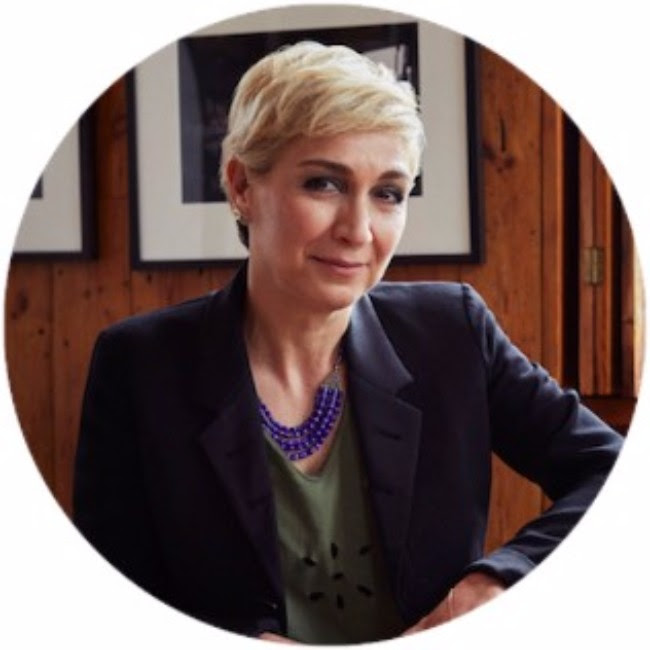 |
The MGI refocuses the lens on the Mediterranean through data and analysis; it is aimed at investors, policymakers, and analysts, as well anyone who wants to gain an in-depth understanding of the region and its potential. Cleopatra is a certified independent director and an advisor to government and corporations on governance, problem solving and growth strategies.
Comfort Ero – Africa Program Director International Crisis Group
 |
Comfort Ero has been Crisis Group’s Nairobi-based Africa Program Director since January 2011. She previously worked with Crisis Group as West Africa Project Director. As Program Director, Comfort oversees projects covering South, West, Central and the Horn of Africa. She has a PhD from the London School of Economics, University of London. Comfort also sits on the editorial board of various journals, including International Peacekeeping.
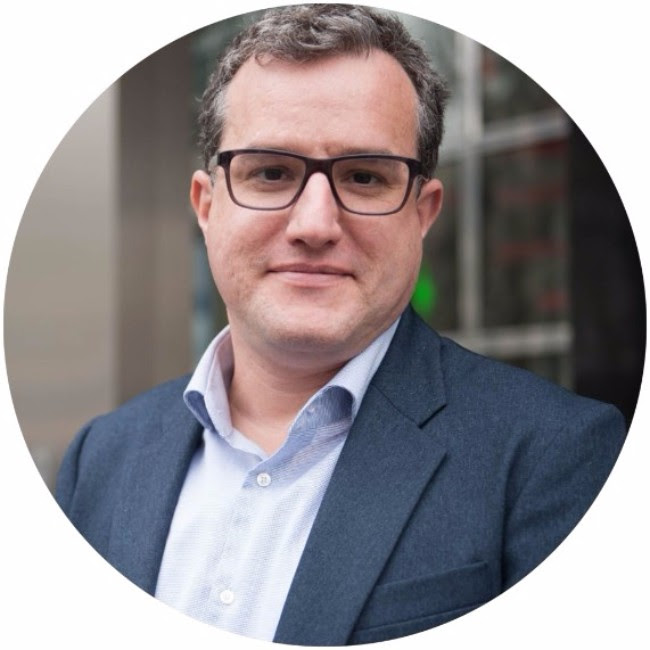 |
Issandr El Amrani oversees Crisis Group’s North Africa Project. Prior to joining Crisis Group, he was a writer and consultant on Middle Eastern affairs based in Cairo. His reporting and commentary on the region has appeared in The Economist, London Review of Books, Financial Times, The National, The Guardian, Time and other publications. He has also advised leading investment firms and NGOs on the region.
Geoff D. Porter – Founder, North Africa Risk Consulting Dr. Geoff D. Porter is the founder and managing director of North Africa Risk Consulting, Inc., a consulting firm specialising in political and security risk in North Africa. North Africa Risk Consulting’s clients include multinational corporations as well as US government agencies. Prior to establishing North Africa Risk Consulting, Dr. Porter was the Director for Middle East and Africa at a political risk consulting firm.
]]>On Wednesday 18 November, Gulwali Passarlay enlightened a packed audience at the Frontline Club into his journey as an unaccompanied child refugee from Afghanistan to the United Kingdom. Joined by former Afghanistan correspondent for the BBC David Loyn, and Nadene Ghouri who co-authored his book The Lightless Sky, Passarlay was keen to address the complexities of the refugee crisis from both a personal and political perspective.
“My mother sent me away- she saved me but she lost me too”- @GulwaliP who left Afghanistan aged 12, running for his life (@frontlineclub)
— Maeve McClenaghan (@MaeveMCC) November 17, 2015
Loyn began the discussion by offering context on the current refugee crisis. “There are many Gulwalis in the world. Almost 60 million people are displaced, between 10 and 15 million people a year move from their homes and Afghanistan is the second largest country people flee from – 800,000 people are internally displaced.”
Passarlay began his journey when his mother paid smugglers to help him escape from Afghanistan after his father and grandfather were shot by US soldiers. “For a mother to decide to send her 12 and 13 year-old children away is extraordinary. I am sure she did not understand the implications and the dangers that I would face along the way. Neither did I,” said Passarlay. “Throughout my journey, my biggest issue and fear was uncertainty.”
Loyn asked Passarlay: “Why do you think your mother trusted your life with smugglers? And what was in it for the smugglers to keep you alive?”
“Smugglers need to maintain their reputation. The system of smuggling is more effective and efficient than the government! She was faced with a difficult circumstance, and through family friends she found a smuggler that was her only hope in giving her sons a better life,” answered Passarlay.
During the harrowing journey Passarlay was separated from his brother, which he referred to as a significantly traumatic experience. “My mother said to not let go of each other, but in Peshawar we were so quickly separated. For the rest of my journey, I had three things to do: I wanted to look for my brother, I needed to get across and I desperately missed home.”
Even arriving in Italy after a life-threatening boat trip from Greece, Passarlay was determined to get to England and find his sibling. “I am forever grateful to the people of Italy who genuinely wanted to keep me safe and welcomed and wanted to help me. But I had to find my brother.”
Responding to Loyn‘s question on why many refugees and migrants have their sights set on the United Kingdom as their final destination, Passarlay said: “I would have loved to have settled in Italy, but the language barrier was far too difficult. Whenever I talk to people from the right-wing, I tell them it’s a great thing for people to want to come to seek refuge in their country. Why? England embodies ideals of hope and opportunity; English is an international language and holds a historical and cultural connection to many countries thanks to the British Empire. But some also believe that Britain was involved in the conflict that exists in their country, such as Afghanistan, so migrants feel Britain has a moral responsibility to take them in.”
Passarlay concluded that he eventually managed to reach England and survive his journey thanks to fellow refugees, who have become his “brothers.”
“As the youngest, I needed help more than anyone. I tried not to show my innocent side, so I acted tough and put on a brave face – but this was not the case. The thousands of people I met were all literally in the same boat as me. We needed each other’s companionship and partnership.”
Loyn then directed the discussion towards Passarlay‘s difficult journey into Greece by boat, when his vessel almost didn’t make it. “Hearing that 2,000 migrants sunk earlier this year kept me awake at night. I feel their pain. I know exactly what they are going through. We were stuck [in the overcrowded boat] for 49 hours.”
Speaking on her experience of writing The Lightless Sky with Passarlay, Ghouri said: “It was a privilege to work with him. The story of unaccompanied refugee children is one I have always wanted to tell, and Gulwali is amazing for deciding to give a voice to many others who have been in his situation.”
@frontlineclub thank you for giving us the opportunity to have this evening' event for #TheLightlessSky it was great pic.twitter.com/8iJKOtqKSZ
— Gulwali Passarlay (@GulwaliP) November 18, 2015
In response to a question from Loyn on his advice for the Home Office, Passarlay commented: “What we are doing right now is not enough.”
An audience member from the Office of the Children’s Commissioner for England commended Passarlay for his courage in reporting his story, and said that his book should be used by the Home Office as a guide into how to better process unaccompanied child refugees. The audience member said: “I believe that things have gotten worse since you made your journey Gulwali. My organisation has churned numbers and figures to notice that since December 2014 to March 2015, over half of unaccompanied minors have their age disputed… Local authorities need to rise to the challenge.”
Ghouri agreed that the response to the refugee crisis by both the government and the media had been far from acceptable. “The British press do not report the full picture on the migrant crisis, so people in this country do not understand what is happening. There are only 3,000 people in Calais, but the press makes it feel like there are much more.”
More information about The Lightless Sky is available here.
]]>