Here’s run-through of the events so far this year during which we have examined the seismic events in the region, with links to blogposts, video and podcasts:
Beginning with our First Wednesday discussion on 2 February, we had planned to look at The Tunisian Domino effect and the Middle East but in response to fast-moving events in Egypt, the focus of the event was largely the protests in Cairo.
Later in the month we discussed the Changing Nature of Protest and whether the mainstream media ‘got’ it. Chaired by Steve Crawshaw, author and international advocacy director for Amnesty International, the 15 February discussion focused on the role of social media in modern uprisings and how the mainstream media is responding to the use of social media in facilitating and reporting people movements.
The following night we held a First Wednesday special, which asked the question What now for Egypt and its neighbours in the Middle East? The event was an opportunity to ask questions and discuss what might lie ahead for both Egypt an its neighbours after President Hosni Mubarak stepped down on 11 February. Author and activist Ahdaf Soueif contributed via Skype and visited the Club at the end of March.
At our March First Wednesday in March we billed it as a look at People, Protest and Democracy in the Middle East and North Africa but events in Libya took precedence and the discussion focused largely on what the future held for the country.
Later in the month, our special external event at the Royal Institution of Great Britain brought together some of the key digital activists in the Egyptian protests to discuss Protest, Technology and the End of Fear. There are interviews with Salma Said, Louis Lewarne, Khalid Abdalla and Omar Robert Hamilton on the Forum blog.
In April, our First Wednesday event focused on the question of foreign policy, diplomacy and the new world order – can the West be trusted to support democracy in the Middle East and North Africa?
The following week we looked at the future of Arab state-sponsored media and addressed the question of whehter it could recover from a crisis of credibility as well as at the impact of channels such as Al Jazeera and BBC Arabic.
]]>
Download this episode
View in iTunes
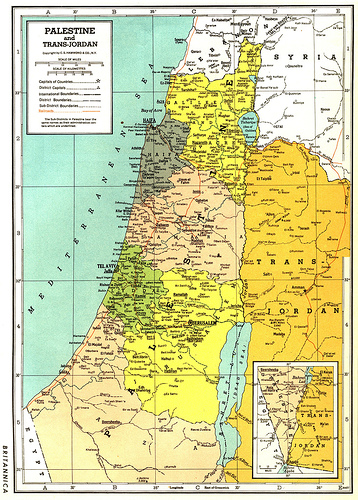 On 28 July the Frontline Club asks: is the best route to peace in the Holy Land to put down guns and start talking? Four members of the Israeli-Palestinian activist group Combatants for Peace will be on hand to talk about how they plan to do just that.
Tickets and more information on that event can be found here, but until then we’re publishing four personal stories from our speakers on the night. You can also read Eyal Weinberg’s story from last week at this link.
Neta Osna: Viewing life on the ‘other side of the wall’
My name is Neta Osnat. I was born 34 years ago in Tel-Aviv to social-lefty parents whose own parents fled Europe during the 30s mainly due to persecution of Jews.
Since early childhood I heard stories about my mom’s only brother who was killed by Palestinians (then called "Arabs") in 1948, before Israel’s establishment, and about her first husband (my sister’s father) who was killed in the 1967 war.
I always knew that occupation was wrong and always supported getting out of the occupied territories, but at the same time embraced the notion that this was very difficult because "there is no partner to work with, and Israel must defend itself from terrorism".
I served as a film producer in the Air Force, where I didn’t get a chance to confront the occupation and see it at first hand. Two years ago, after watching a documentary about the lives of Palestinians who are struggling to make a living working and living illegally in Israel, I decided that I wanted to check for myself what happens "on the other side of the wall" and do my share in breaking the cycle of violence.
Pic credit: Erik D, via Flickr, some rights reserved
]]>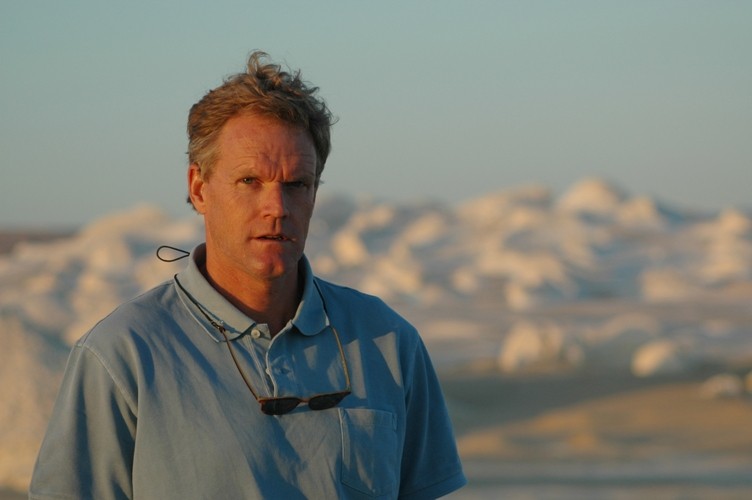
"When you work for the New York Times, people expect you to know everything," according to Neil MacFarquhar.
The journalist remembered: "Like the time I was at a dinner party in San Francisco and a woman came up to me and asked ‘Are there any normal people in the Middle East? People like you and me?’"
Cue a sharp, collective intake of breath from Wednesday’s Frontline audience.
"Of course there are," MacFarquhar responsed, and then began to describe them.
If you missed this event you can watch the whole thing here:
MacFarquhar has lived in the Middle East for much of his life. He went primary school in Libya and spent time as The New York Times‘s Middle East correspondent based in Cairo.
He likes telling stories about these times. So much, in fact, that he’s written a book about them, entitled The Media Relations Department of Hizbollah Wishes You a Happy Birthday
What I like about the Middle East is talking about people’s normal lives there, and one of the most fun experiences I’ve had doing that is talking about dogs in Iran. There was a cleric that was railing against dogs saying they were un-Islamic…"
Listen to the rest of that one in this Audioboo:
Another story? How about the time when an enterprising Iranian press officer in Iran attempted to extort MacFarquhar for visas, translations, and access to government officials? At the end of the ordeal, MacFarquhar says his photographer turned to him and said, "You could have at least tried to be a little diplomatic."
Or maybe the time when MacFarquhar was pulled into the Egyptian secret police’s office for the third time in one day. This time, it was for a meeting with its chief.
Noticing the plethora of certificates from the CIA, certifying the chief in a variety of espionage skills, MacFarquhar asked, "Is this an interrogation?"
"No," the chief responded. "It’s tea."
MacFarquhar says that it’s these everyday life stories that aren’t told nearly enough in the mainstream media. In fact, he believes this so strongly that he spent his final year in Cairo writing about people effecting positive social change throughout the Middle East.
There’s one yarn, however, that MacFarquhar is less keen on spinning.
I only lost one argument with editors: it was on the Palestinian/Israeli conflct. Often you have no choice but to cover it. I didn’t want to. Even though you get on the front page a bit more, it’s just over-covered.
But no matter the story, whether it’s in Tehran, Jerusalem, or Cairo, MacFarquhar says it can all be boiled down to one "normal" sentiment:
"People just want better lives; better lives for their children, better education for their children," he says
And that, it seems, is the beginning and end of most "normal’" stories.
]]>