In 2001, Jack Straw became the first senior British Foreign Secretary to visit Iran since the 1979 revolution and he has developed a growing interest in the country ever since. In 2003, with his French and German counterparts, he initiated the nuclear negotiations which led to the nuclear deal with Iran in 2015.
But when Straw took a family holiday to Iran in October 2015, he was handed a document blaming him for more than a century and a half of malign British interference in Iranian politics. That experience led him to write his latest book The English Job: Understanding Iran and Why it Distrusts Britain which examines the UK’s extraordinary, tangled and difficult relationship with Iran, and why, he says, so many Iranians are obsessed with Britain’s role in their history.
With tensions rising sharply between Iran and the west following President Trump’s decision to withdraw from the 2015 nuclear deal, we welcome Jack Straw to the Frontline Club for a timely discussion with journalist and author Ramita Navai about British-Iranian relations, his view of Iran’s internal politics and the culture, psychology and history of a much-misunderstood nation.
Speaker:
Rt Hon. Jack Straw is one of three senior ministers to remain in Cabinet throughout the 1997-2010 Labour governments under Tony Blair and Gordon Brown. He was Home Secretary (1997-2001), Foreign Secretary (2001-06), Leader of the Commons (2006-07) and Lord Chancellor and Justice Secretary (2007-10). He was co-chairman of the All-Party Parliamentary Group on Iran (2010-15). His most recent visit to Iran was in January 2018. His memoirs Last Man Standing (Macmillan, 2012) received wide praise. Jack was the Member of Parliament for Blackburn from 1979 to 2015, when he retired from the Commons. He is honorary vice president of Blackburn Rovers AFC.
Before becoming an MP, Jack practised as a barrister and then worked as a special adviser in the 1974 Labour government. He lives in London.
Chair:
Ramita Navai is an Emmy award-winning British-Iranian journalist, documentary producer and author. She has reported from over forty countries and has a reputation for investigations and work in hostile environments. She was the Tehran correspondent for The Times from 2003 – 2006 and she makes documentaries for Channel 4 and PBS Frontline.
Ramita’s first book City of Lies: Love, Sex, Death and the Search for Truth in Tehran won the Debut Political Book of the Year at the 2015 Political Book Awards, and was awarded the Royal Society of Literature’s Jerwood Prize for non-fiction. She is also a contributing author to Shifting Sands: The Unravelling of the Old Order in the Middle East (published in the UK and US).
]]>Long, stagnant conflicts in the Middle East and beyond have taken their toll on local journalism infrastructures, and access for foreign reporting teams has becoming increasingly complex and dangerous. Many traditional conflict reporting techniques of 20 years ago just aren’t possible. Trust and respect of the role of journalists on the ground by many conflict actors – ranging in size – is at a precariously low ebb.
Enter OSI. Using mountains of data sourced from freely available online resources like Twitter, Facebook and Google Earth, and often on a shoestring budget, many of the world’s biggest stories are being broken from behind laptops across the globe.
From the Skripal poisoning to the Battle of Mosul, Open Source Investigations are bringing information to the public by harnessing the phenomena of mass communication. This panel will focus on how OSI teams and monitoring groups are working to strengthen our power to report, and uncover stories of civilian harm in the world’s bloodiest conflicts.
Chair
Jonathan Beale is the BBC Defence correspondent. Before joining the BBC in 1999 Beale had been an assistant to a Member of Parliament. Beale also spent two years in Brussels as the BBC’s regional Europe correspondent and Europe political correspondent, before returning to London to become one of the BBC’s political correspondents at Millbank. He’s also presented political programmes, such as The Westminster Hour on BBC Radio 4. He served in Washington DC covering the 2006 midterm elections. In 2009 he covered the Guantanamo military commissions.
Speakers
Chris Woods is the founder and Director of the London-based not for profit Airwars, which has tracked tens of thousands of locally reported civilian deaths in Iraq, Syria and Libya. A conflict specialist, Chris previously worked for the BBC’s Newsnight and Panorama as a senior field producer, and has written on civilian harm issues for many international outlets including the New York Times and the Sydney Morning Herald. Chris also set up the Bureau of Investigative Journalism’s award-winning Drones Project back in 2010, monitoring covert US actions and associated civilian casualties in Yemen, Somalia and Pakistan. His book Sudden Justice charts the history of armed drones since 9/11.
Anthony Loyd is senior foreign correspondent for The Times. His career began in 1993 when he started reporting from the war in Bosnia. Since then he has written from innumerable conflict zones, including Syria, Iraq, Afghanistan, Libya, Chechnya and Kosovo. He is author of My War Gone By I Miss It So and Another Bloody Love Letter. He has witnessed the atrocities committed by Bashar al-Assad’s regime, the brutal rise of the self-styled Islamic State and the desperate struggle of the Syrian people caught between the two.
Rawan Shaif is the Yemen Researcher for Bellingcat. She has a background in freelance multimedia journalism and documentary film making having been based Yemen. She focussed on reporting human costs of the Saudi led-war on the Yemen, and the impact it has had on day to day life of civilians caught up in the crossfire – the damaging long term effect on the country, as a whole. She has written, and worked for Global Post, AJ English, SKY, Foreign Policy, NYT, Der Spiegel and Amnesty Intl, MSF, UNHCR and UNDP.
Milena Marin has over ten years’ experience working at the intersection of technology, data and social good on issues like human rights, public sector transparency, anti-corruption and open data. She leads Amnesty Decoders, an innovative platform using data science, crowdsourcing and artificial intelligence to process and analyse large volumes of data such as documents, satellite images and pictures. Previously she worked as programme manager of School of Data where she trained and mentored numerous NGOs and journalists around the world to make the most of their data and reach new audiences. She also worked for over 4 years with Transparency International where she supported TI’s global network to use technology in the fight against corruption.
 Watch the video stream of New Reporting Frontiers: OSI, Airstrikes and Civilian Harm
In the past 40 years Iraq has endured three major wars, a violent coup, two invasions, a decade of bombing, two insurgencies, attack by the so-called Islamic State group, and a sectarian civil war. Living through such relentless bloodshed has taken a heavy toll on the nation’s mental health. More than one third of Iraqi children are thought to have moderate to severe mental illness and all social indicators, from divorce to suicide, show significant increases.
There’s only one psychiatrist for every 300,000 Iraqi people and just one psychiatric hospital in the entire country. Abu Leith, the hospital’s registrar, has been in post for decades and embodies its memory of Iraq’s dark times. He signs in all the new arrivals and takes it on himself to give a decent burial to those patients who die in hospital. Some have been admitted with no documentation; they languish inside for years, their identities never known.
The film tells the stories of children who, as a result of extreme trauma, are suffering a severe physical impairment such as the inability to talk or walk. This loss of ability is the physical expression of a mental condition, as we see with Maryam, who was 12 years old when IS sold her into sex slavery. Later she was forced to wear a suicide belt, though she managed to cut herself free from it. Since then, her speech has become impaired; we see her being treated by a mobile psychiatry unit, and finding some comfort in learning to be a seamstress.
As this film reveals, the biggest obstacle to overcoming Iraq’s mental health crisis is stigma. This is now changing, as community leaders encourage Iraqis to defy the traditional culture of shame and speak without fear about their abuse. More and more women are coming forward to speak out.
A year in the making, BBC Arabic’s documentary Iraq: A State of Mind explores the mental health crisis that’s gripped the Iraqi people.
Chair
Christopher Mitchell became Documentaries Editor at BBC Arabic in April 2018, after two years working for the BBC as a freelance executive producer. He is an award-winning writer, director and executive producer, having made many films for networks including BBC TV, ITV, Channel 4, ARTE, WDR Germany and Al Jazeera English. He was managing director of the independent production company OR Media from 2005 until 2014.
Speaker
Namak Khoshnaw is a Kurdish filmmaker from Iraq who obtained his MA degree at the University of West London in film and Art. He has produced numerous compelling documentaries for the BBC uncovering the plight of the Iraqi people living under Islamic State rule. Among his work is the harrowing documentary titled Slaves of the Caliphate which tells the story of Yazidi women held as sex slaves by ISIS fighters. the film was broadcasted internationally in 2014, and Namak won New Ground Award for outstanding reporting. He has also produced number of 360 virtual reality films for the BBC and New York Times.
Photograph courtesy of Namak Khoshnaw.
]]> Watch the video stream of In a Time Of Monsters with Emma Sky and Lyse Doucet]]>According to Emma Sky, the Middle East is in a ‘Time Of Monsters’. Where have these monsters come from? Join us for an evening with two regional experts with diverse experiences to dig deeper into the origins, complexities and fallout of these forces at large in the Arab World – and their relationship with Europe and beyond.
‘Hers was a fascinating world of senior military and diplomatic figures, many of them of the highest quality… She knew all the leading Iraqi politicians, many of whom regarded her as a personal friend. She saw much of Iraq and had some hair-raising experiences. And she always kept her sense of opposition to what was being done to the
country. Many people likened her to Gertrude Bell, the British political adviser who helped to create Iraq, and in some ways they were right.’
John Simpson, New Statesman
In her return to the Frontline Club, Sky will be building on over 20 years advising and enacting policy from Iraq and Jerusalem to Afghanistan with her most recent experiences travelling through a region in revolt.
Chair
Lyse Doucet is an award winning Chief International Correspondent and Senior Presenter for BBC World News television and BBC World Service Radio. She is regularly deployed to anchor special news coverage from the field and interview world leaders. Lyse also reports across the BBC including for BBC Newsnight. She played a key role in the BBC’s coverage of the “Arab Spring” across the Middle East and North Africa and has covered all the major stories in the region for the past 20 years.
Speaker
Emma Sky is a Senior Fellow at Yale University’s Jackson Institute. She worked in the Middle East for twenty years and was made an Officer of the Order of the British Empire for services in Iraq. She lives in New Haven, Connecticut. Emma is the author of the critically acclaimed The Unraveling: High Hopes and Missed Opportunities in Iraq.
Watch the video stream of In a Time Of Monsters with Emma Sky and Lyse Doucet
Rania’s new book is published to mark the anniversary of the outbreak of protests in Syria. Cinematically crafted, it weaves a tapestry of rebels and exiles, radical Islamists and their victims amid the deadliest conflict of the century thus far.
Extending back to the first protests in Damascus in 2011, and based on more than five years of clandestine reporting on the frontlines of the war, No Turning Back presents an unforgettable portrait of a shattered country that “has ceased to exist as a unified state except in memories and on maps.”
Rania Abouzeid is a journalist with well over fifteen years experience in the Middle East and South Asia. A print and television journalist, fluent in Arabic, she has won numerous international journalism awards including the 2014 Frontline Club Print Awards and the George Polk Award for Foreign Reporting. Rania regularly writes for the New Yorker and National Geographic and she has been published in The Guardian, The Los Angeles Times, The Australian, CSM, and a host of other outlets.
Lyse Doucet is an award winning Chief International Correspondent and Senior Presenter for BBC World News television and BBC World Service Radio. She is regularly deployed to anchor special news coverage from the field and interview world leaders. Lyse also reports across the BBC including for BBC Newsnight. She played a key role in the BBC’s coverage of the “Arab Spring” across the Middle East and North Africa and has covered all the major stories in the region for the past 20 years.
]]>
The event will take place at the Romantso in Athens.
In October 2016, an elite team of Iraqi Special Forces was tasked with leading the fight to defeat ISIS in Mosul. It was the beginning of a brutal battle of attrition that was to last almost nine months.
Filmed over the course of the whole campaign, MOSUL follows the experiences of four young soldiers: Anmar, a college graduate seeking revenge after his father was the victim of a suicide attack; Hussein, a ruthless sniper and aspiring football player; Jamal, a wise-cracking sergeant; and Amjad, a young recruit excited to be on the frontline.
Full of hope and good intentions at the beginning of the campaign, the soldiers are forced to confront the reality of fighting an elusive and vicious enemy in a city full of trapped civilians who are themselves fearful and suspicious of the army. And with victory in sight, tragedy strikes. When ISIS eventually capitulates, much of the city is destroyed, and the surviving soldiers are left haunted by what they have seen and done.
Watch the trailer here: https://www.youtube.com/watch?v=aGRsBxgO4j4
To book a ticket here: https://www.eventbrite.com/e/mosul-screening-and-qa-with-filmmakers-olivier-sarbil-and-james-jones-tickets-39248865413
Credits:
Filmed and Directed: Olivier Sarbil
Co-Directed and Produced: James Jones
Produced: Raney Aronson-Rath, Dan Edge
Edited: Ella Newton
Production Managed: Pip Lacey
Following the screening and Q+A there will be drinks and refreshments available
]]>Anglo-American media coverage of the Middle East and North Africa (MENA) region is dominated by news of conflict. There is no doubt that the region has seen many conflicts throughout the 20th and into the 21st century, from anti-colonial uprisings, to the Arab-Israeli conflict, the rise of militant religious groups like Al-Qaeda and the self-declared Islamic State (or ISIS), and recent Arab “revolts”.
Nevertheless, coverage of the MENA region in mainstream Anglo-American media has been impacted by “Orientalist” perspectives that perpetrate negative stereotypes and connotations about Arabs and Muslims. These in turn reinforce Islamophopic sentiments in mainstream news discourse and various sectors of the Anglo-American society, and engender hate and fear against Arabs in general and Muslims specifically.
The evening will be formatted in a country-by-country approach to analyse the region, discussing coverage of Egypt, Syria, Gaza and Lebanon.
Chair
Rima Maktabi is a Lebanese TV presenter and award-winning journalist and is currently the London Bureau Chief for Al Arabiya. Before this Maktabi hosted CNN’s monthly program Inside the Middle East for two years. She has done extensive field coverage from Syria focusing on the political, military as well as the humanitarian aspect of the war torn
country; numerous news reports were produced by Maktabi from Aleppo, Idlib and Daraa provinces. She also produced thorough coverage from the frontline of Mosul in Iraq focusing on stories about the battle with ISIS.
Speakers
James Rodgers is Leader of International Studies in the Department of Journalism at City, University of London. James is the author of three books on journalism and war: Headlines from the Holy Land: Reporting the Israeli-Palestinian Conflict (2015); No Road Home: Fighting for Land and Faith in Gaza (2013); Reporting Conflict (2012). James formerly worked as a journalist for Reuters TV, GMTV, and the BBC. While at the BBC, he worked as a producer, correspondent, editor, and occasional presenter. He completed foreign correspondent postings in Moscow, Brussels, and Gaza. James continues to contribute to broadcast, print, and online journalism. Most recently, he has had work published in The New European and on the Prospect website.
Dr Omar Al-Ghazzi is an Assistant Professor at the Department of Media and Communications, the London School of Economics and Political Science (LSE). Omar is interested in the role of media and communication in political conflict, activism, and collective memory, with a focus on the Middle East and North Africa. Before joining LSE, he was a lecturer (assistant professor) at the University of Sheffield’s Department of Journalism Studies. Omar’s research has appeared in journals such as Communication Theory and Media, Culture & Society and has been recognized by the International Communication Association. A former Fulbright scholar, Dr Al-Ghazzi comes from a journalism professional background. He has previously worked as a reporter for Al-Hayat Arabic daily and as a media analyst at BBC Monitoring. He completed his PhD at the University of Pennsylvania’s Annenberg School for Communication.
Dr Zahera Harb was a TV journalist in her native Lebanon for over 11 years, reporting for local and international organisations and anchoring news and current affairs programmes. She has completed assignments for BBC Arabic service, CNN world report and Dutch TV. She still commentates on Media and Politics in the Middle East. A Senior Lecturer in International Journalism at City, University of London, Zahera is widely published on journalism, media and politics in the Arab world. She is the author of Channels of Resistance: Liberation Propaganda, Hezbollah and the Media, co-editor (with Dina Matar) of Narrating Conflict in the Middle East: Discourse, Image and Communications Practices in Lebanon and Palestine and editor of Reporting the Middle East, the Practice of News in the 21stCentury, published by I.B.Tauris. Board roles include the Ethical Journalism Network. She is Associate editor of Journalism Practice and member of editorial boards of several academic journals including Journalism and Journal of Media practice.
]]>Chair: Charles Glass

Glass is an author, journalist and broadcaster specialising in the Middle East and the Second World War. He began his journalistic career in 1973 at the ABC News Beirut bureau with Peter Jennings. He covered the October Arab-Israeli War on the Egyptian and Syrian fronts. He also covered civil war in Lebanon, where artillery fire wounded him in 1976. He was ABC News Chief Middle East correspondent from 1983 to 1993. Since 1993, he has been a freelance writer in Paris, Tuscany, Venice and London, regularly covering the Middle East, the Balkans, southeast Asia and the Mediterranean region. In 1986, Glass interviewed the hostage crew of TWA flight 847 on the tarmac of Beirut Airport. He broke the news that the hijackers had removed the hostages from the plane and hidden them in the suburbs of Beirut, causing the Reagan Administration to abort a rescue attempt. In 1987, Glass himself was abducted and held hostage for two months before escaping from his Shiite Muslim captors. In 1988, he exposed Saddam Hussein’s then-secret biological weapons program. The U.S. government rejected Glass’s claims, until Iraq invaded Kuwait in 1990. In addition, Glass was the only U.S. television correspondent in northern Iraq covering the entire Kurdish rebellion in 1991. He has covered wars in the Middle East, Eritrea, Rhodesia, Somalia, Iraq and Bosnia-Herzegovina.
Speakers
Ian Black

Black is the former Middle East editor at the Guardian, where he has worked since 1980 as a reporter. In recent years he has reported extensively on the Arab uprisings and their aftermath in Syria, Libya and Egypt. 2017 marks the publication of Black’s new book, Enemies and Neighbours: Arabs and Jews in Palestine and Israel, 1917-2017, which traces the history of conflict in the region including important milestones such as the Balfour Agreement. Black joined the LSE Middle East Centre as a Visiting Senior Fellow in August 2016. In 2010, he was awarded a Peace Through Media Award by the International Council for Press and Broadcasting at the International Media Awards in London.
Ghada Karmi

Karmi is a Palestinian doctor of medicine, author and academic. Ghada was born in Jerusalem and was forced to leave her home with her family as a result of Israel’s creation in 1948. They moved to England where Karmi eventually practised as a doctor for many years, working as a specialist in the health of migrants and refugees. Karmi is the author of several books, including her memoir In Search of Fatima, Jerusalem Today, What Future for the Peace Process? and The Palestinian Exodus 1948-1998. She has held a number of research appointments at SOAS and the universities of Durham and Leeds. From 1999 to 2001 she was an Associate Fellow of the Royal Institute of International Affairs, where she led a major project on Israel-Palestinian reconciliation. In 2009, she became a Fellow of the Royal Society of Arts. Currently Ghada Karmi is a Research Fellow at the Institute of Arab and Islamic Studies, University of Exeter.
Lord Leslie Turnberg

Lord Turnberg is a medical professional, author and Labour peer. Leslie Turnberg graduated in medicine from Manchester University in 1957. He was appointed President of the Royal College of Physicians in 1992 and received a knighthood in 1994 Birthday Honours for services to medicine. He continues to be active in medical affairs in the House of Lords and is a member of the Committee on Sustainability of the NHS. He was a Jewish Medical Association (UK) founder patron. In 2008 Lord and Lady Turnberg, in partnership with the Academy of Medical Sciences, established the Daniel Turnberg Memorial Fellowships. These fellowships are in memory of their late son, a doctor and researcher with a keen interest in fostering links between the UK and the Middle East. In recent years Lord Turnberg has turned his attention increasingly to the thorny problems of the Israeli-Palestinian conflict. He has used his experience in research and in large organisations to analyse the reasons behind the inability of the Zionists and the Arabs to reach a compromise. As a Labour Peer he focuses on the problems that abound in the Middle East in his interventions in debates in the House of Lords. In April this year, Lord Turnberg published his book Beyond the Balfour Agreement marking the anniversary of the landmark letter and the misconceptions surrounding the declaration ever since.
Dr Jacob Norris

Jacob Norris is a social and cultural historian of the modern Middle East. He completed his PhD in 2010 at the University of Cambridge where he spent a further 3 years as Research Fellow, before coming to Sussex in 2013. Jacob’s research is mostly focused on Palestine in the 19th and early 20th centuries, albeit within global and transnational frameworks. His monograph, Land of Progress: Palestine in the Age of Colonial Development, 1905-1948 was published in 2013 by Oxford University Press.
Featured image: From left to right: Lord Allenby (commander of British forces in Palestine 1917), Lord Balfour, and Sir Herbert Samuel, first British High Commissioner of the Mandate attending the 1925 opening of Hebrew University.
]]>


The Mediterranean Growth Initiative and the International Crisis Group will be partnering to host an evening at the Frontline Club. The Greater Mediterranean region, from Southern Europe, to North Africa and Levant are at particularly high risk to political and economic insecurity and this has far reaching consequences for the rest of Europe. A trend towards greater inequality in the region is a harbinger for current crises such as migration and extremism to worsen, particularly as the Mediterranean is Europe’s frontline to Africa and the Middle East. However, Europe can act decisively and reverse the trend with economic clarity. What mitigations to political risk might result from increased opportunities for young entrepreneurs, available investment capital dependent on good governance, or burgeoning growth rates? What do the economics of conflict teach us about the current situation and how can trends towards insecurity be reversed? The panel comprised from both organisations will discuss the trade and economic factors feeding the crises in the region and prospects for the Mediterranean, Europe and Britain.
Moderator
Dr Claire S pencer – Senior Research Fellow, Middle East and North Africa Programme, Chatham House Dr Claire Spencer is Senior Research Fellow in the Middle East and North Africa (MENA) Programme and Second Century Initiative at the foreign policy institute Chatham House. In this role, she works with the Director on new initiatives. Prior to this she was Head of the MENA Programme at Chatham House for 8 years, which she expanded significantly, having previously served as Head of Policy for the Middle East and Central Asia for the development agency Christian Aid. Until 2001, she was Deputy Director of the Centre for Defence Studies at Kings College, University of London, where she set up and ran the Mediterranean Security Programme.
Speakers
Cleopatra Kitti –Founder Mediterranean Growth Initiative
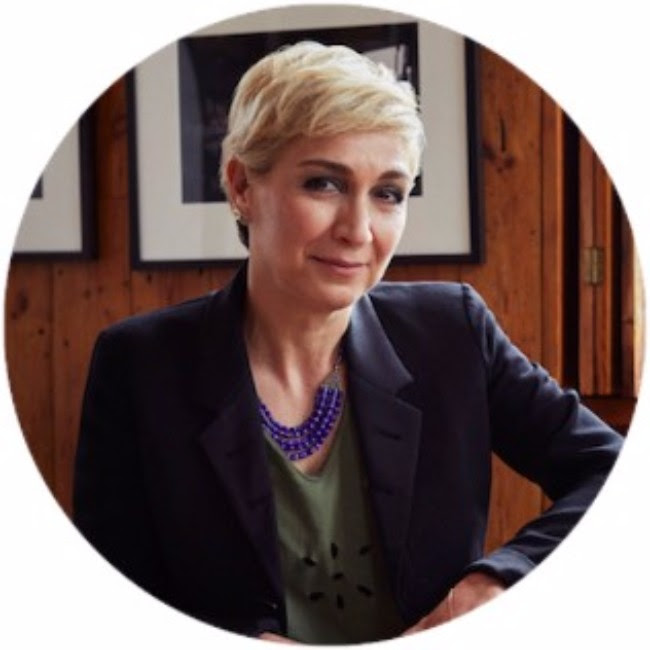 |
The MGI refocuses the lens on the Mediterranean through data and analysis; it is aimed at investors, policymakers, and analysts, as well anyone who wants to gain an in-depth understanding of the region and its potential. Cleopatra is a certified independent director and an advisor to government and corporations on governance, problem solving and growth strategies.
Comfort Ero – Africa Program Director International Crisis Group
 |
Comfort Ero has been Crisis Group’s Nairobi-based Africa Program Director since January 2011. She previously worked with Crisis Group as West Africa Project Director. As Program Director, Comfort oversees projects covering South, West, Central and the Horn of Africa. She has a PhD from the London School of Economics, University of London. Comfort also sits on the editorial board of various journals, including International Peacekeeping.
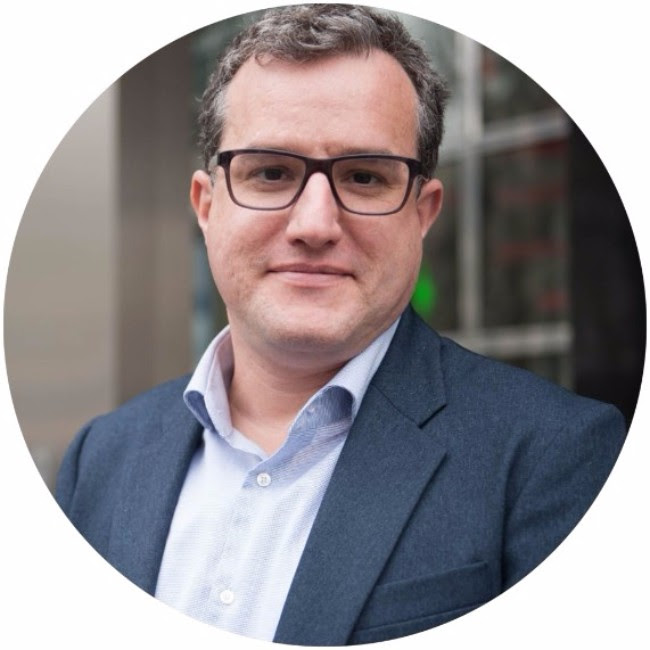 |
Issandr El Amrani oversees Crisis Group’s North Africa Project. Prior to joining Crisis Group, he was a writer and consultant on Middle Eastern affairs based in Cairo. His reporting and commentary on the region has appeared in The Economist, London Review of Books, Financial Times, The National, The Guardian, Time and other publications. He has also advised leading investment firms and NGOs on the region.
Geoff D. Porter – Founder, North Africa Risk Consulting Dr. Geoff D. Porter is the founder and managing director of North Africa Risk Consulting, Inc., a consulting firm specialising in political and security risk in North Africa. North Africa Risk Consulting’s clients include multinational corporations as well as US government agencies. Prior to establishing North Africa Risk Consulting, Dr. Porter was the Director for Middle East and Africa at a political risk consulting firm.
]]>Is this a trend that is repeating itself across the world? Or is Al Jazeera in a unique position?
We will be streaming this event live on our Facebook page at 7pm.
Chair
Safa Al Ahmad – Safa al-Ahmad is an award-winning Saudi Arabian journalist and filmmaker. She has directed documentaries for PBS and the BBC focusing on uprisings in the Middle East. She is the joint winner of the 2015 Index on Censorship Freedom of Expression Award for Journalism and was a finalist for the 2014 Sony Impact Award.
Speakers
Wadah Khanfar – Ex-Director General Al Jazeera Media Network. Wadah Khanfar, President of the Al Sharq Forum and the former Director General of the Al Jazeera Network. He is widely regarded as one of the most influential intellectual in the Arab world. He now devotes much of his time to Al-Sharq Forum, an independent international Network with a mission to develop long-term strategies to ensure the political stability and economic prosperity of the Arab world and the region. His journalistic journey began with Al Jazeera Arabic channel while he was a research fellow in Johannesburg in 1997, subsequently covering some of the world’s key political zones, including US-led wars on Afghanistan and Iraq. During his 8-year tenure at the helm, Al Jazeera transformed from a single channel into a global media network. This period witnessed historic transformation in the Arab World including Arab Awakening. He was ranked first in Foreign Policy magazine’s top 100 global thinkers, and was one of Fast Company’s most creative people in business in 2011
Giles Trendle – Managing Director Al Jazeera English. Tendle is the acting Managing Director of Al Jazeera English where he oversees an editorial staff of over 400 people based in its centres of Doha, London, Washington DC and Kuala Lumpur, as well as in over 70 bureaus around the world. Giles first joined Al Jazeera in 2004 to work on the Arabic channel’s flagship investigative documentary show before moving to Al Jazeera English ahead of its launch in 2006. He began his career in the mid 1980’s as a freelance print journalist based in Lebanon covering that country’s civil war. Giles resides in Qatar where the Al Jazeera Media Network is headquartered. Al Jazeera English produces 24/7 news and current affairs programming for a worldwide TV audience of over 280 million households and mobile content for global digital consumers.
David Hearst – Editor in Chief Middle East Eye. Before this, Hearst was worked at The Guardian as its chief foreign leader writer. In his time, Hearst has covered stories ranging from the miner’s strike, the breakup of former Yugoslavia, the end of the Soviet Union, Chechnya and the backlash from loyalists of the Anglo-Irish agreement.
Dr Marc Jones – Institute of Arab and Islamic Studies Exeter University. His work focuses on political repression in Bahrain, and he is currently working to identify Twitter bots in the Gulf region. He has previously taught Middle East Politics at Tuebingen University, Newcastle and Durham University, and has published widely on new media in the Gulf.
]]>