Download this episode
View in iTunes
You can watch the Frontline event here.
By Gianluca Mezzofiore
After the killing of gay rights activist David Kato in Uganda in January, debate about homophobia in Africa has been reignited. Kato was the face of Sexual Minorities Uganda (SMUG) an advocacy group actively campaigning against the controversial Anti-Homosexuality Bill, which is about to pass in the country. He was murdered after Ugandan weekly Rolling Stone pictured his face and another man on the front page under the headline “Hang them!”, though the exact motives behind the murder are still unclear.
A panel discussion at the Frontline Club about gay rights in Africa featured an exclusive preview screening of an excerpt from a BBC World Debate which will be broadcast by BBC World News on 12 and 13 of March. After the screening, a panel discussed gay rights in Africa and the men and women who seek asylum in the UK to escape persecution as a result of their sexuality. The panel, chaired by Ben Cashdan, producer of the BBC debate, included John Bosco Nyombi, a gay Ugandan man who fled to Britain in 2001 and after an eight-year campaign finally won asylum in the UK, and Jonathan Cooper OBE, a barrister specialising in human rights.
Photography by Sophia Spring
The BBC debate features prominent African leaders like David Bahati, the Ugandan MP behind an anti-homosexuality bill and Festus Mogae, former Botswana President now calling for tolerance of sexual minorities, as well as gay activists like Paula Akugizibwe and Eusebius McKaiser.
The BBC debate is entitled “Is Homosexuality unAfrican?” because the argument among many Africans is that homosexuality is “un-African” – foreign to the continent, against its teachings and traditions and even against what the Bible teaches. Some believe it affects African principles like continuity of life or procreation.
“We used that very deliberate title to force people to this kind of conversation,” said Ben Cashdan, producer of the debate. “The question is: can you really say that homosexuality is not African? Because that’s exactly what Bahati argues.”
In one scene, Festus Mogae is challenged by the BBC presenter, Zeinab Badawi, for his reticence during his presidency to approve a pro-gay law. The answer is shocking: “I didn’t change the law because I didn’t want to lose election on behalf of the gays”.
John Bosco Nyombi believes that Mogae’s attitude is shamefully common in African governments: “Most Ugandan people don’t like homosexuals,” he said. “Politicians don’t want to lose their votes, and even if they are not interested in the issue, they campaign against our rights to gain popularity.”
Nyombi also criticised the primitive view which sees homosexuals as a threat to proliferation of children in the continent. “Catholic priests don’t get married, but their existence is not questioned,” he said. “Gay people don’t recruit children, it’s a childish discussion. I am gay, but certainly not because my parents told me not to be straight.”
Investigating the legality of laws that criminalise homosexual acts is Jonathan Cooper OBE’s main task. He’s the chief executive of Human Dignity Trust, a new body which is highly critical of the Ugandan new bill. “It includes a violation of a number of rights guaranteed by international laws ratified by Uganda,” he said. “Criminalising sexual conduct undermines dignity and privacy of human beings. Once approved, the act could be challenged through Ugandan court for unconstitutionality. But who will be brave enough to do that?”
It has been calculated that about 38 countries in Africa still criminalise homosexuality. However, in other parts of the world, China has changed its legislation recently, and India is going through the same process, not through legislation, but through controversies before lawor litigations. The anti-gay bill in Uganda introduces a hideous note, because it forces doctors, professionals, teachers, lawyers to report someone who is homosexual within 24 hours. Otherwise, they can be arrested.
“The South African constitution guarantees those rights,” Obe said. “I strongly believe that this is not supported by majority of South Africans. A true democracy is one that has legal election, but also fundamental human rights principles to protect fragile and vulnerable people.”
However, Nyombi is sure the Ugandan anti-homosexuality bill is going to pass. “During the pre-election period, nobody talked about it,” he said. “Now they’re bringing it back, because the president and most people in the government are anti-gay.”
Raising the issue in front of an international public is critical to Nyombi. “I would like to back the gay rights issue in Western countries,” he said. “But the question is: is Uganda going to know that? If people try to campaign for Ugandan human rights, is it going to be shown there? Before the internet era, nobody talked about it. Gay people are still hiding themselves, but now they have a voice.”
If you missed the event, watch the video below. You can see the full version of the BBC World Debate: Is Homosexuality UnAfrican on BBC World News on 12 March at 09:10 and 22:10 GMT and 13 March at 02:10 and 15:10.
]]>In 1998 Jennifer Jenkins was shot four times by her brother, Mason, who was subsequently arrested and convicted for her murder. Their parents, Leslie and Brian Jenkins decided to continue to support their imprisoned son and were ostracised by their community.
Although many would find it surprising, this story of a Canadian family who stood by their son after he had shot their daughter, is the typical reaction of families in similar circumstances.
Dr Rachel Condry spoke to audience members after a screening of Life With Murder, an intimate portrait of the Jenkins family and the aftermath of their daughter’s death. Dr Condry, an Oxford University criminology lecturer and author of Families Shamed, which examines the consequences of serious crimes on the offender’s family, said:
“Can we understand a mother and a father who would stand by their son? I think that sometimes that is the case. If you imagine yourself as them and the person you love has been cast aside by everyone else and you’re the only one left to love them – there is this huge feeling of defence and that you’re the only one to support them. On a public level you want to stick up for them.”
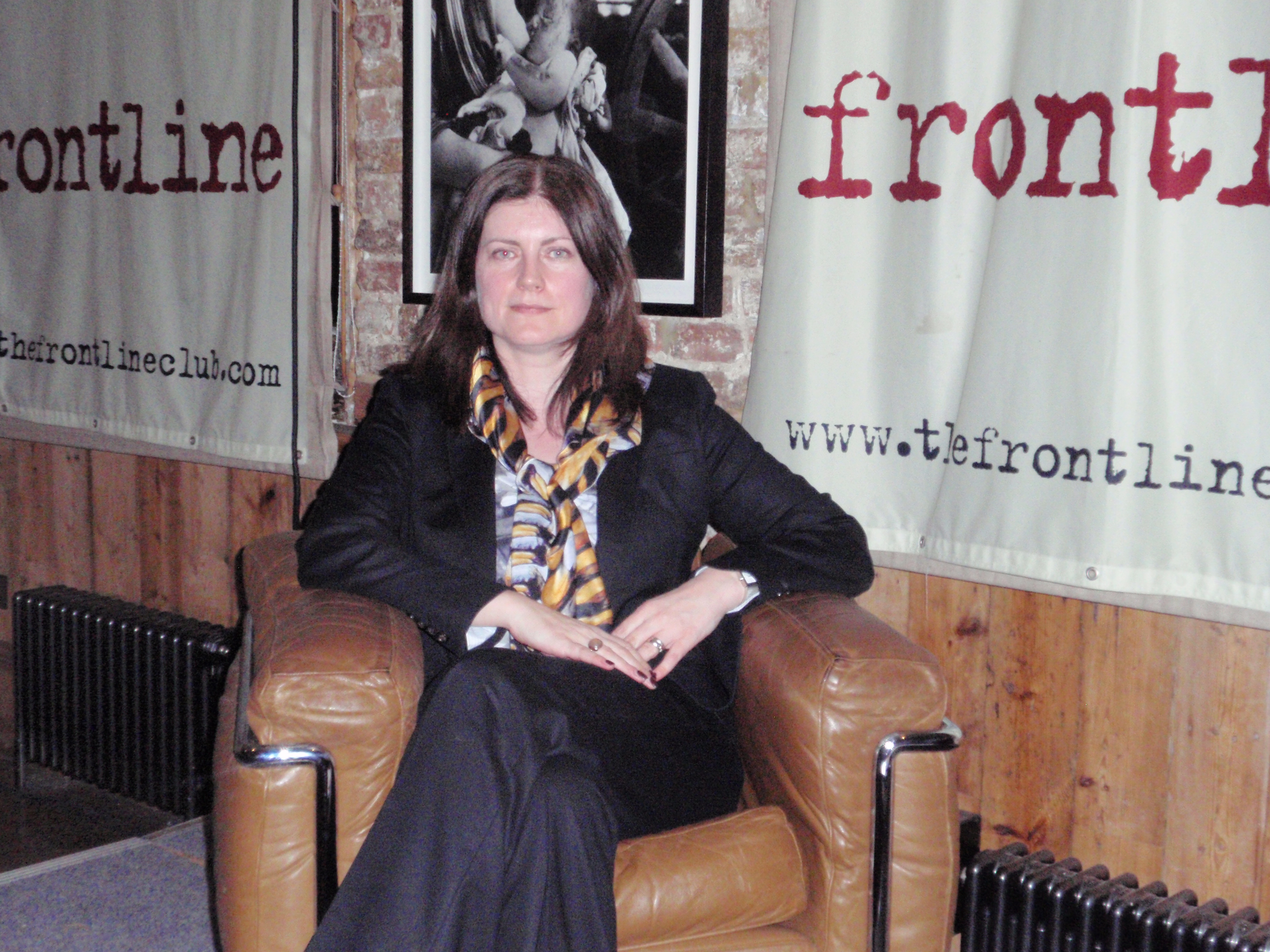
Photograph of Dr Rachel Condry by Shyamalie Satkunandan
Dr Condry said that her research had shown that this experience was actually typical of many families – who, even in the face of obvious guilt, still want to separate the crime from the person they love.
The community’s shunning of the family was also common in Dr Condry’s work.
“Often, the reason why offenders’ families are ostracised is because it is difficult to get to grips with. People think that they are condoning the act – that, in some sense, they think that the crime is okay.”
According to the film’s maker, John Kastner, after showing the film in the family’s area some people began to talk to the Jenkins. The couple also found watching the documentary to be “very cathartic”.
The discussion then turned to the motive and thinking behind such a shocking death:
“In real life there are so many grey areas. I think one of the powerful things of the film is that it leaves that question [of motive] unanswered.”
“We often think parents create their children, but this experience, of a person who commits a crime but comes from an ordinary family rang very true.”
Dr Condry said that the lengthy family visits seen in the film, which are also provided for in the US – which has one of the most punitive prison systems – would be an interesting rehabilitative means for prisoners.
“Research shows that people who have supportive families are less likely to self harm, do better, and on release are less likely to re-offend.”
Which leads to a key point Dr Condry has been a strong supporter of:
“On the point of families, their needs aren’t met by any particular government agency so they are often left on the sidelines. I would make a plea for having more policy that thinks about the needs of offenders’ families.”
]]>
The future green paper is likely to lay the ground for a special form of secret court claimed Gareth Peirce speaking at the Frontline Club last night.
Asked about a current attempt by the Government to hold an entire civil trial in secret the acclaimed human rights lawyer Gareth Peirce said she believed the promised Green Paper on national security and the courts which head of MI6 Sir John Sawers referred to in his recent press conference, would attempt to push the boundaries of secrecy further.
I don’t think [the Government] thinks there is a limit to secrecy at all and I’ll lay you odds that in that Green Paper there is some sort of template for a sceret court so if they lose in the Supreme Court on their scandalous attempt to undo hundreds of years of perfectly normal civil litigation with a tribunal of fact actually knowing the whole of the case, there will be a plan to introduce a special secret court and where the security services are the defendant in the case to push it all into secret.
The growth of the use of secret evidence and secret courts is not just not stopped, it seems to be unstoppable," said Gareth Peirce. who has represented, amongst others, the Guildford Four, the Birmingham Six, Moazzam Begg and the family of Jean Charles de Menezes.
The lawyer was talking to Afua Hirsch about her new book Dispatches from the Dark Side on torture and the death of justice in which she says Britain has a state whose "devices for maintaining secrecy are probably more deeply entrenched than in any other comparable democracy".
Referring to the corruption of legal principles and practices taking place in the prosecution of the ‘War on Terror’ and the treatment of young Muslims, Gareth Peirce said that in Britain we don’t know what we have been complicit in and may never know:
We have such a particular ability to cover up with secrecy on the grounds that it’s justified because of national security. There’s a battle that might not be won to make sure that society knows.
Gareth Peirce said that she hoped that the coalition government would act differently as so much harm was done by the previous Labour government:
It’s certainly an opportunity because so much of what was bad happened on the watch of the last government. Appallingly, so much of what we believed that was inalienable, the heritage of rights that was built up was decimated. There’s the opportunity when there’s a new regime and this regime has said some things that could be significant.
But Gareth Peirce said she was unscertain if significant change was likely. Referring to the ways that the government had got around legal blocks to imprisonment without trial she said that they always had another plan to counter it:
It just breeds bleak cynicism that whatever the legal victory there will be a plan to change it. So if the victory in the Supreme court is that there cannot be a civil court that hears secret evidence then there will be some form of legislation introducing a new experiment.
]]>
How have Facebook, Twitter and blogs changed changed grassroots politics? This was the question tackled at the club on Tuesday, at an event moderated by Deborah Bonello, founder of Mexicoreporter.com and video journalist for the Financial Times.
If you couldn’t be with us for this event, you can watch the whole thing here:
Sunny Hundal, editor of Liberal Conspiracy, cited social media scrums such as the Twitter campaign following Jan Moir’s comments in the Daily Mail about Boyzone singer Stephen Gately; complaints over a BBC World Service messageboard asking if homosexuals should be executed and the campaign to stop Rod Liddle becoming editor of the Independent as examples of how social media can be used to mobilise support on an issue.
But Mike Harris, director of the Libel Reform Campaign, said that these were "quick wins": "Social media is very effective in short term campaigns but it hasn’t converged around a single nexus in the longer term," he said. "I’m concerned that the power of the quick win comes to dominate."
His suggestion that social media would only "come of age" when campaigns were influencing the detail of legislation was disputed by Benjamin Chesterton of Duckrabbit who argued that "It goes far beyond minutiae of policy – therer are so many things beyond politics and policy that people are getting involved in."
Sina Motalebi, of BBC Persian TV, was imprisoned for 23 days in Tehran’s Evin prison and released after thousands of people signed an online petition argued against reducing "social media to our political expectations". Responding to the suggestion that Western media had over-hyped the impact of Twitter in the protests following last year’s Presidential election, Motalebi said:
]]>I don’t think it was unsuccessful in Iran.I know some Iranians are disappointed and are asking this fast-moving buzz, did it change anything? It has: it brought the exclusive power away from the media. I don’t think it can change a government but it can change some of the characteristics of a society and open things up for people whose day job is to create change.
The threat to freedom of speech from costly libel cases and the "chilling" fear of legal action could be alleviated by reforming the system to deal with smaller cases faster and cap the maximum costs lawyers can charge.
That was at least one agreement in an otherwise combative debate amongst the panel and audience. If you missed the event, you can watch the whole thing here:
Event chair Clive Coleman – presenter of BBC Radio 4’s Law in Action programme – described a tumultuous year in UK libel. He said the rise of super-injunctions such as those taken out by multinational oil trader Trafigura highlighted the courts’ power to silence public commentary.
However, the recent success of high-profile libel defences, coupled with commitments from the major political parties to review libel law, prompted him to ask whether it had been “a good six months for the free press”.
Nigel Tait, partner at notorious law fim Carter Ruck, which represented Trafigura, said it had been a “stimulating 12 months” in libel law. He rejected the need for changes to libel legislation, agreeing that that "costs" are behind the “chilling” affect on freedom of speech. He came out in support of a libel tribunal to deal with more minor cases, arguing lawyers could not be expected to shoulder an increased workload.
I’m in favour of a two-tier system. For the really important cases…I could see why you’d have a proper high court judge and possibly a jury. But I don’t think you need the Rolls Royce service for bloggers, what’s written on the internet.
Media law expert and Reynolds Porter Chamberlain partner David Hooper said that the key to lower libel costs in much of Europe was the “swift result” reached in most cases. He said:
[Claimants] may often get results they don’t deserve. But the key thing is that they are cheap. What people really want is a quick decision by the best person available and that’s really what a tribunal would do.
Simon Singh insisted that public opinion, much of it voiced over social media, is helping defence against a defamation writ from the British Chiropractic Association, which he refered to as "two years of hell".
Tait argued that a severe cut in lawyers’ success fees, which in no-win-no-fee "conditional fee arrangment" cases often double costs for defendants, risked removing the incentive to take on difficult cases.
Leigh closed the debate on a cautionary note for journalists, saying that the press was also responsible for problems surrounding libel in the UK:
Unless we put the newspaper house in order it is very difficult to move the debate on libel reform further forward.
Journalism.co.uk covered the evening and you can read its coverage here and here.
]]>Download this episode
View in iTunes
By Ewan Palmer and Patrick Smith
The shark-infested waters of UK media law could be about to get a little safer, thanks to Ministry of Justice reforms to curb extortionate lawyer success fees earned through "no win no fee" conditional fee arrangement cases (CFA).
But Jack Straw’s quick-fire legislation (read the responses to the consultation here, in pdf format) has failed to win enough support to pass in the pre-election bill "wash-up" and reforms will now fall on to the next government, whoever that is…
We discuss this and more at the Frontline Club on Tuesday April 13, science writer with Simon Singh, Guardian investigations editor David Leigh, Carter Ruck partner Nigel Tait and David Hooper, from Reynolds Porter Chamberlain. Helping us make sense of all this is our chair Clive Coleman, presenter of BBC Radio 4’s Law in Action programme. Book here for tickets.
But until then, here’s out brief primer on what’s afoot in media law reform…
Defamation lawyers can currently charge a success fee in CFA cases of 100 percent of the total costs – effectively meaning lawyers double their fees, leaving defendants with a massive bill to pay, often even if they succeed in defending the case. Jack Straw’s proposals would introduce a success fee cap of ten percent.
The law firms argue that they need to charge high fees to counteract the risk of losing in a CFA case – but thanks in to the UK’s case law-based system and the burden of proof being placed on the defendent, very few libel writs fought and won by media bodies in the High Court.
CFAs: a necessary evil?
CFAs were introduced to help people who can’t afford expensive legal fees to sue for libel, which is one reason some MPs like Labour’s Tom Watson voted against this latest law change proposal.
But what started out as an admirable policy has since been abused by those who can afford to pay their own fees. As law firms choose not to take on difficult cases, both smaller and large media bodies are experiencing what they would call a "chilling effect" on their journalism; many would rather settle out of court than face the crippling expenses that would occur if they fought the case.
Libel Tourism
The current libel laws means it is possible for statements published abroad – but visible to a UK audience somehow – abroad to be the subject of a writ. This has the effect of attracting people with little connection to the UK to London’s High Court to settle their disputes and protect reputations.
As The Times’ legal editor Frances Gibb puts it, London is now the libel capital of the world, being the scene for many cases brought by businessmen and companies from countries where such stringent laws don’t exist.
]]>