The rescue of kidnapped New York Times journalist Stephen Farrell is a stark reminder of the dangers of reporting from the frontline in places like Afghanistan, Iraq and Somalia where Amanda Lindhout and Nigel Brennan are still held hostage one year on.
Although Mr Farrell was rescued today by NATO forces, his colleague, journalist and interpreter Sultan Munadi and two other Afghan civilians were killed. One of the British commandos involved in the rescue was also killed. Mr Farrell was kidnapped on Saturday 5th of September with his Afghani interpreter Mr Munadi, whilst reporting on the NATO air strikes that targeted hijacked fuel tankers killing up to 125 people. They were kidnapped and taken from a village near Kunduz and held for four days before the NATO rescue operation freed only one of the two journalists.
Stephen Farrell is a committed journalist who takes all necessary precautions when reporting from such danger zones. He also has a great amount of respect for the people and the cultures he reports on. He previously reported from Iraq for the London Times and was well aware of the dangers faced by foreign journalists and their local staff. In April 2004 he was kidnapped near Fallujah in Iraq. He was released on the same day having negotiated his way out. He and his colleague were unharmed and there was no armed rescue, no bloodshed.
The family of Sultan Munadi, a 34 year old father of two young sons, will sadly be reeling from the consequences of this day forever. Mr Munadi had worked regularly with news organizations, and was also studying for a master’s degree in public policy in Europe. He had briefly returned to Afghanistan and resumed his journalism work. In his first and sadly last post for the New York Times three days before he was kidnapped, Mr Munadi said he would never leave Afghanistan permanently.
“Being a journalist is not enough; it will not solve the problems of Afghanistan. I want to work for the education of the country, because the majority of people are illiterate… I am really committed to come back and work for my country.”
Mr Farrell described seeing his colleague’s body during the rescue. “He was lying in the same position as he fell. …That’s all I know. I saw him go down in front of me. He did not move. He’s dead. He was so close, he was just two feet in front of me when he dropped.” Mr Farrell blogged his account for the New York Times AtWar Blog which he runs. He said he did not know whether the shots killing Mr Munadi had been fired by their rescuers or the kidnappers.
Mohammed Nabi, owner of the house which was raided, told Reuters that the troops left with the westerner, but not his Afghan colleague. His body was found outside the house in the morning. This seemingly purposeful abandonment of Mr Munadi’s body by the operational forces will draw criticism from the local Afghans. The head of the Afghan Independent Journalists’ Association, Rahimullah Samandar, has already voiced criticism at the actions of the international forces. Speaking to the BBC, he said the raid showed international forces did not care about Afghan reporters. Samandar also said it was not the first time a kidnapped Afghan journalist had been killed while a Western colleague was freed.
Questions are being raised about the role of rescue operations sanctioned from the top to save the life of journalists. Questions are also being raised about safety and war zone risk assessment. One senior officer has already said,
“…it makes you really wonder whether he was worth rescuing, whether it was worth the cost of a soldier’s life.”
The New York Times has set up a fund for Mr. Munadi’s family . That money, along with funds contributed by the company and its employees, will be forwarded to his family in Afghanistan. For donations outside of the United States, the newspaper has set up a process for wire transfers: click here. If you would like to contribute by post, please mail your checks here:
The New York Times
680 Eighth Avenue, 3rd Fl.
New York, NY 10018
Attn: Cynthia Latimer
Checks must be made payable to “The New York Times,” noting Sultan Munadi’s name in the memo field.
The Frontline Club also runs a fixer fund which was started following the murder of Ajmal Naqshbandi.
]]>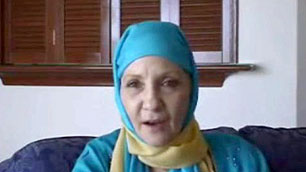
The Globe & Mail reports that a ransom demand of $375,000 has been made by the Taliban kidnappers of Beverly Giesbrecht who has been held hostage since November 2008. The paper says the demand came during an interview with a man calling himself Qari on the Pakistan-Afghanistan border who said only money would secure her release,
“Once negotiators approach the Taliban … then definitely they will work out the timing and conditions for her release,” [Qari] said.
“She is safe and sound, for she is very precious for us. She has the freedom to interact with our female folk, whom she has got used to. Inshallah [God willing], she will not be harmed and we are confident that our demand will be accepted by the concerned government,” Qari said.
“She is provided with the best available facilities including food, medical care,” he said, although he acknowledged he had not seen her himself.
“She seems to be very encouraged with the reports that Taliban will spare her life in exchange for ransom,” he said. link
Giesbrecht, a 52 year old freelance who also goes by the name of Khadija Abdul Qahaar, was freelancing for Al-Jazeera when she was abducted. A previous ransom demand of $150,000 was reported in January and she appeared in a video released by her captives in February.
Photo taken from CBC News.
]]>Probably to tell you your man has been killed.So it was with a perverse sense of relief that I heard the man from Fox News tell me that Olaf Wiig had been abducted at gunpoint in Gaza City three hours previously, and had not been seen since.And my first coherent thought following that relief was: “Get to Gaza”.

You’ve got a job to do”.There are no handbooks available to journalists on how to manage a kidnapping. If they exist, they must circulate around offices in old palaces in the Green Zone, or sit dog-eared on the desks of FBI agents in Washington. And chances are if it’s been written up, the information is probably already out of date.What there is instead is a network of people out there with first-hand practical experience. Who – withtherightintroduction and often a promise of complete discretion – will make available to you contacts, insights, pointers and strategies that may prove invaluable.
There are no safe precedents in an abduction. Local after local informed me: They don’t kill hostages in Gaza. But of course there’s always a first time. The one fact we felt we could put any emphasis on was this: Gaza is not Baghdad. But what precisely did we imagine by this? That the stakes weren’t as high? That the people involved weren’t as angry? The rather smaller-than-imagined degree to which the situation in Gaza was ‘not Baghdad’ we were only to discover later.
When it came to Olaf Wiig and Steve Centanni’s abduction I had one strong gut feeling: That this was a problem that had to be resolved by the Palestinian people in their own fashion, and that any clumsy or less than benign outside interference would at best only prolong the crisis, and at worst turn it into a much more serious one.
Fortunately, this was an opinion shared by the two journalists from the Fox News Jerusalem Bureau, Jennifer Griffin and Eli Fastman who, like me, felt they had a job to do and had simply picked up their notepads and mobile phones and headed straight for Erez.
And we turned out to be right.
During the first few days, the question was: How much attention should we draw to something that might already be halfway resolved – as so many other Gaza hostage-takings had been? It was only after four or five days had gone by, and there was no news, and – more worryingly for us – few signs of concerted political effort, that we decided to publicly ask for help.What then were the crucial issues to weigh up? A degree of attention was needed, yes. But not so much that the affair of two kidnapped foreign journalists would become a cause célèbre. We did not want to inflate in anyone’s mind the value of these two men. And we did not want people getting involved unnecessarily because it had turned into some kind of headline-grabbing ‘international crisis’.
We also had to find out who knew what in Gaza. And who had any line of communication through to the people who might have ordered the kidnapping. And, by implication, which of the two ruling parties, Hamas and Fatah, were the ones with influence in this case.
We needed all the significant figures in Gaza, both political and non-political, to know that we were asking these questions, and where to find us, in case someone decided to get in touch with vital information. And this way we also maintained a respectful, moral pressure on the authorities to act.
There was complete and baffling silence for a week, which was intensely difficult. We needed to know what the kidnappers’ agenda was in order to move the situation along. And once they began to make demands, every statement I made, every word uttered was – after consultation – chosen by me with great care.
Meanwhile, we had to work a parallel track with the diplomatic services involved in Gaza. And in practice – above the radar – that was the British and the New Zealanders, because the Americans no longer have an effective presence or ability to operate there.Below the radar, there were others we sought out who we knew from past experience could be helpful – and they were.
At the same time there were numerous intangible considerations, the most important of which could be expressed in one word:Humility. On the scale of problems suffered by the people in Gaza currently, a missing husband and his colleague were simply not very serious. I felt we could reasonably ask for local understanding andsupport, but there was no way we could approach this expecting the affairs of Gaza to stop for us.
If there was sympathy, that was a bonus. If that led to information, or constructive engagement, then that was doubly so. But as far I was concerned, that could only ever be a polite request, based on a sense of common humanity. Never, at any stage, did I let go of the idea of Olaf and Steve’s kidnappers as people, working within the context of their community.
However doctrinaire or desperate they had become, I reasoned, they still at some stage went home to their families, and what they and their families felt about the kidnapping – and about our efforts to get our men released- was part of their reality too. And within the kidnap itself, Olaf’s cool head and open-minded approach to the attitudes of his kidnappers was also playing an important role.

It seemed to us that the kidnapping was a misjudged action. These two low-profile journalists were genuinely incapable of mobilising significant Western political energies, especially as Olaf is from New Zealand, which has a benevolent international reputation but a distinct lack of weight or resources to throw around.
Both journalists had a track record of neutral coverage of the Palestinian situation. We could not see that anyone outside the immediate protagonists would perceive this snatch as useful to Gazans, and that view was amply borne out as politicians from all parts of the political spectrum – including IslamicJihad – came forward unprompted to say it was a bad move.
As the days wore on, the importance of the small, close-knit team we had established became clear. Trust was hard-won, and the demands on the people involved were extraordinary. By the end of the first week, the non-Palestinians including me who insisted on staying in Gaza did so in complete defiance of diplomatic and security advice.But kidnappings and revenge killings are more of a problem for locals.
Despite this, the help and advice given by the Palestinians working alongside us had from the outset changed from being merely professional to being a point of honour. We needed them. We could make no progress without them, but we knew they were putting their lives on the line.We believed we had all the expertise we needed in those two weeks, right there on the ground. Increasingly as the days wore on we felt that to bring in any other government organisations or ‘professionals’ would have been counter-productive, and we were enormously – and successfully – resistant to it.
But for all of us working in this nightmare, trapped in the Gaza pressure cooker, the counsel of people who intimately understood the terrain but who were not part of the ‘hostage industry’, was not only practical – it kept us sane.
For me to be able to draw on the first-hand experience of Scott Peterson of the Christian Science Monitor – who had worked for nearly three months to help free journalist Jill Carroll from captivity in Iraq – was enormously important.People like Scott, in my view, are worth a thousand uniformed theoreticians.
And now we have a more complete picture of how and why Olaf and Steve were released, I can confidently assert that everything we did in Gaza in those two weeks played a useful part in the outcome.But this won’t be the last time a journalist is kidnapped in the Middle East. We have been told that if/when it happens again in Gaza, it may not end so well. Which is why we need to share with each other what we know.
]]>