View in iTunes
Watch the even here.
By Marise Jeyarajah
The club hosted an animated discussion last night on the controversial issues surrounding the future of Kashmir. Chaired by author and broadcaster Victoria Schofield.
“We had this uprising, in the valley,where hundreds of thousands of young people came out to the streets protesting against the Indian rule […] at the end of it we had 119 young people dead. They were killed on the streets, I refer to that as they were murdered because these were not militants, these were not armed insurgents […] they were young boys.”
“People want to be given a chance to decide their future. That right has been denied consistently and brutally.”
“Standard narrative from Pakistani’s that say they have done everything they can to try and get a solution to this coflict […] what Pakistani’s now feel is that the plebicite needs to happen. If you speak to the Ministry of Foreign Affairs they’ll say that there needs to be a referendum; the Kashmiris themselves need to decide.”
“There were certain rumblings of resistance and there was certainly disaffection among a section of people in Indian controlled Jammu and Kashmir, but this was aided, abetted and fuelled by Pakistan. This is a fact of history.”
“They have done a catastrophic job of promoting their cause. When I look at Burma, when I look at Tibetans they have a figure head, a person that people can rally around […] The first thing they need is to realise what they need to do to obtain their objective, whatever it may be.”
“The common things which have survived, in spite of war in spite of battles, for instance the Indus Waters Treaty has survived 60 years, the LOC, line of control in Kashmir, that has survived for many years and over the last 20 years, India and Pakistan have been regularly and religiously exchanging information on nuclear issues.”
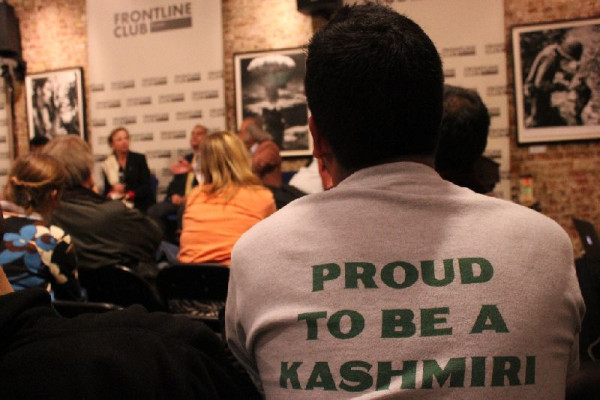
Join us at the Frontline Club with an expert panel to discuss where Kashmir stands in its fight for freedom and the options that lay before it.
]]>The former Princely State of Jammu and Kashmir, is seen by many as South Asia’s Palestinian counterpart. Bordered by Pakistan, India, China and Afghanistan, each country has laid claim to the territory that lies in the foothills of the Himalayas. It has been caught between continuous contestation of borders and autonomy since the partition of British India.
With India unwilling to acknowledge the demands of the people for freedom, and therefore avoiding debate on resolution, Kashmir’s future looks like it will remain in limbo for years to come. But with the recent Jan Lokpal protests and the Arab Spring, will India take note and give the people of Kashmir the right to self autonomy? Or will it continue to arm itself with Israeli weapons and training in the name of counter-terrorism? The Jan Lokpal protests were carried out in support of social activist Anna Hazare and his continuing pressure on the Indian government to push forward an anti corruption bill that would see the establishment and enforcement of legislation against endemic corruption.
Recently discovered unmarked graves of over 2000 bodies, of insurgents and local Kashmiris, have brought to the surface the horrific extent of the conflict that has left thousands of women widowed and subsequently abandoned by the Indian state with no knowledge of the fate of their husbands. An often forgotten and unreported conflict, in the name of diplomacy, Kashmir is slowly voicing itself onto the international agenda. But will Western powers support Kasmiri freedom, or will Indian diplomatic relations be put first?
Join us at the Frontline Club with an expert panel to discuss where Kashmir stands in its fight for freedom and the options that lay before it.
Chaired by Victoria Schofield, journalist and author of Kashmir in Conflict. She is an independent analyst and commentator on the Kashmir conflict for news agencies such as BBC World, Al Jazeera, CBS and CBC. She was also an independent rapporteur for the 4th Global Discourse on Kashmir that was sponsored by the International Council for Human Rights.
With:
Mirza Waheed, journalist and novelist. Born and brought up in Kashmir he joined the BBC’s Urdu Service in London in 2001. His first novel, The Collaborator, is set in his hometown during the early 1990s, and depicts the conflict between India and Pakistan and its effects on a border village in Kashmir.
Subhash Chopra, former The Times journalist and author of Partition, Jihad and Peace: South Asia after bin Laden.
Ashis Ray, Times of India journalist and former CNN South Asia Bureau chief and consultant editor.
Imran Khan, correspondent for Al Jazeera English. He has reported extensively from Pakistan, Afghanistan and from across the Middle East.
Lawrence Sáez, Senior Lecturer in Comparative and International Politics at the School of Oriental and African Studies (SOAS) with expertise in Pakistan and India. Chair of the Centre for South Asian Studies.
Image Credit: Kashmir Global courtesy of Flickr
]]>We will be discussing Kashmir’s future, the changing role of the foreign correspondent with The Guardian‘s Jonathan Steele, torture and the Arab Spring, and the coming presidential elections in the Democratic Republic of Congo.
A series of Film Africa documentaries look at the people of the Western Sahara and a community of women living in exile after being accused of witchcraft.
There’s a film about the street vendor Mohammed Bouazizi who, by setting himself on fire, sparked an uprising in Tunisia, and another tells the story of the brother of Private McKinley Nolan and his quest to find out the truth about what happened to the missing G.I.s in Vietnam.
Following on from this month’s #fcbbca discussion on Israel, we will be discussing women and the Arab Spring at Westminster College’s Paddington Green Campus.
The focus of our November First Wednesday discussion will be announced on Wednesday 26 October.
]]>
We will be discussing Kashmir’s future, the changing role of the foreign correspondent with The Guardian‘s Jonathan Steele, torture and the Arab Spring, and the coming presidential elections in the Democratic Republic of Congo.
A series of Film Africa documentaries look at the people of the Western Sahara and a community of women living in exile after being accused of witchcraft. There’s a film about the street vendor Mohammed Bouazizi who, by setting himself on fire, sparked an uprising in Tunisia, and another tells the story of the brother of Private McKinley Nolan and his quest to find out the truth about what happened to the missing G.I.s in Vietnam.
Following on from this month’s #fcbbca discussion on Israel, we will be discussing women and the Arab Spring at Westminster College’s Paddington Green Campus. The focus of our November First Wednesday discussion will be announced on Wednesday 26 October.
Follow us on Twitter and catch up on any events you missed on the Forum blogor download our podcasts on iTunes.
]]>
Illustration by Clara Vulliamy
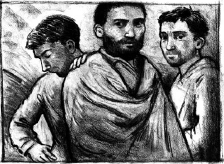
While Pakistan has helped the war on terror, it has been reluctant to crack down on militants from the Lashkar-E-Taiba group. Now it is under pressure to do just that – with explosive results.
The guard stands lazily at the entrance of a crammed brick bunker. Without saying a word, he checks my haversack and frisks me thoroughly. With an inquisitive look on his face, he gazes at the tiny picture on my identity card and whispers my name as if reassuring himself. Finally he moves to let me in. I enter the bunker, where his gun-wielding colleague has to squeeze his body to let me through another hole, covered by a raggedy blanket, to enter the compound. The main entrance of this police camp, a large and heavy metallic gate, remains locked. Spools of razor-sharp barbed wire, a large iron sheet covering the stretch of road with thick nails protruding from its surface, and a huge iron pipe form several layers of the security barricade. Half a dozen armed men, their fingers ready to pull the trigger, stand around the gate, while others watch from the pigeonholes of the bunkers erected above the compound wall.
The headquarters of the Special Operations Group, the counterinsurgency police, has always been a scary compound, and people even avoid the lanes around it. The screams from its dark and dingy torture cells, where captured militants were once interrogated, have become legendary in strife-torn Kashmir. Dozens of men have perished in this two-storey building.
On the few times I have entered the compound over the years, a strange tension was always evident. One particular room, hidden from the public, contained a selection of torture instruments: a hook in the roof with a nylon rope hanging from it, a metal bed with its legs fixed into the floor, whips and a thick wooden rod that would be used to roll over suspects’ bodies during “question-and-answer sessions”. The SOG operations were simple: extract information from the captured men and look for their associates. The militants countered, and 10 years ago sent fidayeens in police uniform into the camp to kill dozens.
This cycle continued for years, until a new officer arrived in the camp. Mohammad Irshad, the current Superintendent of Police, has changed the rules of the game. Like members of the militant group Lashkar-e-Taiba, he is a Salafi, and the only difference between them is in their understanding of jihad. While Lashkar men sneak in from Pakistan with a belief that they are fighting a holy war in Kashmir, Irshad contests it and has no doubt that his war against the Lashkar is well within the ambit of Islamic scripture. Thus, for several years, the camp’s interrogation room has been a site for regular theological debate, and Irshad puts each captured militant’s understanding of jihad to a rigorous test. Unlike Deobandis – the parent religious organisation of the Taliban, who belong to the Hanafi school of Islamic jurisprudence and follow Imam Abu Hanifa – the Salafis do not follow any particular imam and consider the Koran and Hadith as their only guides. The Salafis are a dominant school of thought in Saudi Arabia, and their world view is shaped by the teachings of Ibn Taymiyyah. Al-Qaeda’s leaders also follow this puritanical form of Islam.
This is an unusual counterinsurgency strategy even for Kashmir, where the militant movement against Indian rule is now dominated by the Lashkar – a group that believes its struggle here is part of a pan-Islamic movement, a compulsory religious duty and not merely a fight for people’s rights. Irshad and his team have managed silently to convince and co-opt several of the captured militants, and generated a vibrant debate within the Salafis. This has not become a big success only because a majority of Lashkar men prefer death over arrest. The Lashkar has been responsible for over 200 suicide attacks in Kashmir in the past decade. Within hours of the 9/11 attack, Pakistan took a U-turn on its Afghan policy, allied with the United States and became a frontline state in the ‘war on terror’. The sudden policy shift was major: from being a close friend and ally, the Taliban was now the enemy.
Since 2002, the Pakistani government has fought the Taliban and Al-Qaeda even at the cost of serious setbacks to its internal security, especially along its western border. But Pakistan’s efforts at tightening the noose around groups waging war against India have been extremely difficult. It has been impossible for Pakistan’s government to hand over the Lashkar ideologue Hafiz Mohammad Sayeed to New Delhi, though it did not hesitate to arrest Khalid Sheikh Mohammad and other Al-Qaeda followers on behalf of the US. This shows a dichotomy in Pakistan’s policy, and the reason is Kashmir and its history. Since Pakistan’s creation, the Kashmir dispute has been at the core of its existence.
Unlike Afghanistan, Kashmir has traditionally been a major influence on Pakistan’s domestic as well as foreign policy. Though the Pakistani government did launch a crackdown after the 2001 parliament attack, it insisted that this shift did not mean it was abandoning its support for separatists in Kashmir. The other aspect influencing Pakistan’s policy is to do with ideological and demographic differences between the Taliban and the Lashkar. The Taliban movement in Afghanistan and Pakistan is primarily modelled on the Deobandi school of thought, while the Lashkar is Salafi-based. Apart from differences in the practice of religion, Deobandis in Pakistan seek the establishment of an Islamic state in letter and spirit, and even favour a jihad against the establishment, while the Salafis do not support rebellion against the government in a Muslim country, but advocate reform to turn the ruling elite into “Muslims at heart”. This means that the Lashkar and its parent organisation, the Markaz-e-Dawa-wal-Irshad, were never a security risk for the Pakistani state.
In 1986, Hafiz Mohammad Sayeed and two other Pakistani professors – Dr Zafar Iqbal and Hafiz Abdur Rehman Makki, a close relative of Sayeed – set up the Markaz-e-Dawa-wal-Irshad (Centre for Preaching and Guidance). Sayeed, a professor in the Islamic Studies Department of the Lahore University of Engineering & Technology, had been to Saudi Arabia for higher education in Islamic studies, where he and the others associated with Saudi ulema at Madinah University. The connection was Sheikh Abdullah Azzam, a Palestinian from Jenin refugee camp, who had links with the Muslim Brotherhood of Egypt and a well-known ideologue of Afghan jihad. Soon after his return from Saudi Arabia, he and two other professors set up the Markaz in Muridke, near Lahore.
A year later the Lashkar-e-Taiba was launched, with the aim of participating in the Afghan war. Its militants fought the Russians inthe Jaji area of Paknea province together with the Afghan mujaheddin outfit Itihad-e-Islami. But as the war reached its end, the group shifted its attention to Kashmir. According to security agencies, its Valley operations began in 1993. For years, the group kept a low profile, so much so that government agencies had little clue about its ideology and cadre. The first sensational act by the outfit was in July 1999, soon after the Kargil war, when it launched a fidayeen attack on a paramilitary camp.
This brought the group and its top ideologue Hafiz Mohammad Sayeed to the public’s attention and ever since that July attack, the Lashkar and Sayeed have remained in the headlines. This Salafi group was in absolute conformity with Pak
istan’s policy until 9/11 that blurred the line dividing armed movements and terrorism internationally. And this is why President Pervez Musharraf’s decision to ban the Lashkar was seen as a major step, even though it did not match New Delhi’s demands. On December 24, 2001, almost a month ahead of Pakistan’s ban on the Lashkar, Sayeed called a press conference and officially distanced himself from the Lashkar, closed down the Markaz-e-Dawa-wal-Irshad, and set up Jamaat-ud-Dawa, with an exclusive aim of dawa (preaching) and charity. The Dawa describes itself as “a multi-purpose movement that aims to spread the true teachings of Islam” that “works peacefully, regardless of the circumstances in the country [Pakistan]”. Before Pakistan’s ban on the Lashkar, Jamaat-ud-Dawa had 1,150 organisational offices in Pakistan, of which 74 were at the district level.
The Lashkar was officially confined to Pakistan-administered Kashmir. These measures, announced publicly by Sayeed, worked, and in time the organisation managed to evade a total ban by the Pakistani government. By contrast, Islamabad responded with an iron fist to Deobandi groups. While the Pakistani army has waged a war against Tehreek-e-Taliban in Fata, the military action on the Lal Masjid mosque in Islamabad in 2007 showed the Pakistani establishment’s intolerance to any threat to its authority. The mosque and its two affiliate Deobandi schools were run by two brothers, Abdul Rashid Ghazi and Maulvi Abdul Aziz, who vehemently supported “jihad against America” and condemned Musharraf for joining the war on terror. Lal Masjid was involved in challenging the writ of the government by setting up a parallel judiciary inspired by Sharia law. The Pakistani army’s Operation Silence ended in a bloodbath at Lal Masjid, with Ghazi and hundreds of students dead.
Pakistan had another practical difficulty in cracking down on the Lashkar. While the Taliban draws most of its cadre from the Frontier province, the Lashkar’s men are predominantly from rural Punjab. And thus any action against the Lashkar perceived to be taken as a result of pressure from New Delhi will have consequences in Pakistan’s biggest province and the hub of its political elite – and thus is a big risk.
But the attacks in Mumbai last year brought Pakistan under international pressure to act against the Lashkar and its parent group, Jamaat-ud-Dawa. Both the Lashkar and Dawa denied their role in Mumbai. The Pakistani government took over Dawa’s headquarters at Muridke, closed down the schools and arrested its founder, Hafiz Mohammad Sayeed. The government also launched a crackdown against the Lashkar, arresting several of its top leaders for their suspected role in the bombings. But the attacks in Mumbai were followed by two similar strikes in Lahore which helped Islamabad to mollify international pressure to act against Lashkar. It is too early to tell if Pakistan will confront the Lashkar inside its own territory, but if Islamabad decides to adopt a uniform policy towards all Islamic militant groups in the country, it will open a dangerous new frontier for Pakistan, with military and political consequences. Unlike the Taliban, the Lashkar’s jihad nurseries function deep inside Pakistani society, and Kashmir is its main recruiting sergeant.
If recent incidents along the Line of Control are an indicator, the flow of Lashkar men into Kashmir resumed unhindered as soon as the snow started to melt over the mountainous passes. The Indian army intercepted two major groups of Lashkar militants when they sneaked in through the heavily guarded Line of Control in March 2009. Around 25 Lashkar men were killed. Irshad believes that the war is not enough to confront the Lashkar: “We certainly need to understand them. Death is not a deterrent for them, it is a reward. There is no way we can win this war by guns alone.”
Please subscribe to the Frontline Broadsheet. It is only £15/year for four issues.
]]>
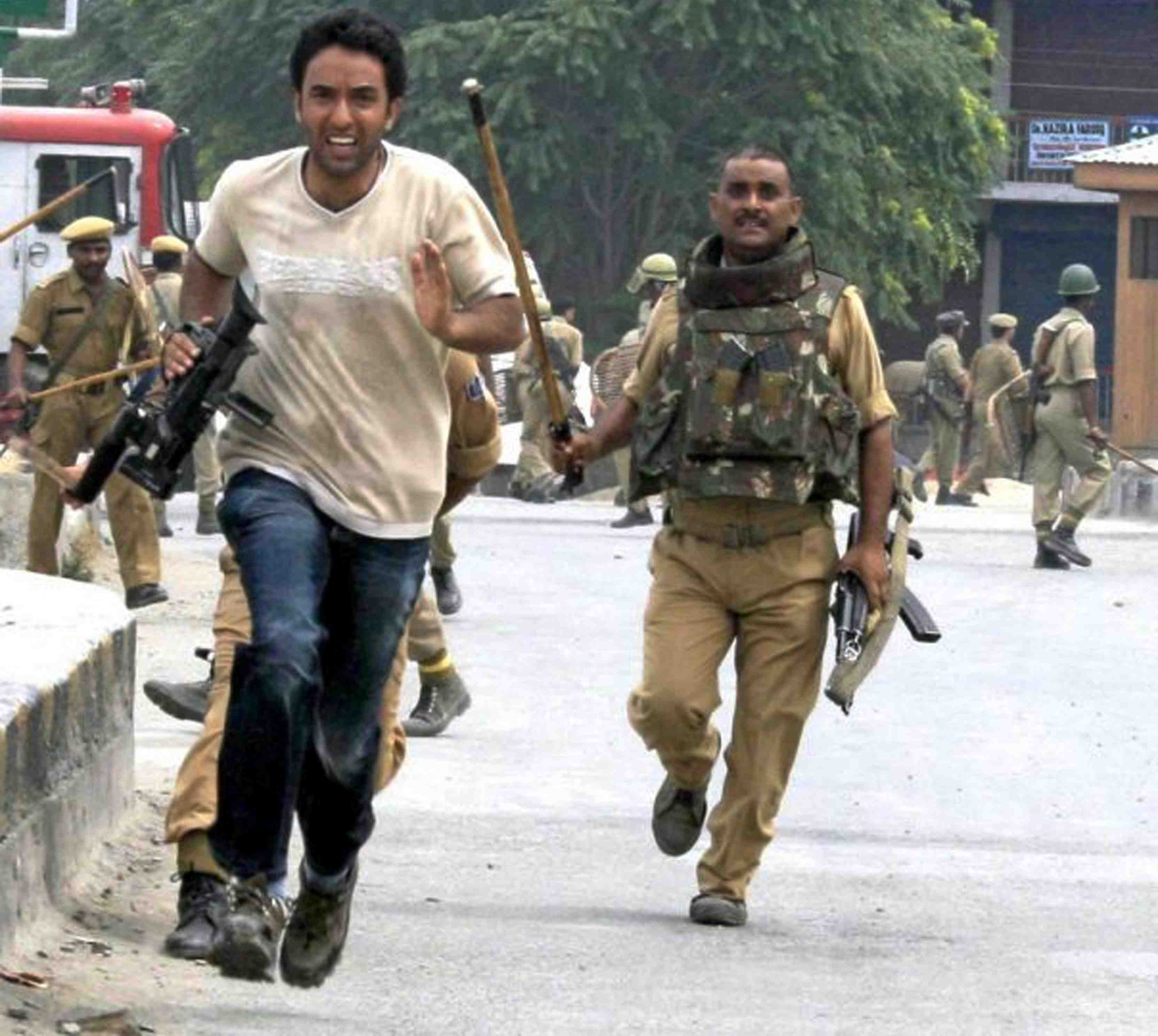
The tussle between the media, Indian military and police in Indian Administered Kashmir has run into decades now. Journalists are intimidated and harassed while doing their job in what is an extremely hostile environment.
At the forefront of this oppression are the photojournalists and camera crew of various newspapers and Channels whose presence is being frowned upon by the Indian troopers who accuse them of favouritism.
Their mode of protest being the boycott of coverage of any events being hosted by the Indian troopers or police. Farooq Khan, President of the Photojournalists Association here, said that presently they do not cover any event the Indian police organize after they used excessive force on them.
“We recently removed our boycott against the Central Reserve Police Force – the primary paramilitary force deployed in the Valley to tackle the insurgency, after they assured photojournalists of non intervention while doing their job."
Khan who has several times been subjected to beating said that we are more noticeable as we carry equipment along with us and the use of this equipment is not liked by the Indian troopers. Khan says that among the media fraternity working here the photojournalists and cameramen working with local and international organizations are more targeted as they are the first to reach the spot of any scene of violence, that takes place.
“A reporter or a correspondent is secure as he can gather information from sources, but we photographers are more exposed to the violence going around,” said Khan adding that in 2008 more than 15 photojournalists and camera crew of different channels were severely injured while covering the events.
In 2008 a cameramen working with a local cable channel, Javaid Ahmad Mir lost his life while doing the job of a journalist. With the loss of Mir the toll of media persons working in private sector during the two decade long insurgency here has risen to14.
Fayaz Ahmad a photojournalist working for International News Agency here says that their job carries an additional risk as that is why many have lost their lives while carrying out the work.
“One has not only to protect himself but the costly equipment he is carrying with him in situations that are beyond our control. The pictures or footage we capture cannot be denied and the troopers are aware of this fact that is why they hinder our work,” said Ahmad.
Raashid Wani a cameraman with the Indian owned media channel Shahra Samay was severely beaten two times while covering events last year in the city. Wani said that no action against Indian troopers or police involved in any repressive action against media is taken giving them a free hand to carry out more even though promises are made by the government authorities.
Narrating one of the incidents at Soura Srinagar in July 2008, where a routine protest against Indian police inaction was going on after a fire incident in one of Mosques, Wani said they were charged by troopers injuring him severely and damaging his video camera.
“After getting injured I was picked up by a team of firefighters who bundled me into a fire tender and took me to the hospital,” said Wani adding that after the incident he was assured of action against the Indian troops , but nothing concrete came out and in August 2008 he was again manhandled at Lasjan on outskirts of Srinagar city.
Mukhtar Khan who works for an International news agency says he’s been thrashed more than a dozen times. He feels that they are an easy target for the Indian troopers to vent their anger upon and sometimes people too get angry with them. “People too get infuriated with us. Accusing us of siding with the police or troopers,” said Khan adding that people also get angry if their pictures do not appear in the international agencies they work for.
The President of the Photojournalists Association said that their modest protest has very little effect on changing their working conditions.
Photograph of Indian policeman chase Raashid Wani a cameraman working for an Indian owned media channel Shahra Samay who was severely beaten while covering events in the city.
]]>
The tourism sector, one of the corner stones of the economy of the Indian Administered Kashmir, seems to be in jeopardy. Tourist arrival rates have taken a nose dive ever since concocted media reports of the presence of ‘Taliban’ in the region. These reports dealt such a blow that local tour operators say that the tourism has fallen by 80% while the government authorities say that the fall is more than 50%.
The misleading reports that Taliban had entered the valley in a good number were run by a leading Indian Television Channel. The channel said it got access to some wireless intercept reportedly suggesting that a group of nearly 20 militants, said to be Taliban, were fighting the Army in the Gurez sector of North Kashmir.
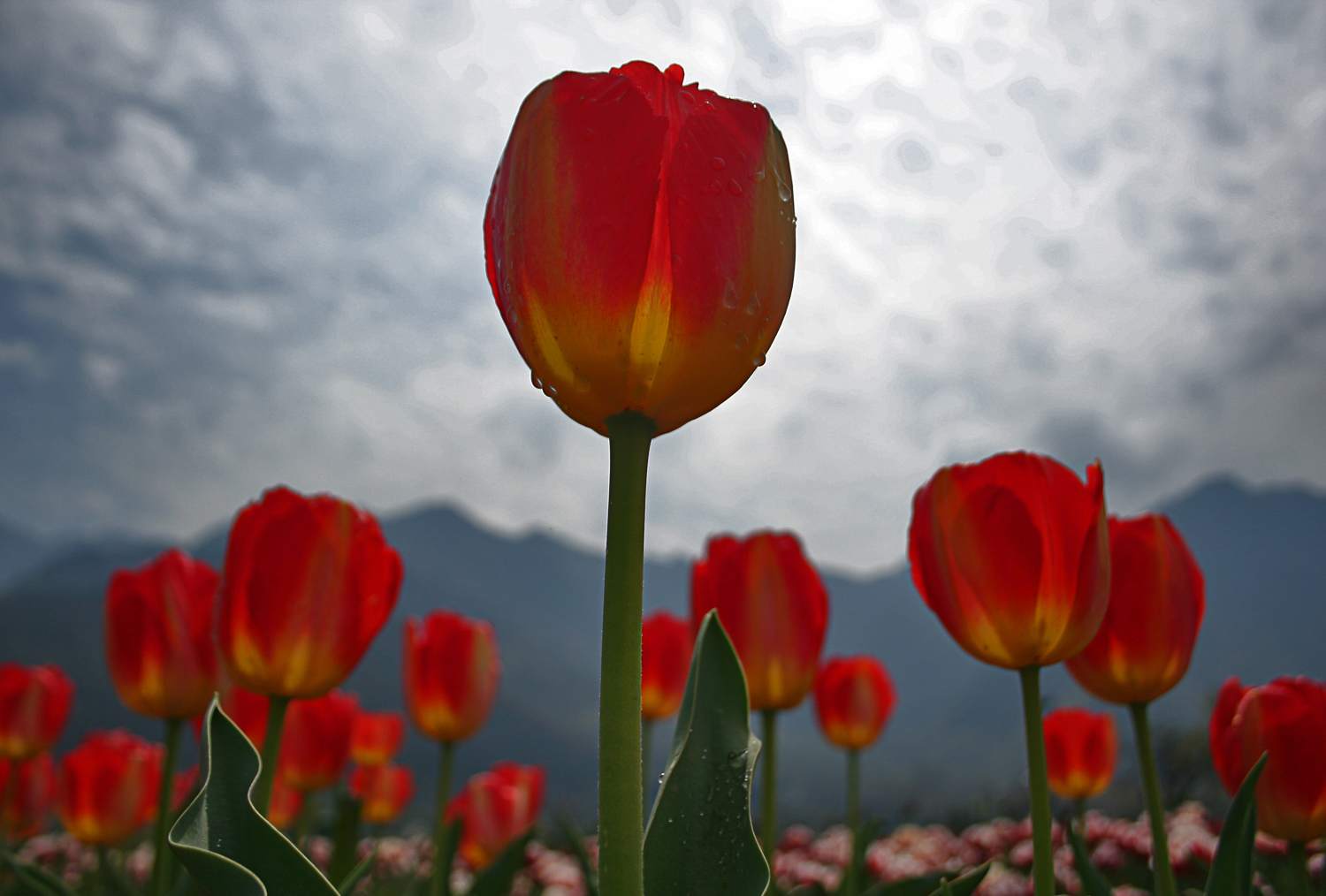
The news quickly hit the inflow of tourists and the first causality was the Tulip carnival held at the onset of Spring to signal the arrival of tourist season in the region. The carnival is organized by the state run tourism department along with the floriculture department at South Asia’s largest Tulip garden set up near the banks of Dal lake. These government departments had great expectations that this year the carnival would add to their revenue as the Tulip garden expansion has been criticized for being wasteful expenditure with less returns.
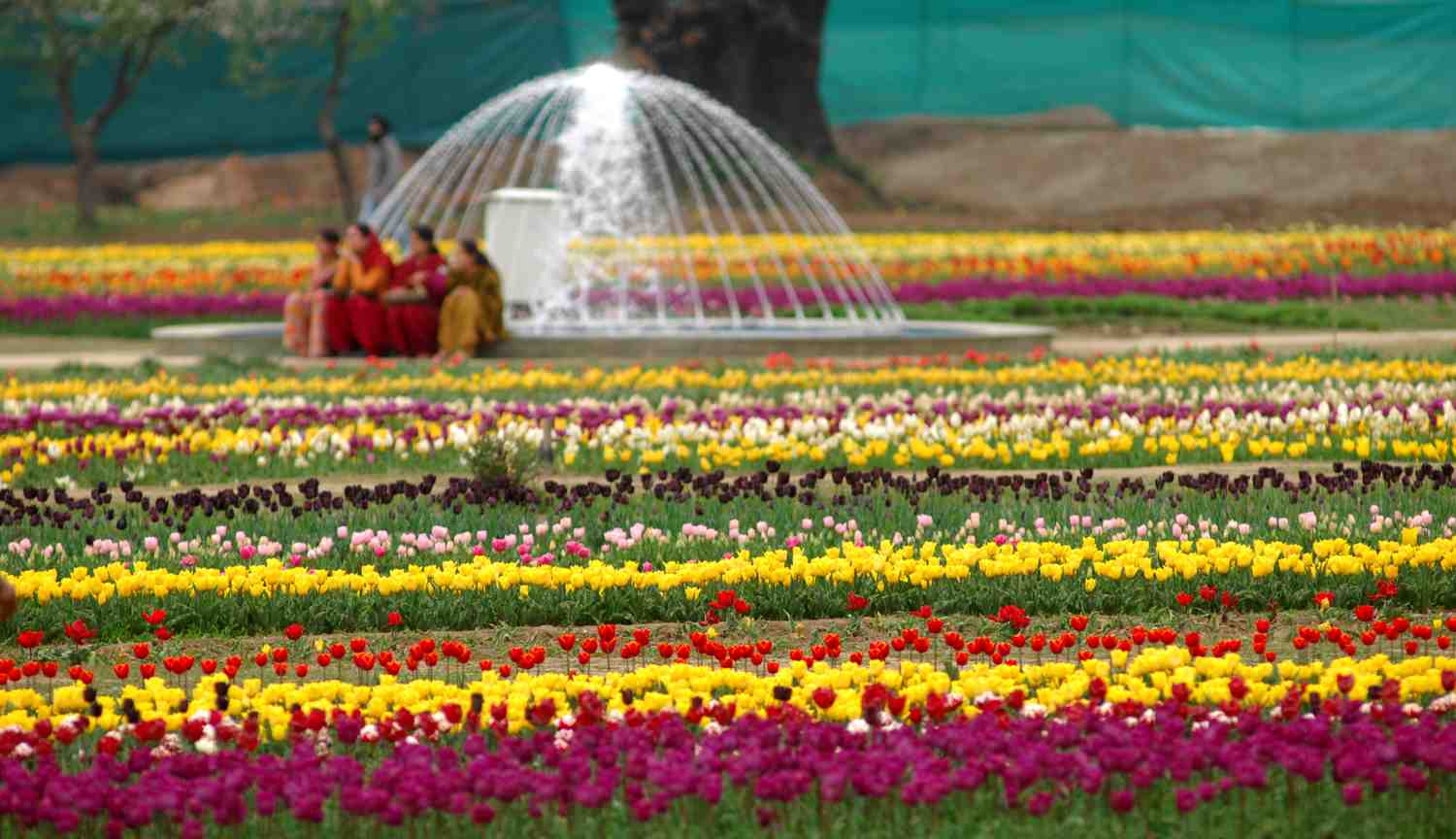
In 2008 the authorities had projected that the revenues would go up every year and that ‘Tulipmania’ would grip the political class and tourists and bowl over producers from the Indian Film Industry who might also be interested in shooting in the garden.
The tulip garden this year had 70 different varieties imported from Holland spread over several hectares, but the festive mood was eclipsed after the ‘Taliban’ news reports. What these reports produced was cancellations of bookings by the tourists expected to arrive from other Indian Sates and some foreign nations.
The Chief Minister of Indian Administered Kashmir Omer Abdullah who himself is a admirer of this Tulip garden went into the damage control mode saying that the reports were not based on factual findings. After the Indian Home Ministry sought reports from the Army on the presence of ‘Taliban’ the Indian Army Chief, General Deepak Kapoor too cleared the air by saying that there are no traces of Taliban in the region. The army recently paraded a militant belonging to Pakistan, reportedly in caught by them, and maneuvered him to refute Taliban presence in this region.
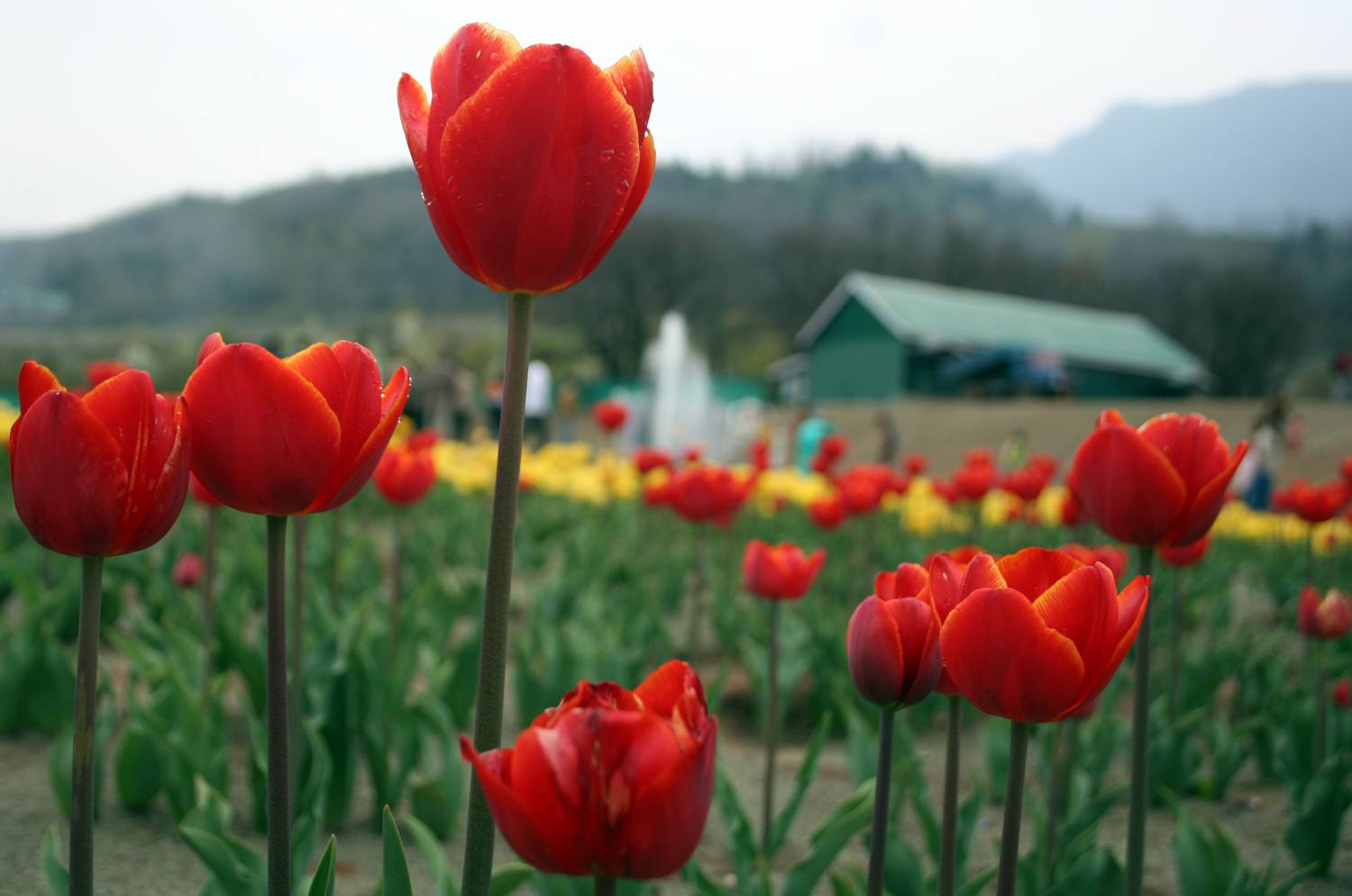
The tourism department is once again trying to woo tourists, even though the tulips have withered and Taliban presence, such that it was, has vanished, but the result is a big dent in the tourism economy of Indian Administered Kashmir.
]]>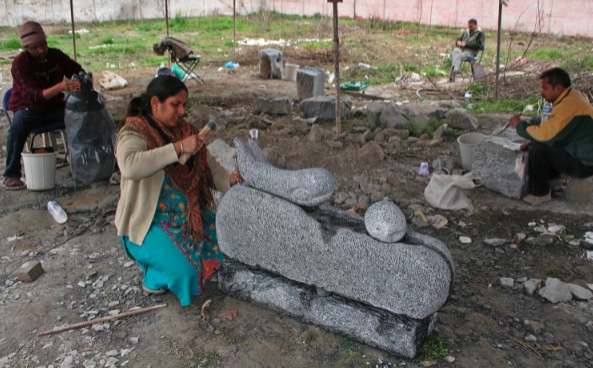
It was after two decades that sculptors from India landed in Indian held Kashmir to take part in a camp organized by the government run Jammu and Kashmir Academy of Art Culture and Languages (JKAACL) which looks after Cultural and Art related activities in the troubled region.
Even though Kashmir has produced some sculptors of international repute this art form could not grow because of the decades of turmoil, war and repression in the region.
The best sculptures are visible at a number of preserved sites such as, Pandretan, Avantipur and Martand and several places dotted around the winter capital, Srinagar.
Noted Kashmiri historian Fida Muhammad Hussein, a former director of the department of archaeology in the state of Jammu, asserted that history is witness that the local stone has long been utilized to create several sculptured marvels which still exist in many locations in the valley.
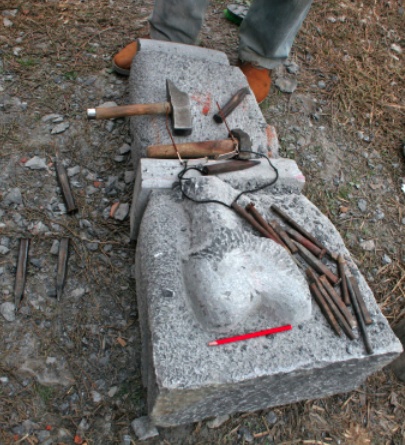
“Within the valley we have structures that point to a visible link to the Greek pattern of sculpture," said Hussein. "One can trace this development which started in neighbouring Pakistan. The famous Indus valley site of Mohenjodado is representative of this and is from where sculpture must have later come to Kashmir also,” explained Hussein adding that the activity was dominated by evolving patterns representing gods and goddesses in the stones.
However, the patterns created by the Indian artists at the camp depicted different themes together with the local group who displayed their creations alongside.
Gayoor Hassan, a prominent sculptor from Kashmir, said that we are not sensitive to this artform and we must once again make efforts to rejuvenate it here.
"Something has to happen to revive and secure this art, a significant change of policy must take place or we will loose a lot,” said Hassan.
The Indian artists, who were amazed to see the rich collection that the local Cultural Academy have in its possession, also stressed the need for safeguarding.
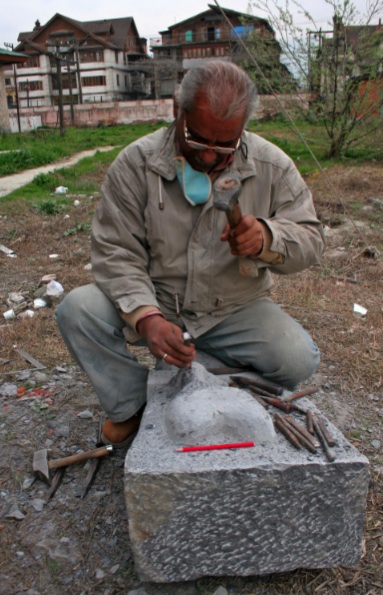
Pretty Khair a sculptor based in Indian city of Baroda, MadhayPrasdesh said that she traveled to the region for the first time and was astounded to see the sculptures belonging the government art body.
The local authorities say that the collection with the Academy is a result of the sculptor camps that have been organized since 1950 when the JKAACL was created.
The officials said that the present camp, held after a a gap of 21 years, had added another 12 pieces to the collection.
Haroon Rashid, a top official with the cultural body, said that they are trying their best to revive art forms in the region.
]]>More importantly though, these results come at a time when India is reeling from the Mumbai 26/11 incident and needs some sort of a ‘show-piece’ event to reassert its democratic foundations. The Jammu & Kashmir elections might well be that reaffirming factor, because after-all India’s most fought-over region has finally shown some signs of conclusively entering the democratic process.
Interestingly, despite these seemingly positive developments in the region, especially against the backdrop of growing tension between India and Pakistan, the fact that India is a multi-party democracy defined by unwieldy coalition governments might put the future of the state in jeopardy. The last government in the state – a coalition between the People’s Democratic Party and the Congress – came crashing down earlier this year as regional tensions flared due to the Amarnath Shrine land transfer dispute between Hindus and Muslims in the state.
According to reports within the last few hours, the National Conference – Kashmir’s oldest political outfit – will join hands with the Congress to form the next state government; the same Congress that had sided with another party previously. And although the state is slated to have its youngest Chief Minister ever, these elections too have clearly exposed India’s perennial ailment of the ‘coalition government’.
There can be no fundamental objection to such governments, but in the context of Jammu & Kashmir at least, there needs to be the realisation that despite ideological differences, political parties need to work across the aisle if the secessionist movement is to be contained. Specifically, it was due to the recent Amarnath Shrine dispute that the secessionist movement in the state was given a fillip, thereby allowing it to occupy the political vacuum that warring political parties had created in their effort to lead at the one-upmanship game.
However, now that the real-time political impact of the secessionist movement has been shown to be next to nothing, there should be a concerted effort by the Indian government and the new government of Jammu & Kashmir to not isolate those seeking nationhood. Rather, the new paradigm should seek to coax these factions into the mainstream political process, and allow the people of the region to exercise their mandate in actuality.
Because the statistics surrounding the voter turn-out are only being co-related with the reduction of secessionist tendencies; there is no causation involved. Just because more people have voted, possibly out of sheer frustration with the current governing majority, doesn’t mean that secessionism in Jammu & Kashmir is in its final throes.
]]>