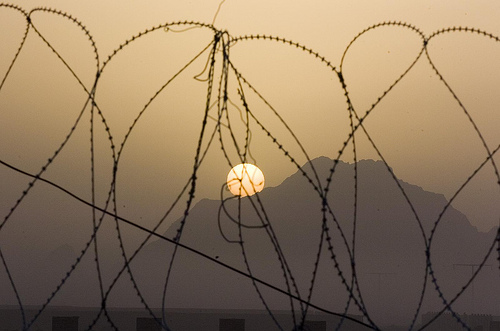
 The important international voices have been ‘on message’ about Afghanistan recently in time for a new British-led NATO offensive in the area around Marjah in Helmand province.
At the London Conference last month there was talk of "turning the tide"; NATO Secretary General Anders Fogh Rasmussen believes there is new momentum in Afghanistan; and US General Stanley McChrystal says the situation, though serious, is no longer deteriorating.
A victory for the communications departments of the international players in Afghanistan, perhaps, but hard to reconcile with the thoughts of Alex Strick van Linschoten (a Frontline blogger) and Felix Kuehn.
Strick van Linschoten and Kuehn have been based in Kandahar full time for two years and have recently finished editing My Life with the Taliban. Last week, they came to speak to the War Studies Department at King’s College, London to offer their opinion on the situation in southern Afghanistan.
Kuehn and Strick van Linschoten may form their viewpoints from a particular place (although they also travel to other parts of the country), but unlike many other foreigners in southern Afghanistan they spend time talking with local Afghans without the backing of any military hardware.
Instead, they rely exclusively on their relationships with local elders to guarantee their security and so their testimony represents an important window on Afghanistan.
A theme that ran throughout their talk was the dislocation between the message of politicians and the experience of those on the ground. Strick van Linschoten, for example, estimated that only 15-20,000 people voted in last year’s election in Kandahar, not the 300,000 reported by election officials.
Similarly, Strick van Linschoten and Kuehn challenged the idea that the Taliban would be open to negotiating with foreign forces. (This recent Taliban statement appears to support their point of view.)
They also perceived the recent proposal to win over moderate Taliban with financial incentives as a move of "desperation and defeat" on the part of the international community.
Security in Kandahar
According to Kuehn and Strick van Linschoten the security situation in Kandahar has deteriorated over the last 18 months. The Taliban are the key security players in the south. Highlighting the Taliban policy of assassinating government officials, Kuehn noted that "if they want you dead, they’ll kill you". Personal security, he said, relied on some sort of deal with a variety of tribal elders.
Kuehn said political progress in southern Afghanistan had ground to a halt. Strick van Linschoten cited a recent UN report which claimed that 61% of Afghans in the south experienced corruption in their everyday lives.
Shifting local political alliances, turf wars over lucrative contracts for reconstruction projects, competition in the narcotics industry, and the alienation of certain groups from jobs in central government all contributed to instability.
Media coverage of Afghanistan
The precarious security situation means few Western journalists ever visit southern Afghanistan without the relative protection offered by a military embed. Kuehn and Strick van Linschoten noted that between fifteen and twenty journalists had come to Kandahar for the election last year, but only spent three to five days in the city. Otherwise, sightings of foreign journalists in Kandahar were rare with only around ten visiting outside of the election period.
Embedding also means that journalists’ interviews with local Afghans are usually undertaken while a foreign military unit is stationed near the interviewee’s house; hardly a setting that encourages honest disclosure.
I asked about the state of local media in Kandahar. Strick van Linschoten said small newspapers usually operate through funding provided by US and ISAF forces. In return the newspapers place a half page advertisement urging Afghans to join the National Army (ANA) or providing information about coalition forces. There are also a number of small radio stations.
While initially Strick van Linschoten and Kuehn regarded the development of local media in Afghanistan as a success story (the latter was involved in an IWPR project) they note that in recent times it has become increasingly difficult for journalists to operate. Self-censorship is a prerequisite for remaining alive while the Afghan government also places pressure on newspapers.
An ‘ugly solution’
Perhaps most worringly Kuehn and Strick van Linschoten admitted they now had far fewer answers than when they arrived. In fact, they seemed to suggest the international community would probably be wise to ask some more questions.
We know very little of the detail about Afghanistan’s recent history, local Afghan politics can change significantly within the space of a few months and there was an interesting discussion triggered by a member of the audience about our lack of understanding of the views of Afghan women. (Though this site is a step forward in the latter regard).
But with President Obama placing a (possibly not so strict) July 2011 deadline for the withdrawal of US troops it seems that time may have already run out for the sort of questions that perhaps should have been asked long ago.
One "ray of hope" Kuehn and Strick van Linschoten discussed was the Pashtun culture of talking to enemies although this wouldn’t extend to occupying foreign forces and in short, Kuehn believed "any solution is going to look somewhat ugly".
Photo: Kandahar, 2007, StartledRabbit III, http://www.flickr.com/photos/75517060@N00/ / CC BY-NC-SA 2.0
]]>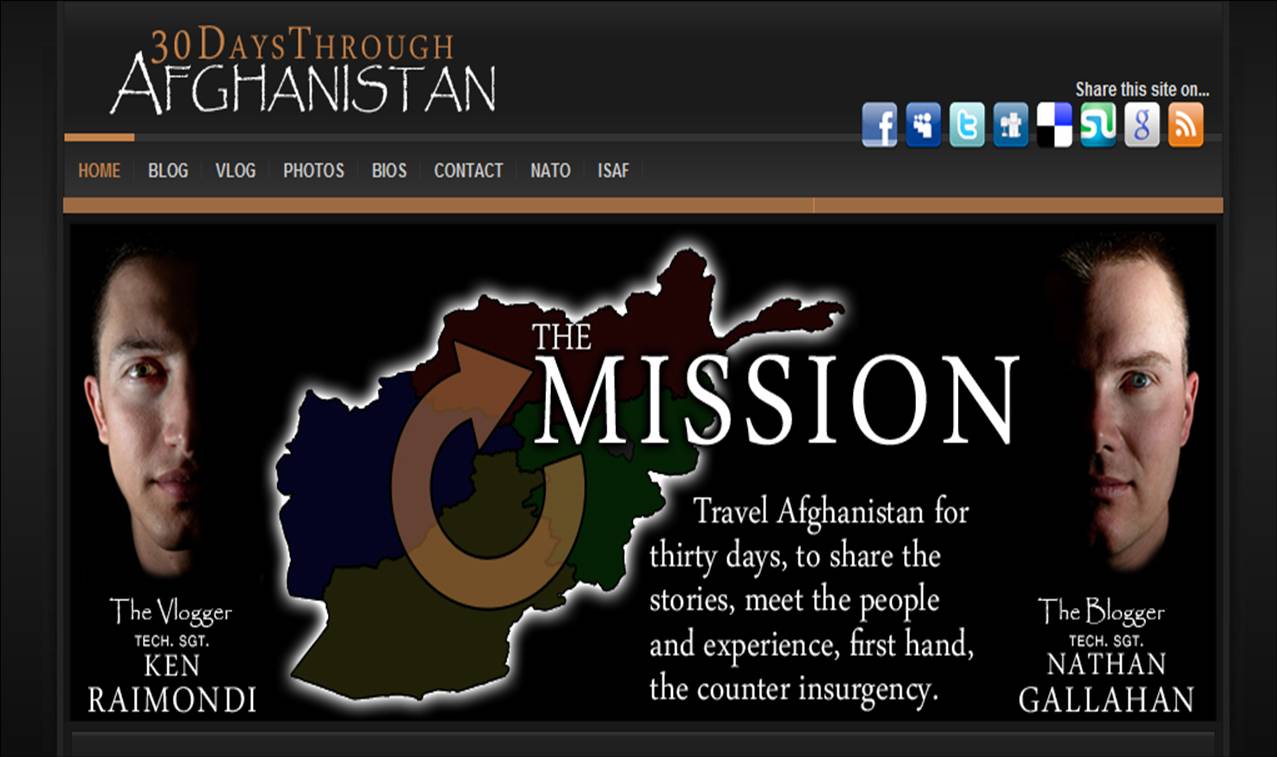
This looks like an interesting new blog which apparently kicks off today. US Tech Sergeants Ken Raimondi and Nathan Gallaghan are going to travel through five regional commands in Afghanistan blogging and vlogging along the way.
Unsurprisingly, they think the story of counterinsurgency in Afghanistan isn’t being covered by the media:
"We want to show you what life is like out there, not just for service members, but for the Afghans we’re all here to free from the grip of war. From past experience, I can tell you the lives of people here are hard. Sleeping in small rooms packed to the ceiling with cots and bunk beds with platoons of soldiers who haven’t showered in a week.
"But they’re here for a reason; they’re working for a greater good. A greater good I feel isn’t covered enough in the mass media. I want to answer the question, why are we doing this? Why are service members and civilians out there being killed, wounded and suffering miserable lives? And I want to cover it from an “average” perspective, talking about it in normal speak so everyone can see this war as those on the ground see it."
I do wonder what sort of access they will have to Afghan voices on their hectic 30 day tour but fair play to them for going in with the intention of covering more than merely the military side of the story. It’s a NATO project though so don’t expect anything from too far ‘out of left field’.
Indeed, I’d be very surprised if they manage to access the sort of material you see in this recent post on the blog of photographer, Holly Pickett. (Warning: contains disturbing images from inside Mirwais Hospital in Kandahar).
It almost goes without saying these days that you can catch Raimondi and Gallahan on Twitter as well.
]]>
It was perhaps twenty minutes after the call to prayer had sounded and we were breaking the fast, sitting on the floor around a plastic sheet with plates of rice and meat, when I was knocked sideways to the ground.
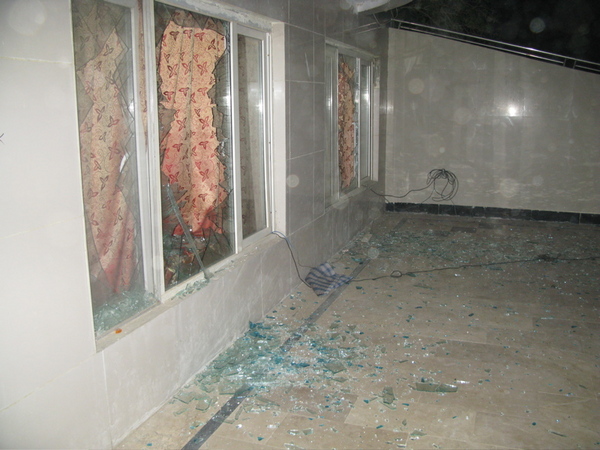
It takes a split second till you realize what happened; the shock-wave had blown out the windows, sending the glass flying like shrapnel into the room. It was a miracle that no one was injured.
Our glass is double glazing, and glass kept on raining down the facade landing on our terrace, shattering into thousands of tiny pieces. There have been bomb blasts before that shook the ground, but nothing like this. I heard gunfire on the streets for several minutes, and I moved to the back rooms of the apartment with my friends. No pretty pictures this time, but I doubt I could have held the camera steady those first few minutes anyway.
Soon after the gunshots stopped, we walked out onto the terrace, glass crunching under our sandals and watched as police cars and ambulances rushed past towards the blast side. The air was filled with dust and a few blocks down I could the flashing lights and cars gathering. Quite soon after, a fire burst out, with flames and black smoke billowing into the sky – firefighters passed by.
The blast site was near to Sharjah Bakery, a shop I visit most days for soda and sweets. Just across the street is a wedding salon, and the NDS/intelligence services office is close by along with a private security company and a construction company. A friend called and said it might have been a bomb factory that blew up. Some 40 minutes later reports came in that it was a car bomb. Casualties kept arriving at Mirwais hospital for hours after the explosion. People were being dug out of the collapsed building. This morning the toll had risen to 43 dead and 65 injured.
My desk is littered with pieces of plaster that have fallen off from the ceiling and the window frames sit next to the wall.
30 minutes after the blast a convoy of foreign troops drove by, the unmistakable sound of their heavy vehicles roaring through the streets, followed by more ambulances.
Smoke kept on rising into the sky hours later, even though the firefighters seemed to have managed to put out the fires. Helicopters were flying overhead through the night sky.
Sitting in the now windowless living room last night talking with my Afghan friends, one turns to me and says: “There are those Afghans who migrated to the west who say they miss Afghanistan!” He bursts out into laughter. “This is what they are missing!” Another shakes his head: “Fuck Kandahar. Fuck Afghanistan.”
Around 11:00pm people were being evacuated from the Continental guesthouse. The police chief was talking about another 4 possible suicide bombers who were still at large in the city and heated discussion broke out in my apartment as to whether or not we should stay or move to another building further away from the Continental guesthouse and the main roads.
In the end we stayed. The idea that a truck bomb would drive into our building and explode seemed unrealistic at the time.
Now the next morning, the air is filled with the sound of people cleaning up broken glass on the street. The shopkeepers just opposite our building have all lost their glass windowfronts. I can see the blast sight; some buildings are missing, and the ones adjacent to the center of the explosion seem derelict, without windows or frames, just the empty carcasses left standing.
The area around the Shah Jahan Restaurant is a popular area, with many people spending their evenings on the little green grass strip in the middle of the road. Half an hour ago I drove to the blast site, and the destruction leaves little doubt that this has been Kandahar’s biggest bomb so far: entire buildings were annihilated and squares of mud huts flattened.
Sharjah Bakery is gone, the construction company reduced to a pile of bricks across the street from it. The restaurant itself collapsed, burying everyone inside underneath it.
Another friend called in and said he believed that the district chief of Khakrez was at the restaurant along with a number of government officials, but nothing is confirmed yet.
Emotions were running high yesterday, and security forces in town were quick to pull the trigger. Standing outside on the terrace waiting to being put through to CBC Radio for an interview, someone started firing his AK47, and a bullet whizzed past me, hitting the door and reaching as far as our living room.
A moment later CBC was on the phone:
“Tell us what is happening right now.”
“I’ve just been shot at…”
I did the interview anyway, even though I guess I must have been a little freaked out at the time, given the amount of swearwords I used.
In the end, though, no one is surprised. This is not a turning point or the start of something; it’s what has been happening all along for the past few years in Kandahar. Violence has been on the rise, and there is no security for the people of southern Afghanistan.
[This piece was written by Felix Kuehn.]
]]>
Just press play on the Houndbite bar above. Felix will be updating his blog and reposting here tomorrow morning when he wakes up and when he can conjure up some electricity…
]]>
I’m sitting in Dubai at the moment so can’t claim to be the man on the ground for tonight’s bombing in Kandahar City. That dubious honour goes to Felix Kuehn (@felixkuehn on Twitter and www.felixkuehn.com for his blog). I just spoke to him over the phone and he added some details to the mix:
– Explosion happened at around the time people had sat down to break the fast.
– Various people reporting a single-sourced claim that there were 5 car bombs that went off, but I don’t know how this information is being confirmed.
– People at the hospital are saying 35+ died in the bombings, but it seems that there are many still trapped underneath the rubble of buildings destroyed.
– The New York Times advances the thesis that the bombs targeted foreigners in Kandahar because they detonated close to UN buildings etc, although I’m not fully convinced. There are easier ways to target foreign institutions/organisations in Kandahar.
Felix told me that the district chief of Khakrez (one of Kandahar’s districts) had been having dinner and meeting with some of his colleagues at the Shandiz ‘restaurant’ near to the centre of the bombing, so it’s possible they were targeted.
Other news outlets have been republishing comments by provincial council member Hajji Agha Lalai implying that a Japanese construction company was targeted in the bombing. I don’t think that’s enough of an excuse for such a huge explosion. Again, I’ve written on this blog often over the past year and posted photos of huge blast clouds, but Felix tells me that this explosion was at least twice as powerful as any of the ones we’ve seen so far.
Most of the windows in central Kandahar were blown out. Our double-glazed panes were blown open and some were even blown out of their frames. There seems to have been a fair amount of gunfire after the explosion, and some of those bullets even struck our balcony close to where Felix was standing giving an interview over the phone to CBC News.
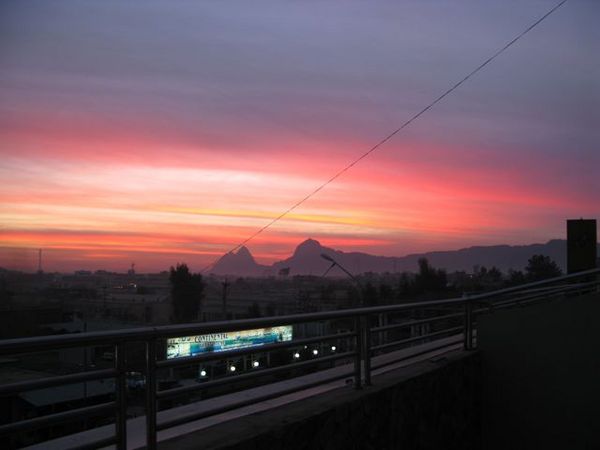
Felix also tells me that Canadian troops came to the Continental Guesthouse (pictured above) and evacuated the foreigners who were staying there. There’s no power in Kandahar City at the moment (in all likelihood unconnected to tonight’s bombing) but tomorrow morning Felix will be posting his account as well as photos showing the damage.
In case you’re wondering whether the bomb has anything to do with the recent elections, or the posting of preliminary results, it probably is more or less unrelated. The Taliban aren’t threatened by the elections, and the ‘international community’s’ turning a blind eye to the massive fraud perpetrated has only further delegitimised the Karzai government in the minds of ordinary Afghans down south. Tonight’s bombing is merely another step in the continuing disintegration of Kandahar; nothing more, nothing less.
]]>-thumb-650x267-769.jpg)
Tribal elders in Kandahar like to explain how they’re waiting to see what will happen before committing themselves to any particular ‘side’. Well, we’ve all been waiting to hear from President Obama on his grand plan for Afghanistan and Pakistan – or the latest neologism, ‘Af-Pax’. Two days ago, finally, we heard.
In the words of a colleague, it’s "more of the same thing – much much more." There was very little of the so-called radical change that myself and other commentators had been hoping for. Of course there must be things that came out of the ‘grand strategic review’ that weren’t said (and that won’t be said), but I’m guessing that they weren’t mentioned because people might not be so receptive…
Speaking of problems, I read these two reports (here and here) this morning about problems with the Awakening Councils in Iraq. Remember this is the strategy that they want to start implementing in Afghanistan (and have started doing so in Wardak province under the watchful eyes of the Ministry of the Interior…).
-thumb-500x626-780.jpg)
On an unrelated note, I went to see someone from Kandahar’s Ulemaa Shura (or ‘Council of Religious Clergy’). Hajji Mahmoud (picture above) is a member of the shura and helps write articles for their monthly magazine, Islami Diwa. It all sounds a little dull, I know, but he was a lovely guy, and pretty world-wise, too. He had served as an MP in the parliament in Kabul during the 1970s (when King Zahir Shah ruled the country) and remembers the various manoeuvres that Afghanistan conducted during the Second World War in order to stay neutral and independent of the fighting going on all round.
We sat on a mat in the grass outside his house, drinking green tea while he reminisced. It wasn’t all pleasant memories, though. By his count 24 members of the 150-strong Ulemaa Shura have been assassinated in Kandahar since 2001. Four of those were from 2009 alone. These include the recent murder of Mawlawi Mohammad Rasoul (killed outside the Qadiri Mosque in Kandahar City), Qari Ahmadullah (killed in his home on March 1st 2009), Mawlawi Abdul Qayyum (shot dead outside the Red Mosque in Kandahar City), and – most famously – Mawlawi Fayyaz, the first president of the ulemaa council and son of Mawlawi Darab Akhundzada.
They are targeted because they offer a legitimate opposition to the radical mobilisations and motivations offered by ‘the Taliban’ to young madrassa students and jobless villagers. This is not to suggest that the ‘insurgency’ is primarily motivated by ideology — there are a variety of influences but ideology or religious motivation is not at the top of the list.
Ulemaa council members are actively and deliberately provocative in this respect. They write articles, make pronouncements and issue statements arguing against suicide bombing, for example, saying that it is an illegitimate form of jihad and so on. The articles published in their magazine are calculated to be provocative in this way.
When I get up in the morning I always cast my eye over the latest commentary on Afghanistan. My latest favourite is one entitled, "The Winnable War" by David Brooks, full of little gems:
"the Afghan people want what we want"
and
"I finish this trip still skeptical but also infected by the optimism of the truly impressive people who are working here"
Now I don’t know who he spoke to or where he visited, but this article felt like it was written about a different country. Or maybe Disneyland?
Speaking of strange things, I ordered some food from a local restaurant for lunch and found a little reminder of England in the packaging:
-thumb-600x252-777.jpg)
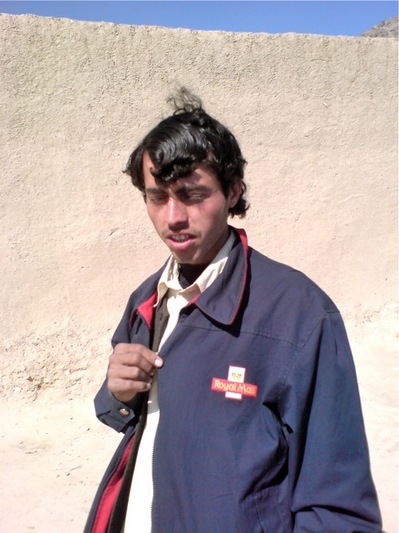
And even stranger, my colleague went out to Sperwan (in Panjwayi district) to see what was going on there and he found an Afghan wearing a "Royal Mail" jacket. An actual jacket that your local postman in England wears. And how did it end up in Panjwayi?
Alex originally posted this on his Frontline blog. Alex is based in Kandahar and regularly writes about life in southern Afghanistan and in Kabul.
]]>
Tribal elders in Kandahar like to explain how they’re waiting to see what will happen before committing themselves to any particular ‘side’. Well, we’ve all been waiting to hear from President Obama on his grand plan for Afghanistan and Pakistan – or the latest neologism, ‘Af-Pax’. Two days ago, finally, we heard.
In the words of a colleague, it’s "more of the same thing – much much more." There was very little of the so-called radical change that myself and other commentators had been hoping for. Of course there must be things that came out of the ‘grand strategic review’ that weren’t said (and that won’t be said), but I’m guessing that they weren’t mentioned because people might not be so receptive…
Speaking of problems, I read these two reports (here and here) this morning about problems with the Awakening Councils in Iraq. Remember this is the strategy that they want to start implementing in Afghanistan (and have started doing so in Wardak province under the watchful eyes of the Ministry of the Interior…).
On an unrelated note, I went to see someone from Kandahar’s Ulemaa Shura (or ‘Council of Religious Clergy’). Hajji Mahmoud (picture above) is a member of the shura and helps write articles for their monthly magazine, Islami Diwa. It all sounds a little dull, I know, but he was a lovely guy, and pretty world-wise, too. He had served as an MP in the parliament in Kabul during the 1970s (when King Zahir Shah ruled the country) and remembers the various manoeuvres that Afghanistan conducted during the Second World War in order to stay neutral and independent of the fighting going on all round.
We sat on a mat in the grass outside his house, drinking green tea while he reminisced. It wasn’t all pleasant memories, though. By his count 24 members of the 150-strong Ulemaa Shura have been assassinated in Kandahar since 2001. Four of those were from 2009 alone. These include the recent murder of Mawlawi Mohammad Rasoul (killed outside the Qadiri Mosque in Kandahar City), Qari Ahmadullah (killed in his home on March 1st 2009), Mawlawi Abdul Qayyum (shot dead outside the Red Mosque in Kandahar City), and – most famously – Mawlawi Fayyaz, the first president of the ulemaa council and son of Mawlawi Darab Akhundzada.
They are targeted because they offer a legitimate opposition to the radical mobilisations and motivations offered by ‘the Taliban’ to young madrassa students and jobless villagers. This is not to suggest that the ‘insurgency’ is primarily motivated by ideology — there are a variety of influences but ideology or religious motivation is not at the top of the list.
Ulemaa council members are actively and deliberately provocative in this respect. They write articles, make pronouncements and issue statements arguing against suicide bombing, for example, saying that it is an illegitimate form of jihad and so on. The articles published in their magazine are calculated to be provocative in this way.
When I get up in the morning I always cast my eye over the latest commentary on Afghanistan. My latest favourite is one entitled, "The Winnable War" by David Brooks, full of little gems:
"the Afghan people want what we want"
and
"I finish this trip still skeptical but also infected by the optimism of the truly impressive people who are working here"
Now I don’t know who he spoke to or where he visited, but this article felt like it was written about a different country. Or maybe Disneyland?
Speaking of strange things, I ordered some food from a local restaurant for lunch and found a little reminder of England in the packaging:
And even stranger, my colleague went out to Sperwan (in Panjwayi district) to see what was going on there and he found an Afghan wearing a "Royal Mail" jacket. An actual jacket that your local postman in England wears. And how did it end up in Panjwayi?
Special agents from America, Germany and Pakistan are sent to a zoo in Afghanistan to track down some missing rabbits. The western agents start looking around, surveying the field, setting up field offices and establishing contacts. The Pakistani agent goes straight to a zebra.
A few days later, the others still haven’t been able to find a rabbit, so they go over to the Pakistani agent to see how he’s getting along. When they come closer they see him beating the zebra with a big pole, shouting at the top of his lungs: “SAY I’M A RABBIT! SAY I’M A RABBIT!”
This joke was told by a highly respected tribal elder in Kandahar last week at the end of a long and frustrating conversation about American plans to engage the tribes in Afghanistan and their apparent decision to support the (re-)formation of local militias.It would have been funnier were the situation down here not so critical. Daily NATO bombing throughout the region, occasional suicide attacks within the city, pervasive and unashamed corruption, rising food and fuel prices, and an increasingly brutal campaign of assassinations are just some of the features of everyday life for the average Kandahari.
There is no feeling that the central government in Kabul projects a legitimate source of authority down here either. The reputation of that government – and foreign powers by association – has been muddied over the past 7 years.
The early years of US raids and night abductions in Kandahar are still not forgotten; massive and unfiltered corruption has permeated to all levels of the government, often working from top-down and bottom-up at the same time; involvement of these government figures in the drug business goes on at a very high level; the central authorities are too weak to implement their decisions (and are perceived as such), and the parliament functions only as a shadow of itself; there has been no media campaign of any sophistication or that is able to respond with the speed that the Taliban themselves have proved capable; there is a concomitant lack of visible signs of development money – and much vanished in submissions back to western countries anyway; and there has been an effective, sophisticated and prioritized Taliban information and media campaign noting all of the above.
Despite this situation, on Tuesday Afghan parliamentarians emphatically spoke out against President Karzai’s own plan to arm local tribes against the Taliban drawn up by the Tribal Commission. MPs argued that the Afghan army and police force should be strengthened instead.
The authors’ own incidental experience talking to people from all kinds of backgrounds in Kandahar also offers overwhelming evidence that people fear the return of the militias.“If the militia comes, they will do everything,” explained one friend. “They will rape my boys and my wife. There will be no more government. Now we have maybe thirty percent law in the city. With the militia there will be none. It will be the end.”
The Soviets tried funding militias before they left – the bloodletting of the 1990s civil war was the result, with only the Taliban who imposed some order and restraints on the autonomous militia groups.Many of those living in southern Afghanistan remember those years.
So what could this tribal militia plan be useful for, then? If NATO and the US is just looking for an exit strategy – as the Soviets were in the mid-eighties – then militias might not be such a bad idea. If they just want to leave, then the militias could watch their backs. They would offer security in the very short-term, but all our aspirations to be builders of nations would have to be abandoned as the militiamen would pillage the country following the departure of foreign forces.There is no universal strategy for Afghanistan, least of all one that seems to originate in the sands of Iraq. Kandahar is no Anbar, and the way tribes work in Afghanistan is different, more fractured, and more complex than how we found them in Iraq. To take Kandahar as an example, conflict within tribes is common, elders are being assassinated by the Taliban to leave a weak and ineffective leadership, and in any case the tribal structure was fatally damaged during the 1980s war with the Soviets.
What’s more, there is currently nobody attempting to self-fund these militias in the south. It’s not as if there’s no money, just that discussion has only been sparked because local tribesmen have heard that ‘the foreigners want to fund militias.’Their interest is in gaining more power.
That the tribes themselves are divided and lack leadership isn’t important for them. That they’re a poor vehicle for taking control of the situation doesn’t seem to be important to those suggesting the plans. What happens, for instance, to the government once they are all rearmed? And why were millions spent on disarmament only to reverse track and change policies because NATO planners lack a sensible way to progress forward.And this is the most dangerous part. The political strategy was left at the wayside a long time ago, and now we’re so far down the road that all vision and momentum comes from the military establishment. Negotiations with the Taliban, tribal militias and a surge (sic) are all being suggested as possible ways out of Afghanistan. But Afghanistan isn’t Iraq, and these solutions will not help the people of the country. They will only add to the confusion.
All of these problems would be more manageable if coalition forces (and the development/assistance community) took the time to study the situation, to think about options instead of blindly – or worse, knowingly – running with the first suggestion that seems to give some power.Six months spent on tour in Kandahar is never enough to get to know and understand the culture and society of the place in which NATO soldiers are operating. Ignorance is no excuse for rushing to half-baked solutions.
There needs to be better mechanisms for preserving the institutional experience and memory of the military, and wide-ranging and systematic studies of the area under NATO command – particularly in search of information relating to the powerful and shaping experience of the 1980s jihad. Only then should we start making suggestions.
Alex Strick and Felix Kuehn are the co-founders of AfghanWire.com and are the only non-embedded foreign researchers living permanently in Kandahar. They are currently editing the autobiography of a senior Taliban figure, due to be published in spring 2009 by Hurst.
]]>
Photographs from the women’s section of the hospital in Kandahar today. Click the image above to scroll through the pictures. I am writing for the Globe and Mail newspaper in Canada for this story.
In interviews at Mirwais Hospital in Kandahar city, where at least 16 male victims and dozens of female victims were being treated Tuesday night, several villagers described the attack. While Mr. Khan corroborated much of the information witnesses gave during a separate interview, it was not possible to independently verify their account or the numbers of dead and injured they gave.
Witnesses gave conflicting statements about the identity of troops who arrived at the scene after the air attacks, with some saying they saw Canadian soldiers while others said they saw U.S. troops. It was not immediately clear which international forces were responsible for the air strikes. link
Note: I (Frontline blogger) am stepping in for Alex here as he can’t upload photos easily for now. Alex will update as and when he has the time.
]]>