In 2010 U.S. Army Private Bradley Manning committed the largest security breach in US history, handing the classified Afghan War Diary, Iraq War Logs, and 250,000 State Department cables to Wikileaks. Imagery like that of an American helicopter team gunning down citizens and journalists on a Baghdad street in 2007 has been lodged in the global consciousness.
With Manning standing trial before a military court in June, the Frontline Club engaged an expert panel on Monday 15 May to ask what lies ahead for the whistleblower, along with what his experience might mean to governments and the media.

(L-R): Naomi Colvin, Chase Madar, Richard Gizbert and David Leigh. Photo credit: Jim Treadway
Naomi Colvin, a writer, activist and founder of UK Friends of Bradley Manning, declared him a “touchstone for people involved in social justice movements.”
“2011 is one of those years that will go down in history, like 1989, or 1968, or 1848,” she said. “Political action was on a worldwide scale. . . . That spark of enthusiasm started in the Middle East, and the [documents that Manning released] are at least a contributing factor to that.”
Chase Madar, a New York attorney who has written a book detailing Manning’s experience, agreed:
“The State Department cables [were] just a very brutal and candid assessment of corruption in the Ben Ali government . . . Tunisian intellectuals I’ve spoken with have said you really can’t tell the story of the uprising there without at least mentioning Bradley Manning and his leaks.”

The panel rang of frustration with the American media’s failure to cover the Manning story in fairness or depth. Americans “know very little” about his case, Madar observed.
“The New York Times fails to send a journalist to cover the first public hearing with Manning,” lamented Richard Gizbert, Presenter for al Jazeera’s Listening Post, “which even the Times’ own ombudsman said was ridiculous.”
“I got adopted by the staff of a fish restaurant in Glasgow [recently],” Madar recounted. “The bartender and the waiter knew all about [Manning’s case], and it’s because The Guardian’s coverage [has been] much better than anything in the United States.”
David Leigh, the Guardian‘s investigations editor until 2013 and co-author of a book on Julian Assange and Wikileaks, reduced Manning’s trial to “a piece of theatre by the American military to expose, dramatise, penalise and terrorise whistleblowers.”

Even still, Madar harbored optimism for what Manning will ultimately represent:
“He delivered a 35-page statement of intent in court a couple of months ago… it was very impressive… poised, very self-possessed, very thoughtful and reflective, as opposed to the way he’d been demonised as some naricissistic little punk… The more people hear from Bradley Manning in his own words and in his own voice – because someone smuggled a recorder into the courtroom, you can hear him with his own voice – the more they’re going to realise that Bradley Manning is the responsible, ethical citizen; that it’s his detractors in government and the media who are the narcissistic, little, punks.”
You can watch a recording of the event or listen to the audio podcast below:
https://soundcloud.com/frontlineclub/the-case-of-the-us-vs-bradley
Speaking at a special Frontline Club event on Saturday alongside renowned philosopher Slavoj Žižek and investigative journalist Amy Goodman, Assange claimed a Cablegate was needed not only for US and Russian intelligence services but for the American daily which first published in 1851.
"It would reveal the extent to which stories have been suppressed and how they have been managed,” said Assange, who told the audience that Daniel Ellsberg claimed the New York Times had been in possession of 1000 Pentagon Papers before he passed them onto the Washington Post and 17 other newspapers in1971.
Only when it realised its rivals had the papers did the New York Times begin publishing the documents on 13 June of that year, Assange claimed.
Since he was propelled “inside the centre of the storm” by the publication of the Iraq and Afghanistan War Logs and the Embassy Cables last year, Assange said he had learnt the extent to which history “is shaped and distorted by the media.”
Contrasting Fox News’ decision, on account of its "hunger" for ratings, to show more of the July 2010 Collateral Murder video than its rival CNN had "under the pretext of sensitivity", Assange said:
"The truth that we got out of Fox was greater than we did out of CNN and similarly for many institutions in the media that we think are liberal."
The 400,000 Iraq War Logs documents, which were published in October 2010, were "the most detailed, significant history of a war to be published," said Assange. Among them were details of some 15,000 hitherto unrecorded civilian deaths:
"Just think about that 15,000 people whose deaths were recorded by the US military but were completely unknown to the rest of the world, that’s a very significant thing."
Responding to claims that have been made that WikiLeaks has not told us anything we didn’t already know, the Slovenian philosopher Slavoj Žižek said WikiLeaks worked in the same way as "that beautiful old fairy tale" the Emperor’s Clothes. He added:
"WikiLeaks is not simply telling the truth. You are telling the truth in a very precise way of confronting explicit lines of justification, rationalisation of the public discourse."
Asked about his decision to collaborate with more than 80 media organisations, Assange said it was necessary in order to "maximise the impact" of the material.
"If you want to have an impact and you are an organisation that is very small then you have to coopt or leverage the mainstream press," he said, raising the question of what what impact a new "internet educated" generation working in News Corp and other big corportations might have.
Discussing the impact of WikiLeaks in the Arab Spring in Tunisia and Egypt this year, Assange said it was "hard to disentangle". He described how a number of factors, including the rise of staellite TV, and Al Jazeera’s decision to film protests in the street, had meant the regime could no uphold its claim that opposition was merely "an outcast voice".
"What the media does is censor those voices and prevents people from understanding that actually what the state is saying is the minority is in the majority," said Assange.
"Once people realised their view was in the majority then they understand that they physically have numbers," said Assange, adding that it also became impossible for US to support the regime in Tunisia after Embassy Cables likened President Ben Ali’s family to a Mafia elite.
Žižek said it was significant that WikiLeaks publication of material meant that politicians could no longer operate on the basis of ‘I know that you know but we can still play the cynical game of pretending that we don’t know’.
He added: "The function of WikiLeaks more than to tell us something that we don’t know, is to push us to the point when you cannot pretend you don’t know."
Full coverage of the event can be found here. Video can be watched here and you can read our live blog of the event here.
]]>On Saturday, 2 July Julian Assange, editor-in-chief of whistleblower website WikiLeaks will be "in conversation" with Slovenian philosopher Slavoj Žižek and award-winning investigative journalist Amy Goodman.
In the build up to what should be a fascinating event, focusing on the ethics and philosophy behind WIkiLeaks, Frontline Club is posting a series of blogs giving an insight into the thinking of Assange and Žižek.
Here is a round up blog post by Will Spens, published in December last year, of the talks and discussions Assange took part in at the Frontline Club:
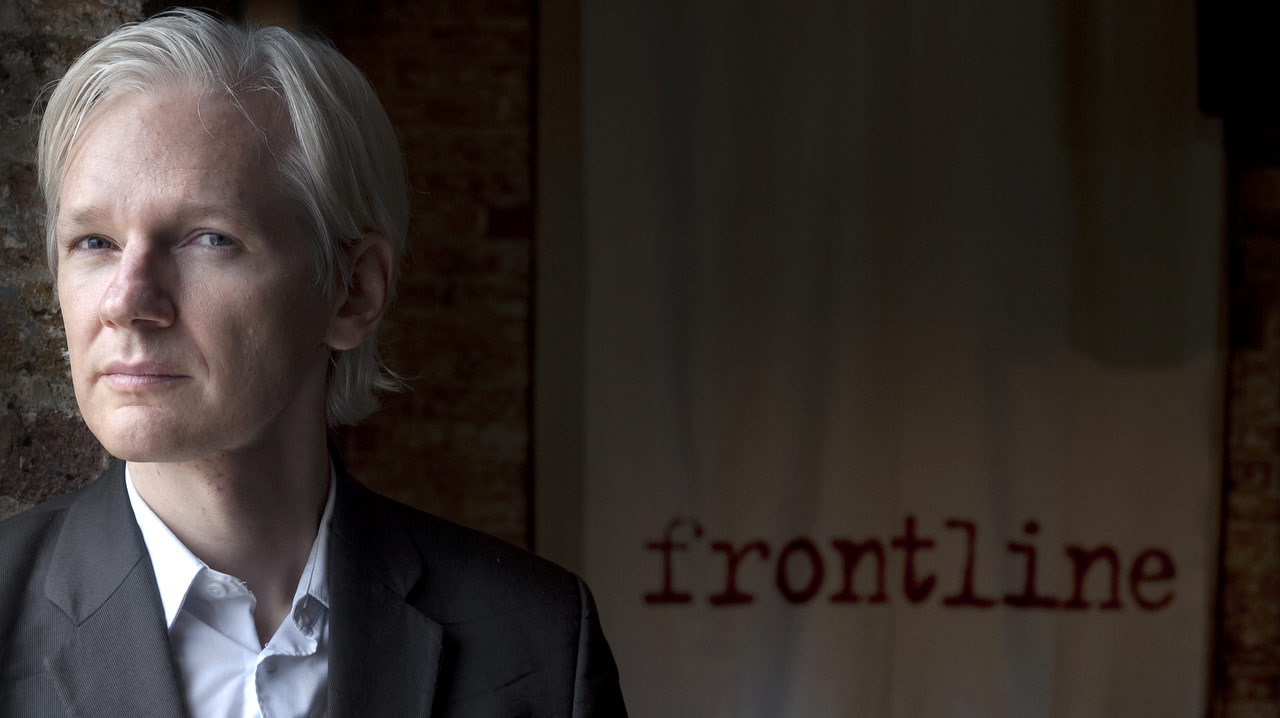
26 July 2010
WikiLeaks: Afghan War Logs – Julian Assange holds press conference at Frontline Club.
Subsequent to the previous evening’s release of 90,000 classified US military documents relating to the war in Afghanistan between 2004-2010, Julian Assange gave a press conference at the Frontline Club in front of many British and international journalists.
You can read a summary of the event and watch the video here.
Further links to media coverage of this press conference can be accessed here.
———-
27 July 2010
Special event: Wikileaks founder Julian Assange at the Frontline Club.
Julian Assange was joined by the BBC’s Paddy O’Connell to engage the audience on the impact of the leaked classified documents which chronicle in detail US military operations in Afghanistan between 2004-2010.
A video and audio podcast of the event can be accessed here.
An interview with Julian Assange about the best and worse case scenarios for WikiLeaks can be found here, along with more analysis of the evening.
———-
12 August 2010
The data revolution: How WikiLeaks is changing journalism.
The controversy surrounding WikiLeaks’ historic release of more than 70,000 classified US military documents on the war in Afghanistan has not died down. But one thing is certain: online data and its dissemination is changing journalism and the relationship between the public and those in power. In this special event, we asked:
- How are organisations like WikiLeaks changing the way public data is released?
- What do the Afghan War Logs mean for the mainstream media and government media relations?
- What are the legal implications of the War Logs files’ release?
You can read a summary of the event and watch the video here.
———-
25 October 2010
WikiLeaks: Iraq War Logs – Julian Assange and Daniel Ellsberg in conversation.
Following the leak by WikiLeaks of almost 400,000 secret US army field reports from the Iraq war between 2004 and 2009, Julian Assange was at the Frontline Club in conversation with one of the most famous whistle blowers in history, Daniel Ellsberg, who was responsible for the leak of the Pentagon Papers in 1971.
The event was chaired by Elizabeth Palmer, CBS News correspondent.
A summary and a video of the event can be found here.
———-
1 December 2010
WikiLeaks: The US embassy cables
Following the release of of 251,287 confidential United States embassy cables, December’s First Wednesday debate focused on the revelations of this latest leak from whistle-blower website WikiLeaks.
You can read a summary of the evening here and access a video here.
]]>Join the Frontline Club and New Statesman for a provocative public debate featuring Julian Assange, founder of WikiLeaks.
For this very special event at Kensington Town Hall, the New Statesman and the Frontline Club host a challenging debate in which some of the most prominent public figures on secrecy and transparency issues will go head to head.
]]>EXTERNAL EVENT AT THE KENSINGTON TOWN HALL
Join the Frontline Club and New Statesman for a provocative public debate featuring Julian Assange, editor in chief of WikiLeaks.
Over the past 12 months, official secrecy has been challenged like never before. Three of the biggest ever leaks of classified information – the Iraq War Logs, the Afghanistan War Logs and Cablegate – shook the world and prompted governments to reconsider how they share information.
Since the start of the Obama administration in 2009, the US government has brought charges against five defendants suspected of leaking classified information. Before Obama, the US government had only ever filed similar charges three times in 40 years.
For this very special event at Kensington Town Hall, the New Statesman and the Frontline Club host a challenging debate in which some of the most prominent public figures on secrecy and transparency issues will go head to head.
Amid the intensifying crackdown on whistleblowers, the debate will ask: are UK and US officials correct to argue that those who publish leaks threaten national security? Or do we need them to expose wrongdoing because, as transparency advocates argue, governments always abuse secrecy?
The event will feature an interactive section where the audience will be able to vote on the motion.
Chair: Jason Cowley, editor of the New Statesman.
Proposition:
Julian Assange, editor-in-chief of WikiLeaks
Julian Assange is the 39-year-old editor in chief of WikiLeaks. Queensland-born Assange has been the subject of public calls for his assassination from leading US politicians and faces an ongoing espionage investigation. In 2010 he overwhelmingly won Time magazine’s Readers’ Choice Person of the Year poll and was named Le Monde’s Man of the Year. He has also been awarded the Amnesty International UK Media Award and the Sam Adams Award for Integrity in Intelligence. In February 2011 his organisation, WikiLeaks, was nominated for a Nobel Peace Prize after publishing three of the biggest leaks of classified information in history, the Afghan War Diaries, the Iraq War Logs and Cablegate.
Clayton Swisher, head of Al-Jazeera’s Transparency Unit
Clayton Swisher is the head of Al Jazeera’s Transparency Unit (the team that produced the Palestine Papers in January 2011). An ex-federal investigator-turned-investigative journalist, he is a former Director of Programs at the Middle East Institute and a current term member with the Council on Foreign Relations. As a journalist he has covered the 2008 U.S. Presidential Elections, the Arab-Israeli conflict, and the on-going war in Afghanistan, and has also authored two books: The Truth About Camp David (New York: Nation Books, 2004) and The Palestine Papers: The End of the Road? (London: Hesperus, Mar 31, 2011).
Mehdi Hasan, senior political editor, New Statesman
Mehdi Hasan is a former editor in the news-and-current-affairs department at Channel 4, where he worked on the award-winning Dispatches documentary strand. He is a regular guest on Sky News and the BBC, appearing regularly on Question Time and The Daily Politics. He is an occasional presenter on LBC radio and the co-author of a forthcoming biography of Ed Miliband – Ed Miliband and the Remaking of the Labour Party (London: Biteback, summer 2011).
Opposition:
Sir David Richmond, former director, defence and intelligence, British Foreign & Commonwealth Office
David Richmond was a British diplomat for more than 30 years. His career included postings to Baghdad, Brussels and New York, where he worked on the UN Security Council. In 2000 he became the first UK representative to the EU’s political and security committee in Brussels and was closely involved in the creation of European security and defence policy. In 2003 he returned to Baghdad (where he had first been posted 20 years earlier) and was later appointed UK Special Representative for Iraq. In his last posting, he was director general for general defence and intelligence and a member of the Foreign Office Board.
Bob Ayers, former director of the US Department of Defence Information Systems Security Programme
Bob Ayers had a distinguished career in the US government. In 1992, he was appointed director of the defence department’s Information Systems Security Programme. He next assumed the post of director, defensive information warfare, leading the programme designed to protect DoD systems from systematic cyber attacks. From 1990-92, he was responsible for the security of more than 40,000 classified intelligence-processing systems at 55 locations across the world. Bob is a noted public figure, appearing on television and radio in the US, in the UK and worldwide, and publishing many articles.
Douglas Murray, author and political commentator
Douglas Murray is a bestselling writer and award-winning political commentator. Since 2007 he has been director of the Centre for Social Cohesion. From April 2011 he will be associate director of the Henry Jackson Society. Murray appears regularly in the British and foreign media. A frequent guest on Question Time and Newsnight, he is also a columnist for Standpoint magazine and writes for many other publications, including the Spectator and Wall Street Journal. In 2008 he co-authored Victims of Intimidation: Freedom of Speech Within Europe’s Muslim Communities. His latest book, on the Saville inquiry into Bloody Sunday, will be published later this year.
Also participating: former MI5 whistleblower Annie Machon and HBOS whistleblower Paul Moore.
For media & press queries please contact events@newstatesman.co.uk – or call 020 7936 6456.
Please book online, for any other enquiries contact events@www.beta.frontlineclub.com – or call 020 7479 8940

]]>
WikiLeaks, the whistle-blowing website that is in the process of releasing tens of thousands of classified documents relating to US military and diplomatic affairs, has been the subject of intense media scrutiny in recent months.
Now under arrest following allegations of sexual assault, Julian Assange and his legal team is now fighting his possible extradition to Sweden and/or the US.
Since July when WikiLeaks held its first press conference at the Frontline Club Julian Assange and other members of the WikiLeaks have taken part in a number of discussions about the issues raised by their leaking of documents on Afghanistan and Iraq and the diplomatic cables.
Each time Julian Assange or other WikiLeaks members have taken part in an event tickets have sold out at a record rate, demonstrating the level of interest in WikiLeaks and the questions their work raises.
Here is a roundup of the Frontline events involving WikiLeaks, with links to summaries and videos, along with other articles of interest.
WikiLeaks’ main website can currently be accessed here
———-
26th July 2010
WikiLeaks: Afghan War Logs – Julian Assange holds press conference at Frontline Club.
Subsequent to the previous evening’s release of 90,000 classified US military documents relating to the war in Afghanistan between 2004-2010, Julian Assange gave a press conference at the Frontline Club in front of many British and international journalists.
You can read a summary of the event and watch the video here.
Further links to media coverage of this press conference can be accessed here.
———-
27th July 2010
Special event: Wikileaks founder Julian Assange at the Frontline Club.
Julian Assange was joined by the BBC’s Paddy O’Connell to engage the audience on the impact of the leaked classified documents which chronicle in detail US military operations in Afghanistan between 2004-2010.
A video and audio podcast of the event can be accessed here.
An interview with Julian Assange about the best and worse case scenarios for WikiLeaks can be found here, along with more analysis of the evening.
———-
12th August 2010
The data revolution: How WikiLeaks is changing journalism.
The controversy surrounding WikiLeaks’ historic release of more than 70,000 classified US military documents on the war in Afghanistan has not died down. But one thing is certain: online data and its dissemination is changing journalism and the relationship between the public and those in power. In this special event, we asked:
- How are organisations like WikiLeaks changing the way public data is released?
- What do the Afghan War Logs mean for the mainstream media and government media relations?
- What are the legal implications of the War Logs files’ release?
You can read a summary of the event and watch the video here.
———-
25th October 2010
WikiLeaks: Iraq War Logs – Julian Assange and Daniel Ellsberg in conversation.
Following the leak by WikiLeaks of almost 400,000 secret US army field reports from the Iraq war between 2004 and 2009, Julian Assange was at the Frontline Club in conversation with one of the most famous whistle blowers in history, Daniel Ellsberg, who was responsible for the leak of the Pentagon Papers in 1971.
The event was chaired by Elizabeth Palmer, CBS News correspondent.
A summary and a video of the event can be found here.
———-
1st December 2010
WikiLeaks: The US embassy cables
Following the release of of 251,287 confidential United States embassy cables, December’s First Wednesday debate focused on the revelations of this latest leak from whistle-blower website WikiLeaks.
You can read a summary of the evening here and access a video here.
]]>Download this episode
View in iTunes
Watch the associated event here.
A couple of days ago, I finished a post on Wikileaks by stating that the media organisation that refuses to play by everybody else’s rules is still learning its own game. I promised you more on that and here it is.
One of the reasons Wikileaks has attracted such a strong reaction from the Pentagon and others is precisely because it doesn’t play by a variety of media ‘rules’.
Far more subtle pressure can be placed on traditional media organisations, which have obvious offices with a registered address under a specific legal jurisdiction, journalists and editors who are easily contactable, and established guidelines and working practices (however praiseworthy or dubious).
Wikileaks, with just a four year publishing history, is much more of an unknown quantity spread across the globe to avoid legal censure. Its servers are apparently safely stored in a Cold War nuclear bunker in Sweden and it has been pressing the Icelandic government to create a legal environment that will protect whistleblowers.
Operating in a grey area somewhere between the spheres of media and activism, Wikileaks is also capitalising on a window of opportunity. The organisation’s ability to consistently publish secret documents is based on the vulnerability of institutional record-keeping to the potential for individuals to transmit vast quantities of digital information with relative ease.
The bureaucratic organisations that Wikileaks seeks to expose have failed to address a number of the weaknesses made possible by the digital era. Existing governmental controls are demonstrably inadequate.
The point was rammed home at the Frontline Club on Monday by Wikileaks’ founder, Julian Assange, when he discussed the Pentagon’s attempts to frame Wikileaks’ actions as a breach of the U.S. Espionage Act.
In order to do so, the U.S. military demanded that Wikileaks “return” documents as though they were bits of paper.
Assange described a light-hearted conversation in a Wikileaks office in which the team wondered if they could fulfil that demand simply by sending the Pentagon an email with the documents attached.
While one might hope that Wikileaks would force the powerful to be more transparent and accountable, a clampdown by the Pentagon is probably more likely.
Procedural changes at the Pentagon are inevitable, pressure for legal reform is not unlikely and perhaps they’ll even be learning from Wikileaks – an organisation that seems to know a thing or two about information security and secrecy.
In the meantime, Wikileaks will be kept under pressure. An alleged source of the Afghan war log leaks, Bradley Manning, has been made into a high profile scapegoat and Assange described the last three months as the most difficult for Wikileaks since the organisation began.
]]>
This was the second time I’d seen Julian Assange speak at the Frontline Club. A few months ago, the small club room was lined with TV cameras as the Wikileaks founder launched the Afghan War Logs leak. The audience of journalists that day were sceptical and were looking for a news line – they pushed Assange hard on whether the mass of U.S. military documents contained evidence of "war crimes".
Yesterday’s appearance – in light of an even larger release of war logs from the Iraq war – was a more relaxed affair in front of an audience that seemed sympathetic to his mission. Assange sat alongside an ally – Daniel Ellsberg, the Pentagon papers whistleblower; the first question from the audience began by congratulating him on his work; and there was a smattering of guilty laughter when another enquired after his "next big leak".
Critics and "the truth"
I have seen some heated argument at the Frontline Club but we didn’t really get a reflection of the polarisation of opinion over Wikileaks.
Advocates of the organisation welcome its commitment to freedom of information and they see the potential for Wikileaks to fundamentally undermine censorship, halt wars and expose abuses of power.
Its harshest detractors have gone so far as to label it a "terrorist intelligence organisation"; more reasoned critics have questioned what sort of understanding document dumps actually offer.
If anything, Assange’s public pronouncements confuse some of the issues. Yesterday, Assange described the goal of Wikileaks as "justice" and its method, "the truth". Regardless of the outcome, the truth, Assange argues, is "always the best place to start" and without it "we have nothing".
Powerful rhetoric, for sure, but the nub of what Wikileaks do is more straightforward. As Assange, himself, noted, Wikileaks just "deliver up the primary sources". Even without delving (too far) into the philosophical problems of the nature of truth, the primary sources are not "the truth".
In the case of the Iraq logs it is certain that the truth is both far worse (particularly for Iraqi civilians) and yet far less straightforward than the logs describe. Furthermore, the truth is often a contested result of selection, interpretation, analysis, context, argument and revision (and if something goes awry you might be further away than when you started).
Wikileaks doesn’t offer that, say its critics. But then context, analysis, and interpretation (etc) based on fewer primary sources is surely less reliable? And it seems harsh to criticise Wikileaks for contributing to part of a broader process and actively seeking to collaborate with organisations that might help them fill in the gaps.
Outcomes and future leaks
Assange offered contradictory thoughts over the importance of the outcome of individual leaks. He might want to see the truth emerge but it seems that getting the documents out there takes precedence and he admits that he simply can’t predict what effect a leak will have.
We do not know if Assange might one day come across a situation whereby the organisation would take the decision that the progress of the truth might be undermined by the publication of a set of documents for some reason.
Although, the irony here of course is that Wikileaks’ mission relies on secrecy. An untimely release of their own organisational documents – whatever they might look like – could presumably scupper it.
But the fear for the Pentagon, and no doubt other organisations, is that they don’t really know what Wikileaks wouldn’t publish and exactly what tactics Assange might pursue. After working with Iraq Body Count for the Iraq War logs, Assange indicated there would be more collaboration with NGOs, human rights organisations and non-traditional media in the future.
The media organisation that refuses to play by everybody else’s rules is still learning its own game.
But more on that at some other point…
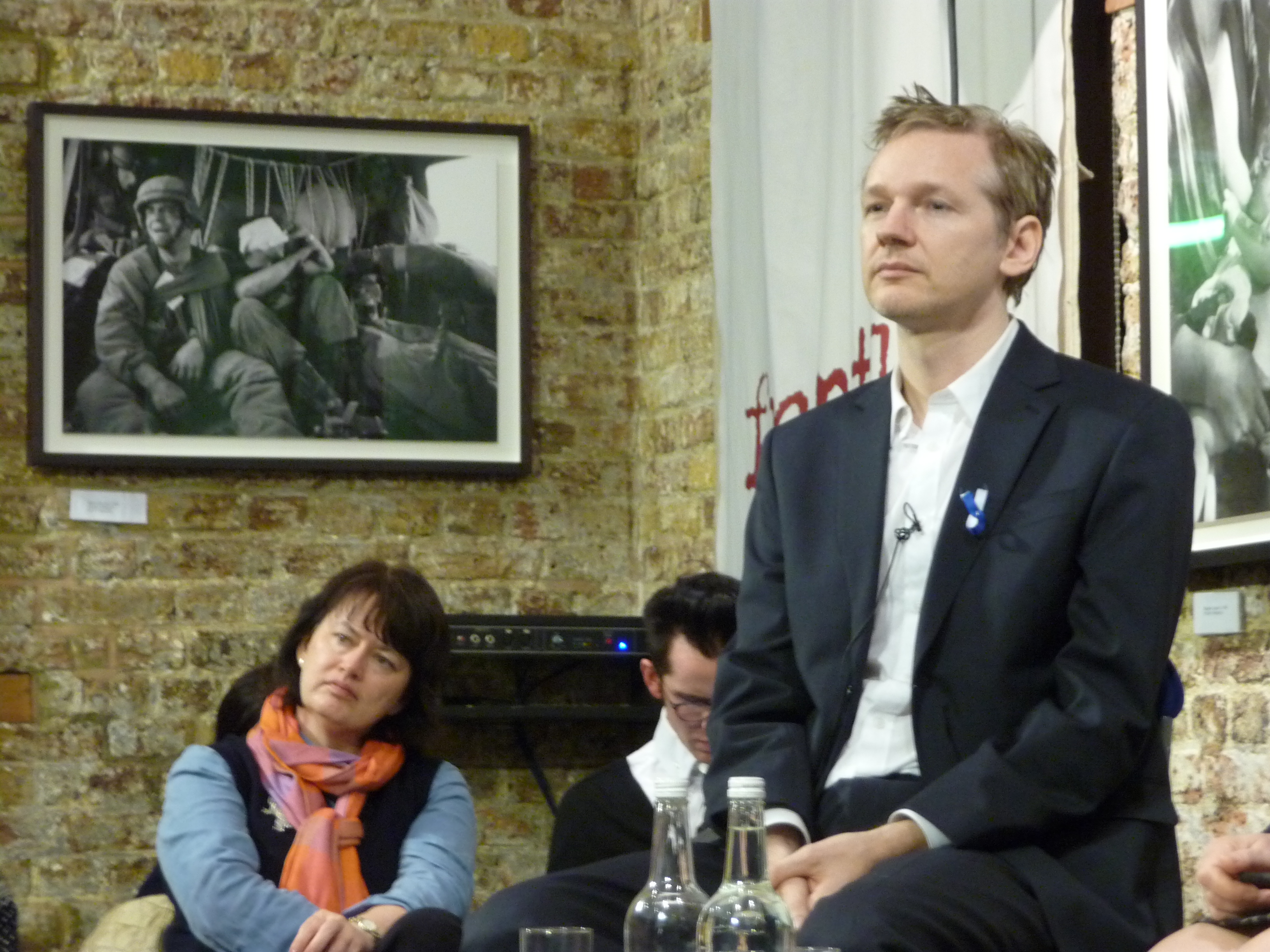
Photo: Julian Assange at the Frontline Club, Daniel Bennett, All Rights Reserved.
]]>