Freelance/Student £125
Members £100

More and more journalists are now using their smartphones as an electronic news gathering device as online magazines and newspapers increasingly expect reporters to add multimedia content to their story. This one-day course will teach you how to record audio and how to shoot video using your smartphone.
The workshop will cover the following:
- Learn how to record audio interviews and use a microphone to get the best sound
- Shoot video interviews and learn how to frame the subject correctly using well established cinematography techniques
- Film voxpops, point-of-view shots, action shots and film multiple interviewees
- Use your smartphone to film establishing shots and cutaway shots
- Learn how to use natural lighting as a key light to model and illuminate the subject
- Use good interview technique and learn how to edit for the sound
- Take photographs and learn how to use picture composition and rule of thirds
- Learn how to edit your clips on the smartphone and create a video news story
- Launch video news stories online and blogs using social media sites.
Before the course, we will contact participants to find out what type of smartphone they’ll bring to the course and with a list of apps to download before the workshop. The majority of these are free, but the list will include a couple of paid-for apps. These should not come to more that £20 in total.
About the trainer
Bill Shepherd is a production editor at The Guardian and The Observer newspapers. He is a member of the National Union of Journalists and a member of the Guild of Television Cameramen.
Image: via Shutterstock / drpnncpptak
]]>Freelance/Student £125
Members £100
More and more journalists are now using their smartphones as an electronic news gathering device as online magazines and newspapers increasingly expect reporters to add multimedia content to their story. This one-day course will teach you how to record audio and how to shoot video using your smartphone.
The workshop will cover the following:
- Learn how to record audio interviews and use a microphone to get the best sound
- Shoot video interviews and learn how to frame the subject correctly using well established cinematography techniques
- Film voxpops, point-of-view shots, action shots and film multiple interviewees
- Use your smartphone to film establishing shots and cutaway shots
- Learn how to use natural lighting as a key light to model and illuminate the subject
- Use good interview technique and learn how to edit for the sound
- Take photographs and learn how to use picture composition and rule of thirds
- Learn how to edit your clips on the smartphone and create a video news story
- Launch video news stories online and blogs using social media sites.
This workshop is currently not compatible with Android devices.
It is specifically aimed at those using an iPhone or iPad, as iOS devices are currently more compatible with video and audio apps.
Before the course, we will contact participants with a list of apps to download before the workshop. The majority of these are free, but the list will include a couple of paid-for apps. These should not come to more that £20 in total.
About the trainer
Bill Shepherd is a production editor at The Guardian and The Observer newspapers. He is a member of the National Union of Journalists and a member of the Guild of Television Cameramen.
Image: via Shutterstock / drpnncpptak
]]>Freelance/Student £125
Members £100
More and more journalists are now using their smartphones as an electronic news gathering device as online magazines and newspapers increasingly expect reporters to add multimedia content to their story. This one-day course will teach you how to record audio and how to shoot video using your smartphone.
The workshop will cover the following:
- Learn how to record audio interviews and use a microphone to get the best sound
- Shoot video interviews and learn how to frame the subject correctly using well established cinematography techniques
- Film voxpops, point-of-view shots, action shots and film multiple interviewees
- Use your smartphone to film establishing shots and cutaway shots
- Learn how to use natural lighting as a key light to model and illuminate the subject
- Use good interview technique and learn how to edit for the sound
- Take photographs and learn how to use picture composition and rule of thirds
- Learn how to edit your clips on the smartphone and create a video news story
- Launch video news stories online and blogs using social media sites.
This workshop is currently not compatible with Android devices.
It is specifically aimed at those using an iPhone or iPad, as iOS devices are currently more compatible with video and audio apps.
Before the course, we will contact participants with a list of apps to download before the workshop. The majority of these are free, but the list will include a couple of paid-for apps. These should not come to more that £20 in total.
About the trainer
Bill Shepherd is a production editor at The Guardian and The Observer newspapers. He is a member of the National Union of Journalists and a member of the Guild of Television Cameramen.
Image: via Shutterstock / drpnncpptak
]]>Freelance/Student £125
Members £100
More and more journalists are now using their smartphones as an electronic news gathering device as online magazines and newspapers increasingly expect reporters to add multimedia content to their story. This one-day course will teach you how to record audio and how to shoot video using your smartphone.
The workshop will cover the following:
- Learn how to record audio interviews and use a microphone to get the best sound
- Shoot video interviews and learn how to frame the subject correctly using well established cinematography techniques
- Film voxpops, point-of-view shots, action shots and film multiple interviewees
- Use your smartphone to film establishing shots and cutaway shots
- Learn how to use natural lighting as a key light to model and illuminate the subject
- Use good interview technique and learn how to edit for the sound
- Take photographs and learn how to use picture composition and rule of thirds
- Learn how to edit your clips on the smartphone and create a video news story
- Launch video news stories online and blogs using social media sites.
This workshop is currently not compatible with Android devices.
It is specifically aimed at those using an iPhone or iPad, as iOS devices are currently more compatible with video and audio apps.
Before the course, we will contact participants with a list of apps to download before the workshop. The majority of these are free, but the list will include a couple of paid-for apps. These should not come to more that £20 in total.
About the trainer
Bill Shepherd is a production editor at The Guardian and The Observer newspapers. He is a member of the National Union of Journalists and a member of the Guild of Television Cameramen.
Image: via Shutterstock / drpnncpptak
]]>Freelance/Student £125
Members £100
More and more journalists are now using their smartphones as an electronic news gathering device as online magazines and newspapers increasingly expect reporters to add multimedia content to their story. This one-day course will teach you how to record audio and how to shoot video using your smartphone.
The workshop will cover the following:
- Learn how to record audio interviews and use a microphone to get the best sound
- Shoot video interviews and learn how to frame the subject correctly using well established cinematography techniques
- Film voxpops, point-of-view shots, action shots and film multiple interviewees
- Use your smartphone to film establishing shots and cutaway shots
- Learn how to use natural lighting as a key light to model and illuminate the subject
- Use good interview technique and learn how to edit for the sound
- Take photographs and learn how to use picture composition and rule of thirds
- Learn how to edit your clips on the smartphone and create a video news story
- Launch video news stories online and blogs using social media sites.
This workshop is currently not compatible with Android devices.
It is specifically aimed at those using an iPhone or iPad, as iOS devices are currently more compatible with video and audio apps.
Before the course, we will contact participants with a list of apps to download before the workshop. The majority of these are free, but the list will include a couple of paid-for apps. These should not come to more that £20 in total.
About the trainer
Bill Shepherd is a production editor at The Guardian and The Observer newspapers. He is a member of the National Union of Journalists and a member of the Guild of Television Cameramen.
Image: via Shutterstock / drpnncpptak
]]>Freelance/Student £125
Members £100

More and more journalists are now using their smartphones as an electronic news gathering device as online magazines and newspapers increasingly expect reporters to add multimedia content to their story. This one-day course will teach you how to record audio and how to shoot video using your smartphone.
The workshop will cover the following:
- Learn how to record audio interviews and use a microphone to get the best sound
- Shoot video interviews and learn how to frame the subject correctly using well established cinematography techniques
- Film voxpops, point-of-view shots, action shots and film multiple interviewees
- Use your smartphone to film establishing shots and cutaway shots
- Learn how to use natural lighting as a key light to model and illuminate the subject
- Use good interview technique and learn how to edit for the sound
- Take photographs and learn how to use picture composition and rule of thirds
- Learn how to edit your clips on the smartphone and create a video news story
- Launch video news stories online and blogs using social media sites.
This workshop is specifically aimed at those using an iPhone or iPad rather than an Android, as iOS devices are currently more compatible with video and audio apps. Before the course, we will contact participants with a list of apps to download before the workshop. The majority of these are free, but the list will include a couple of paid-for apps. These should not come to more that £20 in total.
About the trainer
Bill Shepherd is a production editor at The Guardian and The Observer newspapers. He is a member of the National Union of Journalists and a member of the Guild of Television Cameramen.
Image: via Shutterstock / drpnncpptak
]]>The world is coming to grips with the depth and scale of government surveillance following revelations, released by whistleblower Edward Snowden, about the US’s National Security Agency (NSA) Prism program. On 9 July a panel of experts convened at the Frontline Club to debate the balance between personal privacy and national security.

Mark Urban (left), Sir Malcolm Rifkind (centre), John Kampfner (right), Photo: Jim Treadway
“Balance does not exist,” argued author and commentator John Kampfner, who advises Google on free expression. Kampfner said that because citizens demand total security, governments simply “cannot allow for balance.”
A deeper question than balance seemed to emerge in the debate, however – that of trust. Can governments and corporations be trusted to wield the deeply penetrative surveillance technology that has so recently arrived in their hands?`
Sir Malcolm Rifkind believes they can. The Chairman of the UK’s Intelligence and Security Committee and a former Foreign and Defence Secretary, opened his remarks by saying:
“Let’s start from the presumption that the people who run GCHQ, MI6 and MI5 are decent, responsible people, with high levels of integrity. I think it’s a reasonable assumption.”
The Director of Oxford’s Internet Institute, Helen Margetts pointed out:
“PRISM is [said] to have cost $20 million, which is completely and utterly ludicrous. As one tech blog put it, most security consultants ‘won’t get out of bed for less than $100 million’. The actual cost is probably billions.”
Academic and journalist John Naughton disagreed with Rifkind:
“What comes out [from authorities] is, ‘Trust Us.’ And the trouble with that is that, in recent decades at least, our political masters haven’t deserved our trust…”
The big problem is that the technology operates outside of the laws. . . . Without a warrant – in this country – GCHQ can scoop up all of our email metadata [and] all of our mobile phone metadata, and . . . all of your click streams are collected. In other words, every website we’ve ever visited. . . . You have an amazingly detailed picture of everybody. My question is: in the long run, can you actually square this with liberal democracy?

John Naughton (left), Helen Margetts (right); Photo: Jim Treadway
Rifkind offered a powerful counterpoint:
“Ask yourself . . . why in America, since 9/11, there’s not been a single further example of that kind of a mass atrocity, or why in this country, apart from the 7/7 bombings, not a single person has been killed – since Lee Rigby, a few weeks ago. In each and every year since 7/7 – or since 9/11, whichever you prefer – there have been at least one and sometimes two terrorist plots – in this country – that have been uncovered. . . . I know for a fact that in each of these terrorist plots that were disrupted, it was metadata [that] was a substantial part of the evidence…”
In that light, the chair Mark Urban, an author and an diplomatic and defence editor for BBC Two’s Newsnight, asked:
“To what extent do we as citizens . . . with a phone and a computer, give our consent to the companies? Is it possible to live a modern, networked life, without giving that consent?”
To which Naughton answered:
“Our futures are bounded by the nightmares of two old Etonian writers. One of them is George Orwell, who thought we’d be destroyed by the things we fear. And one of them is Aldous Huxley, who thought we’d be destroyed by the things we love – things that delight us [iPhones and Google etc]. We’re sleepwalking into a nightmare. . . . We are sleepwalking into this amazing, dystopian world, and we love it.”
https://soundcloud.com/frontlineclub/the-trade-off-individual
]]>A couple of interesting experiments from Afghanistan caught my eye this morning documenting ventures in the photographic potential of the iPhone.
First, this piece in The Guardian highlighting its use by Teru Kuwayama and Balazs Gardi.
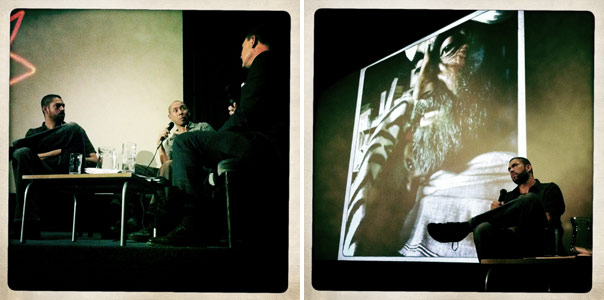
(photo: Balazs Gardi and Teru Kuwayama speaking about Basetrack as part of Frontline’s strand at the 2011 Edinburgh Film Festival)
Part of the Basetrack endeavour, they say the iPhone "was the ideal, rugged piece of gear for southern Afghanistan" because it didn’t trap dust in the camera.
They were using the Hipstamatic app enabling users to take digital "Polaroids".
Second, Michael Yon has been playing with Photosynth to document a military flight from Kabul to Kandahar.
In May, Yon said he was "studying up" on the iPhone app which claims to help photographers capture the world in 3D.
Video below of Balazs Gardi and Teru Kuwayama speaking at the Frontline Club in June 2009
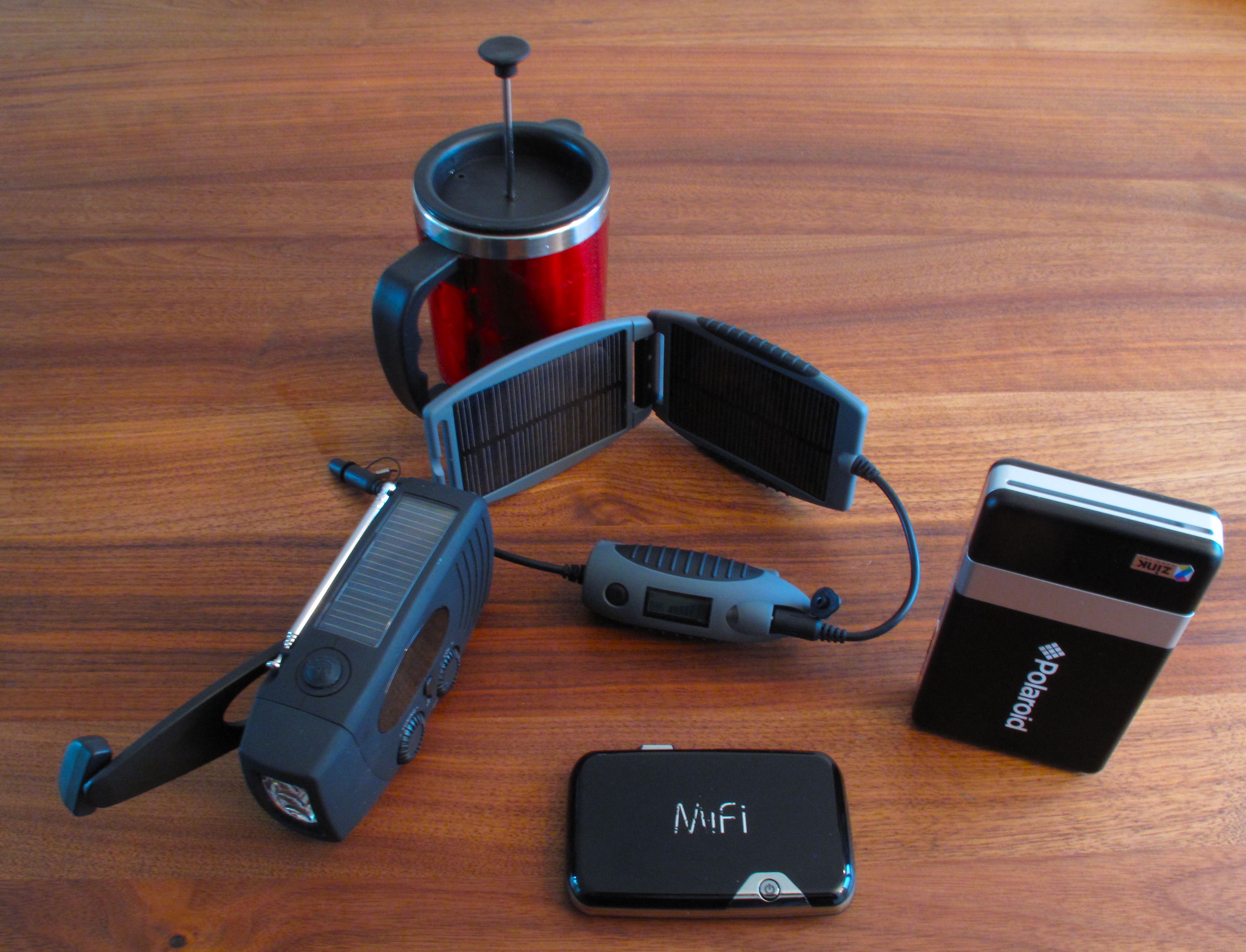
1. Novatel Mifi 2352 portable wireless hotspot
Stick in a SIM card to access a 3G network and start surfing the net via wifi. This little wonder lets you connect up to 5 devices by wifi. I gave the Mifi 2352 a good workout earlier this year in Iraqi Kurdistan using the Mobitel 3G network. It won a lot of praise my co-producers wanting to get online quickly. It turned literally anywhere we were into an instant internet cafe.
2. PowerMonkey eXplorer Solar Charger
Recharge on the run. Christian Payne aka @documentally has a good review of the PowerMonkey on his BushTech blog. It’s a practical device for recharging small devices. I often carry the battery pack to give my iPhone or Nokia a boost. The array of included adaptors makes this gadget quite versatile. Anyone using a Kodak pocket video camera such as a Zi8 might be interested to know that the battery pack will charge the camera battery (slowly) or work as an external power source. I have yet to test how long you can film using the PM on a full charge. As for the solar panels, I’m going to Mali shortly for a filming assignment so I’m keen to use the solar panels to help keep some small gadgets charged up.
3. Solar powered + wind up radio-torch + mobile phone charger
I love radio. I usually take quite a bulky Sony short-wave radio on my travels. But if I want to travel lighter and I know the BBC World Service is available locally on AM or FM then I usually opt for a small Walkman transistor set. But a couple of months ago a small all-in-one radio caught my attention. For 12 euro I thought it was worth giving a go and either it would do what it says on the tin or I’d give it away. No regrets. It’s quite rugged and is staying in the kit bag for the time being – perhaps a one-year after test would be useful to see how it holds up. The AM/FM radio works fine with loudspeaker or headphones. The LED torch is reasonably bright and fine for flapping around during power cuts (though I still carry a mini Maglite). The solar panel charges both the radio and torch. And as for the most interesting part of the unit – the wind-up crank handle – well I’m happy to report that it’s not a gimmick. After a couple of quick revolutions it begins charging not only the torch and radio, but via a short cable, just about anything accepting a 5 volt DC charge. Think mobile phone, iPhone and even a Mifi. Ok, it’s going to be an emergency situation that you need to charge your phone by a crank handle, but you never know… The one I bought in Germany was under the brand Moorhead. But I’ve noticed the same/similar model is sold under other brands elsewhere. It comes with several small adaptors for charging. I have a little bag for these adaptors (they’re all mixed up with the similar PowerMonkey adaptors) but I wish there was a little cubby hole in the unit to store the cable and the adaptor I would use the most. The unit can also be charged up by a USB port connected to a computer or another battery source.
4. Polaroid Pogo photo printer
The crowd pleaser. In combination with a mobile phone or digital camera via USB, the Polaroid Pogo is a pocket-sized photo printer. It really makes a difference if you’re working in a visual medium to be able to offer someone a photo on the spot – about the size of a business card. Result? Smiles all round. I used to cart around a small Canon printer that plugged into a car ciggie-lighter, but the Pogo is much more portable, powered by a rechargeable battery and there’s no mucking around with ink. However, keep in mind you can’t directly print with the iPhone – Apple has crippled the iPhone’s bluetooth for sending photo files. Nokia, no problem. It’s a pity really as it would be brilliant to use some iPhone photo editing apps such as PS Mobile in tandem with the Pogo.
5. Stainless steel coffee plunger
OK, perhaps the title of this post should of read four gadgets and one life saving utensil… but good coffee is technical. When an espresso machine is not within coo-ee, I’m certainly up for any local brew whether it’s a Turkish coffee, a glass of mint tea or chay with the teaspoon standing upright in a small mountain of sugar. But, I get irritable if I have to stare at a tin of instant coffee and consider the words freeze-dried. So if coffee is likely to be a problem on a trip I bring my own coffee and a portable plunger. Probably the best 10 euro I’ve spent on travel kit. The one pictured below is from Jack Wolfskin and it does the job for two cups. I’d like to find a slightly larger one for three cups – a "crew" model, then everyone is happy
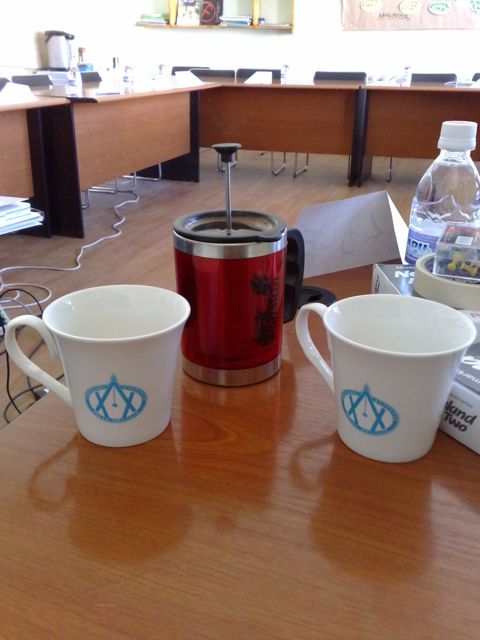
Coffee breaks at the Press Institute of Mongolia improved dramatically!
]]>