What do a dead poet, organised crime and the air we breathe have in common?
On Thursday 21 November the Frontline Club screened The Carbon Crooks – director Tom Heinemann’s exposé of the massive fraud and failures within global carbon trading schemes.
Heinemann introduced his picture thus:
“This film is a about a system where, one could say everybody are crooks, or nobody are crooks. . . . How can you nail a whole system? That was the challenge in this film. Maybe you’ll find a lot of crooks in this film, or maybe you’ll find no crooks.”

Director Tom Heinemann. Photography Credit: George Symonds
The first question from the audience asked: “The VAT carousel has been known for 20 years. How is it possible that they didn’t think of it for emissions trading?”
“That’s a very good question,” said Heinemann, “that the EU Commission didn’t want to answer me either. . . . I don’t know who designed the system, but I’m sure someone has some red ears, somewhere. It took them way too long to stop this. Way too long.”
“Are we going to move away from market-based mechanisms?” followed another audience member.
“Well, I’m a journalist. I ask questions, I don’t give the answers,” began Heinemann. “But, my impression is that . . . the politicians today say, ‘We can’t do it better so we’ll pick the second or third best system.’ What can we do about this? I don’t know. Kevin Anderson, the advisor for the British government on climate issues has stopped flying. He has said, ‘I’ve used my credits.’”
https://twitter.com/CCESltd/statuses/403805857760428032
In response to a question on police investigations Heinemann explained:
“The real problem here is that most of the scam money came from organised crime. We have drug dealers, terrorist funders – the scum of the earth – have laundered money into these VAT carousels. There are a lot of investigations going on . . . there are employees of Deutsche Bank still accused of laundering carbon credit money.”
On why the authorities refuse to answer where the missing – traceable – credits have gone:
“Why don’t they tell us? Maybe it’s too embarrassing,” offered Heinemann. “Maybe it would reveal that these credits have been in so many ‘honest hands.’ . . . You heard the Director of Europol, Rob Wainwright, saying it’s easier to hack into a carbon credit registry than stealing a car. I mean, that’s really trustworthy isn’t it? These questions need to be asked by people other than me, because there are a lot of people who don’t want to talk to me any more.”

Heinemann then expanded on the connection between carbon trading and international development:
“Gold Standard admits to us that half of their projects – about 60 – throughout the world are based on a system called ‘suppressed demand’. Meaning, you ask the poor people, ‘If I brought in a money tree, and you pluck it every day, would you then change your behaviour?’ . . . It’s not a big part of the system but a very important story. Because it was created by a lot of NGOs, based on a mathematical economic theory where the Danish professor says, ‘In the old days we had the vicar, we could go and get redemption. Today we have a long mathematical formula.’ So it fits!”
Heinemann concluded with his forecast for future carbon control:
“The head of communication for DONG Energy, a 80% state-owned Danish energy company, admits it has never been cheaper to pollute than today. It is cheaper than ever. Then there’s something wrong with the system. . . . The problem is that the market cannot reduce carbon emissions, apparently.”
More information about the film can be found at The Carbon Crooks website.

The screening of Afghan Army girls ended with a roaring sound of applause at the Frontline Club yesterday evening. Lalage Snow, also a photojournalist, made her directing debut with a film beautifully weaved in stills and moving images to showcase the lives of women preparing for a life in the Afghan national army.
Focussing on the lives of three girls training in the army, Samiya, Homa and Zeinab, the film captured their individual personalities, following them on a ten week training course to an isolated military base in Kabul and into some of their homes.
Anyone who is remotely familiar with Afghan news and culture would know that staying away from home is taboo for women, and that this is a big step forward.
One member of the audience questioned if and whether this has had any impact.
Snow said,
“Lets not forget before the occupation of the Taliban, the Afghans used to employ at least 4,000 women in the army. Of course all this has been superimposed by ISAF and NATO lately in an effort to empower the women and the country.
All the training and classes take place in a compound. About the impact – I really don’t have much of an idea now. Of course there are higher generals who are women but they still need to develop a better sense of authority without being trampled over by their male peers.”
Many were curious to know about the reactions from fellow Afghan countrymen and women. Snow said:
“In Afghanistan, not many women are aware that women are being recruited for the armed forces. There is not much publicity about it. Not sure if this is a move by ISAF and NATO to superimpose women’s rights on top of the agenda. Female soldiers are being recruited for the army and the police force to conduct searches.”
She added
“Can’t speak for all but many of the men-folk are progressive and want a future that is sustainable. They want peace and stability.”
While the film tackled many aspects of being a woman in the armed forces, many were still looking for answers as to what would happen when the international troops pull out.
Snow said:
“Well it is a mixed response; I have argued this over and over with my friends. Many think they would like the foreign forces to leave. Others think there is just going to be a civil war if that happens.”
One audience member had the room in hysterics asking, “So can the women shoot?” To which Snow replied, jokingly “No.”
As seen in the film, after graduation, no-one made it to the Afghan Air Force. “All of them were extremely proud and happy to have undergone this training except for one, Samiya,” said Snow.
]]>“’It came out of nowhere because of Facebook and Google’ is not true. It was a long time coming.”
So said Marwan Bishara, Al Jazeera English’s senior political analyst and author of ‘The Invisible Arab: The promise and peril of the Arab revolution.’
In conversation with the BBC presenter and special correspondent Lyse Doucet, Bishara discussed his new book which challenges the mainstream media’s portrayal of the 2011 uprisings in the Arab world as a series of spontaneous acts sparked by the self-immolation of a Tunisian fruit vendor.
“Social media was very important, but not the reason for the revolution. [The reason] is the young people with a history of struggle.”
“These regions were open to democracy – they were only stopped because of politics and dictators,”
Bishara’s view is that the West has, until recently, perceived Arab nations as ‘invisible’ and so been unaware of the struggle that has been building up for a number of years.
“First, the inside struggle was made invisible from the rest of society by dictators who made sure those who wanted to say something could not say it. People were imprisoned, tortured, censored, kept away from the media – even sent into exile or to their death.
“Outside, they were made invisible by a media paradigm – [they were seen as] a threat to energy security, a threat to Israeli security, and a threat to national security.”
These feelings are historical, deep-rooted and inevitable, he said.
“There was a massive demand for radical change, and a break from the past was indispensable. It was a collective break that is psychological, political and mental.”
But he warned that the struggle has a long way to go yet, despite much of the western media drawing its attention away from the events which continue to unfold in the ‘Arab Spring’ countries. Predicting more violence to come, he emphasised that these revolutions do not have a specific timeline and it was impossible to tell when they would be over. But he said that he is optimistic, as this young generation has embraced pluralism.
“Arabs know their future is going to look nothing like the past. They have one foot in the past and one foot in the future.
“I see a lot of violence coming our way. But Yemenis, Egyptians, Tunisians… they want to be funny, they want to be creative, they want to be non-violent, they want to be girls and boys together in a revolution. It’s miraculous. They are the miracle generation.”
“A lot of us project the view on these revolutions, asking ‘where is the democracy?’” he added.
“It will come as it comes. We have to take them as they are. I am at least optimistic that we are breaking from the past. There are perils and pitfalls – it’s up to this new generation to move their society on the right track.”
Watch the whole event here:
]]>With more than one billion of the world’s population reliant on fish as their main source of protein and up to 90 per cent of fish disappearing in some parts of the oceans, the impact of illegal, unregulated and unreported fishing operations – known as ‘pirate fishing’ – has never been greater.
After a screening of documentary Deadly Catch, there was a Q&A session hosted by Channel 4 News science correspondent Tom Clarke.
John Pearce, MRAG senior consultant and expert in fisheries management, said that pirate fishing was a “devastating” problem. Within the last year there were 189 reports of illegal trawlers, from more than hundred people in more than 23 communities.
The global fishing industry generates between $9-23bn per year and 20% of the catch is done illegally. A recent seizure of fish, caught illegally of a west African coast, in a Spanish port that was worth $6.5m alone.
The problem is surprisingly compounded by the EU providing huge financial incentives for pirate fisherman, added Domitilla Senni, an environment policy advisor. She said:
We looked at the amount of subsidies these fleets received from the EU – enormous amounts of funds like €10m given to a third of vessels to convert their fishing boats. Also €3m was given to those fishing illegally to improve their practices.
Other concerns were also highlighted. Andy Hickman, an oceans campaigner with the Environmental Justice Foundation (EJF), said that hygiene standards on illegal fishing vessels, which cannot be inspected, are “appalling”.
It was also pointed out that the working conditions on such vessels rendered men as nothing more than indentured slaves paid a dollar a day and do not see land for lengthy periods.
All agreed that the vast majority of illegal fishing activity is rooted in international organised crime and can be linked to elusive multi-national corporations. As long as such outfits believe that the economic benefits outweigh the likelihood of being caught they will continue their illegal activities.
To combat such a widespread problem, a co-ordinated effort from port states is necessary. John Pearce said:
[Pirate] fisherman will always find the weakspot and exploit it. Find the weakest ports to sail to, the weakest markets to get their catch into and the weakest areas which do not enforce rules.
It’s like squeezing a balloon: the problem does not go away, it just goes somewhere else – so everyone must act at the same time.
Other solutions discussed included creating areas of protection at particular breeding sites, excluding industrial fishing vessels from certain areas, and getting local communities involved in fishing management is of paramount importance.
Greater transparency is also needed, with current figures considered to be the tip of the iceberg as unreported illegal fishing is a huge obstacle.
In some cases, however, funds generated from illegal fishing has been put to good use, such as financing legal fishing programmes and combating pirate fishing.
]]>Download this episode
View in iTunes
By Antje Bormann
Broadcaster Sue Steward introduced Carol Allen Storey as one of the most fascinating photojournalists around. Carol Allen Storey’s photographic career started 10 years ago following a thorough rethink of a successful career in the fashion and beauty industry.
Photographs by Edmond Terakopian.
Carol Allen Storey documents the lives of women and orphans affected by HIV-AIDS in Uganda, Tanzania and Rwanda. She focuses on the stigmatisation of HIV-AIDS sufferers and the indomitable spirit that keeps them going against the odds. Her stunning, emotionally-charged images had the room completely silent as she explained the fate of each subject.
She told the story of a woman who single-handedly looks after 32 children, all of them her nieces and nephews whose parents have already succumbed to AIDS, who had contracted the virus while caring for them.
She also told the story of the ‘dustbin boys’, a gang of feral children aged seven to 14 who live off what they can find on rubbish tips and outside slaughter houses, who take drugs to relieve boredom and as they grow older slip into gambling. In contrast, the gang also adopted the 6-month-old baby of a sex worker who had died from AIDS and take turns looking after the little one.
There were stories of children who, once diagnosed with HIV, are made to wear a red badge, a sign that sets them apart from their healthy – or simply as yet undiagnosed – classmates. The children sometimes don’t even know why they are wearing the badge, why they are not allowed to play with the other kids in the school yard.
Alice Fay, HIV Programme development advisor for the charity Save the Children shed some light on how children are treated once they are diagnosed. Children may be diagnosed and treated for HIV but will not be informed of their diagnosis until they are at least 8 years old, she revealed.
There were a number of questions to Carol Allen Storey and Alice Fay from the audience about measures taken by African governments to get the problem of HIV-AIDS under control, with one person saying that it had to start with educating men.
]]>
Download this episode
View in iTunes
Watch the event here.
By Gianluca Mezzofiore
Public interest in international aid is slowly growing across the UK, as catastrophic disasters such as the Pakistani floods make demands on people’s generosity.
But what is the level of accountability and transparency of aid agencies and NGOs responsible for delivering money and services to those countries in need of help?
A panel chaired by Paddy Coulter, Oxford Global Media partner and communications director of Oxford Poverty & Human Development Initiative (OPHI) at Oxford University’s department of international development, addressed these pressing questions.
Aid is “terribly ineffective” according to Giles Bolton, an ex-aid worker for the Department for International Development (DFID), and author of the controversial book Aid and Other Dirty Business.
We pay for aid as any other public service but we cannot track its effectiveness. It has the worst of public service with no good of it.
I am surprised that the rhetoric of corruption has shifted from the corruption among donors to the corruption among recipients. Corruption is within the aid system, within the aid agencies themselves which are very compromised. Aid tends to be very overambitious in the assumptions.” that we can change the world.
Judith Randel, co-founder and director of Development Initiatives (DI), suggested that the primary thing donors could do about corruption is publish their own data: “They key thing is transparency on operations and traceability,” she said.
“The discussion around transparency is important,” argued Vicki Peaple, international development professional for the STARS foundation. “We have to put the decision-making power in the hands of the people who know how to use it more effectively, especially in those countries with stronger civil rights.”
Click here for a write up of the event on Alertnet.
]]>Experts on international aid marked yesterday the importance of effectiveness and risk-taking in delivering money to countries in need of help. In a panel discussion chaired by Humphrey Hawksley, leading BBC foreign correspondent, four professionals on humanitarian issues admitted the failure of project-based development and stressed on the major role of local people as “big drivers” of the development.
“Let’s put more money into people,” said Paul Ackroyd, International Development Consultant ” and put emphasis on things which improve effectiveness. Don’t build schools, for instance, but support education programme experts.”
Samir Elhawary, Overseas Development Institute (ODI) research fellow, examined the role of humanitarian action in conflict-affected emergencies: “We should invest in contexts where there are national security issues,” he said “and reconsider our criteria for instability in countries like Yemen and Afghanistan. Let’s start including people that do not share our same values.”
The top line for Dorcas Erskine, ActionAid head of public affairs, is transformative development and investment in women: “Brave, radical women should be involved in the growth of developing countries,” she said.
“Value for money” is Michael Anderson‘s motto. Director general for policy and global issues at the UK’s Department for International Development, Anderson focused on the relevance of national security problems: “Aid is important, but it’s just a limited part of development,” he said. “Different organizations have to be humbler. People from developing countries drive the main development.”
He also said that Western Countries have learned a lot in the last 15 years on international aid. “Projects alone don’t produce change,” he added. “Changing one village alone won’t change the system. Working with the local government is essential.”
Listen to the podcast here:
]]>All Frontline members have been invited to a reception and exhibition opening to mark the 10-year observance of Security Council Resolution 1325 (2000) on Women, Peace and Security.
With gender-based violence as its theme, the exhibition will feature photographs by VII photographers Marcus Bleasdale and Ron Haviv alongside Lynsey Addario and James Nachtwey.
The opening will take place on Wednesday 20 October, 2010 7pm-9pm at The Atrium, Old Building London School of Economics & Political Science Houghton Street, London WC2A 2AE.
To RSVP please email: RSVP@congowomen.org
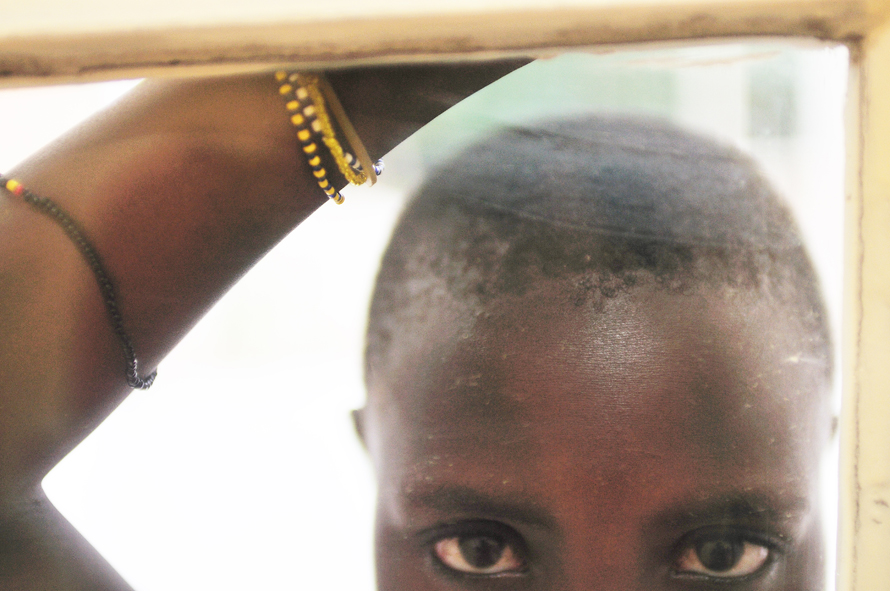
Photo credit: Lynsey Addario/VII Network
]]>
Does the Demotix citizen journalism agency offer a model for the future or will it simply undercut the professionals? Love them or hate them, Demotix has made its mark on the industry. Our networking party tonight offers the opportunity to meet Demotix CEO Turi Munthe and hear about their work as well as network and enjoy some complimentary drinks.
Tomorrow we have Dutch photographer Teun Voeten who will be discussing his insightful photography project which documents the lives of people living under Manhattan in its network of tunnels.
Next week at the Club we have two events which we hope will help throw light on key issues in the wake of tomorrow’s spending review: Who better to discuss the current economic crisis than BBC Newsnight economics editor Paul Mason and playwright David Hare, both of whom have explored in different ways the 2008 banking crisis and its causes.
Then we have a panel discusssion that will focus on the international development budget and the planned changes to be made by the coalition government.
]]>