Nearly three years on from President Obama’s infamous ‘red line’ statement, Syrian activist and filmmaker Orwa Nyrabia, Syrian human rights lawyer Laila Alodaat, journalist Jonathan Littell and Nerma Jelacic of the Commission for International Justice and Accountability (CIJA), joined an audience at the Frontline Club on Thursday 21 May. In a discussion chaired by Owen Bennett-Jones, host of Newshour on the BBC World Service, the panel discussed Syria’s increasingly fractured reality and seemingly endless turmoil. Also under discussion was the investigative work currently underway to record evidence linking the Syrian regime to the atrocities committed, in the hope that the acting parties will one day be held accountable for their crimes.

L-r: Laila Alodaat, Jonathan Littell, Owen Bennett-Jones, Orwa Nyrabia and Nerma Jelacic
Despite the media frenzy in recent months, the evening’s discussion avoided focusing solely on ISIS.
Nyrabia commented: “I don’t know what sadomasochism western media have towards ISIS, but they always blow it up and make it very attractive for anyone who is angry with the West.”
Instead, the speakers shed light on tangible developments on the ground, ongoing external interests and alliances in the region, and the failure of the international community to intervene.
In the wake of news that same day that ISIS had captured the territories surrounding Palmyra, Bennett-Jones began discussions by asking Nyrabia for a brief overview of the groups currently active in Syria.
Nyrabia answered that, while local Islamist groups and ISIS were gaining ground, the regime was not advancing but rather maintaining its highly populated and strategic strongholds.
On the subject of Syrian President Bashar al-Assad, Nyrabia commented: “it was made public that the Iranians were not giving him [Assad] the loan he requested.” Nyrabia connected this to Iran’s conflicting objectives in relation to pleasing all facets of the international community over its nuclear program.
Nyrabia went on to lay out the following summary of regional allegiances, useful even to those well-versed in the Syrian conflict: Assad is backed by Iran with Hezbollah support, and is bolstered by Afghan and Iraqi militias. On the other side, aside from ISIS, local Islamist groups have joined together, notably since the beginning of Saudi offences in Yemen, to form part of what is called Al-Fath. Finally, there is the moderate, secular opposition, exemplified by both Nyrabia and Alodaat, which feels increasingly marginalised and underrepresented.
Alodaat asked: “Where is the secular opposition in all of this? I think they have been set up to fail, they have been set up to fail by the international community that gave them no support.”
Bennett-Jones questioned Alodaat on whether the civilian opposition failed due to their low numbers. Alodaat responded: “Are we expecting civilians to have more power than arms? The answer is no.”
Alodaat went on to remind the audience of the dirty tactics used by the regime against its people.
“A perpetrator can spend a lot of arms and take the guilt of killing a thousand people, or can kill the one person who provides healthcare and make sure these people will die. And Assad did that.” The pinnacle of these crimes and the crossing of the red line occurred in August 2013, when 16,000 people were killed by chemical weapons.
An intervention by the United States never followed.
Nyrabia commented on what he saw as the dire consequence of this failure by the international community to act, and the part this played in legitimising the mass-scale crimes that followed. “We believed that after it [a US-led intervention] was mentioned it had to happen, because the cost on our people is going to be even worse than intervention. And that’s what happened.”

L-r: Owen Bennett-Jones, Orwa Nyrabia, Nerma Jelacic
Littell, who was smuggled into Homs for three weeks on an assignment for Le Monde in 2012, spoke of another tipping point.
“Homs, because of the divided nature of the city, was where things got the most conflictual the fastest,” Littell said.
He spoke of the ideals still upheld at that time by the locals who believed that a civil movement, led by the free Syrian Army (FSA), could topple the regime.
Littell commented on the regime’s tactic of allowing and encouraging the growth of radical Islamist groups, in order to do their work of suppressing other, more moderate, opposition, in the hope that they could later defeat these groups. Littell went on to draw parallels with other conflicts in which this tactic had been used.
“To me, this looks exactly like the curve in Chechnya in which the Russian special services fostered the more Islamist Chechen groups to try and crush the more moderate nationalists.”
Jelacic then discussed the work of her organisation, the Commission for International Justice and Accountability, in gathering evidence linking perpetrators to crimes in the Syrian conflict. However, as Syria is not signed to the Rome Treaty, Jelacic explained that a referral must go through the United Nations Security council (UNSC) in order to bring perpetrators to trial at the International Criminal Court (ICC).
On this point, Jelacic commented: “You are more or less doomed if you are in a war and waiting for the UNSC to agree on anything.”
She added: “Even if the referral to the ICC happened, it would not be able to do justice to the widespread crimes that have been committed throughout the years.”
Despite a bleak outlook, Jelacic offered clear progress in the process of compiling evidence against the regime, currently consisting of over 600,000 separate documents.
She went on to explain that, despite popular opinion, harrowing victim testimonies account for little in a case of this nature: “You need to prove the three C’s: Command, Control and Communication… It’s amazing how meticulous autocratic regimes are in documenting their crimes.”
Audience questions ranged from the involvement of Turkey, Saudi Arabia and Russia, to the meaning of Syrian identity today.
On the subject of an end to the conflict, Alodaat called for a total disarmament, while Nyrabia suggested that the international community actively support local opposition groups.
Jelacic closed the discussion by commenting: “Human intervention: that is something that this conflict has killed as an idea. The second thing it has killed is diplomacy.”
]]>
Monday 18 February

In Moscow, the posthumous trial of whistleblowing lawyer Sergey Magnitsky on tax evasion charges is scheduled to resume. Magnitsky died aged 37 in prison in November 2009 as he awaited trial. Critics suggest the charges were trumped up in retaliation for Magnitsky’s role in exposing an alleged $230m fraud that was linked to a Russian Interior Ministry official.
In Brussels, there is a debate on the EU’s long-term budget which will be attended by EU Council President Herman van Rompuy and European Commission President Jose Manuel Barroso.
In Turkey, the trial of pianist Fazil Say for insulting Islam on Twitter is scheduled to resume, having been adjourned last October when a request to have the case dismissed was rejected.
Finally, Armenians will head to the polls on Monday for presidential elections, with incumbent Serzh Sargysyan hoping to secure a second five-year term.
Tuesday 19 February

Russian Foreign Minister Sergey Lavrov, meanwhile, is scheduled to travel to Brussels for talks with EU High Representative Catherine Ashton. Although Syria is likely to come up in the talks, it seems highly unlikely that the meeting will produce any fundamental breakthrough in terms of reconciling the divergent positions of Moscow and Brussels vis-a-vis the conflict.
Finally, parliamentary elections are scheduled to take place in Grenada.
Wednesday 20 February
China’s Foreign Minister Yang Jiechi is scheduled to begin a three-day visit to Russia on Wednesday. Although there have been telephone talks between Moscow and Beijing since North Korea conducted its third nuclear test last Tuesday, the visit will provide the first opportunity for face-to-face talks between Yang and his Russian counterpart Lavrov on Pyongyang’s latest provocation to the international community.

Finally, in New York, Japanese electronics giant Sony is due to hold mysterious media event, which many speculate will be used to launch the PlayStation 4.
Thursday 21 February

In Brussels, NATO defence ministers will converge for a two-day meeting. It follows the announcement made in President Obama’s State of the Union address that a further 34,000 US troops would be home from Afghanistan by next February ahead of the scheduled end of NATO combat operations next December. The meeting may also provide an opportunity for informal discussions on Syria.
Finally, a highly-anticipated meeting of shareholders of the mining group Bumi is scheduled to take place on Thursday. The meeting was called by financier Nat Rothschild, who has been locked in a dispute with Indonesia’s powerful Bakrie family, with whom he co-founded the company. Rothschild was ousted from the board, but retains a significant stake in the group and is seeking to oust 12 of Bumi’s 14 board members.
Friday 22 February

In the US, an Irish nanny charged over the death of a baby in her care is scheduled to make a court appearance. Aisling McCarthy Brady is charged with the assault and battery of one-year-old Rehma Sabir, who died last month. Some have compared the case to that of Louise Woodward.
Finally, parliamentary elections are scheduled to take place in the tiny east African nation Djibouti.
The weekend
The son-in-law of the Spanish king, Iñaki Urdangarin, has been ordered to appear before a magistrate in Mallorca on Saturday in connection to accusations of fraud and corruption at the Noos Institute, a charitable institution which he ran. Although he has not been formally charged, the connection of a royal to a case is the last thing the Spanish monarchy needs at the moment, given the dire economic situation many Spaniards are finding themselves in at the moment.

Following this week’s announcement of arrest warrants against Muammar Gaddafi and co., The Hague continues its stint in the limelight next week with the high-profile hearing on Monday for former Bosnian Serb Commander Ratko Mladic at the International Criminal Tribunal for the Former Yugoslavia.
Meanwhile, Russian President Dmitry Medvedev and NATO Secretary General Anders Fogh Rasmussen lead a meeting of the NATO-Russia Council in Sochi, the first since military action began in Libya. Russia has been increasingly vocal about its opposition to the NATO action.
Focus shifts back to Greece on Tuesday as the Federal Constitutional Court in Germany hears challenges to the constitutionality of a law adopted last year which guarantees the maintenance of Greece’s financial stability and solvency, authorising up to €22.4bn in loans.
8,500km away, Chavez-watchers are keeping an eye out to see whether the President Hugo Chavez will return for Venezuela’s bicentennial. Chavez has been in Cuba since he travelled there on 8 June to undergo surgery, and, until a video aired on 28 June showing him with Fidel Castro, he had not been seen since.
The International Olympic Committee takes a break from its four-day AGM in Durban on Wednesday to announce whether Munich, Annecy or PyeongChang will host the 2018 Winter Olympics.
Closer to home, American news site Huffington Post launches its UK version, following the arrival of Huffington Post Canada in May. Founder Arianna Huffington has promised the website will be live in 12 countries by the end of the year.
On Thursday, UN Secretary General Ban Ki-moon leads the latest round of discussions between Greek Cypriot leader Dimitris Christofias and his Turkish counterpart Dervis Eroglu in Geneva. Back in New York, the UN launches its annual Millennium Development Goals report, assessing MDG progress worldwide.
In London, families mark the sixth anniversary of the 7 July bombings, which killed 56 people on the Tube and bus network.
Egyptian activists return to Cairo’s Tahrir Square on Friday, just under five months after the resignation of President Hosni Mubarak. Protesters say elections planned for September should not go ahead under the current constitution.
In France, the Cour de Justice de la République is expected to rule on whether to initiate a judicial inquiry into new IMF Managing Director (and erstwhile French Finance Minister) Christine Lagarde’s role in the 2007 Tapie Affair. The decision was delayed from 10 June.
Saturday marks the official independence of South Sudan, following a referendum in January and despite ongoing violence in the Abyei region.
Back to the Arab Spring on Sunday, as Syria’s National Dialogue Commission holds a consultative meeting to discuss constitutional amendments, including changes to Clause 8, which enshrines the leadership of President Bashar al Assad’s Baath Party.
In Israel, the final hearing is scheduled to take place in a case brought against the state by the family of Rachel Corrie, and American activist who was killed in 2003 when an Israeli bulldozer poured soil over her while she tried to block the demolition of Palestinian homes in the Gaza strip.
Highlights: Mladic hearing and NATO-Russia Council (4 July); German court hearing on Greece and Venezuelan independence day (5 July); 2018 Olympics host and Huffington Post UK launch (6 July); UN activity and 7/7 anniversary (7 July); Egypt protests and Christine Lagarde decision (8 July); South Sudan independence (9 July); Syrian National Dialogue and Rachel Corrie trial (10 July).
]]>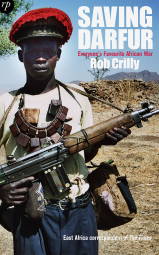 Signs of weariness among some of the campaigners who first brought Darfur to the world’s attention. After six years of advocacy, of campaigning for an end to the conflict, there’s a moment of soul-searching. Nick Kristof, columnist for the New York Times, wrote the first article that catapulted the crisis into public consciousness. Now he is wondering where it all went wrong.
Antonovs are in almost daily action. Millions are still crowded into the aid camps where malnutrition and disease run riot. There are continuing skirmishes between rebels and government. Expelled aid agencies are having to cave to Khartoum’s demands in order to return to Darfur. And President Bashir continues to gallivant around the Arab and African worlds in defiance of an International Criminal Court warrant for his arrest.
Writing in the New York Review of Books, Kristof says he is worried that President Obama shows few signs of having the will to tackle Darfur…
To some extent, that’s a reflection on the Save Darfur movement and on scribblers like myself who took up the Darfuri cause. We have failed to foster the political will to bring about change. For all our efforts, the situation on the ground may soon become worse. A "Darfur fatigue" has set in, and the movement has lost its steam. And of course the movement was always compromised by its own shortcomings, from infighting to naiveté to the ubiquitous penchant of advocacy groups for exaggeration.
He’s right and wrong in pretty much equal measures. Naivete and exaggeration have been the downfall of the Darfur movement. And Kristof more than anyone has been guilty of this – continally taling about light-skinned Janjaweed, for example. At the same time though the Save Darfur movement has done an incredible job of keeping Darfur on the political agenda. The issue was featured in US Presidential debates and Obama has appointed a Sudan envoy.
The advocacy movement has even achieved its two main goals – UN peacekeepers and an ICC arrest warrant.
The advocates have been incredibly successful. The problem is that they have been pushing for the wrong solutions. If the likes of Kristof are having second thoughts then this can only be good for achieving peace in Darfur.
This issue is one of the main themes of my book, Saving Darfur: Everyone’s Favourite African War, due to be published by Reportage Press in November.
]]>
The use of these figures in the media is inconsistent; both individual journalists and newspapers themselves vary in the numbers they use. For example, a journalist for Britain’s Times newspaper used both 200,000 and 300,000 in articles published in February and March 2009 respectively, having previously used 300,000 for most of the previous year’s reporting.
The most irritating thing, is that he is completely right. I’ve dithered. Having spent a bit of time trying to work out the best number, I then screwed it up.
In confusing situations, where stats differ, the safest thing is to use a trusted authority. In this case, the United Nations uses a death toll of 300,000. This is what I was using for most of last year after Sir John Holmes first used the figure.
Only it became increasingly apparent that this number was the result of sticking a finger in the air and adding a few more deaths to the last figure. Asking his officials for details of the calculation just brought a rather confused series of knowing smiles.
Sir John reckoned his number was a reasonable extrapolation from a 2006 figure of 200,000 deaths. Yet we know the death toll of the past year, for example, is way, way less that the worst slaughter of 2003/2004. Last year, deaths from violence were around about 1600. Or not much more than 100 or so a month. We also know that the incredible efforts of the humanitarian agencies had brought down mortality indicators inside the camps (which could now be changing).
Read the rest of this post on Rob’s blog.
]]>
Juba, the capital of the semi-autonomous region of South Sudan, is currently extremely tense, awaiting the reaction of national president Omar al-Bashir to tomorrow’s International Criminal Court decision on whether to issue an arrest warrant against him. Should the ICC go ahead with the indictment – for ten counts of war crimes, crimes against humanity and genocide allegedly committed in Darfur – not only will it be the first such indictment against a sitting head of state but could also imperil the faltering north south peace deal, the so-called Comprehensive Peace Agreement.
The CPA supposedly ended decades of civil war with a negotiated power sharing agreement that calls for democratic elections before July and allows the South a vote for independence in 2011. Thus a potential ICC arrest warrant against al Bashir poses a serious dilemma for the government of the nascent state: it could entirely unravel the CPA and thus undermine the agreement for a vote on self-determination but it could also lead to a pre-emptive unilateral declaration of independence should the beleaguered national president opt to declare a state of emergency.
In the meantime everyone is waiting to see what happens next: not really a novel experience here in a region where everyone is waiting for the opportunity to become the world’s newest independent nation state. Most people seem to regard a yes vote on independence as a foregone conclusion and there is a growing feeling that there is no need to wait another two years. The CPA stipulated that there should be a six year “interim period” during which time both sides should work to make unity attractive but in reality there is currently no sign of any benefits to unity and both northern and southern armies appear to be squaring up for another fight and digging in along the disputed north-south border.
In Juba and other large southern towns the Government of Southern Sudan’s military and security forces are on full alert, although, somewhat paradoxically their main potential targets are members of the north’s military and security the components of the (supposedly) Joint Integrated Units that remain entirely loyal to the Government of National Unity in Khartoum.
Thus the next few days could well be the turning point in the history of a nation that has remained at war with itself for over four decades. We are just going to have to wait and see what happens next.
]]>