For June’s BookNight we are pleased to welcome author and special advisor at Human Rights Watch Fred Abrahams, who will present his book Modern Albania From Dictatorship to Democracy in Europe over an intimate dinner with Frontline Club members. You can now order Modern Albania with a 20% discount. Please use this code to claim your discount: CSF615MALB.
 Modern Albania offers a vivid history of the fall of the Albanian Communist regime and the trials and tribulations that led the country to become the state it is today. The book provides an in-depth look at the Communists’ final Politburo meetings and the first student revolts; the fall of the Stalinist regime and the war in neighbouring Kosovo; and the relationship between Albania and the United States. A rich, narrative-driven account, Modern Albania gives readers a front-row seat to the dramatic events of the last battle of Cold War Europe.
Fred Abrahams is a writer who has worked for twenty years in areas marred by political crises and armed conflict, including the Balkans and the Middle East. In Modern Albania, he weaves together interviews with key Albanians and international parties who have played a role in the country’s politics since 1990.
Guests will be expected to have read the book, and to be ready and willing to contribute to the conversation. This will be an in-depth discussion rather than a standard format Q&A. The evening will start with drinks at 7:00 PM, following by a sit-down dinner at 7:30 PM. We will get to know one another over starters before the introduction of the evening’s guest author.
The event will be hosted by Frontline Club director, Pranvera Smith, and founding member and senior correspondent at The Guardian and The Observer, Ed Vulliamy.
Menu £25 per person excluding drinks
]]>
From left to right: Agnes Odhiambo, Gauri van Gulik, Liz Ford, Liesl Gerntholtz, Rothna Begum and Samer Muscati.
The Women’s Rights Division at Human Rights Watch joined The Guardian’s Liz Ford on Tuesday 13 May to discuss the highs and lows of the challenges faced in improving the lives of women and girls around the world.
The event took place as the world’s attention focuses on Nigeria’s kidnapped schoolgirls and subsequent failure to free the more than 200 victims from militant group Boko Haram.
Shining a spotlight on this specific issue is important, but everyday, harrowing realities are being lived by 39,000 girls subjected to forced marriages globally, said Agnes Odhiambo, researcher for women’s rights in Africa.
“You see it happening so much every day that actually you don’t stop to ask yourself what kind of suffering, what kind of abuses do these girls go through? In South Sudan, some girls actually think that death is better than a forced marriage. There are many cases of girls committing suicide.”
In the African context, she added, children being born into the family are of course celebrated but behind the scenes there may be a far more disturbing story, particularly around the issues of sexual violence and maternal health.
The panel was also keen however to point out successes in the fight for women’s rights, highlighting international treaties and conventions moving forward in earnest as well as grass roots initiatives that aim to tackle abuses against women and girls.
Director of HRW’s Women’s Rights Division Liesl Gerntholtz explained that the work her team is doing by collecting accurate information and evidence across some 90 countries is about “the long game” in making positive change.
“We believe, perhaps naively, that if you can just get the information in front of the right people that of course they will want to stop what is going on on the ground, and sometimes they do and sometimes not so much,” she said. “Particularly in human rights, those of us who work have to be willing to play the long game because change is always incremental.”
The fantastic @hrw women's rights division talk at @frontlineclub "It's all about the long game." pic.twitter.com/Xazvauj17c
— Alex Glynn (@alexglynn1) May 13, 2014
In some instances, the significant advances made grow out of local anger at terrible abuses, which HRW is able to take to the policy makers. In Yemen, marriages were happening at extremely young ages and both local and international outrage were ignited when an eight-year-old girl, Rawan, died of internal bleeding after being married to a man five-times her age.
The incident came in the aftermath of the Arab uprisings and after a transitional government took hold. HRW recognised an opportunity to bring gender issues to the negotiating table in the midst of a national constitutional dialogue.
Yemen now has a Child Rights Act, which includes setting a minimum age of marriage at 18 and criminalising those who take part in child marriage. Additionally, FGM [female genital mutilation] has been criminalised. The Act is going to cabinet, and HRW is pressuring them to pass it and send to Parliament along with other constitutional guarantees, said Rothna Begum, researcher for women’s rights in Middle East and North Africa region.
Still, hard and long fought for rights can be very fragile and quickly rolled back, particularly in post-conflict environments, said researcher for women’s rights in emergencies Samer Muscati, pointing to Iraq as an example where the space for women has shrunk considerably despite constitutional guarantees of parliamentary representation set at 25 per cent.
In Somalia’s Mogadishu, Muscati describes a conflict in which sexual violence is an every day fact of life for women and girls with a backdrop of stigma and lack of services to help them.
“They are on their own. One of the positives is that the international community has worked with Somalia to develop joint commitments. The challenge is trying to ensure that those commitments are met,” he said.
Pressure from developed countries could go far in changing the lives of millions of girls and women around the world, however, the UK is cited as playing a negative role – specifically in the recent initiative to tackle issues of forced labour that includes such categories as domestic workers as well as trafficked sex workers, said Gauri van Gulik, global advocate in the Women’s Rights Division at HRW.
“We hear a lot on one hand from Theresa May and others about how they want to end modern-day slavery. But in these negotiations and at this important moment the United Kingdom is saying we don’t want binding standards we just want a recommendation, or guidelines, which is extremely negative,” she said. “There is actually a lot of work to do in the United Kingdom when it comes to foreign policy.”
The audience was invited to ask questions and issues were raised around gaps in services for elderly women, women living with disabilities, or even highly privileged women bound by strictly patriarchal societies. Also, the audience heard how HRW tries to manage compatibility between the complicated relationships inherent to traditional laws where they may be in conflict with human rights laws.
Ultimately, people questioned how they could get involved apart from sending money to a charity and being directly involved to make a difference.
Gerntholtz replied: “Change is local. The most important thing anyone can do is work in their own communities . . . it creates a community of activists that you are a part of.”
Watch and listen to the full event here:
]]>https://soundcloud.com/frontlineclub/will-2013-see-the-end-of
On 31 May Zimbabwe’s Constitutional Court, the nation’s highest court, ordered that elections should take place by the end of July. The elections will end an uneasy power-sharing government between President Robert Mugabe and Prime Minister Morgan Tsvangirai, which was formed following tense negotiations in September 2008.
As the country goes to the polls we will be joined by a panel of experts to discuss what this election will mean for the future of Zimbabwe. Will 2013 see the end of Mugabe’s 33-year rule and who will replace him?
Chaired by Dr Sue Onslow, a leading oral history practitioner who has published extensively on Rhodesia/Zimbabwe, South Africa and Southern Africa in the Cold War era. Between 1994 – 2010 she lectured and taught at the London School of Economics, and also at King’s College, London. She is currently Senior Research Fellow at the Institute of Commonwealth Studies, London, working on the major AHRC oral history project on the History of the Commonwealth since 1965.
The panel:
Wilf Mbanga is the founder, publisher and editor of The Zimbabwean newspaper. He is also the founder and first Chief Executive of Associated Newspapers of Zimbabwe, the publishers of The Daily News which closed down in 2003.
Chofamba Innocent Sithole is a Zimbabwean journalist and currently works as assistant editor of London-based NewsAfrica magazine. He is also a regular commentator on African affairs and has appeared on BBC’s Focus on Africa and Al Jazeera’s The Listening Post, among others.
Simukai Tinhu is an African Affairs Analyst based in London. His work has been published in The Financial Times, the Guardian, Sky News Website, The Christian Science Monitor and Think Africa Press amongst others.
]]>But rather than refer the country to its Ministerial Action Group, which deals with persistent or serious violations of the Commonwealth’s values, the 54-member body is responding to international concerns by training the country’s journalists in human rights reporting.
The move is part of a programme of constructive engagement being pursued by the Commonwealth Secretary-General’s office, which it said is producing practical outcomes.
Richard Uku, the Director of Communications and Public Affairs at the Secretariat, said there were “no discussions around relocating the 2013 CHOGM” and that “preparations remain underway” to hold the summit in Colombo as planned. Furthermore, referral to the action group, reserved for members out of step with Commonwealth principles and values was not the first option in such circumstances, Uku added.
Journalism remains a dangerous profession in a country that had seen the death of one editor, Lasantha Wickrematunge, and attacks on other reporters, the most recent on 15 February, where a journalist looking into corruption was shot and seriously wounded.
Human Rights Watch and the International Crisis Group have also called for Sri Lanka’s referral to the Commonwealth Ministerial Action Group (CMAG) over its delay in implementing the 2011 Lessons Learned and Reconciliation Commission (LLRC) report. Both organisations recently published reports detailing alleged human rights abuses, including sexual violence, and worries over the independence of the judiciary.
The LLRC, signed by President Mahinda Rajapaksa, promised greater autonomy for the Tamil population following its comprehensive defeat of the Liberation Tigers of Tamil Eelam (LTTE) by Sri Lankan armed forces in 2009.
The UN estimated that between 40,000 and 70,000 civilians died during the final stages of the war, and recently new photographs have emerged that appear to show the execution of a 12-year-old boy, the son of a Tamil Tiger leader. The images form part of a documentary called No Fire Zone, released to coincide with the UN Human Rights Council (UNHCR) meeting now taking place in Geneva. A Sri Lankan army spokesman said the country had been a repeated victim of “lies, half truths, rumours, and numerous forms of speculations”.
What happens next?
The US is sponsoring a resolution at the UNHCR meeting, backed by the UK, expressing concerns of continuing human rights violations and threats to judicial independence, one year after both countries backed a similar move.
Desmond Tutu, Nobel Peace Prize laureate, and Mary Robinson, former Irish president, together described the situation as a ‘test’ for the Council. In a jointly written article for The Times of India, they said:
“Other crises have flared in the past year: Syria and Mali . . . rightly feature high on the Council’s agenda. The case of Sri Lanka offers a different test: of the Council’s ability to hold governments accountable when global attention has turned elsewhere.”
UK Foreign Office minister Alistair Burt said in a twitter Q&A last month that Sri Lanka should “live up to its commitments as a Commonwealth member”. His words drew an angry response from journalist Frances Harrison, who covered the country for four years as a BBC correspondent.
“It is shocking if the Commonwealth Heads of Government meeting takes place in Colombo – it sends a message that this is a club of countries that cares not a fig about crimes against humanity,” Harrison said.
Harrison, author of Still Counting The Dead, criticised both the LTTE and the Sri Lankan army in her book for alleged abuses of international laws governing conflict.
Meanwhile Indian diplomats must calculate whether to risk upsetting Colombo by backing a strong US resolution or incur the ire of Tamil Nadu politicians by ignoring their demands.
The Commonwealth Secretariat is engaged in a ‘partnership’ that includes support for the Human Rights Commission of Sri Lanka, and is, according to Mr Uku “exploring options to provide technical support to the HRCSL in staff training; expanding training of police personnel on human rights obligations; enhancing the training of journalists on human rights reporting; bolstering capacity to be involved in national reconciliation processes; and strengthening capacity to investigate human rights abuses”.
However, the Commission’s independence is unclear – according to the 1996 Act of Parliament that established the body, the chairman is a Presidential appointee.
A UK Foreign Office spokeswoman added that no decision has yet been made on attendance at the forthcoming Commonwealth meeting, saying that while the LLRC left a number of gaps and unanswered questions, the UK expects the Sri Lankan Government to implement its recommendations ‘in full’.
]]>
A round up of world news in the week ahead from journalist resource ForesightNews.
Monday 28 January

The case against former Italian Prime Minister Silvio Berlusconi, who stands accused of paying for sex with the then 17-year-old call girl Karima el Mahroug (aka Ruby) continues Monday with a hearing in Milan at which Mahroug’s mother is expected to testify. Last week, further hearings were scheduled for March, meaning the case will now not conclude before general elections scheduled for 24-25 February.
In Moscow, meanwhile, a hearing is due to take place in the case against whistleblowing lawyer Sergey Magnitsky for tax evasion. This despite the fact that Magnitsky died whilst incarcerated in November 2009. He had previously testified against a Russian Interior Ministry official while exposing an alleged $230m fraud. His name was subsequently attached to a bill in the US limiting the activities of those thought to be linked to his plight, which in turn led to Russian President Vladimir Putin signing a bill restricting US adoptions of Russian children.
French Foreign Minister Laurent Fabius, with plenty on his plate given the French intervention in Mali, will host a conference on Syria in Paris on Monday. Representatives from the Syrian National Council will be in attendance.
Finally, in neighbouring Spain, an IMF team is due to arrive for a week-long visit in advance of a second monitoring report of reforms to the country’s banking sector.
Tuesday 29 January
On Tuesday, Joint United Nations-Arab League Special Representative Lakhdar Brahimi is due to brief the UN Security Council in New York on his efforts to bring the conflict in Syria to an end. It follows a January 11 Triple B meeting (with US Deputy Secretary of State Bill Burns and Russian Deputy Foreign Minister Mikhail Bogdanov) in Geneva that failed to make any substantive breakthrough.
Despite large protests in Paris against a proposed same-sex marriage bill on 13 January, the country’s National Assembly on Tuesday will take up the controversial bill. Discussions on the bill are scheduled to last until at least 10 February.

In Geneva, Israel’s human rights record is due to be scrutinised by the UN Human Rights Council. Israel has repeatedly accused the body of bias and is likely to boycott the process. The report – known as the Universal Periodic Review, is scheduled to be adopted on Thursday.
Finally on Tuesday, a donors’ conference for Mali will take place at the African Union headquarters in Addis Ababa, Ethiopia.
Wednesday 30 January
A further donors’ conference, this time for victims of the Syrian conflict, will take place on Wednesday in Kuwait. UN Secretary General Ban Ki-moon, who will attend the conference, has said he hopes to raise $1.5bn.
Spain, meanwhile, will release its GDP data for the fourth quarter of 2012. It follows unemployment data released last week that showed the overall rate of unemployment has risen to 26%. Youth unemployment, staggeringly, rose to just a shade under 60%.

Finally, in the United States, the Senate Judiciary Committee is due to hold the first of a series of hearings on gun violence in America following the Newtown massacre. This follows yet another combative diatribe from the NRA’s Wayne LaPierre last week, in which he described proposed curbs on automatic rifles and high capacity magazines as an assault on ‘God-given freedoms’, adding, ‘They belong to us as our birthright. No government ever gave them to us and no government can ever take them away.’
Thursday 31 January
On Thursday, Human Rights Watch is scheduled to release its annual World Report – this, as noted, on the same day the UN Human Rights Council report on Israel is due to be adopted.
Meanwhile, EU foreign ministers are scheduled to meet in Brussels for their first meeting since British Prime Minister David Cameron promised to hold an in-out referendum on Britain’s membership.
In the US, former Nebraska Republican Senator Chuck Hagel is scheduled to appear before the Senate Armed Services Committee in what is expected to be a tense hearing to consider his nomination to replace Leon Panetta as US Secretary of Defense. Hagel’s previous comments on Israel and Iran in particular are likely to be questioned. He will also be asked about operations in Africa, particularly the campaign in Mali. Depending on whether North Korea follows through with its threat to test another nuclear device, this may also feature heavily.

Finally, outgoing US Secretary of State Hillary Clinton is scheduled to deliver what may be her final big speech before stepping down from the post at the Council on Foreign Relations in DC. As with the Hagel nomination, Syria, Mali, Algeria, and North Korea will all likely feature.
Friday 1 February
On Friday, the IMF will at last take up the issue of the serious concerns raised over Argentina’s official inflation and growth data. Specifically, the Fund’s Executive Board is scheduled to consider a report submitted on 17 December by Managing Director Christine Lagarde on the progress made by Argentina in addressing these concerns. Lagarde has warned of ‘additional measures’ from the Fund should Argentina fail the test.
Key figures from the world of international security and diplomacy will convene for the prestigious Munich Security Conference from Friday. As usual, exactly who will be in attendance remains under wraps but if previous years are anything to go by, expect some seriously big-hitters to turn up.
Finally, highly-anticipated monthly unemployment data in the US will be released Friday.
]]>Less than two months after the Mau Maus won a legal victory over the British government for torture they suffered during the 1950s, Ian Cobain has published Cruel Britannia: A Secret History of Torture, a book which explores the narrative of Britain’s complicity in torture around the world from the Second World War to the present day.
On Thursday 15 November, Cobain spoke about his book at the Frontline Club and was joined by Human Rights Watch’s Clive Baldwin, Rt Hon David Davis MP, and professor Dr Ruth Blakeley in a discussion that was chaired by BBC foreign correspondent Humphrey Hawksley.
Cobain began by telling the story that sparked his intrigue in the topic. It began, he said, when he was reporting on a terrorism trial at the Old Bailey. All seven accused were British Muslims, but one in particular had been arrested in Pakistan:
“He was repeatedly tortured and asked about his associates and when the torture stopped two British men called Matt and Richard would turn up and ask him the same questions with a glass of water whilst his main torturer would sit in a room behind them.”
The conversation then focused on the UN’s definition of torture, Clive Baldwin described it as:
“Essentially serious physical or psychological harm visibly inflicted on a person for a particular purpose, such as questioning them or obtaining evidence or even punishment.”
He then added that the opportunity for loopholes within this definition has historically enabled governments and secret services to manipulate the meaning of the word:
“What’s now being called water-boarding, The New York Times for a century would call it torture and it was well known and documented even in the American war in the Philippines a hundred years ago. When it became a controversial issue about 10 years ago then it became waterboarding.”
Dr Blakeley, a senior lecturer in International Relations at the University of Kent, spoke of the types of questions she is asked by her students. She blamed the glorification of torture in mainstream media for many unconcerned attitudes she experiences in her lectures:
“10 years ago, very few of my students would accept the possibility of torturing someone – now the majority think it’s ok. What they are subjected to is a diet of total nonsense, things like 24, these are really strong cultural imperatives that drive an agenda and that’s quite dangerous.”
The Conservative MP and former shadow home secretary David Davis pointed the finger at politicians and law makers rather than the people actually doing the torturing:
“The people who wrote the guidelines were the guilty party. It was 2002-2004, immediately after 9/11, you’re a young MI5 or MI6 officer, your task is preventing the people of this country from another 9/11, that’s how you see your task, and you’re given guidelines on how to do it and the people who should be held to account in all this are the people who wrote these guidelines because they’re the people who really have to think this through.”
Cobain finished by saying, perhaps rather forlornly, that he thinks it will take another generation before we can have an inquiry into the British government’s hand in torture in the post-9/11 wars.
Watch the full discussion here:
]]>
Women would be the biggest losers if Afghanistan’s peace plan includes a deal with fundamentalist elements of the Taliban, according to Rachel Reid, who hosted Frontline’s talk with Afghan journalist Zarghuna Kargar.
Reid sais she had lost hope that peace in Afghanistan would include progress for women. Reid, currently working at Human Rights Watch, recounted a conversation she had with President Hamid Karzai last summer, in which he asked whether he should stop children dying or send girls to school. “He has showed himself capable of trading away women’s rights,” said Reid.
But Kargar, who has been documenting the lives of Afghan women for more than 10 years, argued that Afghanistan “cannot go back to what it was 10 years ago.”
Women have lost so much [from the war]. Mothers have lost their sons and husbands. Women have been raped. They have had big losses. For these women peace is what matters.
We want peace but not at the price of losing what we have achieved in the last 10 years. Democracy doesn’t work without women.
Kargar’s knowledge on what matters to Afghan women comes from presenting Afghan Woman’s Hour, a BBC World Service Trust radio show covering a wide range of issues and in which women were able to tell their stories.
The show discussed taboo subjects like homosexuality, sex and the dire consequences for women and girls of ancient traditions such as ‘baad’ where Afghan girls were given away as gifts to end local disputes. Kargar said:
One of the [problems] is lack of information. Some people think this the way that Muslims do things. They don’t. Traditions which have been made for men, by men, are continuing.
In her new book, “Dear Zari: Stories from Women in Afghanistan”, Kargar shares the unique stories of Afghan women, whose problems often seem insurmountable. One woman became an outcast because she did not bleed on her wedding night, another was forced to dress and act as a boy (and then a man) to make up for the absence of sons in one family.
There are many tales of injustice, abuse, violence and rape, but there are some positive, inspiring stories, such as the widow who is determined not take the only route that seemed open to her and go begging on the streets. Instead she started a kite-making business with her children. Such stories inspired and encouraged her to include her own experiences in the book, said Kargar:
I hope people who read it will respect what we disclose about our lives. The courage they [Afghan women] have, there is so much resilience in them for a better tomorrow. They came with such huge trust and told us their stories. That’s why I fell in love with them.
]]>
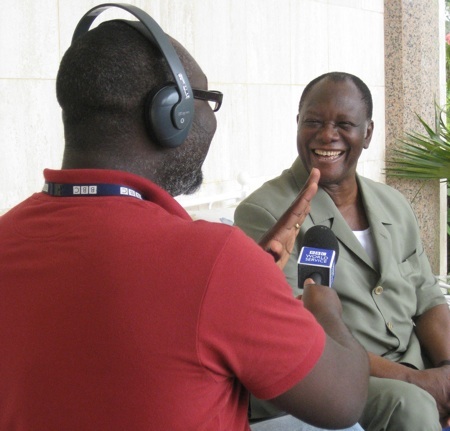
Events are moving fast in Ivory Coast, with a ceasefire reportedly being negotiated and suggestions that the besieged incumbent Laurent Gbagbo who has stubbornly refused to cede the presidency to Alassane Ouattara may now be considering surrender.
At our event on 20 April we will be discussing what message the events in Ivory Coast will send to Africa’s strongmen. With a number of elections due in in Africa in the coming year, the dispute in Ivory Coast took on added significance.
But news of a possible ceasefire comes as the UN announced the discovery of a mass grave with nearly 200 bodies. Sky News’ Emma Hurd puts the number of bodies at more than 300 and writes that the massacre in the western town of Duekoue last week shows that there are "no good guys in this conflict".
At least 800 people were killed in intercommunal violence in Duekoue last week and UN investigators believe president elect Alassane Ouattara‘s fighters were responsible for at least 220 of the deaths.
The warnings had been there for months – a disputed election, an illegitimate president clinging to power through force, and the rightful claimant arming his supporters for a battle.
But the world was focusing on Libya and Colonel Gaddafi as the simmering violence erupted into a full-scale war.
There seems no doubt now, Hurd concludes that Alassane Ouattara will win this battle.
But the atrocities committed by his fighters will taint his presidency and leave the country deeply divided.
The "robust" position taken by UN peacekeeping force which, supported by the French military, targeted forces loyal to Laurent Gbagbo after itself coming under attack, appears to have broken the impasse, writes the Guardian’s Africa correspondent David Smith.
He also highlights concerns about the role of the UN "if they are seen to be co-ordinating with the rebels to topple Gbagbo". And what if Gbagbo has stepped down?
Human Rights Watch worker Corinne Dufka, on Channel 4 News warned that even if if Abidjan and Laurent Gbagbo fall quickly, violence may continue:
A few things raise alarm bells: Ouattara’s forces the RFCI are a loose coalition from different rebel forces, Gbagbo defectors, and decommissioned soldiers, so there is a high potential for undisciplined members to commit abuses" she said
Many of them have committed war crimes in the past, which they have not been prosecuted for. And given the level of brutality of Gbagbo’s side in Abidjan, there is a very high possibility of reprisal killings by Ouattara’s forces were they to take the city.
What role should UN play in disputed elections? What role has the Economic Community of West African States (ECOWAS) and the African Union played and how effective has it been in its handling of the conflict? Join us at the Frontline Club on 20 April to discuss events in Ivory Coast and the implications for future elections in Africa. You can book tickets here.
Picture credit: bbcworldservice via a creative commons licence.
]]>We highly recommend seeing the three we’re partnering with (details below). Also if you missed them at the club please do go and see Laura Poitras’ The Oath and Jennifer Arnold’s A Small Act.
The Team, dir. Patrick Reed
March 27 4.30pm (link to book)
Ritzy Cinema, Brixton Oval – box office 0871 902 5739
March 28 9pm (link to book)
Ritzy Cinema, Brixton Oval – box office 0871 902 5739
Granito, dir. Pamela Yates
March 25, 6.15pm (link to book)
ICA, The Mall – box office 0207 930 3647
March 26, 4pm (link to book)
Curzon Soho, 99 Shaftesbury Avenue – box office 0871 7033 988
When the Mountains Tremble, dir. Pamela Yates
March 26, 6.30pm (link to book)
Curzon Soho, 99 Shaftesbury Avenue – box office 0871 7033 988
More information about the festival can be found here.
]]>