On Friday 22 January 2016, a panel joined a packed audience at the Frontline Club for a lively discussion following the London premiere screening of Michelle Shephard‘s Guantanamo’s Child. With unprecedented access to former fellow prisoners, family members and government officials, the documentary explores the political and ethical implications of the harrowing case of Omar Khadr.
Richard Gizbert, presenter of The Listening Post on Al Jazeera English, moderated the discussion. The panel was comprised of investigative reporter and filmmaker, Michelle Shephard; former Guantanamo Bay prisoner and director of outreach at CAGE, Moazzam Begg; and Cori Crider, head of the Abuses in Counter-Terrorism team at Reprieve.
“All the best work that comes out of Guantanamo either has her name or Karen Rosenberg’s on it,” Gizbert began, praising Shephard‘s substantial journalistic achievements in investigating Camp Gitmo over the past decade.
Still buzzing from tonight’s event at @frontlineclub – the film and discussion after were brilliant #mustseefilm pic.twitter.com/lItRso6GXE
— Camilla Pallesen (@CMPallesen) January 22, 2016
Shephard began by elaborating on her experiences and knowledge of Guantanamo Bay, broadly explaining why certain people were imprisoned and others were not. “What decided how you were dealt with and when you were released from Guantanamo was not the merits or demerits of your case, but what passport you held (…) Guantanamo was never created as a place to try for war crimes. It was created as an intelligence gathering unit.”
Gizbert then asked Begg if the film fell short of capturing the difficult times experienced during his imprisonment. He responded: “There is a part of the story you will never get to see. For example, the conversations I had with my lawyer while at Guantanamo were classified. When I left, I asked for the notes of these meetings and they told me I can’t have them because they are classified.”
Referring to the strict rules that journalists experience when covering Guantanamo, Begg continued: “When you can’t film a person’s face, when you can’t show what he looks like, what his expressions are, and how he feels, it takes away from the humanity of the situation.”
Crider picked up on this point and expressed her respect for lawyer Dennis Edney. He features heavily in the documentary as Khadr’s lawyer, and his role in exposing Khadr’s story has been an essential one. “So much of what the Guantanamo lawyer has to do isn’t traditional legal work in any event. They have to get these stories past the censors and into the world to convey these peoples’ humanity. I think for a solo practitioner to do something like this for Omar is absolutely extraordinary.”
Gizbert asked how important it was that a wide range of characters – such as the interrogators and military lawyer – were included in the telling and depiction of the story.
Shephard responded: “It was really essential to get all voices in [the documentary]. Omar Khadr was seen as a murderer and rapist on the extreme right, and Nelson Mandela on the extreme left. He thought he was neither. So we really wanted to break down that character, but not do it in an activist way. We wanted to get the most complete picture possible.”
Indeed, the panellists agreed that the fields of human rights and counter-terrorism are never “black and white.” This ambiguity was highlighted by Begg, who concluded the discussion with a comment on his former interrogators and prison guards at Guantanamo: “I have 15 of them on Facebook, as friends.”
For information on future screenings, please click here.
]]>Omar Khadr, a Canadian citizen who was captured by American forces in Afghanistan in 2002 and spent a decade imprisoned at Guantanamo Bay, tells his own story in this documentary portrait from directors Patrick Reed and Michelle Shephard.
In prison Khadr struggled to endure the inhumane conditions and the demoralising improbability of release. In the outside world, public outcry mounted as the US and Canadian governments refused to take action. It took the relentless work of Dennis Edney, Khadr’s lawyer of over a decade, to advance the case. Finally repatriated to Canada in 2012, and released in May of this year, Khadr then faces the Harper government’s attempt to overturn his bail.
Featuring unprecedented access to former fellow inmates, family members, and government officials, Guantanamo’s Child acquaints us with an incredibly resilient young person who grew up in a tragic setting and analyses the political implications of his case.
Investigating a life that has sparked some of the most heated political debates in recent history, filmmakers Patrick Reed and Michelle Shephard reveal a young man who is cautiously ready for another chapter of his life. And for the first time, Omar Khadr himself tells us his side of the story.
Directed by: Michelle Shephard and Patrick Reed
Produced by: Peter Raymont, Michelle Shephard, Patrick Reed
Runtime: 80′
Country: Canada
White Pine Pictures
Discussion to be moderated by Richard Gizbert, presenter of Al Jazeera English’s The Listening Post, a weekly show that looks at news coverage by the world’s media. Gizbert has also spent 25 years working in the media world as a foreign correspondent, covering stories around the world.
Panelists:
Moazzam Begg is one of nine British citizens who were held at Camp X-Ray, Guantánamo Bay by the US government. He was released on January 25 2005 without charge. He is the director of outreach for advocacy group CAGE and author of Enemy Combatant. This year he was imprisoned by the British government on charges relating to Syria, his case was later dropped.
Michelle Shephard is an investigative reporter with the Toronto Star, author and filmmaker. With patrick Reed she co-directed Guantanamo’s Child, which premiered at the Toronto International Film Festival in September 2015. Shephard has been awarded the Michener Award for public service journalism and won Canada’s top newspaper prize, the National Newspaper Award, three times. In 2011, she was an associate producer on the Oscar-nominated documentary Under Fire: Journalists in Combat. She produced the National Film Board documentary, “Prisoners of the Absurd,” which premiered at Amsterdam’s film festival in 2014.
Cori Crider heads the Abuses in Counter-Terrorism team at international NGO Reprieve. A U.S. lawyer, Cori has spent a decade investigating and litigating the most serious violations of the ‘war on terror’: Guantánamo, CIA rendition and torture, and civilian deaths from drone attacks in undeclared war zones.
She devised Reprieve’s challenge to abusive force-feeding at Guantánamo, which resulted in the first disclosure of videotapes of the process. She also developed Reprieve’s project investigating the drone war in Yemen: her team exposed key details of a drone strike on a wedding convoy, and brought a Yemeni man whose innocent relatives died in an attack to Washington, D.C. She represents two Libyan families whom U.S. and British intelligence ‘rendered’ to the dungeons of dictator Muammar Gaddafi.
Cori regularly gives print and broadcast interviews on counter-terror abuses and has written for the Guardian, CNN, al Jazeera, and the Huffington Post.
]]>

Monday April 22

Foreign Ministers from the European Union, including British Foreign Secretary William Hague, meet in Luxembourg on Monday. Among other things, they are expected to agree to lift remaining sanctions against Myanmar (Burma). The meeting is also a chance to discuss Syria and Mali.
In Milan, a hearing is due to take place in former Italian Prime Minister Silvio Berlusconi’s trial for allegedly paying for sex with then 17-year-old Karima el Mahroug, better known as ‘Ruby the Heart Stealer’.
Also Monday, IAEA officials who have been visiting Japan to review the ongoing decommissioning of the Fukushima Daiichi nuclear plant are due to hold a press conference in Tokyo. There have been a number of setbacks at the site recently.
In Guantanamo, hearings are due to begin (and last all week) in the case of the alleged 9/11 mastermind Khalid Sheikh Mohammed and his alleged co-conspirators.
Finally, Monday is the deadline for creditors suing the Argentine government for $1.3bn in outstanding debt to respond to Buenos Aires’ latest, court-ordered, repayment proposal.
Tuesday April 23

On Tuesday, Julius Malema, the firebrand former leader of South Africa’s ANC youth movement, is due back in court on money-laundering charges.
In Brussels, NATO Foreign Ministers are scheduled to meet on Tuesday with Afghanistan and the planned handover next year likely top of the agenda. Russian Foreign Minister Sergey Lavrov will be in town, for a meeting of the NATO-Russia Council.
In France, the National Assembly is scheduled to vote on the country’s same-sex marriage bill, which has provoked major protests.
Finally in Washington DC, President Barack Obama will host the Emir of Qatar, Hamad bin Khalifa al Thani, for talks at the White House.
Wednesday April 24

On Wednesday, French President Francois Hollande is scheduled to hold a cabinet meeting at which concrete legislative proposals announced in the wake of the Jerome Cahuzac affair are scheduled to be presented.
In Russia, the trial of opposition figure Alexei Navalny on embezzlement charges is scheduled to resume after it was adjourned on 17 April to allow the defence more time to prepare. Critics argue the charges are fabricated.
Wednesday is also the ‘deadline’ for the ESM Board of Governors to sign off on their €9bn share of the €10bn bailout for Cyprus announced by the Eurogroup on March 25.
In Brunei, ASEAN leaders are scheduled to hold the first of two planned summits this year, with tensions in the South China Sea likely high on the agenda.
Finally, former US Secretary of State Hillary Clinton is due to deliver a public address in Texas. She has made several public appearances recently, leading to frenzied speculation about her potential candidacy in the 2016 presidential election.
Thursday April 25

On Thursday, Spain will release its latest unemployment statistics.
In Russia, President Vladimir Putin is scheduled to hold a live Q&A with members of the public. The catch: the questions are pre-selected.
Meanwhile, US President Barack Obama will be among those attending the dedication of the George W Bush Presidential Center in Dallas, Texas. Bill Clinton and Jimmy Carter will also be in attendance.
North Korea will mark the 81st anniversary of the founding of the country’s army. The day actually recognizes the beginning of Kim Il-sung’s guerrilla activities in 1932, since the Korean People’s Army was not founded until 1948.
Also Thursday, the trial of former Israeli Foreign Minister Avigdor Lieberman relating to his selection in 2009 of Ze’ev Ben Aryeh to be Ambassador to Latvia. Lieberman has said he will plead not guilty.
Finally, French President will begin a two-day visit to China where he will meet his counterpart Xi Jinping.
Friday April 26

On Friday, US President Barack Obama is scheduled to host King of Abdullah of Jordan for talks at the White House. Syria is likely to be high on the agenda, with a recent announcement that the US plans to step up its military presence in Jordan in response to the conflict in neighbouring Syria.
Friday will also see the world’s largest economy release its GDP figures for the first quarter of the year. It will be the first GDP data since the automatic budget cuts – or sequestration – went into effect.
Sticking with finance, the Bank of Japan will make its second monetary policy announcement under its radical new Governor Hurihiko Kuroda.
Finally, in Ndjamena, Chad, foreign ministers from the region are due to hold a regularly scheduled meeting. The situation in the Central African Republic is likely to feature significantly.
]]>Monday 15 April

China, meanwhile is scheduled to release its GDP data for the first quarter of the year, with analysts predicting robust growth of approximately 8%.
In Oslo, the Norwegian government will host, in conjunction with the United Nations, a major two-day conference on LGBT issues.
In France the government is due to publish a list of the wealth and assets of its ministers in the wake of the scandal surrounding disgraced former Budget Minister Jérôme Cahuzac and his secret bank account.
Finally, a four-day motions hearing will open in the case of Guantanamo detainee Abd al Rahim al Nashiri, who is charged over the attack on the USS Cole in Yemen that killed 17 sailors back in 2000.
Tuesday 16 April
On Tuesday, the German parliament’s budget committee is scheduled to consider legislation authorising the €10bn bailout of Cyprus, with reports suggesting the bill will reach the floor of the Bundestag on Thursday.
In the United States, the Commander of US (and NATO) forces in Afghanistan, General Joseph Dunford, is due to testify before the Senate Armed Services Committee. The focus is likely to be the country’s preparedness for the handover next year.
The European Court of Human Rights in Strasbourg will hand down its judgment in the case of Haroon Aswat, who is fighting his extradition from the UK to the US on terror charges.
Finally in London, the Lord Mayor’s Easter Banquet takes place, which traditionally features an address from the British Foreign Secretary.
Wednesday 17 April

Wednesday also marks the deadline for British Home Secretary Theresa May to lodge an appeal in the case of radical preacher Abu Qatada, whom she is seeking to extradite to Jordan. Previous rulings have gone against the Home Secretary amid concerns about the Jordanian judicial process.
US Secretary of State John Kerry is scheduled to give public testimony before the House Foreign Affairs Committee. Although the hearing is nominally concerning Kerry’s departmental budget proposal, lawmakers traditionally take the opportunity to probe their top diplomat on the most pressing issues of the day, such as North Korea, Syria and Iran.
Lastly, the Senate Judiciary Committee will hold a hearing on the long-awaited proposed comprehensive immigration reform legislation.
Thursday 18 April
On Thursday, Italian lawmakers are scheduled to begin the process of electing a new President to replace incumbent Giorgio Napolitano. The selection process is being complicated by squabbling between Pier Luigi Bersani and Silvio Berlusconi over whose faction should occupy the largely ceremonial position.
In Moscow, Bolshoi ballet dancer Pavel Dmitrichenko is due back in court over his alleged role in masterminding the brutal acid attack against the ballet’s artistic director Sergei Fillin back in January.
Meanwhile, IMF and World Bank Spring Meetings begin in earnest on Thursday with press briefings from Christine Lagarde and Jim Yong Kim on the global economic outlook.
Incoming Bank of England Governor Mark Carney, in town for the meetings, is scheduled to discuss the global economy and financial reform at an event organised by Thomson Reuters at the Canadian embassy in Washington DC.

Friday 19 April
On Friday, Time magazine is due to publish its annual list of the 100 most influential people in the world.
Nancy Pelosi, currently House Minority Leader in the US, will be in the UK where she is due to give a lecture at the London School of Economics.
Weekend
On Saturday, Turkey will play host to the latest meeting on Syria, which US Secretary of State John Kerry will attend.
Sunday will see Paraguayan’s go to the polls for presidential and legislative elections. Paraguay has been somewhat isolated since the impeachment of its then-President Fernando Lugo in the summer of 2012, considered by regional critics – understandably sensitive about such political interventions – a ‘soft coup’.
Finally, US Secretary of Defense Chuck Hagel will (reportedly) arrive in Israel for what would be his first visit since taking up the post earlier this year. The Iran threat, as well as the security implications of the Syria conflict, will be top of the agenda, assuming the visit goes ahead.
]]>Monday 11 February

Further pre-trial hearings in the case of alleged 9/11 mastermind Khalid Sheikh Mohammed and his four co-defendants resume on Monday and continue all week at Guantanamo Bay in Cuba. At the last session, held at the end of January, it emerged that proceedings were being censored by figures outside the courtroom. The judge overseeing proceedings, Colonel James Pohl, subsequently ordered the release of the transcript of the censored section of proceedings.
Finally, Egypt marks the second anniversary of Hosni Mubarak stepping down as President following unprecedented protests in the Arab world’s most populous state. Two years on, the turmoil in Egypt continues with little prospect of an end in sight.
Tuesday 12 February
On Tuesday, all eyes will turn to the United States, when President Barack Obama delivers his State of the Union address. Of note too is the fact that this year the Republican response will be delivered by Florida Senator Marco Rubio, described on a recent Time magazine cover as the ‘saviour’ of the GOP.
Also in the US, UN High Commissioner for Human Rights Navi Pillay will address a Security Council meeting on the protection of civilians in armed conflict, where she is likely to highlight the plight of Syrians.

Finally, France’s National Assembly is due to begin consideration of a banking reform bill, which would increase oversight of banks and aims to curb risky trading activities. Critics argue the proposed reforms concede too much to banks and fall short of lofty campaign rhetoric about getting tough on banks.
Wednesday 13 February
On Wednesday, it is EU High Representative Catherine Ashton’s turn to address the UN Security Council at a session discussing cooperation with the EU. She may well discuss the upcoming talks on Iran’s nuclear programme, now scheduled for 26 February in frosty Almaty, Kazakhstan.
In Moscow, meanwhile, the head of the state-run arms exporter Rosoboronexport, Anatoly Isaykinis, is scheduled to hold a press briefing at Russia’s Foreign Ministry. He may face questions on Russian arms sales to Syria.
Finally, Turkey’s European Affairs Minister Egemen Bagis will be in London addressing a RUSI/Open Europe discussion.
Thursday 14 February

Also on Thursday, a slew of interesting economic data is scheduled to be released. Highlights include fourth quarter GDP data for Germany, Japan, Italy and Greece, as well as a flash estimate for the whole EU area.
Friday 15 February
On Friday, Russia will host G20 finance ministers and central bankers for a meeting in Moscow, attended by IMF Managing Director Christine Lagarde.
In the US, President Barack Obama will hold talks with Italian President Giorgio Napolitano, where they are likely to discuss the upcoming Italian elections, scheduled for 24-5 February. At the moment, it seems likely Italy’s next premier will be Pier Luigi Bersani, of the centre-left Partido Democratico.
Saturday 16 and Sunday 17 February

Voting also takes place in Cyprus, where eleven candidates are seeking to replace President Demetris Christofias. If no clear winner emerges, a run-off will take place on 24 February. Cyprus is seeking a bailout from the EU and IMF, however this is highly unlikely to be finalised until after the elections.
Lastly, environmentalists are scheduled to hold a major rally in Washington DC. Particularly focused on opposition to the proposed Keystone XL pipeline which would transport Canadian oil, including oil gleaned from controversial tar sands, into the US.
Some pictures courtesy of Telekhovskyi / Pablo Hidalgo / Shutterstock.com
]]>
Monday is the beginning of a new month and the beginning of the holy Muslim month of Ramadan.
In Saudi Arabia, the date is doubly significant: following the 18 June beheading of Indonesian maid Ruyati binti Sapubi and the near-beheading of another maid known as Darsem, an Indonesian moratorium on sending domestic workers to the country comes into effect.
There have also been whispers of another women’s driving protest to coincide with the first day of Ramadan, but so far nothing as organised as the 28 June attempt.
Tuesday is debt ceiling day in the US. While one hopes that the increasingly heated negotiations will lead to a solution before then, there remains the increasingly real possibility that the US could default on its $14tn debt.
In Cape Town, Mziwamadoda Qwabe and Xolile Mngeni are due to go on trial over the 13 November, 2010 murder of British honeymooner Anni Dewani. Mngeni was unable to attend the last hearing, reportedly due to surgery to remove a brain tumour, and is unlikely to be in attendance.
All eyes on Egypt on Wednesday, as the trial for ousted President Hosni Mubarak and his sons Alaa and Gamal is due to begin, but looks likely to be postponed. Former Interior Minister Habib al Adly is also tried, after his trial was postponed from 25 July so he could be heard alongside the Mubaraks.
Less dramatic is a Supreme Court hearing taking place in Sydney, where the Australian government is taking legal action against former Guantanamo inmate David Hicks over his 2010 book Guantanamo, My Journey. The government says Hicks is illegally gaining commercial benefit from a crime.
The Food and Agriculture Organization’s (FAO) monthly Food Price Index is released on Thursday, with the July figures of interest as drought and famine continue to ravage the Horn of Africa. US
President Barack Obama celebrates his 50th birthday as the week begins to wind down.
Following the excitement around the final Atlantis mission in July, NASA launches Jupiter explorer Juno on Friday, the first solar-powered spacecraft designed to operate so far from the sun.
Saturday marks the 66th anniversary of the Hiroshima atomic bomb. A commemorative ceremony takes place at the Peace Memorial Park in Hiroshima, and nuclear disarmament campaign groups hold events worldwide.
Voters go to the polls in Cape Verde on Sunday to elect their next President. Incumbent Pedro Pires, who won by less than one percent in the 2006 elections, is not a candidate.
]]>As a daring and impassioned journalist with a decades-long career, John Pilger has inspired and motivated many to ensure human rights and preserve unfiltered truth.
From films such as Year Zero: The Silent Death of Cambodia (1979) to The New Rulers of the World (2001), he has unrelentingly made this his commitment. This continues with his newest film, The War You Don’t See (2010). In this work, Pilger masterfully presses against those who weaken journalism’s efficacy in the current political climate.
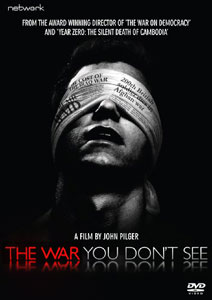
Complementing previous works such as Noam Chomsky’s book on media manipulation, Manufacturing Consent (1988), and Adam Curtis’s films on mass psychology and the politics of fear, The Century of the Self (2002) and The Power Of Nightmares (2004), Pilger lends his experience in media to answer similar questions posed in those works about the role of public relations and media in war, journalists in the advancement of a war agenda and the reporting of war crimes. At its conclusion, the message is and clear: when searching for the truth, always challenge the official story.
Truth be told, The War You Don’t See is remarkably relevant to today’s world. At first, Pilger’s effort details the history of public relations and fuses it with the current backdrop of the dual wars in Afghanistan and Iraq. Concepts such as propaganda and media manipulation are analysed as means of conveying official truths about war.
In a tense and demanding manner, the film’s images of bullet-riddled buildings, explosions and death in Baghdad, Kabul and Palestine shatters the viewer’s outlook on mainstream media like glass. Interviews are conducted in a powerful face-to-face manner that pulls no punches. To that end, it includes a soundtrack of simple yet beautiful orchestral passages that add to the film a solemn character. In total, it makes The War You Don’t See offers a rewarding viewing experience will be detailed more greatly below by theme.
Public Relations: The Facts Don’t Matter Anymore
In The War You Don’t See, the early machinery of media propaganda is detailed at length. From the 1910’s and 20’s work of Walter Lippmann and Edward Bernays, who improved techniques of public relations during the First World War to the Bush and Blair “Shock and Awe” doctrine of in the Iraq invasion of 2003, an understanding of the role of social psychology acts as a foundation to Pilger’s argument.
War Drums Beating
With UK/US official narratives, press releases and statements intertwining with the supposed objective reporting of Western media, the co-opting of the Fourth Estate for official purposes becomes apparent. In his familiar manner of grilling those in power, Pilger highlights government-PR inspired news and the media circus that it generates.
“…I’m not the vice-president in charge of excuses“ – a former CBS anchor Dan Rather
With the cordial commentary and praise of American and British journalists about their country’s leadership in times of hardship, the interest of media to portray conflicts in a favorable manner to governments and business is apparent.
Embedding or In Bed?: Journalists in the Game and Made for TV moments
“…I didn’t really do my job properly. …One didn’t press the most uncomfortable buttons hard enough…” – Rageh Omaar, former BBC world affairs correspondent
According to the film, current wars instigate media circuses and plenty of carefully orchestrated photo ops. In the run up and early years of the Iraq war, the mainstream media appears as a complicit tool of elite power interests, backing prevailing government views despite dissent or independent journalism that strayed from pro-war narratives, or their accompanying iconic images.
Everlasting Images
In occupied Iraq, the tumbling of Saddam’s statue in Baghdad and the placing of an American flag on his head “…gave no sense of the bloody conquest of Iraq that was already underway.” Against the jubilation and news clips of war proponents glorifying American weapons and military might, Pilger places shots of buildings in ruins, adults facing hardship and wounded and killed children.
Independent Journalism Vs. the “Propaganda of Fear”?
Like in his other films, another motif common to the work is the scale of suffering of ordinary people. To that effect, the work of independent journalists Mark Manning and Rana al Aiouby‘s during the Battle of Fallujah, Iraq is featured. It deviates from the official and mainstream portrait of events, using examples from history like Wilfred Burchett’s detail of an Atomic plague, or Dahr Jamail’s revealing and horrific footage of the torture of Iraqi citizens in the second Gulf War.
The propaganda of fear is described as having begun as early as the Vietnam War. To Pilger, it is “…the blueprint for the wars of today” in Afghanistan in Iraq. Pilger asserts: “…As in previous wars, public memory of the Vietnam war was greatly influenced by Hollywood”. In keeping with the tradition of films that aggrandise government war efforts, Iraq war movies attempt to inspire a masculine, aggressive, and staunchly supportive viewpoint of an occupation, with the on-screen Western powers nearly always championing a noble cause against a dim-witted and ultimately unsuccessful enemy effort.
“Modern democracies don’t leave marks” – Phil Shiner of Public Interest Lawyers
Other parts of the Wars We Don’t See also include soldiers abusing Iraqi civilians secretly on tape, as embedded journalism is the point of view of the troops, not the civilians. With that being the case, atrocities by coalition forces can be concealed, shrouding the views of afflicted peoples in official, sanitised manner. The disconnect between western audiences and those announced in death tolls is apparent, as the press “plays down the carnage”, and distinguishes between unworthy and worthy victims, with the latter bizarrely labeled peculiar for disapproving of having their houses invaded and loved ones killed.
A Major Deception
““If you look at every war, or every coup, or every regime that Britain is supporting or involved in…it’s usually accompanied by an increasingly sophisticated public relations operation by the Government…” – Mark Curtis, British historian
Another aspect of the invisible war includes no accountability of media personnel. Able to spit factoids or spin events, governments, acting as information machines, take the view that if journalists are not particularly supportive to their accounts, they could be frozen out of the access, as the apparatus “…would make life harder for them.” This implies why important dissenters to war aren’t heard, for example, Charles Hanley’s analysis of WMD sites and Scott Ritter’s detail of completely eliminated weapon sites in Iraq before Gulf War Two began.
The Narrative of Mainstream Journalism
Pilger encounters the reaction of mainstream media participants that seek to downplay any observed complicity. In this effort, he does not go unchallenged. ”It’s not up to me to make a judgment.” says one Britis
h journalist to Pilger. “We’re there to report what their claims are and hold them up to scrutiny, and to investigate.” Just the same, in this film, investigative journalism is portrayed as a bulwark against conflict.
Preventing wars?
As the film progresses, the media spin of governments is documented as an example of the War We Don’t See. In some countries, after a government crime is committed, intimidation from embassies not to reveal damaging information to host countries covering the incident is apparent. Spokesmen from guilty governments act as spinsters, offering official lies as truth, using doctored sources to strength their claims. Commentators convince the public to go along for the ride.
The UK and US Government reaction to WikiLeaks
According to Pilger, just as some governments spin the truth, the Obama Administration and British Ministry of Defence have attacked “truth-tellers” WikiLeaks, Julian Assange and others who deviate from the official narrative or spectrum of discourse and punditry. To stress this point, Pilger reveals a leaked secret British Government file which sees investigative journalists involved with the propagation of WikiLeaks’ source material as a threat to be neutralised by various means. Leaked material, such as the 2010 release of “Collateral Murder”, is described as an example The War You Don’t See.
“The Public is a threat that needs to be countered…”
"…The more information the public has, the more difficult it is for them (governments) to pursue policies that maybe are abusive of human rights or involving supportive a repressive regime.” – Mark Curtis, British historian
Perhaps what’s most important about this film is its simple message. For John Pilger, the mainstream Fourth Estate is not doing its job properly. Whereas independent journalists are able to articulate the truth in a sophisticated manner, mainstream sources remain disinterested in their work. Time and again, they prefer baseless information, sound bytes and sensational footage of clamoring crowds that rouse emotion to the hard tasks journalists must perform. In Pilger’s final remarks in the film, what remains clear is that more than ever, uncompromised, brave journalism is needed in our world, always challenging the official story, in his words, “however patriotic it appears, or however seductive or insidious it is.”
]]>
The future green paper is likely to lay the ground for a special form of secret court claimed Gareth Peirce speaking at the Frontline Club last night.
Asked about a current attempt by the Government to hold an entire civil trial in secret the acclaimed human rights lawyer Gareth Peirce said she believed the promised Green Paper on national security and the courts which head of MI6 Sir John Sawers referred to in his recent press conference, would attempt to push the boundaries of secrecy further.
I don’t think [the Government] thinks there is a limit to secrecy at all and I’ll lay you odds that in that Green Paper there is some sort of template for a sceret court so if they lose in the Supreme Court on their scandalous attempt to undo hundreds of years of perfectly normal civil litigation with a tribunal of fact actually knowing the whole of the case, there will be a plan to introduce a special secret court and where the security services are the defendant in the case to push it all into secret.
The growth of the use of secret evidence and secret courts is not just not stopped, it seems to be unstoppable," said Gareth Peirce. who has represented, amongst others, the Guildford Four, the Birmingham Six, Moazzam Begg and the family of Jean Charles de Menezes.
The lawyer was talking to Afua Hirsch about her new book Dispatches from the Dark Side on torture and the death of justice in which she says Britain has a state whose "devices for maintaining secrecy are probably more deeply entrenched than in any other comparable democracy".
Referring to the corruption of legal principles and practices taking place in the prosecution of the ‘War on Terror’ and the treatment of young Muslims, Gareth Peirce said that in Britain we don’t know what we have been complicit in and may never know:
We have such a particular ability to cover up with secrecy on the grounds that it’s justified because of national security. There’s a battle that might not be won to make sure that society knows.
Gareth Peirce said that she hoped that the coalition government would act differently as so much harm was done by the previous Labour government:
It’s certainly an opportunity because so much of what was bad happened on the watch of the last government. Appallingly, so much of what we believed that was inalienable, the heritage of rights that was built up was decimated. There’s the opportunity when there’s a new regime and this regime has said some things that could be significant.
But Gareth Peirce said she was unscertain if significant change was likely. Referring to the ways that the government had got around legal blocks to imprisonment without trial she said that they always had another plan to counter it:
It just breeds bleak cynicism that whatever the legal victory there will be a plan to change it. So if the victory in the Supreme court is that there cannot be a civil court that hears secret evidence then there will be some form of legislation introducing a new experiment.
]]>
Download this episode
View in iTunes
The 5 April terrorist attack in the Republic of Ingushetia was the fifth to shake Russia in the past week.
In response to the first bomb blasts in the North Caucasus region of Dagestan, Russian President Dmitry Medvedev told authorities to use tougher, "more brutal" measures against the perpetrators.
Who is carrying out these attacks? Are they, as some commentators suggest, the beginning of a Muslim counter-insurgency? And if so, can we expect more?
Commentators writing for RIA Novosti claim that the bomb blasts are not part of separatist struggles in the targeted regions but instead part of a broader strategy to establish an anti-Western Islamic entity. They argue that the Western media have underplayed the role played by Caucasus emir Doku Umarov.
NATO Secretary General Anders Fogh Rasmussen has said that NATO remains committed to cooperating with Russia in the fight against international terrorism. What can we expect of thsi cooperation between Russia and the West in counteringinternational terrorism?
These are some of the questions we will be addressing at the First Wednesday discussion tomorrow.
Part of the evening will be devoted to discussing Russia and the second part of the evening will look at the broader "war on terror".
The panel will include Asim Qureshi author of Rules of the Game in which he claims that "Islam is now the largest suspect community ever to have existed”.
Asim Qureshi travelled to East Africa, Sudan, Pakistan, Bosnia, and the United States to talk to tvictims caught in counterterrorism’s "new game" and record their testimonies. Read freelance journalist Hodan Yusuf-Pankhurst’s blog post on the book here.
]]>
Download this episode
View in iTunes
By Rebecca Omonira-Oyekanmi
The rise of China, not Islamist terrorism, is the story of our time, declared Timothy Garton Ash at the Frontline Club last night.
If you missed the event, you can watch the whole thing here…
“It is groundhog day… One wakes up and it is the same old ding dong on the Today programme, the same old arguments being wheeled out. I feel I could hibernate for 10 years and I would come back and the British would still be having the same ludicrous European argument.”“I can’t believe we are so stupid … we have got a British Europe, the only people who don’t realise are the British.”
“It was an extraordinary conversation … Cheney was there, Condi was there. He had made his mind up about only two things; one was missile defence and the other was climate change.“He said Kyoto was mush … and ‘I think the Europeans are trying to screw us’. Islamist terrorists did not get a mention. Here was a man… groping for a narrative. 9/11 gave him that narrative.”