How to send stories by carrier pigeon, when to run when you are under fire and the best way to brush off tweets were amongst titbits of information from Alan Cowell’s discussion of his new book ‘The Paris Correspondent.’
Cowell has long been a correspondent with the New York Times, and before that worked for Reuters. This is his third book.
In discussion with Charles Glass, freelance writer and former chief Middle East correspondent with ABC News in Beirut, Cowell says that reporting and producing news has changed for good. The book’s two male protagonists grapple with the fast pace of this change in the news industry. Cowell reads an excerpt:
“News men and newswomen were going down with the ships on which they had once sailed the kindly oceans of expense account lunches, five-star hotels and mortal peril. Print, that great, gorgeous messy alchemy of ink and hot type and whirring reals of paper and working stiffs in stained overalls was expiring, but not quite finished.”
And as Cowell suggests, there is no reason not to reminisce a little about how things used to be:
“I remember in N’Djamena I was doing an interview with [President] Goukouni Oueddei… you had to go across the river to Cameroon to be able to find a phone… and on the bar there, there was a direct dial telephone… located next to an ice bucket where there was always a fresh bottle of champagne…”
“And there was also a curfew… and you had to be poled across the Chari River in a dugout canoe. And I remember saying to President Oueddei, “I’m sorry I’m going to have to cut this short because I have to catch the last pirogue before curfew.”
Those times have gone, says Cowell:
“If you say ‘Is that a more pleasant way of earning a living than slaving over a computer screen all day trying to bat off tweets like mosquitoes?’ Then yes, sure. But we can’t turn the clock back and what we have to do now is… bringing the standards and the values that have always made newspapers sell, into this new era.”
It was in Zimbabwe reporting shortly before independence, that Cowel was able to hone his carrier pigeon sending techniques. With no way to send his stories back he was given a huddle of “cooing carrier pigeons” by the last white mayor of Bulawayo and the last editor of the Bulawayo chronicle.
“…we didn’t know exactly how we were supposed to cope with them and he said look, Sid said “you hold the birds legs between those fingers, you put your thumb over the neck, you give it a little kiss and whisper something nice to it, then you loft it up to the air… And you write the story on a 30 packet of Madison cigarettes – there was a small bit of tissue paper inside and you could write 400 words of spidery script on it.
It is hard to avoid the feeling that news has definitely changed.
]]>
Popularly known as the Paris of the Middle East, Lebanon is said to be culturally liberal compared to most Arab countries in the Middle East. However, such is not the belief of Joumana Haddad, a Lebanese journalist and poet based in Beirut. She says, "I feel liberated but I wear a veil."
The documentary "Jasad", meaning "body", is titled after a controversial magazine, founded by Haddad in 2008. The magazine tackles several issues faced by Arab women such as hymenoplasty, homosexuality, eroticism, feminism, sexual health and virginity, usually considered taboo topics and culturally sensitive.
Captivated by the idea while browsing through the quarterly magazine director Amanda Homsi-Ottoson said, "This film was very personal to me. I still remember how I walked into a library one day and saw this magazine and was then very keen to find the woman behind it."
Having questioned several cultural beliefs growing up in a conservative society, she said, "While I was growing up in Lebanon, this was something I struggled with on a daily basis. Talking to my friends about issues on virginity and sexuality was unthinkable."
"I still look back at some of my early days in my late teens and early twenties and wondered if a lot of people were going through this, I wanted to explore how people felt about this today."
Members of the audience raised several questions on content and were surprised by the wide spread condemnation from the feminists present in the film.
One said, "I thought the feminist group’s views were contradictory to the ideas of Joumana which was quite surprising. I was shocked when some of the women didn’t agree with what Joumana does. There are more naked women on posters in Beirut. Are women meant to be seen as products? "
Another said, "There is a fine line between artistic and pornographic, will she be disillusioned if people are looking at the pictures and not bother to read the text"
"They may see it as pornography but there are so many beautiful stories. Jasad is trying to help women reconcile with their bodies, “said Ottoson
"Content is about freedom of choice, you have to provoke people to wake them up and make them think about things, people are still stuck in their old ideas and that’s what Joumana is trying to do through her magazine."
It wasn’t long before the aspect of distribution came up. Many thought it was quite surprising distribution of the magazine was not halted by the government in Lebanon, especially after the film ‘Beirut hotel’ was banned in Lebanon last year, for similar reasons.
In its fifth year now, despite several controversies the magazine has a large number of subscribers from Saudi Arabia, Jordan, Syria and Dubai. Haddad cleverly seems to have won the approval of the Ministry of Information and the Journalists Syndicate in Lebanon.
"Allowed by the ministry of information, she said she felt quite fortunate. To her luck, also recently the minister had changed, previously it was someone who was much stricter."
"Lebanon is undergoing a lot of change politically. With the Arab spring and revolution in most gulf countries, one may never know about the future," said Ottoson.
]]>
Interestingly, condemnation of Berlusconi’s media involvement was not wholesale. Paolo Mancini, professor at the University of Perugia said:
“Everyone here will expect me to say one thing but I don’t think Berlusconi is controlling the media. It’s overstated.”
“Berlusconi tried to limit freedom of journalists but he did not succeed because there was the opposition press, particularly the print media,” agreed Gianpietro Mazzoleni, University of Milan academic. “RAI 3 constantly make shows that have continued to alert people against Berlusconi.”
Mattia Bagnoli, UK correspondent at the Italian news agency ANSA opposed:
“I must say he controlled much of the Italian media for a long time. We are not talking about news here but we are talking about culture and reality shows. What’s on television is a reflection of what he projects on to Italian people to enjoy life.”
“He had control in the media not only through television but also through print in the form of advertising through his company Mondadori,” he added.
As with all modern European countries, most Italians depend on television for their source of news and information. So was Berlusconi clever in choosing his medium?
Marco Niada, a former London bureau chief of the political and financial Italian daily Il Sole 24 Ore, said:
“He knows many Italian people don’t read. He thought without imposing too much influence through papers he could control them through TV. However, he started to be defeated by technology. He was still stuck to terrestrial TV and social media started to take over.”
It didn’t take long for the lurid saga of Berlusconi’s bunga bunga parties to surface. An Italian documentary director in the audience, pointed out coverage of the scandal in mainstream Italian TV media was poor, saying most people relied on the internet. Meanwhile a reporter from the Financial Times in the audience defended the Italian news output:
“Don’t make the Italian media sound clandestine. La Repubblica went all out to cover the scandal extensively for days.”
Bagnoli added, “As an Italian news agency we are obliged to cover it impartially and we did.”
The discussion swiftly moved into the future of Italian media, now that Berlusconi is gone. Bagnoli and Mazzoleni weren’t entirely optimistic, as they feel many of the Italian MPs are still linked to Berlusconi.
“Mario Monti is here just to bring the country back from default. They need to rewrite the constitution for RAI,” said Bagnoli.
“The Monti factor is crucial at this point,” said Mazzoleni. “We don’t know about the future but we can guess, Monti will take the opportunity to reform RAI but he will be cautious.”
Coming back to the question of press freedom, Hewlett asked whether a more liberal Italian media is possible in five years. Niada said, “The worst enemies of press freedom are journalists themselves, it will take more than five years.”
As the Leveson Enquiry uncovers more evidence of press corruption in the UK, these words may ring true for the British and Italian news industries alike.
]]>Watch the event here.
Rupert Murdoch’s positive contributions to the British press as well as the negative effects of his influence were discussed by a Frontline Club panel on phone hacking last night.
Although some of the panelists concluded that the positives might even outweigh them, the negatives are “awfully negative”, said chair Jon Snow, presenter of Channel 4 News.
Ever since the phone hacking scandal exploded earlier this month after the revelation that the News of the World hired an investigator to hack into murdered schoolgirl Milly Dowler’s phone, Rupert Murdoch’s influence has been unanimously decried.
Much reflection on the value of a reportedly dying empire has followed.
Panellist David Banks, a former Daily Mirror editor who also spent 14 years working for News Corp, said:
He begat a whole generation of journalism that we may not approve of. He pushed boundaries. I can divorce Rupert Murdoch from his power base. I rather like the man.
Without Murdoch quality papers like the Times and the Sunday Times would not exist today, added panellist Toby Young, a journalist for the Spectator and Daily Telegraph Snow pointed out the role Murdoch played in promoting premiership football and bringing satellite TV to millions of homes.
However, Jane Martinson, women’s editor at the Guardian, who until recently was media editor, said she Murdoch should not be discussed in extremes:
Rupert Murdoch as a bogeyman has not been the case for some years. [But] I wouldn’t go as far as to say the man is a saviour.
After many years in thrall to the Murdoch empire politicians finally called both Rupert and his son James Murdoch to account last week. Martin Moore, director of the Media Standards Trust and founder of the Hacked Off campaign, said politicians felt able to speak against Murdoch only after the revelations about Milly Dowler emerged.
When we went with the Dowlers to see the party leaders. They were remarkable, dignified … You could see the leaders [more] emboldened than they were before. They believed it was wrong and they had the public behind them.
The panel also discussed what had created the culture that led to widespread illegal activity. David Banks said the disappearance of the old, grey-haired editor-in-chief with a pipe and a strong moral code had resulted in a more reckless culture:
It is no coincidence that the last four or five editors of the Sun have all come from the showbusiness route. They have been quite young. No ethical background. No sense of someone behind them saying, ‘you can’t do that’.
In response to the panel’s comments about tabloid newsroom culture, James Anslow, a fomer News of the World employee who was in the audience,said the phone hacking scandal had surprised him.
“The idea that this is a culture that has been infected is hyperbole. I know of no ‘don’t ask, don’t tell policy’,” he said.
The role of press regulation has come under much scrutiny as a result of the phone hacking revelations. However, there was concern about the future of newspaper journalism if statutory regulation moving towards statutory regulation would be detrimental to journalism, argued Toby Young:
If journalism becomes wholly professionalised it becomes much harder to speak truth to power. We are not going to have quite such an energetic, rambunctuous media.
But Martin Moore said rather than statutory regulation a more “concise privacy law and first ammendment-style defense” should be developed. Such a stronger public interest defense would embolden journalists and solve the problem of what do when private or sensitive information is published online.
Review by Rebecca Omonira-Oyekanmi
]]>
By Antje Bormann
A panel of journalists came together to discuss their take on the future of journalism, to mark the publication of Face the Future: Tools For A Modern Age.
The first to present his thoughts at the event, which was moderated by Raymond Snoddy of BBC Newswatch was Kevin Marsh, until recently executive editor of the BBC College of Journalism.
He set out the issue of the ever-expanding information universe with equally diversifying ways of accessing and transmitting information, which is exciting but not really journalism, as many seem to think. Journalism to him is rather a small, precise part of this information universe whose distinction lies in the ability to sift through the deluge of information, filter out items of value to the audience, investigate and analyse them properly, and finally report them honestly, all things that require special skills, mindsets and commitment.
Laura Oliver, community co-ordinator for Guardian News and Media, added another twist by saying that new media, like Twitter, Facebook and blogs should not be discounted as some of the writers are in fact professional journalists, and even some of the amateurs are committed, skilled and reputable sources of information. An important new skill for journalists therefore is to establish credentials for online sources and to verify the information gleaned from them. However, this is still rather uncharted territory with more grey areas than in the past.
Judith Townend, a freelance journalist currently working on a PhD, replied to the question if we could expect new developments every six months that she hoped so. The example of MySpace should be a warning to anyone who mistook new online media for an end in themselves rather than a tool. Facebook is well established in her opinion due to its size but it is not a good news source as it is about its members’ personal lives, whereas Twitter has its own limitations that make it not particularly efficient, amongst them that it is not representative of society at large. She cited journalists on Twitter who ask colleagues for case studies to flesh out preconceived stories and just pick the bits that fit as an example of ‘lazy journalism’ using new media, even from professional journalists.
In the following debate this question was picked up again, and an interesting argument was that what is seen as ‘lazy journalism’, like journalists not going out and talking to people to get a story but being stuck in the office, is sometimes simply a consequence of the rolling news issue of continually having to update, leaving no time to do the actual journalistic work.
Other questions looked at the way editors may influence journalism in attempts to ‘pander to their readership’; new online media allowing the return to citizen journalism as the historical precursor of commercial journalism; how news organisations go about establishing trust and their brand value, especially where paywalls are in place; and whether declining news viewing figures really mean that people are less interested or simply signify a shift in the way they access news.
Face the Future: Tools For A Modern Age is edited by John Mair and Richard Keeble and published by Arima Publishing.
]]>
Does the Demotix citizen journalism agency offer a model for the future or will it simply undercut the professionals? Love them or hate them, Demotix has made its mark on the industry. Our networking party tonight offers the opportunity to meet Demotix CEO Turi Munthe and hear about their work as well as network and enjoy some complimentary drinks.
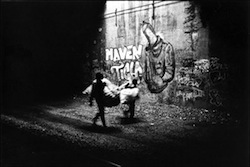
Tomorrow we have Dutch photographer Teun Voeten who will be discussing his insightful photography project which documents the lives of people living under Manhattan in its network of tunnels.
Next week at the Club we have two events which we hope will help throw light on key issues in the wake of tomorrow’s spending review: Who better to discuss the current economic crisis than BBC Newsnight economics editor Paul Mason and playwright David Hare, both of whom have explored in different ways the 2008 banking crisis and its causes.
Then we have a panel discusssion that will focus on the international development budget and the planned changes to be made by the coalition government.
]]>Data helps journalists paint a more compelling and complete picture – but only if they can interpret and present that data effectively. That was the message from journalists with extensive experience of the benefits, challenges and pitfalls of data and journalism at the Frontline on Wednesday.
If you couldn’t make the event, you can watch the whole thing here:
The Guardian’s Datablog editor Simon Rogers dismissed accusations that using data isn’t proper journalism: “None of the stuff we talk about is particularly new, it’s the way we do it and the tools we have that are.”
He described how Guardian readers helped analyse thousands of documents on MPs’ expenses and how the paper has gradually developed new ways to visualise data, such as the 92,000 documents on the Iraq and Afganistan wars released by Wikileaks.
Times programmer and editorial developer Julian Burgess showed how computer code can be used to present data as diverse as the body mass index of Playboy playmates and pager messages sent from the World Trade Center on 11 September 2001. He recommended free tools such as Google Docs or MySQL that can be used to work data into stories.
These tools can be used by journalists to tackle data themselves, but programming is still reliant on the quality of the data, he said. “Things are often very easy with programming, or impossible practically.”
David McCandless, writer, designer and author of the Information Is Beautiful blog, emphasised the use of design in moulding data to tell a story. Well-designed visualisations can not only present data appealingly, but can also highlight interesting links that might go unnoticed, he said.
As an example, he showed how a simple graph showing peaks in news coverage of violent video games coincides with the anniversary of the Columbine school shootings.
Michael Blastland, a freelance journalist and creator of BBC Radio 4’s More or less programme, closed the session on a cautionary note by highlighting the dangers of not interrogating official data or questioning its creation. He cited the use of a single test result – in a sample of 1,500 – as the basis for estimating that three million people in the UK were affected by the Winter vomiting norovirus bug. He also described how valuable sources of data such as the Office for National Statistics often involve huge margins of error.
Finding your data is tough, knowing what kind of data you are finding is even harder. But I think you do need to know what data does, how it behaves and how it misbehaves in order to start making sense of it and start doing some of the wonderful things that my colleagues have been showing us how to do.
This event was part of our On The Media series, in association with the BBC College of Journalism. The next in the series is on 12 October and asks what the future holds for TV journalism in a connected age. More details and ticket booking here.
]]>Google’s online dominance puts it at the heart of forces undermining the traditional news publishing industry.
But a Frontline Club panel on Google’s relationship with publishers on Wednesday focused on the wave of technological change behind the search giant that means the industry must "innovate or die".
If you couldn’t be there on the night, you can watch the whole thing here:
Trinity Mirror’s digital content director Matt Kelly said that newspapers were "blinded" by the internet’s ability to expand readership, but they are confusing reach with audience.
He said building an engaged audience of returning readers was far more important than attracting "transient" site traffic from Google, and can deliver higher ad revenues.
I’d much rather have one click from Twitter than a 100 clicks from Google because it means that somebody said ‘check this out, this is fun this is good’. We built [gossip site] 3am.co.uk deliberately to perform badly in search engines.
Google UK’s head of PR and communications and former Newsnight editor Peter Barron conceded that Google may not have cooperated effectively with publishers in the past. However, he blamed what Kelly referred to as an "arrogant" approach on the company’s rapid expansion – which outstripped its ability to recruit enough staff, something the firm has now corrected.
Barron also challenged the assumption that Google is opposed to charging for content: "There is a lot of mythology that we stand for everything must be free on the web – that’s not the case. There are lots of great things on the web that people pay for all the time."
PaidContent:UK editor Robert Andrews said he admired the "ballsiness" of Rupert Murdoch’s paywall experiment, but he said everyone is asking: "What is Rupert Murdoch’s plan B?" He said there was every chance that papers in their current form could be wiped out by what was essentially a broad economic shift.
There was no great ball newspapers dropped when moving online. This was just a different medium, and newspapers had no divine right to come and dominate it.
Wired and Press Gazette columnist Peter Kirwan stressed that papers may only be saved by switching to an online model where operating costs match the reduced income from switching from print ads to online: "The possibility of a digital-only business is starting to open up."
]]>How have Facebook, Twitter and blogs changed changed grassroots politics? This was the question tackled at the club on Tuesday, at an event moderated by Deborah Bonello, founder of Mexicoreporter.com and video journalist for the Financial Times.
If you couldn’t be with us for this event, you can watch the whole thing here:
Sunny Hundal, editor of Liberal Conspiracy, cited social media scrums such as the Twitter campaign following Jan Moir’s comments in the Daily Mail about Boyzone singer Stephen Gately; complaints over a BBC World Service messageboard asking if homosexuals should be executed and the campaign to stop Rod Liddle becoming editor of the Independent as examples of how social media can be used to mobilise support on an issue.
But Mike Harris, director of the Libel Reform Campaign, said that these were "quick wins": "Social media is very effective in short term campaigns but it hasn’t converged around a single nexus in the longer term," he said. "I’m concerned that the power of the quick win comes to dominate."
His suggestion that social media would only "come of age" when campaigns were influencing the detail of legislation was disputed by Benjamin Chesterton of Duckrabbit who argued that "It goes far beyond minutiae of policy – therer are so many things beyond politics and policy that people are getting involved in."
Sina Motalebi, of BBC Persian TV, was imprisoned for 23 days in Tehran’s Evin prison and released after thousands of people signed an online petition argued against reducing "social media to our political expectations". Responding to the suggestion that Western media had over-hyped the impact of Twitter in the protests following last year’s Presidential election, Motalebi said:
]]>I don’t think it was unsuccessful in Iran.I know some Iranians are disappointed and are asking this fast-moving buzz, did it change anything? It has: it brought the exclusive power away from the media. I don’t think it can change a government but it can change some of the characteristics of a society and open things up for people whose day job is to create change.
“PR has always been the get-out for journalists who want to make more money,” said Martin Veitch who is due to join Bite Communications. “Those who wanted to drink more would become journalists instead.”
This arguably outdated vision of the intrinsic differences between journalism and PR is what promted Frontline to set up last night’s event, chaired by former Times media editor Dan Sabbagh and based around the question: ‘Is journalism becoming more like PR?’
Yet panellist Drew Benvie, managing director and of digital PR agency 33 Digital, takes a different view. He argued that with social and media interaction changing drastically faster than most industries can assimilate, the future of PR is to bypass journalists and feed targeted information directly to the consumers that no longer have an interest in traditional news outlets.
But are we really crossing the line between traditional news reporting and PR-style propaganda? Ian Burell, media editor of the Independent, recognised that times are also changing on the journalists’ side. “Twenty years ago I wouldn’t dream of taking a call from a PR company, now I can’t do my job without them.”
There was a feeling of disappointment amongst journalists and academics, who recognised the need to churn out the stories as fast as possible to beat – or at least match – the competition and satiate the consumers’ bottomless desire for new information 24 hours a day. But has this led to a detriment in the quality of news reporting?
Darren Waters, who has worked for the BBC and is now Managing Director of Monument PR said:”It’s heartbreaking to see people read your stories, because they don’t.” He argued that focus groups show how people read the first three paragraphs and then move on to another story, making the quality of the writing less important than the volume of stories.
PR people in the audience were unsurprisingly shunned more than once by the journalists, with comments such as “it’s disgraceful that journalists share a stage with PR people” or “public relations is just a fancy name for propaganda”. But ultimately, the image of a journalist sitting in an ivory tower, basking in his own noble glory was shot down by comments suggesting that the real issue is whether journalism is becoming more like PR, and not vice versa.
A final show of hands proved that over half of the audience believed that PR and journalism were indeed merging, and it was generally considered to be a good thing that PR companies are now recruiting renowned journalists such as Richard Sambrook to help them to communicate with the press, but at the same time, we want the press to not listen.
Ian Burrell said: “Journalists need to be beholden only to their reader.” Let’s just hope there’s still a reader out there.
]]>