
On Friday 15 May, the Frontline Club hosted the UK premiere of This Is My Land, followed by an insightful discussion with director Tamara Erde. Screened on the 67th anniversary of Israeli Independence and Nakba Day, the film poses an important and highly relevant question: how does teaching of the Israeli-Palestinian conflict affect younger generations in the contested region?
This Is My Land follows several history teachers and students in six schools over an academic year. It provides a nuanced perspective of how educational institutions across Israel and the West Bank grapple with national identity, curriculum censorship and a relentless fear of the ‘other’. Observational in style, the film reveals gaping discrepancies between concepts of freedom and historical truth, and a sense of how trauma and conflict are transmitted onto the next generation through the pages of a textbook.
At the beginning of the film, Erde explains how, as an Israeli student, she was never taught to consider Palestinian history. It was not until she joined the army that she gained greater awareness of the other side of the conflict. During her discussion at the Frontline Club, she commented on her motivations for making the film.
“For me, something that is really important and lacking in education, is the other side’s vision, narrative and history. The first step is just to realise that there is another side and story, that is today being completely ignored. It’s [about] opening up to tolerance and understanding that you are not alone in the world… to see people on the other side with their pain from the past, all this complexity.”
Thought provoking evening @frontlineclub: This is my land | Tamara Erde http://t.co/VHnxaohRFM
— Stephanie Biden (@StephanieBiden) May 15, 2015
Asked by an audience member how she had approached each school, Erde said:
“You have to get approval from the Ministry of Education for each teacher. From the Israeli side, all the teachers who were centre-left were not authorised.”
She added that while there were numerous schools from which she was denied access, the teachers she filmed were intriguing, both in their characters and the way they approached teaching.
“What I was looking for was teachers who on the one hand represent the national curriculum, but on the other hand do try to challenge themselves or ask questions within what they can do.”
Despite the complex personalities of the teachers, several audience members noted how bleak the film seemed in terms of optimism, and asked whether Erde felt any sense of hope that the two sides could find a solution.
She responded: “While editing, there were times when I thought I’d like it to have a happy ending. But at the same time, I wanted to stay loyal to what I felt and what I saw during this process… From what we’ve seen over the long years, the solution doesn’t come from politics. We need to try and bring it from other places, and I think education could have been one of the major places. But today, it’s just following politics completely.”
One audience member asked whether the film had been screened in Israel or Palestine and, given the contentious topic, the reactions it received.
Erde said: “We did some private screenings in the cinemas on the Israeli side and Ramallah… There were many good responses from teachers who saw the film and said it raised many important questions for them. On the Israeli side we did some screenings in April. There were first reactions saying, it’s okay for us to see it inside Israel but don’t show it outside so you don’t reveal anything about the problems here.”
She added that her ultimate aim would be to screen the film in schools.
“What I would have loved to do is to bring it to schools, to teachers and to kids from both sides to see. I think it will be a long process. We managed to do it in the schools that we filmed, and in some private teachers organisations. We tried through the Ministry [of Education], but I’m not surprised it didn’t work. On the Palestinian side, we are trying now and I hope it will work in some way.”
Visit the This Is My Land website for more information on the film and upcoming screenings.
“How can you have a war on terror when terror is a tactic?” asks one of the American counter-terrorism analysts interviewed in Greg Barker‘s new film, Manhunt, about the decade-long hunt for Osama bin Laden, which was screened at the Frontline Club on Monday 24 November. Director Greg Barker joined the packed-out audience afterwards for a Q&A via Skype.

Greg Barker joins the Frontline Club audience for a Q&A via Skype from LA after the screening.
In the film, we see Barker conducting interviews with retired CIA analysts and operatives.
“We did ask for some current people inside the intelligence community and they were all denied,” said Barker. “There’s a certain healthy rivalry between analysts and field officers, but I think one of the things that was clear to a lot of people is that since 9/11 there’s been a real effort to integrate them more.”
Many of the analysts interviewed in the film were women who had been examining bin Laden and al-Qaeda since the mid-90s with little recognition from their superiors. One audience member asked whether the women felt that it was a culture of silence or a culture of sexism in the CIA which prevented their work from being recognised earlier.
“I think there was definitely a culture of sexism in the mid-90s,” answered Barker. “But I also know from talking to some people who were not on camera, some of the men involved, even the guys overseeing that unit around 9/11, they all felt that they were crying wolf.”
Indeed what becomes apparent throughout the film is that the threat of bin Laden and al-Qaeda was not taken seriously by many of those working for American national security. As Barker pointed out: “The more they [the analysts] raised the alarm the less they were listened to. . . . At that point, the institutions in Washington were still in a mindset shaped by the Cold War so the idea that a group of fundamentalists somewhere off in Afghanistan could pose an existential threat to America’s national security was just kind of laughable actually.”
The conversation then turned to the topic of ISIS and whether there has been again a failure of the intelligence services to spot the warning signs.
“Our focus now has been shaped by the al-Qaeda threat and the bin Laden threat and that’s just not what ISIS is. There’s always a danger of fighting the last war,” said Barker.
One audience member asked whether a decade-long hunt for one man was viewed by those on the inside as a success or a failure. “There was a certain frustration that it hadn’t been done earlier,” said Barker.
He also spoke of his own frustrations at not being able to include a portion in the film detailing the detrimental effect that the Iraq War had had on the hunt for bin Laden: “It was a massive diversion in terms of resources.”
Barker also spoke about his motivation in making the film. “What I wanted to do was give a human face to the people who work in operations . . . so next time something happens we don’t necessarily believe all the rhetoric and we remember that there are these people inside who in many ways are a lot like us, just doing very unusual jobs.”
Manhunt premiered at The Sundance Festival at 2013 and is available for pre-order from HBO.
]]>Shorts at the Frontline Club on 1 February showcased five documentaries that highlight different ways of telling non-fictional stories. Four of the filmmakers were on hand to discuss the themes and process behind their work.
The first film of the evening, Afghanistan: The forgotten war, was shot by Vaughan Smith, who spent three weeks with the Grenadier Guards 3 Platoon in Helmand mid-2012. As the war in Afghanistan drops off ‘top stories of the year’ lists in the news, Smith asks what the soldiers are doing it for. It opens with an announcement of a casualty, Lance Corporal Groom, and the reactions of grief from fellow soldiers – a scene the MoD wanted removed in the final cut.
During the Q&A Smith said:
“I think it is important to show the suffering of war as well as the paraphernalia of war. . . . [The news] we get here is a long sequence of successes which somehow turns into a significant defeat. . . . What are they are fighting for? They are fighting for each other, for their regiment. . . . They are professional soldiers doing a job.”
The next film, Borderland, by Simon Mitchell, looks at the deep divisions of a Syria in conflict; divisions between and within nations, religions, communities and families.
“We have given a very black and white narrative from the outside, it suits our media, it suits our politicians . . . [but] there is a whole contradictory, confusing outlook from almost every perspective [on the ground],” Mitchell said.
From South Africa, Port Nolloth: Between a rock and a hard place is about a former deserted mining hub on the west coast. Filmed against a backdrop of desolate, barren landscape and sleepy shops, director Felix Seuffert introduces three characters and their stories – all tied to the diamond trade for better or worse. Seuffert was not on hand for the screening.
After, by Lukasz Konopa, is a silent ‘day-in-the-life’ of today’s Auschwitz. It is a meditative reflection beginning and ending with the routine maintenance and care of facilities as a variety of tourists cross the train tracks that once transported victims. The film is a student project inspired by the poem Campo dei Fiori by Polish Nobel Laureate Czesław Miłosz.
“[The film is about] how past and present melds, how do Europeans remember [the] past? Which, growing up in Poland, is [a] very important subject because wherever you go you see places where people were dying or were killed and it’s kind of normal, we get used to that, it’s everywhere,” Konopa said.
The last film of the evening was director Kate Sullivan’s Walk Tall, an animated portrait of 1948 Olympic gymnast and indefatigable nonagenarian George Weedon. It moves between filmed scenes of Weedon’s present-day campaign to improve the world’s posture and animated clips detailing his story and the challenges he overcame on the way to the Olympics.
]]>Sullivan said: “After his Olympic escapades [Weedon] worked for a great number of years as a builder and I just have a general love of DIY manuals, and that was the starting point for the styling [of the animation]. . . . The whole film is handmade, he is a guy with a handmade gym in a garden, so to me that was a lovely poetic thing.”
It wasn’t a surprise to see Burma VJ on there which we screened at The Frontline Club a few months ago and I’m very glad to see another two films that will be shown at the club soon, The Most Dangerous Man in America – which we will be showing on the 29th November (booking link is here) and Sergio which we will be screening in the new year. This means our last two Sunday screenings of the year are both on the Oscar shortlists.
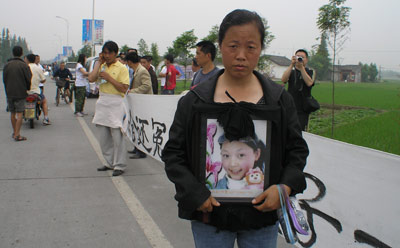 This Sunday we are showing the incredible China’s Unnatural Disaster which is nominated in the Documentary Shorts category and the filmmakers are flying in for the Q&A. Booking link here.
Surprise omissions from the list are The September Issue, Capitalism: A Love Story, Sundance Grand Jury Prize winner We Live in Public, Tyson, The Way We Get By and Anvil.
The 15 films shortlisted:
* “The Beaches of Agnes,” Agnès Varda, director (Cine-Tamaris)
* “Burma VJ,” Anders Østergaard, director (Magic Hour Films)
* “The Cove,” Louie Psihoyos, director (Oceanic Preservation Society)
* “Every Little Step,” James D. Stern and Adam Del Deo, directors (Endgame Entertainment)
* “Facing Ali,” Pete McCormack, director (Network Films Inc.)
* “Food, Inc.,” Robert Kenner, director (Robert Kenner Films)
* “Garbage Dreams,” Mai Iskander, director (Iskander Films, Inc.)
* “Living in Emergency: Stories of Doctors Without Borders,” Mark N. Hopkins, director (Red Floor Pictures LLC)
* “The Most Dangerous Man in America: Daniel Ellsberg and the Pentagon Papers,” Judith Ehrlich and Rick Goldsmith, directors (Kovno Communications)
* “Mugabe and the White African,” Andrew Thompson and Lucy Bailey, directors (Arturi Films Limited)
* “Sergio,” Greg Barker, director (Passion Pictures and Silverbridge Productions)
* “Soundtrack for a Revolution,” Bill Guttentag and Dan Sturman, directors (Freedom Song Productions)
* “Under Our Skin,” Andy Abrahams Wilson, director (Open Eye Pictures)
* “Valentino The Last Emperor,” Matt Tyrnauer, director (Acolyte Films)
* “Which Way Home,” Rebecca Cammisa, director (Mr. Mudd)
You can see the official press release here
]]>