Inevitably there are a few slides which won’t mean much without the benefit of Hughes’s words overlaid but he has included several interviews with BBC correspondents discussing the nature of war reporting.
He speaks to Allan Little about eyewitness reporting, discusses the term ‘war correspondent’ with Caroline Hawley and hears Caroline Wyatt’s views on embedding with the military.
Well worth taking a look…
]]>A chapter I wrote . . .
So-called “embedding”, the term for the practice by which journalists have been allowed to accompany allied troops in the Iraq and Afghan wars, is not just a way for the military to manage information but is an unspoken compact with the media that helps sustain the conflicts themselves.
It is easy to find British journalists like myself who criticise the practice of embedding but jump at every opportunity to accompany British troops at war. Space with the British army is at a premium and so if you can get there you won’t face too much competition. Compared with other foreign trips it is relatively easy to acquire strong stories supported by exceptional pictures. One can win awards.
Embedding costs very little money. The military provide food and tents. The press can often use military communications and the British army will fly you out and back for free. As an independent video journalist, I should make a profit on an embed. The army will also lend you a flak jacket and helmet. Even better, the soldiers will protect you from danger and deliver excellent first aid if they don’t. The risks are less than they appear. Easy pickings really.
It’s not just me being careful with the pennies. News budgets are at an all time low and foreign news acquisition is increasingly priced out of reach. Reporting foreign stories is much more expensive than covering domestic ones. As news organisations have tried to realise their duty of care the cost of covering foreign conflicts has further increased. Reducing risk is very expensive, often requiring extra insurance, equipment and the retention of bodyguards or other safety personnel.
Most now rely on cheaper wholesale agency material and whatever they can source from locals or other non-media sources. This includes material filmed or reported by army combat camera teams and blogs by military press officers. There are too few sources of information and even fewer reliable ones. But agency material, being shared with competitors, doesn’t promote the news brand nearly as well as the correspondent or television network reporter, so the opportunity for a newspaper or broadcaster to get people out on an action-packed foreign story on the cheap can be irresistible.
Army management of news output
While it is true that journalists have been accompanying armies and navies in wars for at least 150 years, in the past the military has been better at denying access rather than using the press to get their message out. Allied forces are now very sophisticated in managing news output. The effort is well funded and employs many ex-journalists. Lots of reporters have no difficulty crossing over from journalism to PR, leaving a trade that seems to lose its calling as quickly as it loses its funding.
The sign on top of the British media office tent in Camp Bastion in Helmand, Afghanistan, says “Media Operations’. As soon as you walk through the door as a journalist you understand that you are a sort of target, albeit treated much more gently than the Taliban. It is not about public accountability. News management has become an integrated part of the war effort, aiming to maintain public support for the conflict nationally, while winning the information war abroad.
Embedded journalists are normally accompanied by press officers during their visits. Servicemen or women trained in press management. The stakes are high for the press officer as getting it wrong can ruin their military career. With the British army, both sides are guided by a publication called the Green Book that lays out the rules of the press embed. It was put together by the Ministry of Defence, but in consultation with media organisations. It delivers editorial independence for embedded journalists subject to the needs of operational security. It also includes the reasonable provision in my view that the names of casualties should not be revealed until their next of kin have been informed. The conditions set out in the Green Book are progressive when compared with the restrictions that the press experienced, say, in Northern Ireland in the 1970s and 1980s or the Gulf War of 1991.
When soldiers and journalists bond
Press officers normally work hard to help journalists get stories on their embeds, organising transport and interviews. It would be hard for most of the media to find their way around these battlefields without them and a good working relationship normally develops. Journalists often develop strong relationships with their subjects. Those bonds can be strongest during a tough assignment when discomfort is shared and embedding often puts reporters with frontline troops under stress.
Certainly, having journalists embedded into units where they can get to know soldiers and share their experiences rewards the military with friendlier reporting. But the primary control exerted by the military is through determining who actually gets embedded. Unfavourable reporting is not often rewarded with further opportunity.
The military cannot reasonably be expected to take all the journalists that might want to accompany them. Thousands of journalists descended on Kosovo in 1999 and Afghanistan in 2001. The numbers are far too great. There have been instances when more journalists have applied to go to outposts in Afghanistan than there are soldiers stationed there. But numbers are kept very low, particularly when the military are feeling sensitive about what is happening. Whole operations can go unreported by independent journalists on the ground.
During the recent Operation Moshtarak, in Helmand in February 2010, there were only about 10 members of the press with the whole British force in Afghanistan. The Ministry of Defence will often favour popular commentators, like Ross Kemp, over critical journalists, or try to develop a relationship with tabloid newspapers when it thinks that favourable coverage can be widely achieved.
Valuable pool places to regional newspapers
Valuable places are given to regional newspaper reporters who are less likely to be critical, often there to do soft stories on a military unit local to the paper. Even regional newspapers can afford to send correspondents on embeds. But journalists are not allowed to bring their own vehicles, and being compelled to rely on the military for logistics makes it impossible to access the local population independently. If the military don’t want you somewhere, you are unlikely to get there.
Unfortunately, even if American and European journalists could have all the access they wanted to the military, these days they would deliver less than we need from them. The news industry does not look like it did in the 1960s during the Vietnam war. Most war reporters these days don’t really know much about war, in the way that say, sports journalists know about sport. War reporters are rarely students of conflict nor are they
normally ‘defence’ correspondents who might need to develop a broader knowledge of military affairs.
Over the last two decades the news industry, particularly television news, has developed a culture that rewards the more self-obsessed operators, pushing them to lead their reporting from a personal perspective to make it more accessible to the audience. Reporting becomes as much about promoting the correspondent, the brand representative, as telling the story. As the industry gets starved of funds the reports get weaker and the branding stronger.
The military and their political masters believe that images of dead or wounded allied soldiers, particularly, have the potential to sap public support for the war at home. The lesson from the conflict in Somalia in 1993, when pictures of dead US soldiers being paraded around Mogadishu were shown around the world, was that such images also risk delivering a propaganda victory to the insurgents abroad.
Casualties – the most sensitive issue
This makes allied casualties the most sensitive issue after operational security to the military. With the British army you are prevented from filming dead soldiers and will only be allowed to film or broadcast pictures of wounded soldiers if you have their permission. There are obvious practical difficulties getting this sort of permission from soldiers who suddenly find themselves in agony and struggling to stay alive. Most soldiers say no if they are fit enough to address the question, which is not easy to ask in the circumstances. Doing so invites a negative answer, which of course is why the requirement is there in the first place.
In theory a cameraman or photographer is allowed to film first and ask questions later. But attempting it will seriously raise the pulse of your military minder and soldiers you hadn’t noticed before suddenly become remarkably poor at keeping out of the way of your shot. As a consequence, embeds rarely show the suffering of war but instead offer up a dramatic but sanitised version of it. One that most journalists sex-up to present themselves as well as possible and in doing so normally treat the domestic audience to comforting messages of heroism and military strength.
Limiting the public’s real understanding of the cost of the war in human suffering actually betrays those unfortunate young men who become its casualties. Many are teenagers and some lose multiple limbs. A public that is poorly informed is unlikely to show these men the compassion and respect that they deserve. For all the proximity of the journalists and the cameras, the reporting has been contained, serving to distance the audience from the reality of war and any great feeling of ownership of it. The wars merge into the background and go on and on.
The current Afghan war has lasted for longer than the US military engagement in Vietnam in the 1960s and appears to a significant number of clued-up observers to have no greater prospect of success. But the US and the British public remain firm. British reporting is heavily informed by the tragedy of dead servicemen coming through Wootton Bassett. But it is not an image the soldiers who come home unscathed identify with. They are mystified when those they meet feel sorry for them. They do not see themselves as victims in the way that the press portrays them. They want public empathy; they get – to their dismay – public sympathy.
Presenting war to fit the grand, Hollywood-esque narrative
It is easier to ignore a war if it is soldiered by hero-victims. But the soldiers are us. They are our professional killers who sometimes enjoy it. But we want more distance from it than that. So we manufacture something else that doesn’t seem to require us to take any responsibility. An eroded and underfunded news industry compresses, simplifies and pasteurises, presenting war to conveniently fit into a grand narrative that owes more to Hollywood than the real experience.
Perhaps all parties – politicians and the military, the media, campaigners for forces support groups like Help for Heroes and even the public themselves – have an interest in sustaining this comforting way of seeing it. But news management is a risky business. Though it might maintain a level of support for the war that support becomes more brittle for the deception.
Every now and then a particularly disturbing story breaks through that becomes more shocking for being unexpected and is amplified for running contrary to the narrative the nation is being fed. Faith in our armed forces is imperiled. On the whole, generals, admirals and air marshals have enjoyed considerable public respect in Britain since the 1930s. There are signs that this is eroding.
News management, or spin, creates cumulative damage to us all by undermining our trust in the institutions that engage in it and subverting the quality of our conduct more widely in society. We are paying for these wars with more than blood and treasure.
]]>
Embedded journalism in Afghanistan is on the agenda at the Frontline Club this evening. Several journalists are on the panel including Caroline Wyatt, (BBC), Tim Marshall, (Sky News) and the Club’s founder Vaughan Smith.
While they’ll be discussing Afghanistan and embedding tonight, The Independent‘s Defence and Diplomatic Correspondent, Kim Sengupta, will be heading back to Afghanistan for the 25th time.
Yesterday he spoke about embedded journalism at the Global Media and ‘War on Terror’ Conference at Westminster University.
Sengupta said that when he travels to Afghanistan, most of his time is spent embedded with British forces. He has also joined up with U.S. forces.
He said that ideally a journalist would also spend some time unembedded but argued that a journalist "can’t just rock up to a place" in Helmand province in the middle of an insurgency. A number of Sengupta’s media colleagues have been kidnapped and held for ransom in Afghanistan.
There are other difficulties for the embedded reporter. Freedom of movement is obviously limited, and there is a "fine line" between what a journalist can and can’t report.
Sengupta said that he would put up an argument if he felt the military was not allowing him to report something which did not breach operational security. But he admitted that there is a tendency to identify with the unit and subconsciously self-censor; a journalist relies on the military unit for support and shares in the experiences of the soldiers.
He acknowledged that he is never entirely sure which side is telling the truth, suggesting that NATO pronouncements are not challenged in a sophisticated manner by the insurgents and that stories in the Afghan news media are often based on unverifiable rumours.
The view of Afghanistan that Sengupta can access and, hence, the one he can offer his audience, is consequently limited: "All you can do is give a snapshot".
]]>In the video below, Norwegian journalist Paul Refsdal risks his life to film Taliban operations with a commander in Eastern Afghanistan. There’s some intriguing footage here including an attack on a U.S. convoy and snapshots of everyday life.
Throughout the group’s ideological commitment to the cause stands out: "We fight for freedom, our religion Islam and its principles. We are fighting for the freedom of our land…Allah the All-Powerful will destroy them as He did many other great powers".
But the film humanises ‘the enemy’. We see Commander Dowran’s young children and the Taliban sharing food and prayers together.
Other images are more troubling as we see very young men carrying weapons along with their elders.
In an online chat hosted by SBS Dateline Refsdal said he did:
"…not go to make propaganda, neither for the Taliban nor against them. I entered their area with an open mind, and even though I was surprised by how “normal” they were, tried to report as objectively as possible what I observed with them."
Refsdal was kidnapped two weeks later by a commander called Omar but released without a ransom being paid.
]]>
Well it seems the lightning has struck again – only this time much harder.
Another Yon embed came to what he regarded as a premature end earlier in the month, but this time rather than blaming the nearest media operations officer, the independent journalist has trained his sights on none other than General Stanley McChrystal and his staff.
In a Facebook comment Yon claimed: “McChrystal is a great killer but this war is above his head. He must be watched.”
]]>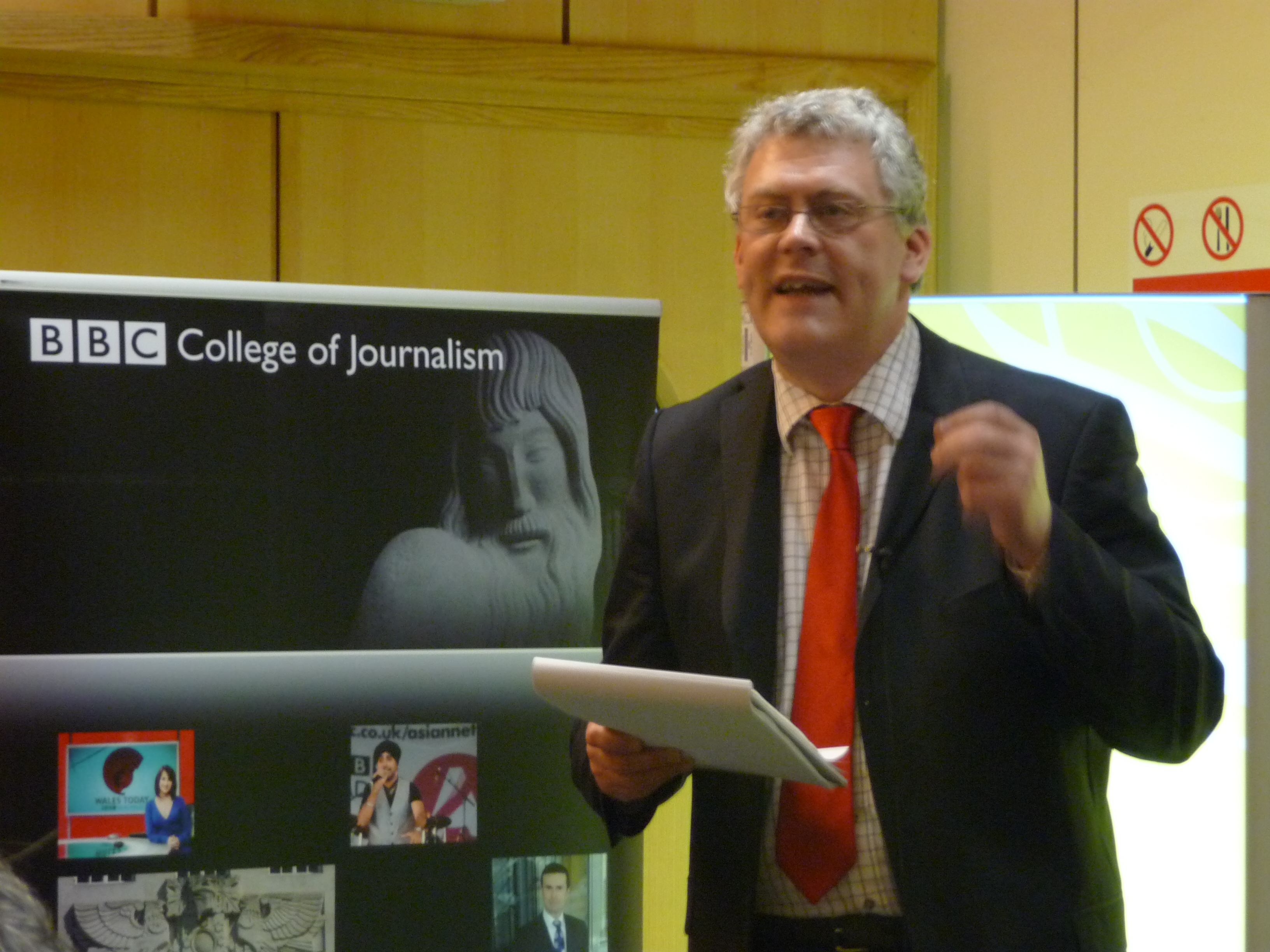
Yesterday, I travelled up to Coventry for a conversation about embedded journalism in Afghanistan. It was hosted by Coventry University and the BBC’s College of Journalism.
I’m not sure I ever really understood the question that was supposed to frame this debate: "Afghanistan: Are we embedding the truth?" (Answers on a postcard etc…)
But as far I was aware the aim was to discuss whether embedded journalism is helping us to understand the war in Afghanistan.
Of course, embedded journalism – when a journalist is attached to a military unit in a warzone – is nothing new.
It’s always been best to cover a war from one side or the other rather than being stuck somewhere in the middle of no man’s land trying to jot down a few notes while the bullets hail down from both sides. (The pen might be mightier than the sword but it doesn’t look too clever against a rocket-propelled grenade).
But embedding has become formalised since the Iraq war and in an era when acting unilaterally as a journalist is exceptionally dangerous, this form of reporting has become an important lens through which we view conflict.
‘There are two in the bed…’
Embedded journalism brings two uneasy bedfellows – the media and the military – together under the same tent. Vaughan Smith, Frontline Club founder and freelance filmmaker, gave us an insight into the nature of the "compact" between the two parties.
Both sides have something to gain from the arrangement. For the media, an embed delivers some "strong pictures" and "feeds the [news] machine". For the military, embedding means control over the journalist and the potential to use the media organisation to disseminate positive messages about the progress of the war.
Brigadier Mark van der Lande said one of the military’s key responsilities was informing the public and that embedding journalists was necessary to fulfil that obligation. He hinted at a step change in the way information about Afghanistan was communicated with the appointment of Major-General Gordon Messenger (a name-role combination that wouldn’t look out of place among the pages of Catch-22) as the most senior spokesman on Afghanistan.
Of course, there is a fundamental clash between the aims of the media and the military. ‘Objective’ journalists will want to portray ‘the good’ and ‘the bad’ (with the thought in the back of their minds that ‘the bad’ often sells better and is more likely to win an award).
The military will want to accentuate ‘the good’ and downplay ‘the bad’. Journalists covering Afghanistan will tend to go for ‘bang bang’ and dramatic pictures while the military will be more concerned with representing political and economic development (arguably more important than warfighting in this case).
Ideologically journalists tend towards freedom of information, while, for the military, secrecy is vital for operational security, the welfare of serving soldiers and political aims. Journalists are after news; the military has a war to fight and win.
‘And the military one said: "roll over". So they all rolled over…?’
Vaughan Smith was most stringent in his criticisms of news management by the Ministry of Defence, which he felt was "pretty unhelpful" and "risky". He said his initial application through the Ministry of Defence for an embed got him nowhere and that after waiting 6 months he changed tack and embedded with the Grenadier Guards through ISAF (NATO).
Vaughan suggested that freelancers were not deemed by the MoD to be worth the effort compared to their traditional media counterparts and were considered more of a risk because there was no editor to pressurise.
Alex Thomson, who joined the discussion via a pre-recorded interview, said his recent embed with the Coldstream Guards for Channel 4 news was an improvement on previous experiences. He said the MoD "do play games" with the timing of embeds and believed his embed was "bumped back for fairly naked political reasons" so that other journalists could cover the earlier stages of Operation Moshtarak.
But Thomson praised Lt-Col David Wakefield, the Spokesman for Task Force Helmand, for his assistance on the ground in Afghanistan describing him as someone who "understands the needs of the media".
‘And ‘the truth’ fell out?’
Even if the media/military relationship is often professional and sometimes as positive as Thomson discovered, is it possible for embedded journalists to give us an accurate and fair representation of the conflict in Afghanistan?
Stuart Ramsay, Chief Correspondent at Sky News, made an appeal to his experience of covering 16 separate wars during his career. He said that an accurate picture could be given and argued that journalists could be trusted. In particular, he was confident that he could retain high professional despite forging close friendships with the participants.
Ramsay nevertheless recognised that embedded journalism provided a limited picture and I don’t think this was really in dispute. Although Professor Tim Luckhurst seemed to be keen to make sure we understood just how limited by citing the example of two New York Times reporters whose reporting of the Spanish Civil War was fundamentally inaccurate.
There was general agreement that embedded journalism was an important aspect of coverage but should merely be part of something far more comprehensive. The BBC’s Jon Williams said it was for this reason that the BBC maintains a correspondent on base in Kabul in order to cover Afghanistan’s ongoing political story.
We do also have access to far more voices if we are willing to look further afield than the traditional media. Just on Afghanistan why not check out things like Captain Cat’s blog, Nasim Fekrat, and the Afghan Women’s Writing Project.
I think a possible challenge for ‘independent’ embedded journalism is the fact that militaries have started doing this sort of journalism themselves. The soldier is committing acts of journalism.
If front line blogs, combat camera teams, and uploads to Youtube become the norm the military might well wonder why they need these embedded journalists to get their message across. Especially if the military does believe that "our people are our best advocates" as Brigadier van der Lande does.
At the moment, media organisations still have far too much sway in terms of viewers, listeners and readers but times are already changing.
P.S.
1. Video of the event is…should be available somewhere.
2. More time for questions next time please! I ha
d these for starters….
Q. To Alex Thomson: Why did you decide to use ‘as live’ tweets during your recent embed and what did you make of this mode of reporting?
Q. To front line journalists: Do they view the war in Afghanistan as ‘in the national interest’ and what are the implications for their journalism depending on how they answer that question.
3. Wireless access at venue might have been nice. Not much point announcing a hashtag at an event otherwise.
4. Photo: Tim Luckhurst in full flow, All Rights Reserved (for the time being).
]]> Yesterday, I suggested there might be an unlikely rapprochement between Michael Yon and the British Ministry of Defence after the row over the end of the journalist’s embed with the British Army in Afghanistan.
And that’s clearly what Nick Gurr, the MoD’s Director of Media and Communications, is trying to achieve with this post.
Written in response to Yon’s attack on British Media Operations, Gurr invites Yon "for a chat about how we go forward from here".
"…everyone in theatre is working under huge pressure which will sometimes generate friction and, as I said, I am sorry if Michael felt he was not being treated as he should be."
In between times, Gurr reiterates the line that has been held all the way through – that Yon’s embed with 2 Rifles was ended in August to allow Media Operations staff to focus on other incoming journalists. All Gurr adds is more detail on exactly which media organisations were due to embed with Task Force Helmand.
Despite Gurr’s conciliatory tone, it doesn’t look as if Yon will be taking him up on anything more than a chat in the near future. In an email, Michael Yon said he felt he could "not trust" Media Operations "to be truthful or to operate above the table":
"They are playing politics/spin and I am not playing at all. I don’t write about sports but about brutality and war. They seem to pretend this is all some kind of spin game but it’s no game and the real-life outcome of their actions will be felt in the media, which will affect real world operations."
In an echo of his recent blog post, Yon concludes that although some staff are "quite professional and competent", more generally, under the leadership of Bob Ainsworth, "Media Ops are failing at their mission".
]]>Around a month ago, I was following the saga of the end of Michael Yon’s embed with the British Army in Afghanistan from the initial much-debated nature of its "cancellation", through Yon’s explanation of the episode, to the MoD’s response and Yon’s decision to go it alone in Afghanistan.
Last week, while I was enjoying some lovely late-autumn sun elsewhere, Yon was busy writing a far more detailed post, entitled ‘Bullshit Bob’, about the end of his embed and the state of British Media Operations:
"Many soldiers in the British Media Ops are true professionals who strive constantly to improve at their tasks and work very well with correspondents. Their professionalism and understanding of the larger mission—ultimate victory—provide an invaluable service to the war effort. But there are a few who should not be in uniform and it takes only one roach leg to spoil a perfect soup."
What followed was a scathing attack on various aspects of British Media Operations. According to Yon, those who were allegedly spoiling the soup included the Defence Secretary, Bob Ainsworth (you may have picked up a subtle hint in the title of Yon’s post), and the spokesman for Task Force Helmand, Lt Col Nick Richardson.
But Yon also homed in on an unnamed Major who he alleged had been rude to soldiers and correspondents and caused him a variety of logistical difficulties.
Unsurprisingly, Yon’s piece sparked a not particularly satisfactory game of ‘name-the-Major’. Richard North at Defence of the Realm jumped in with this piece claiming that the Major in question was Major Ric Cole.
In the meantime other Majors were being misidentified as the Major in Yon’s piece. Paul Smyth, the Ministry of Defence’s man behind Helmand bloggers, was getting comments like this one sent to him:
"Hey Douchebag Paul Smyth, maybe you ought to take your fat head outside the wire once in a while. Actually see the fighting that’s happening rather than disparaging your countrymen who are doing the dirty work and outting themselves in harm’s way. Rear Echelon Mother F’er."
I had a similar comment submitted to me here at Frontline which I couldn’t publish because it was worse and quite probably defamatory.* As Major Smyth pointed out on the Helmand blog, Yon’s unnamed Major was unlikely to be him as he hasn’t been to Afghanistan since 2006:
"Since May last year I have been pretty busy working within Media Ops. I have served in Kosovo with 2 RIFLES and Iraq within MND(SE) and I am now a week away from a tour in Afghanistan, somewhere I have not been since 2006.
I am currently in the UK and am not the unnamed major Michael Yon refers to. With any luck I will have the chance to meet and work with Michael when he returns to Helmand."
Returning to Yon’s criticisms of British Media Operations a couple of follow up comments (which you can make your own mind up about) are worth reading at Defence of Realm including this one from ‘Psyoper’ and another from ‘Anonymous Mouse’.
I’m not sure whether this is the last we’ll hear on Yon vs MoD (and who knows, maybe they’ll be a seemingly unlikely rapprochement at some point), but expect to hear more on British Media Operations in Afghanistan, in one way or another, in the near future.
*(American commenters should note that libel law is stricter this side of the pond as this interesting BBC blog post demonstrates. And yes it does have implications for the principle of freedom of speech but it’s still me/Frontline that would be sued).
]]>He claims that the Ministry of Defence has been trying to have him removed from the area of Regional Command (South) and from Thursday he will be reporting unilaterally from Helmand province.
Yon was annoyed that his embed with 2 Rifles in Helmand was ended by the Ministry of Defence last week, and says his "days of covering British operations are over."
There remains some difference of opinion on the nature of the end of Yon’s embed. The Ministry of Defence left a comment on one of my previous posts claiming that they had "hosted Michael with British forces for five weeks, some two weeks longer than originally planned".
Yon who always said his embed was "cancelled" with "zero warning" now claims in his latest dispatch that it ended "about one month before we had agreed it would end".
Whoever you believe, Yon certainly does not appear to be in a conciliatory mood. In his piece entitled ‘Precision Voting‘ he criticises both the Pentagon and the Ministry of Defence:
"The Pentagon and British MoD spin lies (though I have found Secretary Gates talks straight), but veins of pure truth can be found right here with these soldiers. The Pentagon and MoD as a whole cannot be trusted because they are the average of their parts. There are individual officers and NCOs among the U.S. and U.K. who have always been blunt and honest with me. Among the higher ranking, Petraeus and Mellinger come to mind, but for day-to-day realities this is where it’s at. Out here. Nothing coming from Kabul, London, or Washington should be trusted."
Yon also has something to say about equipment shortages in the British Army, providing more information than you will find in the official version on the death of Joseph Etchells last month:
"Several times, the events of Joseph’s loss were recounted to me, in clear hopes that important details would be told. I said not to worry, it will be told. The missing details were that soldiers had complained about not having enough ladders to scale walls to avoid dangerous compound entrances. During a mission the soldiers needed to get over a wall but were without a ladder, and so Joseph Etchells volunteered to go through the entrance, where he stepped on a pressure plate."
He pitches in on the helicopter debate too:
"Enemy control of the terrain is so complete in the area between Sangin and Kajaki that when my embed was to switch from FOB Jackson to FOB Inkerman—only seven kilometers (about four miles) away—we could not walk or drive from Jackson to Inkerman. Routes are deemed too dangerous. Helicopter lift was required. The helicopter shortage is causing crippling delays in troop movements. It’s common to see a soldier waiting ten days for a simple flight."
The question now is what and how will Michael Yon report. Yon’s coverage, both in Iraq and Afghanistan, has often focussed on combat; will it be possible for him to access the front line unembedded or will he have to change tack and chase different aspects of Afghanistan’s troubled story?
]]>In an email I received overnight, Michael Yon claims the Ministry of Defence "cut off" his embed with the British Army in Afghanistan with "zero warning and no chance for me to prepare."
As I highlighted yesterday, Yon had been embedded with 2 Rifles for the last five weeks. The MoD denied that Yon’s embed had been "cancelled" claiming he had come to the end of his allocated time period and that other journalists were waiting for embeds.
Yon, a former Green Beret, argues that "it’s silly to lump me in with the war-tourist sorts who come here for a month or two (usually a week or two).
"Among those who do come, most rarely if ever go on true combat missions to see what our lads are dealing with."
He claims there is "no journalist in the U.K. or the U.S. who spends more time in combat."
He remains specifically unhappy at what he felt was a lack of warning that his embed was ending: "It’s too expensive and dangerous" to operate in Afghanistan knowing that "amateur-hour is running the show" at the MoD.
Citing "thousands of dollars in direct costs, logistical headaches and lost opportunities," Yon says it’s not sensible to cover British troops when he did not know if his embed might end "from one hour to the next."
He said the problem could have been "easily solved by giving me even a few days notice," and he remains suspicious of the fact his embed ended hours after he had published a post entitled ‘Bad Medicine‘. (Update: Though clearly this is something the MoD want to dispel. Yesterday, they said they could not see an operational security problem with the post and just now @defencehq tweeted a link to the article.)
Yon had high praise for British soldiers saying they were "like his own brothers": "I can say with certainty that British forces are fighting courageously, they are fighting well…I would never hesitate to go into battle with them."
But Yon says the war in Afghanistan is "being lost" and his experience means he does not foresee himself embedding with British forces in the future. "The world is too big to play games with a few nameless bureaucrats," he says.
In future articles about the British Army in Afghanistan, Yon says the MoD will not be given a chance to comment: "If they wish to comment, they can do so separately in the form of a rebuttal, or however they chose. Access is a two-way street."
Speaking of which, I’ve now left two messages today with the MoD for their take on this latest development. Hopefully, they will get back to me some time this afternoon. (Update: Which kindly they did. See the MoD’s response in the comments.)
But whatever the wrangling about the whys and wherefores the sad fact of the matter is that a great source of reporting about the work of British troops in Afghanistan has been lost.
]]>