Legendary Iranian photographer Abbas joined journalist and filmmaker Maziar Bahari in a conversation at the Frontline Club on 3 February 2016, chaired by CBS News correspondent Elizabeth Palmer.
Bahari and Abbas have collaborated to launch abbas.site, a platform showcasing Abbas’s photographic body of work on Iran since 1970, including his coverage of the 1979 Iranian Revolution.
Legendary photographer Abbas & @maziarbahari at @frontlineclub to talk about our new website https://t.co/bZLo4xtbIW pic.twitter.com/6mhEP8fXJx
— JournoIsNotACrime (@JournoNotACrime) February 3, 2016
Abbas’s work includes “the most iconic photos of Iranian history between 1971 and 2005,” said Bahari. “He shows parts of Iran in one photograph in a way that some people have to write many books about.”
“This is the first time I’m showing contact sheets,” said Abbas, as he showed his images of Shah Mohammed Reza Pahlavi’s Persepolis celebration in 1971. “Normally photographers don’t show them. It’s like your personal diary, but I thought after 37 years, I can show not just the photos, but what led to the photos.”
“I wanted to show the complexity of Iran through the complexity of the lives of 12 Iranians. One would lead to another, like a circle. But the revolution started, and that was the end of the work.”
“How did you make sure you didn’t get hurt when the revolution turned violent?” asked Palmer.
“Well, I ran fast!” said Abbas.
“Some of the violence and hate which emerged later was already written on [the revolutionaries’] faces,” Abbas said, on the subject of his work in the early stages of the Islamic Revolution in 1977.
He showed his photos of Iranian Prime Minister Hoveyda at home, and then in a morgue shortly after his execution by the Revolutionary Guard in 1979.
“Although you feel very strongly for the man on the slab, you still do your work as a photographer. You try to compose the best picture… In all situations of strife or violence or emotional upheaval, you put a curtain between you and what’s happening. Because if you don’t, you can’t function,” he said.
“As a photographer, you don’t think, you just act. You capture energies you’re not even aware of. It’s when you do the editing and the sequencing that you become conscious.
“The act of photography is very intuitive. Your intuition is fed by your education, your culture, by the argument you had with your girlfriend the night before… that makes you take this picture instead of that one.”
Khomeini’s return to Iran in 1979, captured by Abbas @frontlineclub pic.twitter.com/7jdRut7I3y
— Charlotte Beale (@CharlotteAGB) February 3, 2016
Abbas commented that great photography is a combination of two things – “information and aesthetics.”
“When the two come together, in a suspended moment, that’s it. I don’t freeze the moment, I suspend it. I like to give the impression to my reader that the people in my photograph kept on doing the thing they were doing before I took the photograph.”
On the subjectivity of his work, Abbas commented: “the difference between a militant and a photographer [is that] the militant has his own agenda. The photographer, although he feels strongly, has a duty to his readers and also as a historian of the present, to be as fair as possible.”
In response to a question on how he manages his presence as a photographer, Abbas responded: “as much as possible, you try only to be a witness, not a partisan. Sometimes it’s hard, because of course they know what you are when you have a camera in your hand.”
In response to an audience member who asked what model of camera he prefers, Abbas said, “my favourite camera is my eye. It works very well.”
The discussion then moved to Abbas‘s references as a photographer, with Bahari commenting: “when you ask about Abbas‘s icons he doesn’t talk about Cartier-Bresson – he talks about Caravaggio, Rembrandt, Cezanne, who really painted life.”
On the methods of the photographer, Abbas commented: “Instead of writing with words, you write with light.”
Visit abbas.site to view the project in full.
]]>On 28 January at the Frontline Club, a panel chaired by CBS News correspondent Elizabeth Palmer discussed the possible start of a new chapter for Iran following the election of Hassan Rouhani as president. Rouhani is not only in favour with the Supreme Leader and political hardliners but also backed by reformists, due to his running mandate “moderation and wisdom”.

Elizabeth Palmer, Shashank Joshi and Kelly Golnoush Niknejad discuss change in Iran
Palmer started by asking the panel if there had been change for the good since the election of Rouhani?
British-Iranian Emmy award-winning foreign affairs journalist, Ramita Navai said:
“He is the man who can change things, he’s a real insider. . . . He really knows how to negotiate the hardliners. . . . He’s also of course in favour with the big man . . . the supreme leader.”
Kelly Golnoush Niknejad, founder and editor-in-chief of the award-winning Tehran Bureau, hosted by The Guardian said:
“The initial optimism that came with Rouhani’s win is definitely wearing off. When he released a group of prominent political prisoners before his UN trip hope went up that he was going to free [former presidential candidates Mehdi] Karoubi and [Mir Hossein] Mousavi and his wife [from house arrest] and when he didn’t do that . . . they were hoping that would legitimise an election they had taken part of.”
Packed house for tonight's Iran debate as our panel discusses the changes we have seen in the country pic.twitter.com/8JuPBJPuYW
— Frontline Club (@frontlineclub) January 28, 2014
Shashank Joshi, a research fellow at the Royal United Services Institute (RUSI), said that the nuclear deal, which was implemented on 20 January, would be the start of Iran becoming more economically viable internationally, but it is not the end:
“The so called ‘Joint Plan of Action’ . . . it was the biggest breakthrough for 10 years in the nuclear dispute. . . . [But] going from an interim deal to a final deal is very, very hard. . . . The one thing that unites those who hate the deal and those who love the deal is that both have a propensity to see this as the thin end of a wedge to a bigger rapprochement. . . . [Rouhani’s] mandate is to ease reconciliation for economic reasons, economic renewal, it is not a mandate for unconditional friendship with the west.”
@shashj on converging strategic interests btwn the West and #Iran: "Iran never easy to deal with even with mutual interests" @frontlineclub
— Julia Macfarlane (@juliamacfarlane) January 28, 2014
Iran’s success depends on economic success but the west has a dilemma. Former British ambassador to Iran (2002–06) Sir Richard Dalton said:
“The outside world . . . has got a genuine dilemma because the Iranian regime is not one which one would want to see strengthened. One would want to see aspects of the way it treats its own people and the way it behaves in the region weakened, frankly. . . . But at the same time, non-proliferation of nuclear weapons and above all ensuring that the Iranian programme will not be misused in future is such a high priority issue that there are certain features that are going together with a solution which include boosting Iran’s growth rate. . . . In justification, an Iran that is prospering is an Iran that is more likely to reform long term.”
How much domestic pressure is there for the government to affect change, Palmer asked. Arron Reza Merat of the Economist Intelligence Unit said:
“Your question presupposes that there is a strong . . . democratic apparatus to press politicians to do anything and in Iran . . . the elite run Iran, the elections though do have some democratic elements in them are really just changing fractions within the original systems.”
An audience member asked whether the reformists have any hope in having an effect on the system. Merat said that there was hope in Rouhani’s relationship with the Supreme Leader and political hardliners:
“The one hope I think that the reformists have is that they’ve got a reformist-backed president who has the support of not only the reformists but the hardliners and this hasn’t happened since [former president Akbar Hashemi] Rafsanjani’s first term [in 1989]. . . . Ever since then Iran has been utterly polarised . . . nothing happens in Iran unless you have both sides on board.”

Sir Richard Dalton, Arron Reza Merat and Elizabeth Palmer discuss change in Iran
A final question from the audience asked what would be the significance of having Mousavi and Karoubi released? Dalton said:
“From my perspective I can’t imagine the streets of Tehran would be filled with people supporting them the day they came out. People are a lot more practical than that at the moment.”
Navai said:
“It is symbolic. It will signal that Rouhani has the power to change, the power to release them. . . . They are still perceived as a threat . . . it’s a fear apparently that if they do release them that the reformists, however dormant they are, will be strengthened before the parliamentary elections [in 2016] and of course the hardliners are very keen that Rouhani doesn’t gain ground in the parliamentary elections.”
Watch or listen back here:
The election of cleric Hassan Rouhani to Iran’s presidency last week has Iranians and the world turning their heads to wonder: is the Islamic Republic changing direction? Will Rouhani’s promised pragmatism and reform replace the hardline conservatism of incumbent Mahmoud Ahmadinejad?
An expert panel convened at the Frontline Club on 26 June, to probe for answers.

Saeed Barzin and Mark Fitzpatrick. Credit: Jim Treadway
CBS Correspondent Elizabeth Palmer, chair for the discussion, observed:
“He’s [Rouhani] had a career which has kept him at the very core of power, very close to the Supreme Leader. So it’s hard to imagine that he will be a radical reformer. And yet, at certain stages in his career he has shown that he is a pragmatist, that he is capable of being flexible.”
During his campaign, Rouhani promised greater engagement with the West while urging the world to “acknowledge the rights” of Iran. His primary promise was to try to ease sanctions imposed on Iran over its nuclear program.
Meanwhile, as Arab Spring upheavals echo across the region, panelists saw the election as a sign that Tehran is tuning in acutely to the demands of the people. Author and journalist Azadeh Moaveni asserted:
“I see Iran changing, and I see the prospects for Iran changing from below. [It] feels differently inside the country. . . This is a break from the police state atmosphere of the last 8 years, which has just been suffocating.”
Saeed Barzin, a longtime Iran analyst now with BBC Persian, agreed:
“What I learned from the elections is that Iranians are getting [ready] for change. That is quite clear in the way that the establishment behaved, the way that the candidates behaved, and the way that people behaved. . . . People are desperate for change. The economic situation is not good: inflation, unemployment, the value of the national currency. But, they want gradual change. They don’t want…a Libya scenario. They don’t want an Egyptian story. They want their new TV at the end of summer, and they want a new fridge for their children . . . gradual, calculated, reasonable, common sense change, and this is what indeed Mr Rouhani is representing.”
“One phrase which did not occur in this election, strikingly, was ‘Islamic Awakening’,” reflected Scott Lucas, a professor at the University of Birmingham and editor-in-chief of EA WorldView.

L-R: Elizabeth Palmer, Azadeh Moaveni, Scott Lucas. Credit: Jim Treadway
Barzin added: “The faction which was defeated in these elections was what I call the right wing of the establishment…which initially brought Ahmadinejad to power.”
With 72% of eligible voters casting ballots, Rouhani won just over 50% of the vote, while his nearest rival, conservative Tehran Mayor Mohammad Qalibaf, received only 16%, and hardliner favorite Saeed Jalili received 11%.
So, will Tehran’s tenor change in nuclear negotiations with the United States? Mark Fitzpatrick, director of the Non-Proliferation and Disarmament Programme at the International Institute for Strategic Studies, commented:
“The [current] nuclear negotiating team was criticizing Rouhani during the election, so they’re all out. But, that’s only a handful of people. My read is that Rouhani will probably bring in more pragmatists, as opposed to hardliners.”
Watch the event here or listen/download the podcast:
https://soundcloud.com/frontlineclub/iranafterahmedinejad
]]>CBS News’ Elizabeth Palmer led an expert discussion at the Frontline Club on 11 September regarding the latest crush of violence in Iraq.
The panel painted a portrait of a country desperately in need of peace, independence, rule of law, reconciliation with its traumatic past, and unity amidst hardening divisions along ethnic, class, and religious lines. Yet none of these needs are being met.
Professor Charles Tripp lamented Iraqis’ inability to trust their government, with a:
"Parliament that sat for 20 minutes in the whole of the year 2010 after being elected … a judiciary which seems to be completely in the pocket of the executive power, and of course a police that you have to be very wary of calling."
Tripp expressed sadness at a "hatred of the state" that he perceived fueling many Sunni and Shi’a attacks.
"The blowing up of people who are looking for employment … of a large number of people standing outside army recruiting or police recruiting. These are people who are just like [their killers] in some senses, these are, you know, sad people who are looking, desperate for employment."
Kamran Karadaghi, distinguished Kurdish Iraqi journalist, downplayed recent attacks as anything out of the ordinary.
"This was something that was meant to happen," he said. "There is always from time to time a wave of violence in Iraq … Iraqi people are very violent. Killing, getting rid of others, is something which sometimes is like a normal thing."
Different factions who make up the government, The Independents‘ Patrick Cockburn added:
"Sunnis, Shi’a, Kurds … none of these people like each other … [but] they all have quite a lot to lose if the present system collapses. So despite the very high levels of violence … in a way it has a sort of grisly stability."
Karadaghi agreed.
"Being an oil economy … everybody in Iraq wants to be a part of it. So this is why, despite … all the animosities … nobody actually left the government. They are all still in the government. This kind of arrangement will continue."
On one topic, however, the panel found optimism, Kurdish independence.
Karadaghi, as well as Tom Hardie-Forsyth, a senior adviser to the Prime Minister’s office, Kurdistan Regional Government (KRG), Northern Iraq, both touted the transparency and success of recent Kurdish oil contracts, a more stable and prosperous way of life in the region, and a stronger sense of unity and purpose among Kurds.
"They are the largest disenfranchised nation in the world. They deserve [independence]," Hardie-Forsyth said.
But are they ready for it?
Karadaghi smiled: "Not yet, but like Andy Murray said, getting closer."
]]>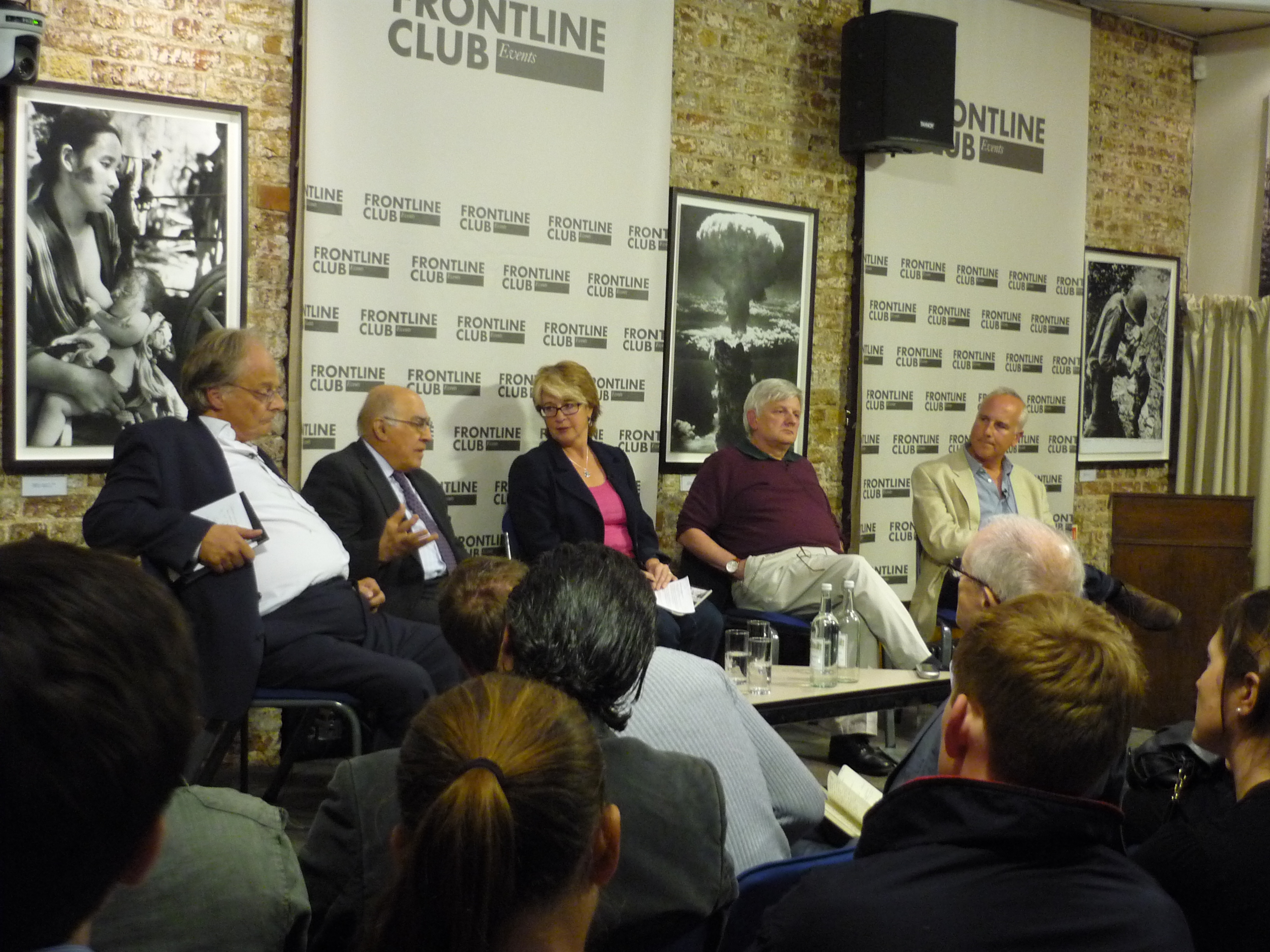
In the past few months a fresh wave of violence has swept through Iraq. The 23 July saw the worst of these attacks when a string of coordinated bombings and shootings in 15 cities across the country left over 100 people dead and many more injured.
But do these recent events really signal new depths of instability in a nation that has already suffered so much trauma in recent history? Is there a way through the maze of sectarian rivalries and power plays? And what, if any international intervention could take place to remedy the Iraqi predicament? The panel discussion on the 11 September saw four experts wrestle with these questions.
Much of the discussion focussed on precarious political situation, which is inevitably reflected in the wider community. Kamran Karadaghi, distinguished Kurdish Iraqi journalist emphasised the cyclical pattern of such violence, attributing this to underlying sectarian and therefore political fractures which have never completely healed. It is other interests, he said, that hold these factions in the balance, not true reconciliation:
“I felt that there never was real reconciliation among the different … political players.”
Senior Middle East correspondent for the Independent Patrick Cockburn, also pointed to the fragile sectarian situation within the political sphere:
“None of these people like each other, a lot of them hate each other, some have tried to kill each other, but a certain stability is there in the balance of power between them, and they all have quite a lot to lose if the present system collapses.”
During the debate the presence of oil also emerged as a key factor at play within the continuing unrest in Iraq. Putting aside sectarian conflict for a while, Professor Charles Tripp, explained how the focus on oil wealth creates a "kind of wary stability" within the government. Along with this elitism he argued, comes destabilising effects within the general populace. "If you create class privilege you create class resentment" he said, referring to the the lack of trust in state institutions.
Adding to this Tom Hardie-Forsyth spoke of his extensive military experience and criticized the inadequacy of Western intervention during the recent occupation:
“We did not have the boots on the ground to fulfil our obligations as an occupier to the civil population under the Geneva Conventions. Instead we left reconstruction and security to a bizarre alliance between private and public sector.”
Western mistakes he argued, contributed to the continuation of Mukhabarat state governance-mentality, which in turn has lead to the disenfranchisement of ordinary Iraqis. Perhaps the most poignant question asked during the evening was whether the ‘signature of Saddam Hussain’ was still visible within Iraq. The panel agreed that Al-Maliki’s security orientated government would certainly imply so.
For reactions to the discussion including those of panelist Kamran Karadaghi, watch below:
Frontline Club Events – Iraq: Escalating violence and sectarian division from Lizzie Kendal on Vimeo.
You can watch the full debate here.
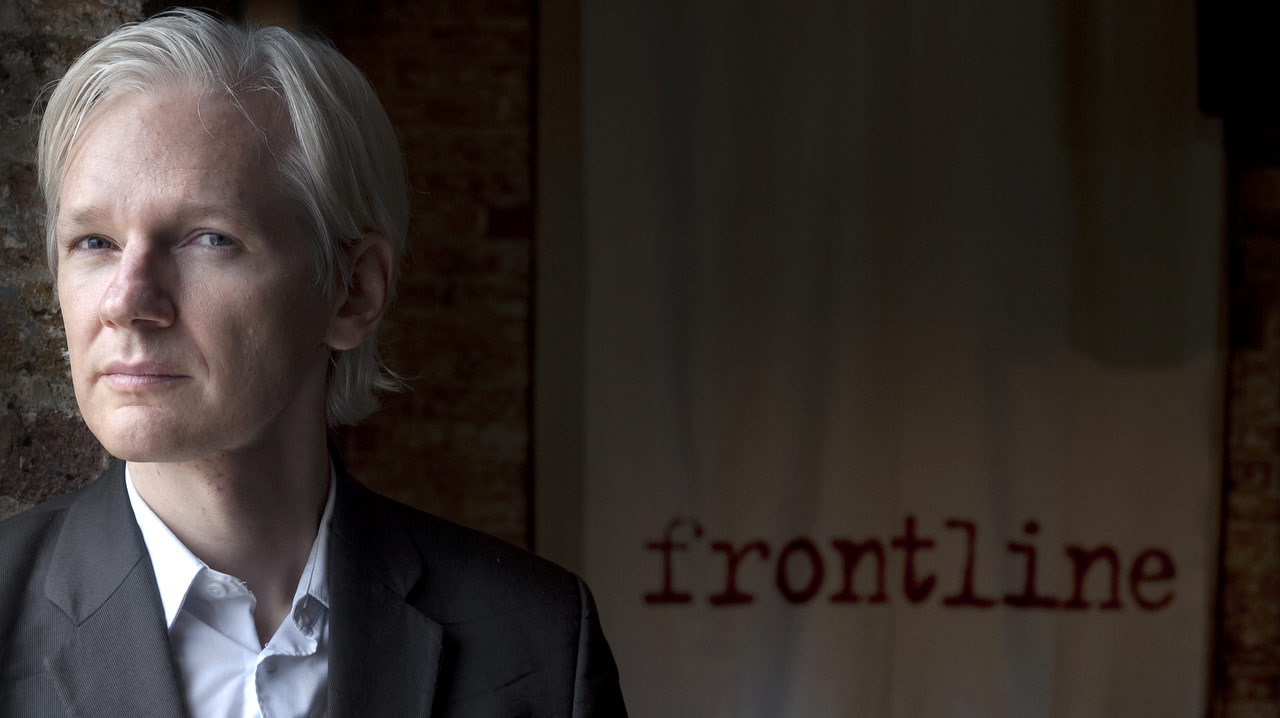
WikiLeaks, the whistle-blowing website that is in the process of releasing tens of thousands of classified documents relating to US military and diplomatic affairs, has been the subject of intense media scrutiny in recent months.
Now under arrest following allegations of sexual assault, Julian Assange and his legal team is now fighting his possible extradition to Sweden and/or the US.
Since July when WikiLeaks held its first press conference at the Frontline Club Julian Assange and other members of the WikiLeaks have taken part in a number of discussions about the issues raised by their leaking of documents on Afghanistan and Iraq and the diplomatic cables.
Each time Julian Assange or other WikiLeaks members have taken part in an event tickets have sold out at a record rate, demonstrating the level of interest in WikiLeaks and the questions their work raises.
Here is a roundup of the Frontline events involving WikiLeaks, with links to summaries and videos, along with other articles of interest.
WikiLeaks’ main website can currently be accessed here
———-
26th July 2010
WikiLeaks: Afghan War Logs – Julian Assange holds press conference at Frontline Club.
Subsequent to the previous evening’s release of 90,000 classified US military documents relating to the war in Afghanistan between 2004-2010, Julian Assange gave a press conference at the Frontline Club in front of many British and international journalists.
You can read a summary of the event and watch the video here.
Further links to media coverage of this press conference can be accessed here.
———-
27th July 2010
Special event: Wikileaks founder Julian Assange at the Frontline Club.
Julian Assange was joined by the BBC’s Paddy O’Connell to engage the audience on the impact of the leaked classified documents which chronicle in detail US military operations in Afghanistan between 2004-2010.
A video and audio podcast of the event can be accessed here.
An interview with Julian Assange about the best and worse case scenarios for WikiLeaks can be found here, along with more analysis of the evening.
———-
12th August 2010
The data revolution: How WikiLeaks is changing journalism.
The controversy surrounding WikiLeaks’ historic release of more than 70,000 classified US military documents on the war in Afghanistan has not died down. But one thing is certain: online data and its dissemination is changing journalism and the relationship between the public and those in power. In this special event, we asked:
- How are organisations like WikiLeaks changing the way public data is released?
- What do the Afghan War Logs mean for the mainstream media and government media relations?
- What are the legal implications of the War Logs files’ release?
You can read a summary of the event and watch the video here.
———-
25th October 2010
WikiLeaks: Iraq War Logs – Julian Assange and Daniel Ellsberg in conversation.
Following the leak by WikiLeaks of almost 400,000 secret US army field reports from the Iraq war between 2004 and 2009, Julian Assange was at the Frontline Club in conversation with one of the most famous whistle blowers in history, Daniel Ellsberg, who was responsible for the leak of the Pentagon Papers in 1971.
The event was chaired by Elizabeth Palmer, CBS News correspondent.
A summary and a video of the event can be found here.
———-
1st December 2010
WikiLeaks: The US embassy cables
Following the release of of 251,287 confidential United States embassy cables, December’s First Wednesday debate focused on the revelations of this latest leak from whistle-blower website WikiLeaks.
You can read a summary of the evening here and access a video here.
]]>We’ll be discussing the situation in Iran following the disputed election results at the Frontline Club tonight. Specifically, how did hotel-bound foreign journalists report from Tehran and beyond during the election and days and weeks following? We start at 7pm GMT and as usual if you can’t join us in person please come and join us on the Frontline Club broadcast channel or on the Club events page where we will be streaming the discussion. In addition, we now partner Livestation and we will be broadcasting the event with them. To try out Livestation, which gives better quality audio and video than our usual channel and allows a greater degree of interaction, you’ll need to download the software to your PC/Mac.
Joining us will be Channel 4 News International editor Lindsey Hilsum, Behrouz Afagh, head of the Asia & Pacific Region for the BBC World Service, CBS News correspondent Elizabeth Palmer, one of the last US network journalists to leave Iran and The Times journalist Marie Colvin.
]]>