Following the success of Girlfriend in a Coma, director Annalisa Piras brings us an artfully constructed depiction of how Europe is sleepwalking toward disaster, starring Angus Deayton in fiction scenes from a post-EU future. Piras pairs an imagined view from a dystopian future with insightful analysis by ordinary Europeans and economic and political experts on how and why things are going so wrong.

With an innovative form that combines playful narrative and hard facts, the film examines the identity crisis of current-day Europe and the complex challenges that are mounting against the Union’s survival. Beset by growing nationalism, seven years of economic crisis and an increasing dissatisfaction with its undemocratic political structure, will Europe sleepwalk into catastrophe as it did one hundred years ago?
Using beautiful photography, expert interviews, personal stories, and archival footage, Piras constructs a picture of a Europe that is worth fighting for, but which, if things carry on as they are, looks destined for disintegration. Through 5 different European stories – in Britain, Sweden, Germany, Spain and Croatia – the film creates a unique, choral portrait of the “European dream” and how it could be lost forever.
]]>What do a dead poet, organised crime and the air we breathe have in common?
On Thursday 21 November the Frontline Club screened The Carbon Crooks – director Tom Heinemann’s exposé of the massive fraud and failures within global carbon trading schemes.
Heinemann introduced his picture thus:
“This film is a about a system where, one could say everybody are crooks, or nobody are crooks. . . . How can you nail a whole system? That was the challenge in this film. Maybe you’ll find a lot of crooks in this film, or maybe you’ll find no crooks.”

Director Tom Heinemann. Photography Credit: George Symonds
The first question from the audience asked: “The VAT carousel has been known for 20 years. How is it possible that they didn’t think of it for emissions trading?”
“That’s a very good question,” said Heinemann, “that the EU Commission didn’t want to answer me either. . . . I don’t know who designed the system, but I’m sure someone has some red ears, somewhere. It took them way too long to stop this. Way too long.”
“Are we going to move away from market-based mechanisms?” followed another audience member.
“Well, I’m a journalist. I ask questions, I don’t give the answers,” began Heinemann. “But, my impression is that . . . the politicians today say, ‘We can’t do it better so we’ll pick the second or third best system.’ What can we do about this? I don’t know. Kevin Anderson, the advisor for the British government on climate issues has stopped flying. He has said, ‘I’ve used my credits.’”
https://twitter.com/CCESltd/statuses/403805857760428032
In response to a question on police investigations Heinemann explained:
“The real problem here is that most of the scam money came from organised crime. We have drug dealers, terrorist funders – the scum of the earth – have laundered money into these VAT carousels. There are a lot of investigations going on . . . there are employees of Deutsche Bank still accused of laundering carbon credit money.”
On why the authorities refuse to answer where the missing – traceable – credits have gone:
“Why don’t they tell us? Maybe it’s too embarrassing,” offered Heinemann. “Maybe it would reveal that these credits have been in so many ‘honest hands.’ . . . You heard the Director of Europol, Rob Wainwright, saying it’s easier to hack into a carbon credit registry than stealing a car. I mean, that’s really trustworthy isn’t it? These questions need to be asked by people other than me, because there are a lot of people who don’t want to talk to me any more.”

Heinemann then expanded on the connection between carbon trading and international development:
“Gold Standard admits to us that half of their projects – about 60 – throughout the world are based on a system called ‘suppressed demand’. Meaning, you ask the poor people, ‘If I brought in a money tree, and you pluck it every day, would you then change your behaviour?’ . . . It’s not a big part of the system but a very important story. Because it was created by a lot of NGOs, based on a mathematical economic theory where the Danish professor says, ‘In the old days we had the vicar, we could go and get redemption. Today we have a long mathematical formula.’ So it fits!”
Heinemann concluded with his forecast for future carbon control:
“The head of communication for DONG Energy, a 80% state-owned Danish energy company, admits it has never been cheaper to pollute than today. It is cheaper than ever. Then there’s something wrong with the system. . . . The problem is that the market cannot reduce carbon emissions, apparently.”
More information about the film can be found at The Carbon Crooks website.


Shereen El Feki has spent the past five years travelling across the Arab region asking people about sex. Blending interviews, statistics, opinion polls, journalism and personal reminiscence, in her new book Sex and the Citadel: Intimate Life in a Changing Arab World, she explores this intimate and often highly sensitive facet of life in a changing Arab world. She will be joining us in conversation with columnist and broadcaster, Jenni Russell.
 From the taboo of premarital sex to trouble in the conjugal bed; from sexed-up writing to censored movies; from debates over sexual education and abortion to the incendiary topic of unwed motherhood; from the booming business of sex work to the struggles of those who break the heterosexual mould, El Feki examines the complexity of sexual intolerance and liberty in the Arab world and how it is entwined in religion, tradition, politics and economics.
Shereen El Feki is a writer, broadcaster, and academic who started her professional life in medical science before going on to become an award-winning journalist with The Economist and a presenter with Al Jazeera English. She is the former vice-chair of the UN’s Global Commission on HIV and the Law, as well as a TED Global Fellow. She writes for a number of publications.
]]>It was standing room only as an energetic audience gathered for the Frontline Club’s monthly showpiece First Wednesday. Chaired by the BBC’s ever exuberant Paddy O’Connell, a panel of political experts and commentators tackled the state of play as the US gears up for the Presidential election on 6 November.
Following Mitt Romney’s controversial response to the attacks on the US missions in Egypt and Libya, proceedings opened with an inspection of the candidates’ foreign policy credentials. The speakers discussed his British blunder when he suggested London was unprepared for the 2012 Olympics and his strong rhetoric over Russia. Referring to the latest Romneyshambles, Channel 4 News’ Felicity Spector argued that foreign policy is one of the incumbent’s strengths:
“This could be just the kind of incident that changes people’s minds. … One of the criticisms that Obama brought forward at his convention speech is that Mitt Romney’s very inexperienced at foreign policy. Obama’s had those four years in the White House, taking those 3 am calls making difficult decisions. He now feels that he’s allowed to make that kind of criticism.”
Alex Spillius of the Daily Telegraph suggested that foreign policy could prove decisive come November:
“It was meant to be an economy election but because the race is so tight small factors could make a key difference and Romney’s messing up foreign policy. I don’t think he’s got the measure of how to deliver his policy yet. Obama killed Osama and that’s a huge score.”
The panel agreed that the state of the American economy is of utmost importance for the majority of American voters. Stacy Hilliard, former vice chairman of Republicans Abroad UK stated that the Obama camp is attempting to avoid discussion of economic policy.
“I saw the Democratic convention and it sounded like a Baptist revival. They were talking about issues that people don’t talk about when they go to the polls. The fact that they don’t talk about the economy suggests that they’re afraid to. Every person who spoke talked about abortion.”
Chair of Democrats Abroad UK Robert Carolina responded with a staunch defence of Obama’s economic legacy.
“The United States’ auto-industry was saved by government intervention. That was a tremendously good investment that helped to save the economy and save Detroit, Chrysler and General Motors. Let’s not forget that half of the entire debt is attributable to over spending by George W. Bush.”
Yet this message has proved difficult to sell to the electorate in the past and the panel agreed that this is the main worry for the President.
As the evening progressed, an engaged audience opened debate on specific battles that will be fought over the next 8 weeks, including immigration, socio-cultural issues including gay marriage, rape, race and religion. However the panel came full circle and agreed that it will most likely be economic policy that will secure the next President his place in the Oval Office.
Watch the full debate here:
]]>
A lively audience gathered at the Frontline Club as a distinguished panel grappled with the factors driving change in India. Leaving the country’s recent growth wobble aside, the panellists unravelled the economic revolution that has thrust India to the front of the global stage.
The discussion began on a positive note as travel writer and author Oliver Balch recounted stories from his latest book India Rising. His optimism for the future of India lays in his belief that young Indians can now realistically aspire to a professional career.
“For the first time if you’re the son of a carpenter, who’s the son of a carpenter, you don’t necessarily have to be a carpenter. That is a dramatic change… For the Indian youth to have the chance to be something else, that’s what the economic story has given.”
Balch’s positivity was complemented by the cautious optimism of second speaker Dr. Ruth Kattumuri, co-Director of the India Observatory and Asia Research Centre at LSE. Stating that India has improved vastly in the past 40 years and remains a work in progress, Kattumuri praised the strength of India’s plural democracy.
“The fact that people have a voice to say what they want, to go and demonstrate in the streets, the fact that Anna Hazare is able to influence certain things in the country, that’s what makes India dynamic.”
Moderator Shahzeb Jillani, South Asia Editor at BBC World Service News then brought in Abhik Sen of the Economist Group and the discussion moved towards doubts over the sustainability of India’s rise.
“For everything that is true about India, the opposite is true as well. For every great entrepreneurial success story that Oliver’s written about, there are thousands if not millions of possible success stories that have been stymied by all kinds of forces beyond the control of individuals.”
Sen cast doubt on the popular idea that India is a land of inventive entrepreneurs, stating that many Indians have to show a street wise cunning in order to survive.
“This entrepreneurial spirit that we talk about, it’s not something that’s been plucked from Mars. It is something that all Indians have to be to get through daily life. You have to be an entrepreneur of sorts to get a gas connection or a phone connection. You have to be innovative and inventive to make sure that you’ll have food on your table.”
Robert Wallis of the Panos photo agency added another sceptical voice as the lights were dimmed and the audience treated to a multimedia piece. The short piece detailed the impact of mining activity on agrarian communities in Jharkhand state.
“Most of these mining operations are highly industrialised so there’s very little employment for former farmers. The only employment that results for the people whose land this once is usually a type of scavenging.”
In a lively Q & A session, the panel debated the above issues without reaching a consensus although they agreed that the implementation of people’s rights is an important step for India.
Does the Demotix citizen journalism agency offer a model for the future or will it simply undercut the professionals? Love them or hate them, Demotix has made its mark on the industry. Our networking party tonight offers the opportunity to meet Demotix CEO Turi Munthe and hear about their work as well as network and enjoy some complimentary drinks.
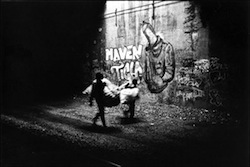
Tomorrow we have Dutch photographer Teun Voeten who will be discussing his insightful photography project which documents the lives of people living under Manhattan in its network of tunnels.
Next week at the Club we have two events which we hope will help throw light on key issues in the wake of tomorrow’s spending review: Who better to discuss the current economic crisis than BBC Newsnight economics editor Paul Mason and playwright David Hare, both of whom have explored in different ways the 2008 banking crisis and its causes.
Then we have a panel discusssion that will focus on the international development budget and the planned changes to be made by the coalition government.
]]>Tonight we’ll be in discussion with Paul Mason, BBC Newsnight’s Economics Editor, about the financial crisis as we ask the question – Is this the end of the age of greed? Paul will be talking with Michael Wilson, Business Editor of Sky News. As usual, we’ll be livestreaming the event on the Events page and on the Frontline Club live channel. We start at 7pm GMT/11am PST tonight April, 23,
]]>Paul Mason talks about the ongoing financial crisis that has brough the global economy to the brink of depression. Gordon Brown hailed the result of deregulation as the ‘golden age’ of banking in the UK. Mason will give insights into how deregulation is at the heart of the collapse of the banking system in September and October 2008 and how it led to expanded subprime mortgage lending, an uncontrollable derivatives market, and the lethal fusion of banking and insurance.
In his latest book Financial Meltdown and the end of the Age of Greed Mason goes on a journey from the trading floors of the New York and London stock exchange, to the meeting rooms of HBOS and Lehman Brothers and the minds of senior government officials. Meltdown explores the roots of the US and UK’s financial hubris, documenting the real-world causes and consequences, from the Ford factory, to Wall Street to the City of London. link