Some speculate that the violence in Kasai is threatening to overshadow the fighting in 2012 when the M23 rebel movement took over the city of Goma.
Aid agencies claim it is the worst-affected area of conflict displacement in the world. Yet in a Thomson Reuters Foundation survey, it was named the most neglected conflict in the world in 2017. Civilians bear the brunt of the violence in the fighting and displacement.
Is 2018 a year without hope for the country? Have the media and aid agencies neglected the brewing conflict turning instead to the Syrian Civil War and the Rohingya exodus from Myanmar? Our panel discuss and report on the ongoing catastrophe.
Chair
Ben Shepherd is a leading specialist on African politics and conflict, policy formulation and applied analysis. He has a broad range of experience across West and Central Africa, with a particular focus on the DRC and wider Great Lakes region.
Speakers
Mélanie Gouby is an award-winning investigative journalist, writer and documentary filmmaker based in London. Her work focuses on conflicts, politics and the impact of corruption on social cohesion, development and the environment. She was the East Africa correspondent for the French newspaper Le Figaro in 2014-2016, and has contributed to The Guardian, The New York Times, The Associated Press, Foreign Policy, Newsweek, National Geographic, France 24 and Vice, among others. From 2011 to 2014, Mélanie lived in Goma, in the east of the Democratic Republic of Congo, where she covered the rise and fall of the M23, the latest rebellion in Congo’s protracted war. She led the investigation into a British oil company’s illegal activities in the Virunga National Park for the Oscar-nominated documentary Virunga, winner of a Peabody and duPont-Columbia Award for outstanding journalism. Her interest for the Great Lakes region began while she covered the trials of Congolese warlords at the International Criminal Court in The Hague from 2009 to 2011. Mélanie studied Politics and International Relations at the University College London.
Jean-Roger Kaseki is a human rights campaigner in the UK and the DR Congo. He is a Labour councillor for Tollington Ward, Islington and a human rights and social justice research institute associate at the London Metropolitan University.
Tom Wilson is a journalist with Bloomberg News. He’s worked on Congo for the last 10 years. From 2015 to 2017 he was based in Kinshasa and traveled the country reporting on business, politics and conflict. His investigations have plotted the vast business empire controlled by the president’s family and the relationships between members of Congo’s political elite and some of its biggest investors. In doing so he’s sought to consider how and why Congo’s president and his entourage might seek to hold on to power. Now based in London he continues to write about Congo.
Alex Ntung was born and grew up in a semi-nomadic, pastoralist and cattle herding tribe in South Kivu (DRC), he has experienced conflicts and violence, and lost many close relatives. He is a political and security analyst (DRC), a Member of the UK Expert Witness Institute and author of Not My Worst Day: A personal journey through violence in the Great Lakes Region of Africa (EARS Press, 2013). He is an international speaker, human rights advocate and fellow of the Royal Society of Arts. Alex is a PhD research candidate at the Centre of Conflicts Research Analysis, Kent.
Photo: Junior Kannah—AFP/Getty Images
]]>

Godfrey Mwampembwa, is a renowned political cartoonist. Originally from Tanzania, Gado has lived and worked as an editorial cartoonist in Kenya for many years, and currently works for The East African Standard in Nairobi. His cartoons have also been published in Daily Nation (Kenya), Le Monde and Courrier International (France), Deutsc he Welle (Germany), and The Guardian (UK) among others. He is the Co-Founder and Executive Chairman of Buni Media, an independent multi-media company based in Nairobi, where he produces the weekly satirical puppet show, The XYZ SHOW. Gado is a recipient of many awards including the Kenya National Human Rights Commission Award in Journalism in 2005 and 2007 and the prestigious Cartoon for Peace 2016 International Editorial Cartoon award. In 2011 Gado was among 12 extraordinary leaders to receive a Visionaries Award from Ford Foundation for their innovative efforts on the frontlines of key social issues. In 2014, Gado was named as one of the 100 most influential people in Africa by the New African.

Nic Cheeseman is Professor of Democracy and International Development at the University of Birmingham. In addition to numerous book chapters, he is the author of Democracy in Africa: Successes, failures and the struggle for political reform (CUP, 2015) and over twenty journal articles including “Rethinking the ‘presidentialism debate’: Conceptualizing coalitional politics in cross-regional perspective” (Democratization, 2014), which won the inaugural GIGA prize for the best article published in Comparative Area Studies. Professor Cheeseman is also the editor of the collections Our Turn to Eat: Politics in Kenya Since 1950 (2010), The Handbook of African Politics (2013), and African Politics: Major Works (2016), and two special issues of the Journal of Eastern African Studies on the Kenyan elections of 2007 and 2013. As well as being the former editor of the journal African Affairs, the #1 ranked journal in Area Studies, Professor Cheeseman is the founding editor of the Oxford Encyclopaedia of African Politics, the Oxford Dictionary of African Politics, and the co-editor of the Handbook of Kenyan Politics (forthcoming). These days, he spends much of his time writing about contemporary events in Africa in a bi-weekly column for Kenya’s Daily Nation newspaper.
]]>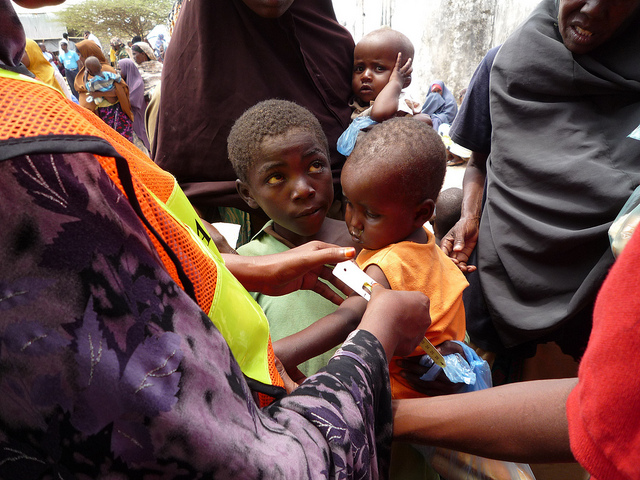
When you think of Somalia, what comes to mind?
Conflict? Pirates? Refugees? Poverty?
Somalia is still a dangerous place for journalists to operate: according to the Committee to Protect Journalists five journalists have been killed there this year.
But improvements in the security situation are offering new opportunities to access stories that may have been too risky to cover in recent years.
Yesterday, I headed along to a seminar at the Dart Center to discuss how Somalia is represented in the media. The informal meeting allowed journalists and other interested observers to share their experiences and grapple with the challenges and opportunities of reporting from the East African country.
The award winning Somali reporter Jamal Osman helped kickstart debate by highlighting a number of weaknesses with journalism from Somalia.
He suggested that a lot of local Somali journalists are young and have not always had access to education as many grew up during Somalia’s civil war after 1991.
He said they do not always "think responsibly" and are under both conscious and unconscious pressure to report stories in the interests of their clan. He believed reporters would benefit from more education in the ethics and principles of journalism.
He also noted that because "money is tight" journalists are understandably likely to value stories for their economic worth rather than their public value – a problem that is far from unique to Somalia.
Turning his attention to international media coverage, Osman argued that journalists often misunderstand the intricacies of clan loyalties, inaccurately portraying conflict in Somalia within the framework of "good vs evil".
As an example, he cited the fact that Somali officials speak to members of the insurgent Al Shabaab group because of shared family and clan ties.
Osman made a strong appeal for independent journalism and was concerned about embedding with other organisations including African Union troops as part of the mission in Somalia (AMISOM) and aid agencies.
Al Jazeera English’s Juliana Ruhfus pointed out that obtaining secure access to Somalia remains a problem for international media organisations. She argued, however, that the cultivation of good local contacts was a starting point for more "human stories", "analysis", "investigative pieces" and "meaningful long form coverage that goes beyond news".
Participants emphasised that there were plenty of fascinating stories waiting to be told outside a media narrative which emphasises poverty, conflict and piracy.
Mary Harper, BBC World Service Africa Editor and author of Getting Somalia Wrong offered some examples including the export trade in livestock and the discovery of oil reserves.
One useful suggestion which came up at the seminar was the possibility of creating some form of media monitoring of output related to Somalia after a number of journalists present had expressed their concern at coverage of the country in recent TV documentaries.
Photo: UNICEF/Iman Morooka