By Gianluca Mezzofiore
A panel at the Frontline Club, chaired by Mark Galloway, director of International Broadcasting Trust, an educational and media charity which works on range of projects to promote media coverage of the developing world, discussed yesterday the problems linked with media and aid.
“We have ups and downs and a lot of criticism, but on the whole there’s a good relationship with the disaster emergency committee. We need each other,” said Fran Unsworth, head of BBC newsgathering, who added that the corporation had a responsibility to licence fee payers to provide the information they require for their lives.
“We have to be responsible to our audience, but not audience-led,” she said. “It is our challenge to make the complex stories interesting for them.”
Andrew Hogg, Christian Aid news/campaigns editor and former news editor of the Sunday Times and Observer, admitted that NGOs need media to raise money and to highlight issues. “The relations with media is healthy and functional only if it involves mutual responsibility,” he added. “There is a huge responsibility upon us, but also media has the responsibility to report on what we do in a fair manner.”
“The BBC documentary on aid agencies in Haiti which collected money but failed to deliver goods on the ground was interesting, but one-sided and created a deep impression in the public opinion,” Hogg said. “We deserve a proper scrutiny.”
Benjamin Chesterton co-founder of the production company Duckrabbit and the website A Developing Story, raised his concerns about media outlets relying too much on aid agencies. “When you a see a whole BBC photo gallery with aid agencies’ by-lines, instead of the photographer’s name, the independence of media is compromised,” he said. “Balance is fundamental, but we start losing it because aid agencies are too much on the grip of media.”
Unsworth replied that the BBC has no problems with aid agencies providing photos, as long as they are well-known and reliable. “There are strict policies about libelling,” she said. “It is not about giving credit to someone, but being transparent with our audience.”
Independent writer and consultant, Michael Green was director of communications at DFID from 2003 to 2007 and co-author of Philanthrocapitalism and The Road From Ruin. He expressed concern about the government’s policy on international aid and increasing the budget and commitments “despite the negative economic growth”
“Politicians should hear the public opinion’s voice,” he said. “There is a benign conspiracy among political elite to push aid ahead of public opinion.”
According to the EU barometer website 91 per cent of Britons still think it is important to help developing countries, but the percentage of people who thinks the government should give more aid has decreased from 50 per cent to 35 per cent since 2007.
A crisis of confidence is coming in the aid business. Part of the problem is how to engage people on these complicated issues. The other problem is with NGOs lobbying and campaigning. However, aid agencies are beginning to use online platforms, which give rich experience to the public and give them a chance to participate and engage with the NGOs. Like a shark has to stay alive, NGOs must communicate to propagate their brand.
Watch the video here:
]]>Experts on international aid marked yesterday the importance of effectiveness and risk-taking in delivering money to countries in need of help. In a panel discussion chaired by Humphrey Hawksley, leading BBC foreign correspondent, four professionals on humanitarian issues admitted the failure of project-based development and stressed on the major role of local people as “big drivers” of the development.
“Let’s put more money into people,” said Paul Ackroyd, International Development Consultant ” and put emphasis on things which improve effectiveness. Don’t build schools, for instance, but support education programme experts.”
Samir Elhawary, Overseas Development Institute (ODI) research fellow, examined the role of humanitarian action in conflict-affected emergencies: “We should invest in contexts where there are national security issues,” he said “and reconsider our criteria for instability in countries like Yemen and Afghanistan. Let’s start including people that do not share our same values.”
The top line for Dorcas Erskine, ActionAid head of public affairs, is transformative development and investment in women: “Brave, radical women should be involved in the growth of developing countries,” she said.
“Value for money” is Michael Anderson‘s motto. Director general for policy and global issues at the UK’s Department for International Development, Anderson focused on the relevance of national security problems: “Aid is important, but it’s just a limited part of development,” he said. “Different organizations have to be humbler. People from developing countries drive the main development.”
He also said that Western Countries have learned a lot in the last 15 years on international aid. “Projects alone don’t produce change,” he added. “Changing one village alone won’t change the system. Working with the local government is essential.”
Listen to the podcast here:
]]>In the first of a series of events looking at international development and the aid industry we will be examining the UK international development budget and the implications for foreign aid. What is the coalition government’s policy towards the development budget and what impact will the proposed changes have on countries around the world?
The government has signalled its intention to retarget a large porportion of the budget to achieving stability in Afghanistan, but is there a danger that the line between development aid and military intervention becomes increasingly blurred? What will be the impact of cut backs in aid to countries such as India, China and Russia?
Join us at the Frontline Club with an expert panel to discuss the coalition government’s shake up of the international development budget and if they have their priorities in the right places.
Chaired by Humphrey Hawksley, leading BBC foreign correspondent, author and commentator on world affairs.
With:
Michael Anderson, DFID director general for policy and global issues;
Dorcas Erskine, ActionAid head of public affairs;
Samir Elhawary, ODI Research Fellow, currently researching the evolving role of humanitarian action in conflict-affected emergencies, with a particular focus on the interface between humanitarianism and politics;
Paul Ackroyd, International Development Consultant.
]]>
Does the Demotix citizen journalism agency offer a model for the future or will it simply undercut the professionals? Love them or hate them, Demotix has made its mark on the industry. Our networking party tonight offers the opportunity to meet Demotix CEO Turi Munthe and hear about their work as well as network and enjoy some complimentary drinks.
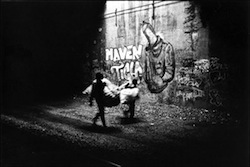
Tomorrow we have Dutch photographer Teun Voeten who will be discussing his insightful photography project which documents the lives of people living under Manhattan in its network of tunnels.
Next week at the Club we have two events which we hope will help throw light on key issues in the wake of tomorrow’s spending review: Who better to discuss the current economic crisis than BBC Newsnight economics editor Paul Mason and playwright David Hare, both of whom have explored in different ways the 2008 banking crisis and its causes.
Then we have a panel discusssion that will focus on the international development budget and the planned changes to be made by the coalition government.
]]>