By Nicole Hunt
Though it’s sometimes difficult to keep track of which Silvio Berlusconi trial is currently in court, Monday sees the resumption of the most infamous of his four cases, in which he faces charges for abuse of power and paying for underage sex. The Italian Senate has approved a motion to move the case from Milan’s court to a special minister’s court, but the case remains in Milan while the Constitutional Court mulls the Senate’s request.
The Council of Europe Parliamentary Assembly opens, with more attention than usual being paid this time around. On Tuesday, the Assembly debates a motion that would recommend taking action against pre-natal sex selection in Europe, particularly in Albania, Armenia, Azerbaijan and Georgia, where the ratio of girls to boys in the population is dropping. On Thursday, Palestinian Authority President Mahmoud Abbas addresses the assembly.
Following a meeting of Eurogroup Finance Ministers on Monday, all EU Finance Ministers convene in Luxembourg on Tuesday, with the focus, as with many things this week, squarely on Greece. Discussions are also expected on an EU financial transaction tax, after the European Commission published proposals last week.
In direct response to the austerity measures being so closely watched by the European Finance Ministers, Greek public sector workers hold a 24-hour strike on Wednesday, calling the cuts ‘barbaric’. A general strike is also planned for 19 October.
Meanwhile, in Brussels, German Chancellor Angela Merkel attends the weekly meeting of the European College of Commissioners. At NATO headquarters, NATO Defence Ministers hold a regular meeting to discuss operational issues, with Libya topping the agenda.
Former Bosnian-Serb Army Commander Ratko Mladic is back in court in The Hague on Thursday. Since his last appearance on 25 August, Mladic’s lawyers have requested the names of all 7,000 victims of the Srebrenica massacre as part of their opposition to the indictment.
In Johannesburg, the African National Congress’ disciplinary committee resumes hearing the charges against controversial youth leader Julius Malema, who is accused of interrupting an ANC Officials meeting alongside three other men. Malema faces separate charges of bringing the ANC into disrepute and sowing divisions within ANC ranks, which will be heard separately once this case has concluded. It’s currently scheduled to last two days, but has already been delayed several times.
Friday is, oddly, both the 10 year anniversary of the beginning of the War in Afghanistan and also the date for the announcement of the winner of this year’s Nobel Peace Prize in Oslo. Anti-war activists hold mass demonstrations in London and Washington on Saturday, while the Peace Prize will be presented to the winner on 10 December.
Archbishop Desmond Tutu celebrates his 80th birthday and a year since he stepped down from public duties. Three days of celebrations are being held in Cape Town, and a new biography is being released to mark the day.
Spanish ‘indignant’ activists who have marched 1500km from Madrid are scheduled to arrive in Brussels on Saturday to hold a demonstration against unrepresentative politics. The protesters, who are joined by counterparts from across Europe, plan to hold a week of events, culminating in a large rally on 15 October.
Two elections take place on Sunday: voters in Poland elect 460 members to their lower house and 100 members to their upper house of parliament, while in Cameroon voters elect their president for the next seven years. Incumbent Paul Biya is only the second president since independence in 1960, and has held the post since 1982.
The Archbishop of Canterbury Rowan Williams is in Zimbabwe on Sunday, making him the first high-profile UK official to visit the country since 2001. The visit is part of a three-country pastoral tour which also includes Malawi and Zambia. Williams is expected to meet with President Robert Mugabe, and is scheduled to hold a special service for members of the Anglican Church who have not joined a splinter movement set up by the former Bishop of Harare.
]]>By Allan Williams
Former Panamanian dictator Manuel Noriega has until Monday to appeal against his extradition to Panama. The 77-year-old is currently serving a prison sentence in France after being convicted of money laundering in July 2010.
On Tuesday attention turns to Japan when the Parliament elects its sixth Prime Minister in five years. Incumbent Naoto Kan announced he was stepping down over plummeting approval ratings, following the earthquake and tsunami earlier this year.
Wednesday sees Canada release its second quarter GDP figures. Fears of the economy contracting grew following an announcement earlier this month that manufacturing sales declined 1.5per cent in June, to their lowest level since November 2010.
Also on Wednesday South African President Jacob Zuma makes a state visit to Norway at the invitation of King Harald V. The two-day trip includes a wreath-laying ceremony at the National Monument and a meeting with Prime Minister Jens Stoltenberg.
In the UK, on Thursday, repatriations of deceased British troops move from RAF Lyneham to RAF Brize Norton. RAF Lyneham and the parade through the nearby town of Wootton Bassett have made the headlines with the dignified way locals have mourned the fallen.
In Thailand that same day, Chiranuch Premchaiporn, editor of the liberal news website Prachatai, has her trial for lese majeste offences recommence. It is alleged that Premchaiporn failed to screen comments on her website that were critical of the Thai royal family, and if convicted faces up to 20 years in prison.
Attention turns stateside on Friday, when a US district court decides whether to order a retrial of former baseball star Roger Clemens, who was accused of lying to Congress in 2008 when he denied using anabolic steroids. The original trial was declared a mistrial on 14 July.
In London on Saturday the far-right English Defence League are expected to demonstrate in the borough of Tower Hamlets, against what it sees as militant Islam. The march is expected to be banned by the Home Secretary, but the action group Unite Against Fascism has arranged a counter-protest against the EDL.
On Sunday the UN Special Representative on Somalia Augustine Mahiga convenes a conference in the east African nation to provide clear timelines and benchmarks for the Transitional Federal Institutions.
And in Germany there’s a test for Chancellor Merkel’s coalition when state elections take place in Mecklenburg-Vorpommern, with local elections coming under increasing scrutiny as a gauge of popularity for Angela Merkel’s Christian Democratic Union.
]]>Three military episodes are dominating headlines following reports from the German parliamentary ombudsman to the military.
– The treatment of officer-cadets onboard the German Navy tall ship Gorch Fock, including events surrounding the death of a female midshipman after she fell from the ship’s rigging during a training exercise, and whether several fellow midshipmen behaved in a way that could be deemed mutinous. Currently the vessel is in Argentina. The captain has been relieved of his command. An investigation is underway and the vessel has been ordered to return to Germany. (DW-TV report in English)
– The investigation into the death of a soldier in December last year at the Pol-e-Chomri base in Afghanistan. It was first suggested an accident occurred while the soldier was cleaning his weapon. German media are now reporting up to 10 troops may have been fooling around and the soldier was killed by the weapon of a comrade.
– Feldpost: the unauthorized opening and tampering of letters posted by soldiers deployed in Afghanistan.
Minister zu Guttenberg obviously has a lot of explaining to do about what’s happening inside the German military and his own department. He is also under pressure from opposition parties over whether he’s adequately informed parliament about the Gorch Fock incidents.
All of this comes at a time when Germany’s troop commitment in Afghanistan (and the timing of a possible withdrawal) is under debate, as well as what is the future of a smaller, professional German armed forces following the ending of compulsory military service.
Thomas Wiegold of the excellent German defence blog augengeradeaus.net has produced a good Audioboo summary of the Gorch Fock reports in English.
And a Süddeutsche Zeitung interview with Minister zu Guttenberg also tries to zero-in on what the Minister did or did not know about these events and what action he is taking. A translation is below.
(Interview conducted by Peter Blechschmidt, published 21 January 2011.)
]]>SZ: Minister, is the Bundeswehr covering up unpleasant truths?
Guttenberg: That should never be the strategy of the Bundeswehr, and that is also not the case.
SZ: But in the case of the soldier killed in northern Afghanistan also with the situation onboard the Gorch Fock has your Ministry not told the whole truth?
Guttenberg: Nonsense. In the case of the soldier killed it was officially known on the day after the accident, that possibly a second person was involved. The public prosecutor’s office were immediately informed and is investigating. With the investigation underway to gain evidence of the actual events, we can not make comments out of respect to those involved.
SZ: And of the alleged mutiny onboard the Gorch Fock, you hadn’t heard anything up till now?
Guttenberg: I was informed about that accusation through the documents of the military ombudsman dated 17 January. I immediately directed the Inspector of Navy and the head of the legal department here in the Ministry to clarify the facts. You will not hear any pre-judgement from me. But if these accusations are true, then there will be clear consequences. Generally speaking: degrading drill can not be tolerated. And the accusation of mutiny is a very serious one, in light of what I know so far.
SZ: But aren’t the accusations relating to the Gorch Fock so grave that you as Minister should have been informed?
Guttenberg: Part of the investigation will be to determine if the lines of communication were respected. If there were failures there will be consequences. All of that must be clearly explained. On this matter I have little patience.
SZ: After the death of the female midshipman aboard the Gorsch Fock the training exercise was suspended. At that time the impression came about this appears to have been merely an act of compassion.
Guttenberg: The responsible Inspector of Navy had decided out of technical reasons to suspend the training and to send the training crew back to Germany. The Gorch Fock though should continue her journey.
SZ: And you hadn’t heard about the opening of letters posted from Afghanistan?
Guttenberg: The responsible military leadership in charge did not have any knowledge of this. My mind reading skills are therefore very limited. But here too the investigations are in full swing.
SZ: Are these emerging developments now not posing the question of whether the inner leadership of the Bundeswehr has failed?
Guttenberg: Should the allegations turn out to be true we will most likely be dealing with individual failings. The inner leadership is successful and widely accepted within the Bundeswehr. To draw conclusions about the majority of Bundeswehr from potential individual misconduct – after all it’s about 250,000 soldiers – would be totally unjustified.
You might have done if you live in a constituency with specific military or defence industry links.
Dorset South, for example, includes Bovington Army camp and the MP for South Ribble notes that his constituency in Lancashire is at the heart of Britain’s defence industry.
Otherwise you might not have done.
But the Chairman of the Defence Industries Council, Mike Turner, thinks all potential MPs should be talking about defence. He argues that "practically every Parliamentary constituency has a connection to the defence and security industry".
Of course, the Defence Industries Council, comprised of Britain’s leading defence company CEOs, is keen to point out how important the sector is to Britain’s economy.
The DIC says the sector employs over 300,000 people in the UK and is responsible for £5 billion of export sales each year. (Which is an interesting figure because the UK Trade and Investment Department valued defence export sales at £4 billion in the financial year 2008-9).
Unfortunately for the DIC, the public do not seem to place the same value on defence and security when it comes to voting in this election. Which means politicians probably haven’t spent much time talking about it.
According to MORI opinion polls conducted in February and March defence policy is not at all that important to voters. I picked up these figures from an interesting post on the UK Defence Forum blog.
When MORI asked what is the most important issue affecting the country 55% said the economy, with only 14% citing defence, foreign affairs, and terrorism.
In a survey conducted between 19th and 22nd March, 32% said managing the economy was the most important issue when they were choosing which party to vote for. Only 3% regarded defence as the most important.
I’d be interested to hear from those 3%. Who are you? And who will you be voting for?
If you’re not sure what the parties’ policies on defence are you could do far worse than start with this analysis of the Labour and Conservative manifestos on the Kings of War blog. The Liberal Democrats defence policy can be found here.
(This is another post for Talk Issues. Apologies to regulars over the sparse blog offering on digital media and war reporting recently. I’m currently looking at blogs in the Gaza crisis in 2009 so time for my own blogging is a little short. I have a great post in my head about Wikileaks and Iraq and war reporting and journalism and the like…which hopefully I’ll extract from head to paper one day soon.)
]]>
Ok, here at Frontline we don’t know exactly what will happen in the unpredictable worlds of journalism and warfare over the coming years.
But we can reveal how everyone will be describing the future.
Military and media experts have gazed into their respective crystal balls (or maybe they’re sharing the same one due to respective budget cuts) and have decided that whatever does happen in these uncertain times it will almost certainly begin with the letter C.
The Ministry of Defence’s Green Paper* on defence policy has identified "five Cs" to describe the nature of future conflict:
Photo: Leo Reynolds, Flickr.
]]>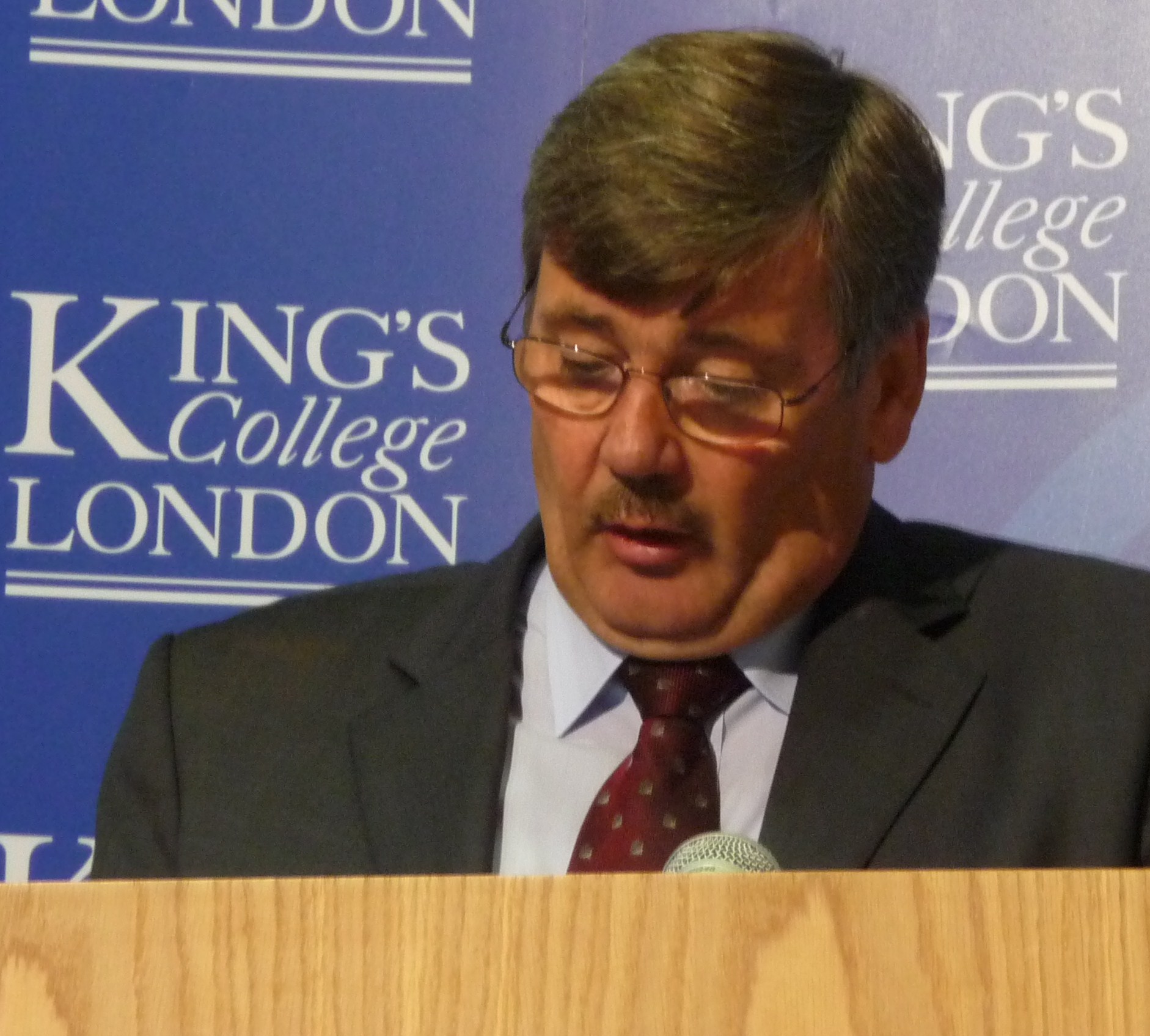
The British Secretary of Defence said operations in Afghanistan must take priority in the next Strategic Defence Review in a speech at King’s College, London.
Bob Ainsworth said longer term strategic considerations should be secondary to providing the necessary equipment and manpower to British Armed Forces in Afghanistan.
Ainsworth conceded that there was "significant" pressure on the £36 billion defence budget but refused to be drawn on where cuts, if any at all, might be made. Although he said that savings on Britain’s Trident nuclear deterrent system would be considered as part of the wider review.
It was also unclear how defence might lose out as the strings of the public purse are inevitably tightened in the future.
Military spending on Afghanistan has risen to £3 billion per annum. In addition, £1 billion has been spent from the reserve since 2006 funding new military vehicles to combat the threat of Improvised Explosive Devices (IEDs).
Beyond Afghanistan, Ainsworth identified various areas of concern including terrorist groups in failing or unstable states, the rise of Asia as a focus of political and economic power, the impact of climate change and population growth on global resources, and the migration of warfare into new spaces online.
He predicted that international intervention in the future would be more difficult and greater focus would have to be placed on the use of ‘soft’ power:
"…the course of wars will be influenced as much though diplomacy and opinion as through fighting. In an era of 24 hour news the media assumes an important and influential role."
The previous defence review took place in 1998, and although a chapter was added after 9/11, Ainsworth said it was necessary to update military thinking in the wake of rapid technological change and evolving strategic challenges.
He advocated a move towards the U.S. system of regular defence reviews and proposed undertaking one review during the course of each parliament.
A Green Paper is due to be published for full public consultation early next year. Of course, the relevance of Ainsworth’s thinking on the defence budget in the future will be highly dependent on the result of the next General Election.
Photo: Daniel Bennett
]]>