By Nicky Armstrong
Last night’s event at the Frontline Club saw a heated debate between the expert panel and the audience on the UN’s presence in Darfur. Chaired by Patrick Smith, editor of Africa Confidential, the discussion bought up many of the tangled complexities surrounding the conflict in Darfur. With the recent expulsion of the former UN head in Sudan and tensions rising in the Nuba mountains the UN has come under scrutiny, charged with failing the people of Darfur.
The discussion opened with Sir John Holmes, a former British diplomat and UK ambassador for France and Portugal. He claimed the UN had been given an impossible task dealing with a political system that was obstructing the UN, recounting the situation when he first arrived in Sudan:
“There were still regular attacks on villages by the Janjaweed, there was tribal fighting of different kinds, occasional rebel attacks form these forces and a very unstable security situation…the overall security situation was stuck, it wasn’t really moving, it was stagnant, there was no real progress and frankly it stayed that way throughout my time and its pretty much the same way now.”
Dr. Mukesh Kapila CBE went on to discuss the failures of not only the UN but of a collective failure on behalf of the international community:
“My journey did not start in 2003, it began exactly 10 years before in Rwanda…and there I saw for myself what happens when an international response system basically implodes because there are contradictions…if there is a failure it is a collective failure…this is all extremely relevant to why we failed in Darfur…. all the lessons of enquiry on Rwanda which were big enquiries of the system and produced a big report, all of [these] were forgotten.”
The deafening silence from the UN and lack of response to memos was described as an ‘amnesia’ from the very top as they remained seized up on the matter of Darfur.
Dr Ahmed Al-Shahi offered his opinion on why the UN has failed. When asked who was the principal author by an audience member, Al-Shahi went on to describe a number of factors, but it was apparent that a lot of the problems lay with the political system under President Omar Al-Bashir and his regime in Khartoum.
China’s involvement in Darfur and why the UN is not reacting as it has recently in Libya were just some of the issues raised. It seems the issue of Darfur shall remain complex, with the situation not reflecting well on the UN.
Mukesh made a poignant closing statement:
“The UN should honestly admit its failure and its paralysis, for the reasons we have been debating. But it’s a mother bearing child relationship, you can’t make yourself redundant, what it should not do is be false prophet, launch misleading missions, which distract and bring false hope…I think we should be honest, that’s what I am saying and I think the UN is bound to fail…we are talking about the 21st century with twitter and globalisation and we are dealing with an instrument that I think is a relic to the Second World War, and conflict after conflict it has proven that it can’t succeed.”
Click Here to read the Amnesty International 2011 Sudan report.
]]>
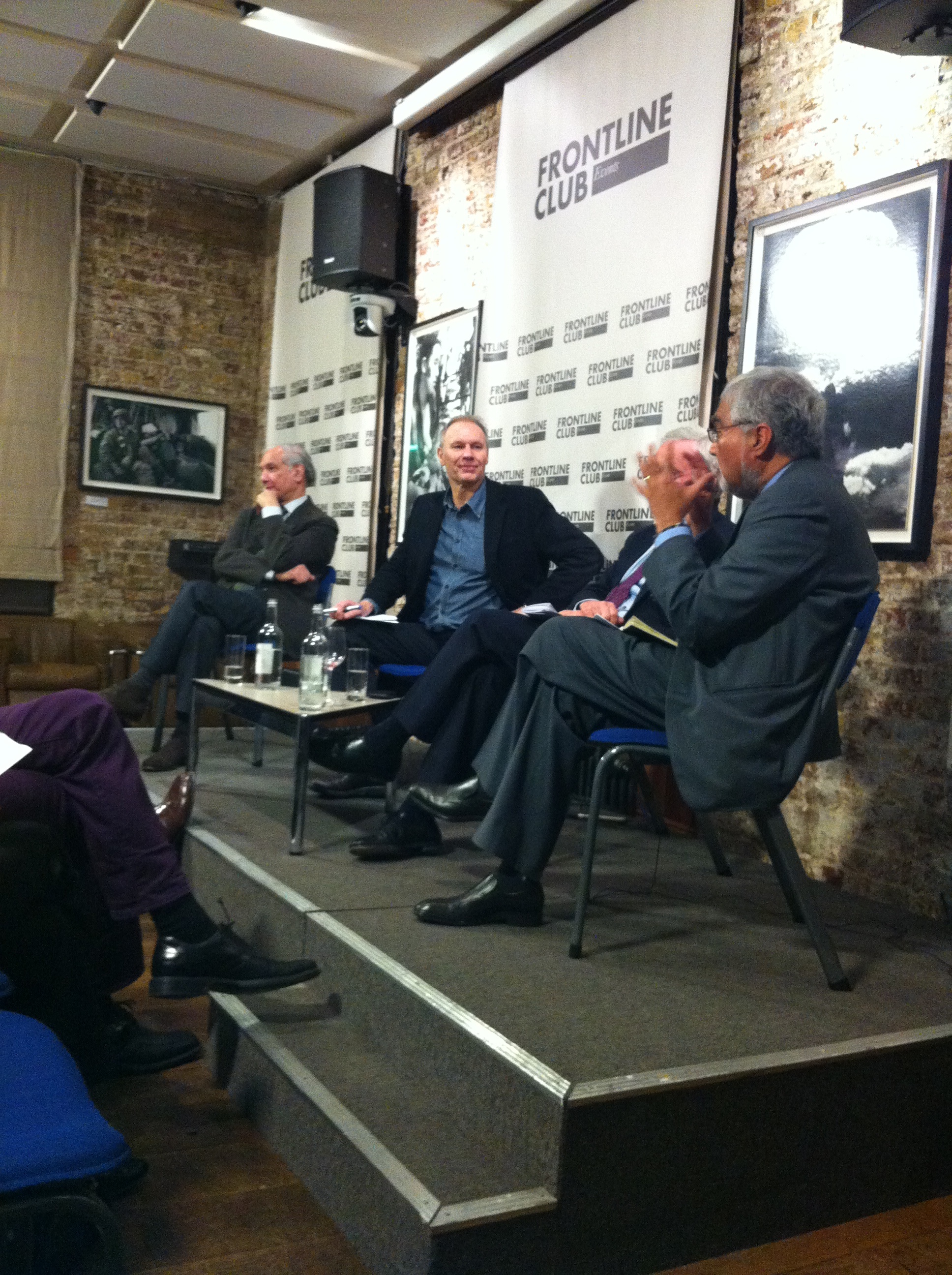
Join us at the Frontline Club to discuss the actions of the UN and whether they are still failing Darfur.
]]>https://soundcloud.com/frontlineclub/nine-years-on-is-the-un-still
Since the start of the 2003 conflict in Darfur, questions have been raised about the role played by the United Nations and the viability of its mandate.
With the recent expulsion from Chad of the former UN head in Sudan during the original outbreak of violence in Darfur, and the crisis edging towards its first decade, is there any more that the UN can do? Or has the situation reached a level that is beyond resolution?
After the UN came under fire for not having done enough to help civilians during recent attacks, we will be discussing how the enduring situation in Darfur reflects on the UN.
Join us at the Frontline Club to discuss the actions of the UN and whether they are still failing Darfur. What could be done to reduce the possibility of future failures?
Chaired by Patrick Smith, editor of Africa Confidential.
With:
Dr. Mukesh Kapila CBE, former Under Secretary General, National Society and Knowledge Development for the International Federation of Red Cross and Red Crescent Societies based in Geneva. He has worked extensively in the Sudan where he was previously UN Humanitarian Coordinator and UNDP Resident Representative. He is Special Representative for The Aegis Trust.
Sir John Holmes, a British diplomat for over 30 years, serving as the UK’s Ambassador to France and Portugal, and as Overseas Adviser to both Tony Blair and John Major when Prime Minister. He was Under-Secretary-General for Humanitarian Affairs and Emergency Relief Coordinator at the United Nations in New York from 2007-2010, and visited Sudan five times during that period. He is now the Director of The Ditchley Foundation.
Dr Ahmed Al-Shahi, Research Fellow and Co-founder of the Sudanese Programme at St Antony’s College, Oxford University.
In association with the Aegis Trust.
Image Credit: Babasteve / Flickr
]]>
By: Ivana Davidovic
When the United Nations was founded after World War II it embodied the world’s hopes for a more peaceful and just world. Since it’s noble founding, wars and human rights abuses have continued unabated, throwing a spotlight at the UN’s role in keeping the peace and building a fairer world for all.
Has the UN managed to stick to its founding principles?
The US documentary maker Ami Horowitz went on a search for some answers in his harrowing and sometimes darkly humorous documentary U.N. Me.
Featuring interviews with with former U.N. ambassador John Bolton, former CIA Director James Woolsey, former U.N. weapons inspector Charles Duelfer, Nobel laureate Jody Williams, and others, U.N. Me exposes incompetence, denial and corruption at the highest levels of the organisation.
From the corruption-tainted Oil for Food Programme in Iraq to the catastrophic and deadly unwillingness to intervene in Rwanda and Darfur, Horowitz portrays the UN more as a clubhouse for the dictators and tyrants who sit on its various Councils, than the world’s most distinguished humanitarian organisation.
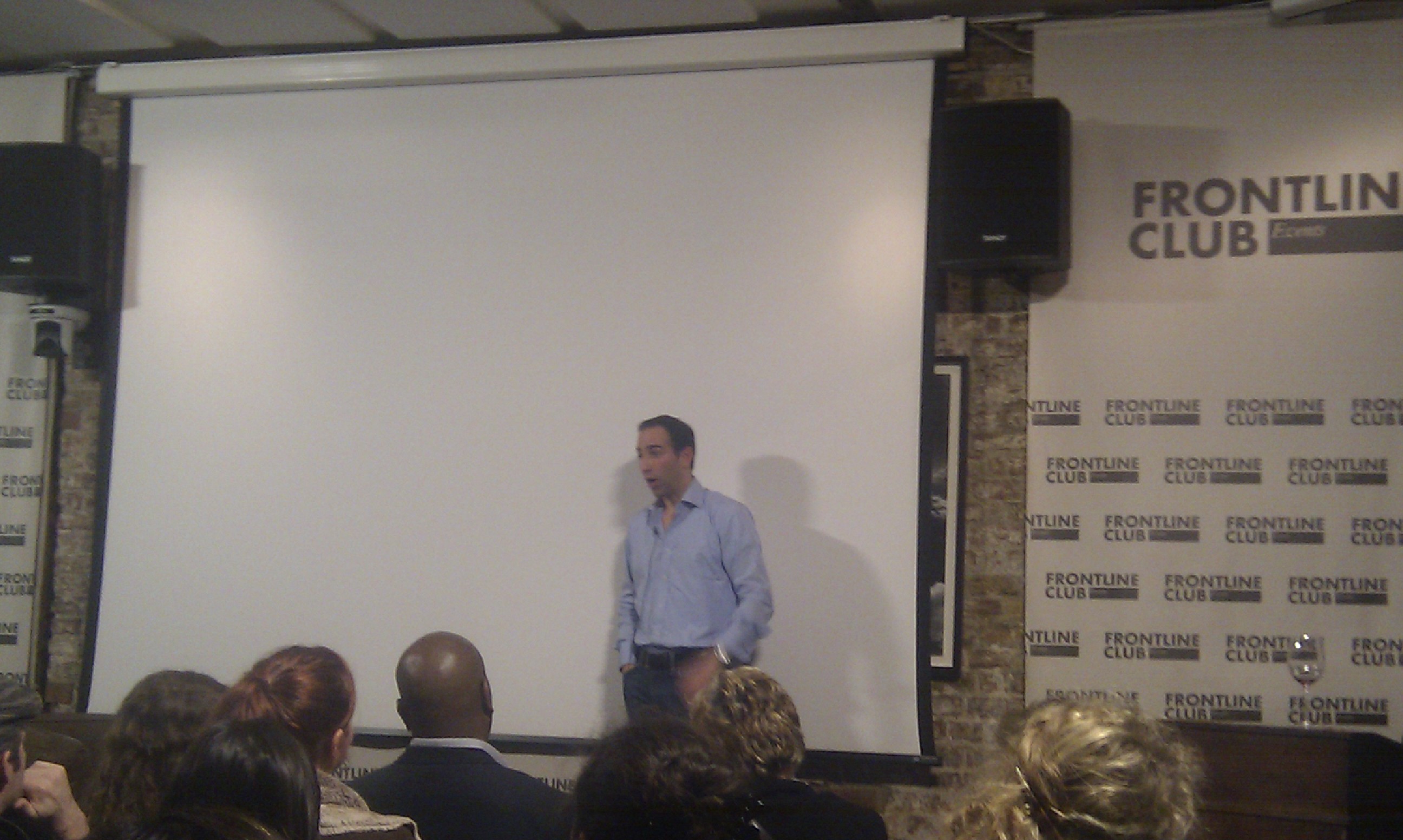
Not everyone at the Frontline Club’s screening agreed with Horowitz’s analysis and the author was subjected to some vigorous questioning during the Q&A session.
One member of the audience likened Horowitz to Ali G, the satirical character invented and performed by Sacha Baron Cohen, wondering whether it would have worked better to adopt a more serious approach when questioning, for example, a Sudanese Ambassador.
Horowitz responded:
“Politicians are trained to avoid the questions directly or just to lie. He spent about five to seven minutes talking about nothing relating to the questions, I had unusable video. I would have loved to have made a straight up documentary of real power all the way through, but I am a slave to the market and the market wants something a little bit comical at times.”
There was also strong criticism from another member of the audience who dismissed the film as a “US-Republican pro-Israeli critique of the UN – a piece of propaganda,” that did not focus sufficiently on Israel or America.
Horowitz defended his editorial decisions, however:
“When you weigh the problem of Israel, he UK and the US with what Sudan, North Korea and Iran are doing, I think it is a fairly simple conclusion who’s worse. These are some of the worst players. These are evil governments. North Korea – it’s a gulag. Would you not agree with it?”
Several current and former UN workers among the audience were more positive about the film. Responding to suggestions that there should be more detailed analysis of why the UN behaved the way it did and possible solutions, as well as an examination of the “total immunity and impunity as UN staff are outside of all national laws,” Horowitz said:
“We made a difficult decision not to talk about the solutions, for several reasons. You make a 90 minute movie and you can’t give that sort of a subject 15 minutes at the end. We tried and it sounded trite.
I want people to feel empowered, upset and to come up with their own way of solving the problem.
I am very much split. I am not one of those who calls for eradication of the UN. I think it should pursue the vision and the values from its charter."
]]>
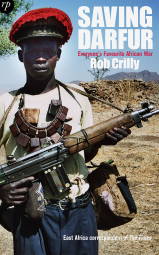
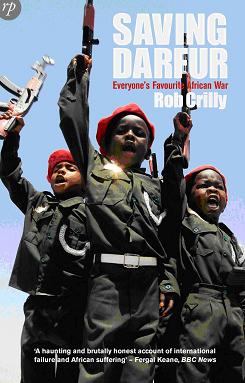 My book is all set for its launch next month, which is one of the reasons why my Middle East blog has been a little quiet. Over at South of West though I’ve updated things with a bit more on the book, some endorsements and a list of events to promote Saving Darfur.
This year is a crucial year for Sudan. Elections in April and a referendum on independece for the South at the start of 2011 could cement a shaky peace deal or plunge the country back into crisis.
Saving Darfur is my very personal attempt to chart how we came to this point.
]]>The Lord’s Resistance Army, one of the most feared guerrilla groups in Africa, has moved into Darfur, one of the continent’s most troubled regions, intelligence sources in Sudan say.
The unexpected move by the LRA comes just as the war-weary west of Sudan recedes from world headlines and after the UN mission there had tentatively declared the fighting to be over. The possible arrival of a messianic cult notorious for rape, civilian massacres and the enslavement of child soldiers threatens that fragile peace.
So far so bad. The LRA is responsible for miserable crimes against humanity. It has slaughtered thousands of people across a swath of central Africa. If they are opening a fresh front in the war then this is seriously bad news for the embattled people of Darfur. But hang on a minute. Where is the evidence that they have crossed into Darfur? Reading on…
The LRA has been terrorising the north of the Democratic Republic of Congo for 18 months but the bulk of its forces have now crossed into southern Darfur, a senior official in the Sudan People’s Liberation Army (SPLA) told The Independent.
Well, at least time there is no Abu Sharati-style confusion about which side Major-General Kuol Deim Kuol (quoted in the next line) is on.
So the evidence comes from rebels who spent 20 years fighting against Khartoum, who are allied with the Darfuri rebels, and who themselves are no strangers to using child soldiers, stealing food aid and targeting civilians in their struggle. Lower down they resurrect their claims that Khartoum is resupplying the LRA.
All of their claims may be true. And if it is then Sudan’s messy wars just got a bit more messier, a bit more bloody and a bit more less likely to be solved. Or it may just be another round of unsubstantiated propaganda.
]]>
I shall immediately be ordering one of these beauties (although possibly not the women’s pink number, pictured here) as the slogan
I think you’ll find it’s a bit more complicated than that
has a million possibilities, including one rather close to my own heart. As Goldacre points out
….we have possibly the finest all-purpose political t-shirt slogan ever conceived. Better still, they only reveal their true powers when you are standing next to someone who is also wearing a slogan t-shirt.
Which brings me on to… any ideas for a similar Saving Darfur shop? Slogans for G-strings in particular would be appreciated.
]]>
After six years of violence, the war in Darfur is over, according to a man who should know. General Martin Luther Agwai was handed mission impossible two years ago – setting up the joint UN and AU peacekeeping job. In an interview with the BBC, as he prepares to step down as force commander, General Agwai said the conflict was very different to earlier phases of heavy fighting…
"Banditry, localised issues, people trying to resolve issues over water and land at a local level. But real war as such, I think we are over that," he said.
Anyone who has visited Darfur in the past couple of years has come to the same conclusion. Yet the Save Darfur lobby has predictably – accidentally or deliberately – misunderstood what General Agwai has said. Over at Enough, John Norris, who likes to accuse anyone who differs from his views as being a Khartoum sympathiser, deliberately misses the point…
What Agwai and others conveniently fail to mention: the three million Darfuris stuck in refugee and displaced camps unable to return to their homes because of insecurity and violence. Having driven three million people from their homes, President Bashir and his janjaweed allies do not need to engage in daily military clashes anymore because they have achieved their objectives.
This is not what General Agwai was saying. The man who has spent the past two years trying to protect the camps and keeping a lid on banditry, was actually saying Darfur was still mired in a humanitarian emergency, but that the insecurity was no longer the sort of genocide or military conflict that people like Norris like to imagine.
Over at The Promise of Engagement, Bec Hamilton, who has at least now been to Darfur, inadvertently misses the point.
Firstly, it’s hard to distinguish ‘the war is over’ from ‘the war is in temporary respite because of rains/fractured rebels/focus on the elections’. Secondly, even to the extent this is a permanent change, it’s still somewhat irrelevant from the perspective of the IDPs. The real issue is how insecurity (as a result of the war) has squeezed the humanitarian space.
I would disagree with little of that. But Bec charmingly then blows it…
Bottom line: I wouldn’t say Gen. Agwai’s comments are “wrong” but rather very much beside the point.
Regular readers of this blog won’t need me to say this again, but anyway, here goes. The whole problem with the international effort to save Darfur has been this sort of misguided analysis. How you understand the conflict in Darfur is central to devising the right solutions. To continue to believe that this is a genocide or a war means we will continue to focus on no-fly zones, peacekeepers and arresting President Bashir. This continues to be the mainstream view of the campaigners – as shown in the support offered to these options by Biden, Clinton and Obama in last year’s US presidential campaign.
The reality of course is very different. The crisis in Sudan’s western region is humanitarian, needing humanitarian not military solutions. As General Agwai’s analysis makes clear, banditry, water and local issues need to be tackled if Darfur is to find security. He has not missed the point. This is the point Bec.
Commentators who harp on about genocide and war in the face of evidence to the contrary are increasingly looking like sad, out-of-touch polemicists with a grudge. Rather than using the evidence to shape their analysis and their solutions, they are using their agenda to dictate the possible range of solutions. To dismiss General Agwai’s comments out of hand is clear evidence that they are not interested in understanding what is happening on the ground. People like Norris will only stop when they have brought down the government in Khartoum – whatever the implications for regional security.
Peace can only be achieved if the lobbyists drop their dogmatic stance. But some of the campaigners seem less interested in peace than pursuing an anti-Muslim agenda. That’s why we haven’t managed to save Darfur yet.
]]>
So the second draft is done. There is more editing ahead, and the afterword will probably be redone to take account of ongoing developments in Darfur. But the back is broken, the end is in sight etc.
My publisher has read the manuscript. But she knows what to expect. There are typos, occasional bouts of muddled thinking, things to be fixed. She has seen it all before and can see the finished book lurking beneath the odd screw-up.
Now though I have to widen the circle. And it’s a nerve-wracking business. A couple of trusted friends have been sent the book for their general thoughts. And this week it has been going to the people whose comments may or may not appear on the cover, exhorting you to pick up this book – from all the other millions available – invest a few quid and actually read the thing.
Some are experts in Sudan. Some are experts on Africa. Some have had books published. Some know their name adds hundreds, if not thousands (I can dream), of sales. They aren’t going to endorse any old rubbish. Their reputations are at stake. Some are friends. Some I have interviewed at different times. Some are friends of friends. All I respect.
What happens if they don’t like it. Will I be getting emails that begin: "Thanks very much for a chance to read your, erm, interesting take on Sudan. On reflection, I feel that it isn’t appropriate to be associated with this sort of…"
Of course I’m being stupid. Of course the book is almost as good and as readable as I could have made it. I’ve spent five years of my life working on Sudan and although I know I’m not an academic or an expert, I do reckon I have a thing or two to say. The one endorsement that I’ve had so far is in fact one of the most important, from one of the leading Darfur watchers. He likes it. So far so good.
Suddenly though, after years of being the critic, the unelected, unaccountable journalist-pundit offering opinions in the papers, on the radio or on my blog, the roles have been reversed. And it is an uncomfortable place to be.
]]>
The chairman of Sudan Liberation Movement (SLM) Abdel-Wahid Al-Nur dismissed reports by the African Union – United Nations mission in Darfur (UNAMID) on the return of IDP’s to their villages. This week UNAMID announced that hundreds of families have returned home since 2007 after being displaced during the upsurge of fighting since 2003.
But Al-Nur said that insecurity is prevalent in most of Darfur. “The people are still being attacked in North, South and West Darfur. The kidnapping of the two aid workers proves that” Al-Nur told Sudan Tribune.
The issue of returning to Darfur is particularly close to Abdulwahid’s heart, given that he sees fit to live in Paris. That may not last much longer. My snouts with the baguettes under their arms tell me he has not had his visa renewed leaving him vulnerable to deportation. So could this statement be more about the safety of Abdulwahid himself, rather than the thousands of Fur languishing in aid camps that he claims to represent. And has the French government finally fallen out of love with Darfur’s rebels?
]]>
Alex de Waal and Nick Kristof come from relatively different ends of the Darfur advocacy spectrum. Yet last week de Waal’s Making Sense of Darfur piece asked “Can Sudan Activism Transform Itself for the Obama Era?“ and last month Kristof’s On The Ground blog began by saying “The Save Darfur movement seems to be losing steam. It is riven by internal debate, it is being ignored by the Obama administration, and it suffered a frontal attack from Mahmood Mamdani . . . "
She is looking for contributors to answer the question, what next? Readers of this blog (and its predecessor) will know that much of the discussion on this blog has centred on what I have seen as the failures of the Save Darfur Coalition to understand Sudan and its complexities, leading advocates to push for the wrong kind of solutions. I’ve already submitted my thoughts and look forward to an interesting debate.
]]>