From: Vaughan Smith
Date: 22 June 2012 10:28
Subject: Re: CNN interview request
Name, do you feel that what you promised in your email below is
close to what happened during the live with Max Foster last night?
Though it was inconvenient, I came to CNN because as a journalist I
feel a responsibility to address issues of public concern when asked
to do so. I know Julian Assange well and it is right that he has some
support in the western media. But that doesn’t make it appropriate to
beat me up as a token disbursement towards balanced journalism on
Julian’s bid for political asylum.
I was grateful for the opportunity to get one full answer out, but how
was it reasonable for Max to keep interrupting me before I could get
out a response to his question on whether the Swedish girls were being
denied justice? I wasn’t being evasive. It is an important question
and I was clearly trying to answer it.
Interrupting in this way is meant to distract and seeks to disrupt a
respondents ability to deliver a useful answer. It is aggressive and
in this case favoured contest over enquiry. Do you, or Max, or your
team at CNN think that this indulgent use of gladiatorial journalism
was really the best way to inform your viewers? Or are you comfortable
with the illusion of dashing journalistic attendance it delivers?
Well in truth it tak
es no courage to reinforce public sentiment
against a man who believes that he is running for his life.
Regards, Vaughan
http://edition.cnn.com/video/?
> Hi Vaughan
>
> So, after a chat with my producer, we are very keen to accommodate your request to talk about the wider political issues in Julian’s case. Although we will need to start off the interview asking about Julian’s asylum case and your relationship with him – to set the scene for our viewers – we will then move the discussion to talking about the wider political issues. On a day when Ai Weiwei is back in the headlines and due to give CNN his first on screen interview since his detention tonight, it will be an interesting comparison to make, raising issues about the concept of the western dissident (as you said) and whether they are recognised/tolerated. We would also like to discuss the change in Julian’s public image: how he has gone from a champion of free speech to a fugitive in the public eye and whether this image reflects the majority opinion of his work (particularly outside the ‘Western’ world).
>
> Although time will be tight as ever, I will make sure Max gives you at least one question on this wider context at the end of the interview, to give you the opportunity to share your views on this.
>
> How does this sound? If you’re still concerned I can get you on the phone to Max briefly this afternoon so you can explain directly to him what point you would like to make.
>
> In terms of timings we would ideally like to do this live as we are expecting news from the Ecuador government later in the day, which might date any interview we do with you earlier. We would need you here for 8.50pm — I think if you can leave the Frontline Club by 8.30pm the Bakerloo line might be the quickest way to get down here. I’m happy to get you a car for afterwards if needs be.
>
> Let me know your thoughts.
>
> Many thanks
>
> Name
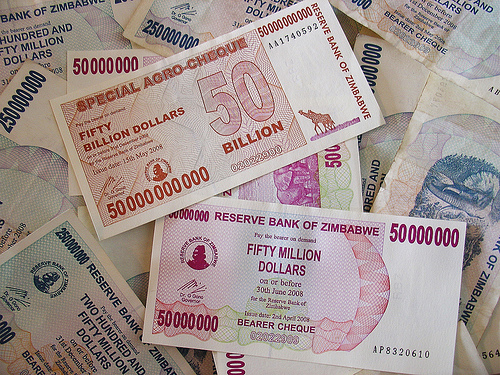
Writing in The Indypendent Alaina Varvaloucas and Jerry Guo describe the day to day work of journalists in the Zimbabwean capital Harare.
Magwenya himself secretly works as a stringer for CNN and has approximately 20 colleagues in Harare who do the same work for other major Western media outlets. Not only is he free to express himself in his dispatches however he likes, but he also gets paid by wire transfer in U.S. dollars, vital to purchasing groceries and other goods as the Zimbabwean dollar has become worthless.
But reporting for foreign news services is far from the ideal job. For a journalist in the land of chaos, the fear of being arrested is all too real, and the possibility of an arbitrary jail sentence — or even torture — is terrifying. Though most are accredited and are doing nothing illegal, independent journalists have been known to wind up injured, missing or dead. link
For my money, this is still the best post I have read about life in Zimbabwe and it comes from our very own anonymous Frontline blogger based in the country.
Photo of Fifty Billion Dollars by ZeroOne
]]>CNN International talk to Colin Freeman and José Cendón about their kidnap ordeal in Somalia. The duo were kidnapped on November 26, 2008 and held for some six weeks. The pair don’t appear to have feared for their lives and seem remarkedly relaxed about their experience, although it seems unlikely they’ll be heading back to that particular part of the Horn of Africa any time soon. No word has been made of any ransom payments in the case
Canadian freelance journalist Amanda Lindhout and Australian photographer Nigel Brennan who were kidnapped in August 2008 are still being held hostage in Somalia. Abdifatah Mohammed Elmi and Marwali, who worked as the duo’s fixer and driver respectively, were released in January 2009. We contine to follow the plight of Lindhout and Brennan on this post. The contrasting experience of the two kidnap cases does make you wonder if there is one rule for freelancers and one for staff journalists.
]]>I said I wouldn’t say anything more about Joe the War Correspondent. And I won’t. But, CNN’s Rick Sanchez does have something to say to the war correspondent who thinks “media should be abolished from reporting”.
]]>It wasn’t so much that AJE triumphed in its coverage of the Lebanese event but it did show signs of finding its footing after an uncertain first week.
Since AJE went live on November 15, it has looked more like Bob Geldof TV than a channel dedicated to “fearless journalism” that is “setting the news agenda,” as promised in the promos.
While it has been refreshing to see reports from places like Darfur, Myanmar and Zimbabwe, the channel was crammed with so many obscure features from forgotten corners of the world that it was beginning to resemble a UN video service.
Then came the Gemayel assassination. Its boss may claim AJE doesn’t present an “Arab” perspective, but the Qatar-based channel should be outperforming Western rivals on its own turf. The first hours after the assassination showed little evidence of that.
In fact, AJE seemed to be repeating the mistakes of both Western and Arab broadcasters. Two-thirds of the channel’s presenters are Brits and it was Sky News veteran David Foster, rather than an Arab journalist, who was sent in to anchor coverage from Beirut. He promptly mispronounced the names of two of Beirut major newspapers.
Such “parachute journalism” is a key criticism of Western reporting from the Arab world. Beirut correspondent Rula Amin, a Palestinian who previously served as CNN’s roving Middle East correspondent, then briefly strayed into journalistically dangerous territory when she described Pierre Gemayel as a “martyr” and somewhat fawningly kept referring to the slain Christian politician with the honorific “sheikh.”
Conservative bloggers in the U.S. have been sharpening their knives for AJE, which a columnist on Accuracy in Media’s site called “enemy media, plain and simple” out to “infiltrate our country.” Adjectives like “martyr” – no matter the context – will only feed that mindset.
During live coverage of the dramatic mass funeral-cum-political rally, which drew hundreds of thousands to Beirut’s city centre, Al-Jazeera English and its competitors – BBC World and CNN International – appeared virtually identical, relying on the same pool feed as the Arabic channels. But it was in the analysis and depth of coverage that AJE finally began to distinguish itself.
While western channels focused largely on the obvious confrontation between the anti-Syrian faction that Gemayel represented and Hezbollah, AJE’s other Beirut correspondent, Zeina Khodr, provided a valuable insight into the way in which the assassination had exacerbated divisions within the Christian community as well.
But the biggest difference between AJE and its competitors came as the funeral ended. It was here that Jazeera’s home court advantage came into play. Both BBC World and CNN International quickly switched away to other programming. CNN’s anchors looked a little uncomfortable with a segue from Lebanon and the latest carnage in Iraq right into a fluff piece about the Macy’s Thanksgiving Day Parade, without so much as a commercial to buffer the jarring contrast.
AJE stayed with Lebanon, interviewing a Hezbollah spokesman, a perspective not heard on the other channels – one in a comprehensive series of interviews with the key players in the drama not seen elsewhere.
AJE’s Lebanon specialist Omar al-Jassawi dug deeper into the impact on the country and region as a whole, while Middle East analyst Lamis Andoni noted that although Syria is widely presumed responsible for Gemayel’s death, plenty of other players in the region had reason to want him dead.
The Gemayel assassination was not the first hard news reported by AJE. Since launch day, its correspondents in Gaza and Israel have been doing yeoman’s work, as have those covering the deepening chaos in Iraq. But in Lebanon, the channel finally began to separate itself from the pack.
]]>David Frost managed to get an uncharacteristic slip out of Tony Blair on Iraq (he seemed to admit that the Iraq adventure had been a disaster). As for Riz Khan’s show, the former CNN anchor invited Nobel laureates like Harold Pinter on as well as introducing a fresh ‘developing world’ perspective on stories that we hear about every day.
Shahnaz Pakravan’s Everywoman strand made excellent contributions to the debates surrounding how women are treated in so many developing nations.
Only one programme was a disaster – an appalling culture-type show in which a journalist named Amanda Palmer failed to interview the new James Bond on Leicester Square’s red carpet. The programme was a patchwork of PR electronic press kits.
As for the other ‘back half-hour’ documentaries – nothing really shone because nothing was particularly new or told in a way that threatened conventional wisdom on current events.
A documentary on British troops training seemingly dim-witted Iraqis on the Shatt al-Arab waterway was dull at best. At worst it was shameful imperialist PR.
But the news…oh dear, the news. Clark’s vision for the channel is that money shouldn’t be mentioned. The result is that whilst the first day saw excellent live shots from Darfur and Mogadishu, everything was dumbed down to a human interest story.
This was children’s news that didn’t tell us about cause, just effect. No anchor seemed to think of “following the money”. Instead presenters looked dumbfounded after yet another shocking report of human misery from a place not usually covered by existing broadcasters.
This pointillist approach is likely to leave the viewer dazed, confused and feeling disempowered by the mess the world is in. There seems to be some vague “blame George Bush/if we just understood other cultures everything would be alright” agenda without any meaningful evidence.
It is, of course, international business that binds the world together but the channel is steadfast in its desire not to connect situations in developing world countries with the power of multinationals headquartered in G8 nations.
This inexplicable lack of news on anything resembling corruption or finance leads to odd gaps. There doesn’t seem to be a Tokyo correspondent. On the channel’s launch day, the main news on every station was leading on predictions of a Japanese tsunami.
Jazeera English led continuously on the Middle East: an Israeli woman had been killed by a Palestinian rocket. Since Jazeera English resolutely didn’t offer statistics from say, The Red Crescent (4,286 Palestinian deaths and 30,804 injuries since October 2000 according to their information), the channel could have even made Israel’s Ehud Olmert blush. There was no fair context to a story that Jazeera presented as an unprovoked attack on an Israeli civilian.
Because money is not mentioned on the news, Gaza again became a human interest story.
No interconnections were explained between events there and decisions in Europe (the EU has sanctions against the Palestinian Authority after the outcome of a democratic election). No connection was made with U.S. funding of Israel. As for Iraq, Rageh Omaar interviewed an official who claimed that Iraq exported $25 billion worth of oil last year. It was disappointing that instead of Omaar following up by asking what happened to all the money, his rejoinder was something like “But things aren’t going well in Iraq, are they?”.
]]>