
Preview Screening: North Korea – Life Inside the Secret State
North Korea is the most totalitarian regime still in existence, yet knowledge of the outside world is slowly but relentlessly filtering in, in the form of USB sticks and wind-up radios. Channel 4’s Dispatches followed North Korean defector Mr Chung and Japanese journalist Jiro Ishimaru, who smuggle information and video footage in and out of North Korea.
On 12 November the resulting documentary North Korea – Life Inside the Secret State was previewed at the Frontline Club followed by a discussion with director James Jones, Dr John Swenson-Wright, senior lecturer in Modern Japanese Politics and International Relations at the University of Cambridge, and Rajiv Narayan, researcher for East Asia Team at Amnesty International.
Jones started off by saying how he wanted to show the side of North Korea that’s not commonly seen in the outside world:
“Our objective starting out was to go beyond the media caricature of North Korea – which 90% of the stuff you see is about mad tubby little leaders with bad haircuts threatening the world with nuclear war. That’s not really what affects North Korean’s lives.”
“We didn’t really know what we were going to get until we saw the footage; some of the stuff I suppose is familiar – the poverty, lack of food…. But what really surprised us were the signs of cracks in the regime of control. People standing up to authority.”
Narayan said that cracks started to appear during the 1990’s food crisis:
“The food crisis has resulted in more than a million people dying and…the world food program still estimates that something like two thirds of the population just eat two meals a day… This is over the last twenty years, so it’s a very undernourished population.”
One of the most unexpected aspects of the documentary is the footage of North Korean women standing up to officials – one for the right to wear trousers, and one to run her private bus service. Narayan said the catalyst for this was the appearance of the black markets:
“In this footage…Jiro and the documentary shows so vividly that markets have come to place. The government has tried very hard to stop it.”
“They tried some quirky ways which only you’d think of in countries like North Korea…under Kim Jong-il they tried to stop men from working in the markets – so they allowed only women about age 49 for some reason. So women have got now economic power and you can see they’re challenging authority.”
Jones said of the women standing up to authority:
“I was genuinely struck by those women…it’s so satisfying to see these individuals [having the] self confidence to stand up to authority. . . . Women for the first time ever are the people who are going to the market and earning a living, so they’ve become the people pushing the boundaries of these changes.”
Narayan added that these markets are often key in spreading information among the people:
“The role of the markets is very crucial, because [they] allow channels of information. That’s the USBs, DVDs, food etc. People are no longer dependant on the North Korean authorities.”
“Access to information at the end is key; at the end it may not be the weaponry… it’s soft power that will eventually bring down the fort.”
Swenson-Wright said that jobs and economic development would be key to North Korea’s success, the freedom of its people and a soft transition devoid of conflict and military intervention:
“There’s an appetite now for them seeing economic prosperity as an opportunity for individuals. It’s a movement that’s not actually very political. It’s not about formally challenging authority. It’s simply the logic of a market world. Persuading people that North Korea is an international business is going to be the basis for their ability to survive this regime.”
Jones says that is hard to gauge the level of active opposition within North Korea:
“The sad truth about North Korea is that no none really knows. We spoke to a woman from the CIA and even they know nothing. She said that when Kim Jong-un came to power all they knew about him was an article they’d read in the New York Times six months earlier.”
“People just don’t know. We don’t have informers, we have defectors who can feed information but … it’s very hard to verify what a defector tells you. So you hear stories about people putting posters up saying ‘down with Kim Jong-un’… I take those kind of stories with a big pinch of salt … people just don’t take the risk.”
“In 2009 when the currency was re-valued – basically they chopped off two zeros – people were so pissed off that they actually took to the streets. It’s that kind of thing that gives you some hope that these latent feelings of cynicism about their rulers could one day translate into some kind of action.”
North Korea – Life Inside the Secret State will air on Thursday 14 November at 11.05 PM on Channel 4.
]]>
North Korea’s supreme leader Kim Jong Un is the world’s youngest dictator, ruling the world’s most repressive state. Through unique undercover material, director and producer James Jones reveals cracks in the regime and investigates the impact the information revolution has had in North Korea.
Jones follows Japanese journalist Jiro Ishimaru, who has been training undercover cameramen in North Korea for fifteen years. On his latest trip to the border with China, he secretly meets one of his agents and receives new undercover footage revealing the harsh reality of every day life on the other side of the border. The footage shows starving homeless children and the elite driving the latest Mercedes in Pyongyang.
We also meet Mr Chung – posing as a mushroom farmer, he smuggles USB sticks and DVDs of South Korean soap operas and entertainment shows into the North. Through these activities, Kim Jong Un can no longer keep the world from seeing the reality of life in North Korea – and just as importantly, he can’t stop his own people from discovering what the outside world is really like.

Photo by Daily NK
Directed and produced by James Jones
Duration: 48′
Year: 2013
This preview screening is in partnership with Dispatches, Channel 4’s investigative current affairs programme.
]]>
The Frontline Club hosted an evening of reflections marking the publication of Granta 125: After the War on 17 October. Two correspondents shared their personal views on developments on the ground, after the battles are fought and the camera teams have moved on to cover other wars.

From left to right: Roma Tearne, Frances Harrison and Lindsey Hilsum
Roma Tearne, Sri Lankan artist, filmmaker and novelist, spoke to Lindsey Hilsum, International Editor for Channel 4 News who covered the Rwandan genocide and Frances Harrison, former BBC Correspondent in Sri Lanka.
Watch it back and listen to the podcast:
https://soundcloud.com/frontlineclub/granta-125-after-the-war-with
]]>Lambert has worked in many violent and dangerous situations, but none comparable to what he filmed in Syria.
“It was very different, it’s certainly the most intense conflict that I’ve ever come across. I didn’t expect anything on the same scale as what played out when I was there. . . . There have been many reports of what is happening in Aleppo, but [we were] trying to look at this grinding conflict: where it might go, where it might end up, which is a very difficult subject to tackle.”

Initially the filmmaker began by looking at the Houla massacre – the murder of 108 people at the hands of pro-regime militias in late May 2012 which was widely cited in the international media as the tipping point in Syria’s conflict.
“We were going to take [the Houla massacre] as a focus, and often when tackling a very big subject . . . I try to find the smallest window with the biggest view. And Houla might have presented that – one afternoon that might have prefigured how Syria was going.”
But Lambert’s focus was shifted to other massacres in nearby Tremseh and al-Qubeir, villages only 30 or 40 miles apart, the line between which formed a sectarian frontline between Alawite and Shia and Sunni communities. Patrick Johnson, a young researcher at the International Crisis group, pointed him to this area of the Gharb valley, south of Jisr ash-Shughur, through which runs the Orontes river – and which is now wrought by crossfire and bloodshed.
For five weeks, Lambert worked in this fertile Syrian valley, focusing on a microcosm of the Syrian conflict and being reminded of another documentary set within another warring enclave, Dan Reed’s The Valley. The 2000 Bafta-nominated eyewitness documentary, filmed during the guerilla war in Kosovo, before Nato’s intervention.

“I don’t know exactly know who gave us the tick and who gave us the okay within the regime. We made a variety of different applications . . . We were quite explicit that I wanted to go to az-Zazir and that I wanted to see how people were living in az-Zazir and how minorities were living in az-Zazir and someone somewhere signed that off and a visa was granted.”
Lambert and his fixer were escorted by two regime officials. Despite worries about the affect their presence would have on people’s ability to talk, but it proved to be a godsend.
“The anxiety was just thick in the air in this village. I don’t think they had ever been filmed before, and I stayed there for a week, and our security officials were able to say to the Alawites, ‘These guys are absolutely fine, you can talk to them.’ That then unleashed a torrent of their fears and anxieties and beliefs that they really hadn’t had a chance to share with any kind of media.”
Lambert gave these communities a voice, and also gave some redress to paranoia at work within Western news sources.
“There’s a real obsession in Western media about foreign fighters, jihadists, al-Qaeda, Jabhat al-Nusra. When I came out of the rebel side – I hadn’t had any internet for weeks – and when I first looked at the news, I could believe that every article I read was about [this] and it just didn’t connect because I did not meet a single foreign fighter. . . . It’s just not on the agenda. It’s a distraction form the wider issue.”
That wider issue is, of course, the unending, punishing destruction of the fighting. An audience member asked about the apparent survival of infrastructure, to which Lambert replied:
“There is electricity, food is getting in – somehow they’re surviving. It’s terrible in a way because it makes it go on longer and longer and longer. It’s not forcing any kind of outcome.”
But there are people who are now desperate to go back to a Syria as it was, and that plays entirely into the regime’s hands.
“There’s this phrase that is often repeated: This is their freedom. When there’s any kind of conflict or car bomb or any kind of explosion or fight: This is their freedom. It’s the regime’s way of saying you’re better off under us.”
Syria – Across the Lines will be broadcast on Channel 4 on April 17 at 10pm.
There will also be a special screening at the RSA on April 16.
]]>
The fertile plains of the Orontes River in rural Idlib used to be a place of peaceful coexistence for Syria’s many sects and religions. Today, the river marks a sectarian frontline: on one side, the Free Syrian Army holds ground in Sunni villages whose residents are calling for the fall of the regime. Only 2km away, Alawite villagers remain fiercely loyal to the government, and gladly host army checkpoints that fire shells and mortars into the Sunni villages across the valley on a daily basis.
As the Syrian conflict enters its third year, this documentary offers a shocking window on its increasingly sectarian nature. For five weeks, award winning documentary filmmaker Olly Lambert lived on both sides of this frontline: living with Alawite loyalists and government supporters on one side, as well as the FSA and Sunni refugees on the other.
In Syria – Across the Lines Lambert documents a graphic and unflinching portrait of a society cleaving apart in the face of dwindling international support, escalating violence and a growing mutual desire for revenge.
Directed by Olly Lambert
Duration: 52′
Year: 2013
The moral dilemma of being compliant in the ill-treatment of terror suspects was tackled at the Frontline Club with a preview screening of the feature-length TV drama, Complicit, on Monday 11 February.
The audience watched a compelling account of the complexities faced by British intelligence services in their attempt to foil terror plots.
The drama, a production by Many Rivers Films, charted the investigations of a MI5 officer Edward, (David Oyelowo) who believed his suspect Waleed (Arsher Ali) was planning large scale terrorist attacks in the UK. He followed his suspect from the streets of London to farmlands in the Middle East and found himself battling the moral quandary of whether or not to use torture to extract a confession.
The screening was followed by an engaging debate between the audience and members of the panel which included director Niall MacCormick (The Long Road to Finchley), writer Guy Hibbert (Blood and Oil, Five Minutes of Heaven and Omagh), actor Arsher Ali (Four Lions) and producer Kevin Toolis (The Cult of the Suicide Bomber).
The discussion started with Hibbert’s deliberate choice of the genre of drama as oppose to documentary to tell the story. He explained:
“Drama has an advantage of getting to the emotional truth. . . . If you are doing a documentary you will come out saying that ‘Yes, torture is unequivocally wrong.’ It’s shocking and corrupting, but with drama you can go in more interesting areas . . .”
In answer to a question about whether people do have a choice in matters of torture MacCormick said:
“The film is not just about torture, its about how extraordinarily tempting it is if you are in that situation and also how, categorically, it doesn’t work.”
When questioned about the alleged involvement of the British government in torture, Toolis explained:
“The important thing is to say that [the British government] does not systematically practiced torture. Britain is a democratic nation. The most awful thing about incidents like this is Britain stepping off the pedestal . . .”
Giving an account of a writer’s research Hibbert commented:
“We talked to MI5, MI6 . . . and they told me that life as an MI5 officer was very boring and I was quite interested in that because I was determined to write something that was different or what I perceived to be cliches of secret service life.”
Playing the character of the terror suspect, Ali said:
“I never felt I was playing a terrorist. It felt like I was playing someone who was vain, a bit arrogant, too cocky, holds extreme beliefs. . . . For me the whole thing was that he wan’t doing anything illegal.”
A member of the audience suggested:
“Defining terror was the ‘not knowing’ and that to me was the key to the whole film – that nobody knew their own direction. They were all trying to play the game to be somebody. . . . I found that incredibly moving . . . in a way you can’t go forward to take a stand, in a way you have to stand still.”
Commissioned by Channel 4, Complicit is scheduled for the UK TV audience on 17 Feb at 9pm.
]]>Channel 4 presented its new series of Unreported World to a packed audience at the Frontline Club on October 31, followed by a panel discussion entitled “Reporting Social Change“.

Unreported World correspondents Aidan Hartley, Ramita Navai, Marcel Theroux, Jenny Kleeman, Seyi Rhodes, Channel 4 News anchor Krishnan Guru Murthy and series editor Monica Garnsey introduced extracts from the upcoming programmes and talked about the change of focus from the reporter to the interviewee in the new series.
Aidan Hartley presented his report about a British Somali businessman facing the continuous threat of suicide bombers in Mogadishu by opening new restaurants in the area.
“This is the story that I had been ignoring all of these years since 1991 and it was so incredibly good for me to do… in this story, there are all the hopes that you can relate to what Somali’s want from the country.”
Ramita Navai discussed her piece about the increasing frequency of sexual attacks on women in Egypt since the revolution.
“I was trying to figure out why it was so bad in Egypt, in a way that it isn’t in other Middle Eastern countries… There are a few interesting answers that come out in the film that we think are very important and we’re really looking forward to it getting out there.”
Marcel Theroux reported on the elections of the opposition movements in Russia. His film follows Kseniya Sobchak, a Russian socialite who went from hosting reality TV to becoming a contender in the opposition elections.
“I thought she is someone who really might be a potential leader of the future in Russia, because she really does connect to the new generation. Her fans are much younger, they are social-media savvy… She is constantly tweeting about political issues”.
Jenny Kleeman discussed the issues highlighted in her report about police crackdowns on clubbers in Mumbai.
“It’s about the pace of social change (in India). You’ve got a country that is changing so rapidly but not all the constituents of that society are able to enjoy the benefits of that change, and some feel very threatened by it.”
Seyi Rhodes presented his film examining the pressure young baseball players from the Dominican Republic face from their trainers, as they try to be recruited by American teams.
“The reality for them is that outside of some sort of amazing talent that will make you millions, you’re likely to be picking sugar cane for the rest of your life… If you’re right down at the bottom, you’re looking for the big jump to raise the whole family out of poverty.”
C4 News anchor Krishnan Guru Murthy discussed his piece on the influence of conservative talk radio shows in the United States and the difference in broadcasting ethics in America.
“The temperature that this cultivates is angry, is very polarized…What we found is that you hear a lot of the same arguments… which I found pretty horrific… your biggest fear as a broadcaster is just talking to people who agree with one side or just think one thing and not really talking to a broad spectrum.”
The correspondents discussed why the new Unreported World series focuses more on the characters in the stories rather than the reporters:
“People get involved with a character, they become invested with that character,” said Seyi Rhodes.
Jenny Kleeman agreed:
“Our job as reporters is to help people feel empathy for people living very different lives on the other side of the world.”
The new series of Unreported World starts Friday November 2, at 7.30 pm.
Watch the full discussion here:
To launch the new series, Channel 4 invites you to an exclusive talk: ‘Reporting Social Change’, introducing a line-up including reports on Indonesian anti-smoking activists trying to stem the epidemic of child smoking, British Somali businessmen ignoring the continuing threat of suicide bombers in Mogadishu to start up a flourishing sector, and a police crack-down on clubbers in Mumbai.
Unreported World correspondents Marcel Theroux, Jenny Kleeman, Ramita Navai, Seyi Rhodes, Aidan Hartley, C4 News anchor Krishnan Guru Murthy and Series Editor Monica Garnsey will be present to introduce extracts from the programmes and talk about the highlights, challenges and dangers of reporting on new kinds of conflict.
]]>
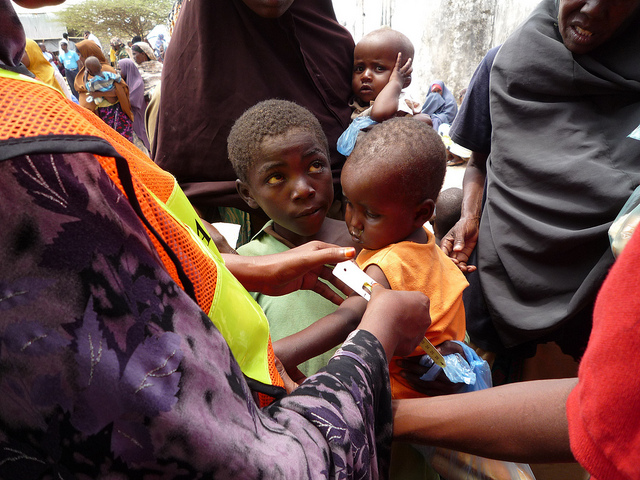
When you think of Somalia, what comes to mind?
Conflict? Pirates? Refugees? Poverty?
Somalia is still a dangerous place for journalists to operate: according to the Committee to Protect Journalists five journalists have been killed there this year.
But improvements in the security situation are offering new opportunities to access stories that may have been too risky to cover in recent years.
Yesterday, I headed along to a seminar at the Dart Center to discuss how Somalia is represented in the media. The informal meeting allowed journalists and other interested observers to share their experiences and grapple with the challenges and opportunities of reporting from the East African country.
The award winning Somali reporter Jamal Osman helped kickstart debate by highlighting a number of weaknesses with journalism from Somalia.
He suggested that a lot of local Somali journalists are young and have not always had access to education as many grew up during Somalia’s civil war after 1991.
He said they do not always "think responsibly" and are under both conscious and unconscious pressure to report stories in the interests of their clan. He believed reporters would benefit from more education in the ethics and principles of journalism.
He also noted that because "money is tight" journalists are understandably likely to value stories for their economic worth rather than their public value – a problem that is far from unique to Somalia.
Turning his attention to international media coverage, Osman argued that journalists often misunderstand the intricacies of clan loyalties, inaccurately portraying conflict in Somalia within the framework of "good vs evil".
As an example, he cited the fact that Somali officials speak to members of the insurgent Al Shabaab group because of shared family and clan ties.
Osman made a strong appeal for independent journalism and was concerned about embedding with other organisations including African Union troops as part of the mission in Somalia (AMISOM) and aid agencies.
Al Jazeera English’s Juliana Ruhfus pointed out that obtaining secure access to Somalia remains a problem for international media organisations. She argued, however, that the cultivation of good local contacts was a starting point for more "human stories", "analysis", "investigative pieces" and "meaningful long form coverage that goes beyond news".
Participants emphasised that there were plenty of fascinating stories waiting to be told outside a media narrative which emphasises poverty, conflict and piracy.
Mary Harper, BBC World Service Africa Editor and author of Getting Somalia Wrong offered some examples including the export trade in livestock and the discovery of oil reserves.
One useful suggestion which came up at the seminar was the possibility of creating some form of media monitoring of output related to Somalia after a number of journalists present had expressed their concern at coverage of the country in recent TV documentaries.
Photo: UNICEF/Iman Morooka
View event here.
View in iTunes
Epitomising the troubled state of Sri Lanka post-conflict, an impassioned panel spent Wednesday night disputing the truth. Facing an equally ardent audience, they proved that the country has a long way to go before reconciliation will become a reality.
Chaired by BBC Hardtalk’s Stephen Sackur – who summarised the evening’s topic as “highly contentious [and] still hugely controversial” – the discussion first focused on two films broadcast by Channel 4: Sri Lanka’s Killing Fields and Sri Lanka’s Killing Fields: War Crimes Unpunished. Callum Macrae, director of both, clashed repeatedly with Professor Rajiva Wijesinha MP, government advisor on reconciliation who dismissed Channel 4’s work as illegitimate and “sordid.”
Wijesinha stated that while the film was not necessarily false, he believed it to have been “doctored”, although did at times direct his criticism at an earlier Channel 4 news item rather than the films under debate. Macrae rejected the suggestion that he had been an apologist for the Tamil Tigers (LTTE) as “nonsense”, and was later backed by an audience member who described a “very clever propaganda film [by the government] refuting the Channel 4 film” as “an excellent piece of editing.”
Yolanda Foster, Amnesty International’s Sri Lanka researcher, weighed into the debate by describing the government’s “merely cosmetic” act of lifting the state of emergency last year, and recounted ongoing disappearances and systematic torture. Foster served as a voice of calm in the panel – although criticised by Wijesinha as “avenging”, her measured tone helped her avoid heckles steeped on other panellists.
In December, Sri Lanka’s Lessons Learnt and Reconciliation Commission released a report on atrocities committed during the civil war. Foster said on careful reading the report was “good”, although pushed for the government to move forward with the Commission’s recommendations.
While the panellists failed to agree on the portrayal of war crimes by media and human rights groups, they broadly stood for legal remedies. Wijesinha deflected a question from Sackur about whether anyone had been prosecuted for wartime atrocities, but stated clearly that he was frustrated by delays in pushing the judicial process forward.
Arun Thambimuttu, a Tamil political activist, argued that atrocities were widespread over a 30 year period rather than just a few months, and committed by all sides. Recognising this, Jan Jananayagam, spokesperson for Tamils Against Genocide (TAG), stated that prosecutions must cover the breadth of the war:
“The judiciary has failed. I don’t agree that the government has an opt-out clause; that because they didn’t deliver justice for 30 years they won’t do it now.”
The international community has taken a much lesser role in post-conflict resolution and by all accounts momentum from within Sri Lanka seemed lacking.
“The international law which governs the behaviour of all governments around the world applies to Colombo, and that is something we cannot escape from,”
Sackur reminded Wijesinha, as tempers seethed throughout the room.
After two hours, a ceasefire was called on the divided panel. One audience member summarised the withering hope of reconciliation:
“If this is the reaction you get sitting in London; what chance do you have?”
Watch the full event here:
[acf field=”Tickets”]