
Frontline Club founder Vaughan Smith chats with Ben De Pear of Channel, 4, Marcus Mabry of The New York Times, freelancer Emma Beals, and AFP’s David Williams.
As many major news organisations close foreign bureaus, freelancers are called on more and more to cover global conflicts. They face risks often without the structure, training and resources that come with having a large media outlet behind you.
Continuing a conversation that began at the end of October in New York at the Overseas Press Club of America (OPC), Vaughan Smith, founder of the Frontline Club, spoke with leading editors at the club in London on Tuesday 18 November. They discussed the importance of pay to reflect risk, training, and new ways of determining how much responsibility for freelancers news outlets should take on.
Joining Smith were David Williams, deputy global news editor at Agence France-Presse (AFP); Marcus Mabry, editor at large for The New York Times and president of the Overseas Press Club of America (OPC); Ben De Pear, editor of Channel 4 News; and Emma Beals, a multimedia independent journalist covering Syria and Iraq and member of the board at the Frontline Freelance Register (FFR).
New Standards
How freelancers are folded in to media organisations vary from outlet to outlet, so what should best practice look like?
“There’s an inverse relationship between the amount of control and the amount of responsibility they should take on for that person,” Beals said of the freelancer–editor relationship.
“We commission people in a very clear way. They have to take a hostile environment awareness course. We have to know them,” said De Pear. “Do you trust this person, are they trained, will this person deliver something we will put on television?” he said are important questions they ask, adding, “the Arab Spring was a bit of a nightmare. Libya was a fantasy war zone. Anyone who had a camera flew in.”
“I think the future is more to incorporate regular freelancers into our structures,” said Williams, pointing out that they made a tough decision after two of AFP’s top editors met with freelancers on the Turkish–Syrian border in 2012. “We will not accept production from freelancers where we don’t dare to venture ourselves,” he said, “we don’t want to encourage freelancers to take risks that our own journalists won’t take.”
Better Pay = Safety
Marginal wages for a story from a conflict zone don’t allow freelancers to invest in much needed training and equipment, argued Beals and many from the audience.
“You have to pay them more than $300 for 1,000 words in Syria,” she said. “It’s a professional work force with unprofessionalised wages. The pay is about safety,” Beals added, noting a recent story had her covering her expenses, which were twice the rate she was getting paid, up front with a promise of reimbursement months later.
Treating freelancers like a member of the AFP team under a new approach, said Williams, means they have more financial backup. “We bring them into the same structure that an AFP reporter would have. Generally they should have the same benefits.”
Smith said he is astounded by the number of freelancers he meets who have not been on a hostile environment training course. “We did a survey of freelancers at FFR,” he said, “a third said they thought that the editors they dealt with didn’t give a fig about their safety.”
You can watch the talk and listen again online here:
]]>‘Reflections’ at the Frontline Club brings well known journalists to the stage to look back on their careers. Incorporating video clips, still images and articles selected by them, the host Vin Ray describes it as “a cross between Desert Island Discs and This is your Life”. It is held in association with the BBC Academy College of Journalism.
On 29th May Alex Thomson, chief correspondant for Channel 4 News and the recent winner of the prestigious RTS Television Journalist of the Year joined Vin Ray.

Alex Thomson with Vin Ray. Photo credit: Caroline Schmitt
The first to be shown were two black and white still images showing the famous albino boy in Biafra by Don McCullin and Eddie Adam’s man being shot in Vietnam, the Saigon Execution.
“There is something peculiarly arresting about these photos; something that makes you stop and look about a photograph, different from television. I can visualise still images from Syria more easily than some of the moving images.”
When asked about what safety measures the Channel 4 News team take in conflict zones, Thomson shared an anecdote about one of his early experiences:
“When we started doing the Croatian War, we had a white diesel W2 Golf and wrote TV on it with black gaffa tape because that’s what they do in war movies. . . We just didn’t know what we were doing.”
When Ray asked what draws the correspondent to conflict zones, he stated:
“I do it because I like doing it. I do it because I don’t want to stand outside the House of Commons or in the City. That would drive me into a very early state of unhappiness.”
Thomson then read to the packed audience the report ‘Massacre in Sanctuary’ about the Qana Massacre in southern Lebanon. Written by Robert Fisk, Middle East Correspondent for The Independent in April 1996, according to Thomson it was an example of “first-class, unencumbered and passionate eye-witness reporting.”:
“When you just look at that, when you take that apart as a piece of writing, there’s so much going on, there’s so much conveyed. . . . I just think that something like that just stands and there will always be a place – online or in the newspaper – there will always be a place for that kind of writing – direct, passionate reportage.”
Another issue raised by Thomson was the underreported issue of post traumatic stress disorder (PTSD) amongst soldiers operating remote drones in the US, which he elaborated on after presenting the infamous helicopter gunship footage leaked to WikiLeaks:
“They [USAF drone operators in Nevada] do a shift, they operate a drone and go back to see the assessment, so they see what the drone has done. They see the people and the bits of people lying there . . . and switch off their computers. . . . Half an hour later they are in the shopping mall with their kids. That’s incredibly difficult for a human brain to link up. . . . Post-traumatic stress isn’t just found on the battlefield, it’s found on the virtual, real battlefield amongst drone operators as well.”
He finished with his well known foot-in-the-door interview with Kelvin MacKenzie, former editor of The Sun, to inquire about the newspapers infamous editorial take on the aftermath of the Hillsborough disaster:
“Nasty. Vindictive. Pointless. Unpleasant. Personal. Tawdry. Cheap…theatrical. It’s all of that. Every time I see it, I feel more sorry for him actually. . . I started laughing, that was the problem . . . I couldn’t believe the way he mishandled it.”
Watch the full video or listen to the podcast below:
https://soundcloud.com/frontlineclub/reflections-with-alex-thomson
https://soundcloud.com/frontlineclub/reflections-with-alex-thomson
Newly crowned RTS Television Journalist of the Year, Alex Thomson was described as “without question one of the UK’s leading correspondents”. As chief correspondent at Channel 4 News his range of work from the Syria crisis, to door stepping Kelvin Mackenzie about the Hillsborough disaster has won him wide acclaim.
He will be joining Vin Ray in conversation to reflect on a career that has seen him spend 22 years at the Channel 4 News covering 20 wars across the Gulf, the Balkans, Africa and Afghanistan, as well as presenting the programme.
Described by host Vin Ray as a cross between Desert Island Discs and This Is Your Life, Reflections brings journalists to the stage to reflect on the stories that have impacted them most throughout their career and the journalists whose work has inspired them.
In association with:

 Join us to discuss what the future holds for relations between Iran, Israel and the US in the year ahead.]]>
EXTERNAL EVENT HELD AT THE LONDON SCHOOL OF ECONOMICS, SHEIKH ZAYED THEATRE
As he is about to embark on his second term, President Barack Obama’s relationship with Israel is already being tested. But while all eyes are on events in Gaza, Obama is facing major decisions that could lead to the beginning of a new conflict.
Israel’s threat of military action against Iran has already raised tensions in the Middle East and in the summer of 2013, the US and its allies will decide whether or not to attack Iran’s nuclear sites and if Israel should be given the go ahead to start a war.
While leaders of these countries continue their brinkmanship, recent and increasingly biting sanctions imposed by the United States and the European Union have had a significant impact, choking the country’s economy and provoking growing unrest on the streets. Iranians are facing ever increasing hardship as a result of the devaluation of the currency, food shortages and lack of medical supplies.
Join us to discuss what the future holds for relations between Iran, Israel and the US in the year ahead.
Chaired by Channel 4 News presenter Jon Snow.
With:
Meir Javedanfar, an Iranian – Israeli Middle East analyst. He teaches the contemporary Iranian politics course at the Interdisciplinary Center (IDC) in Herzliya. He is also the co-author of president Ahmadinejad’s biography The Nuclear Sphinx of Tehran and a regular contributor to The Diplomat, Al Monitor, as well as BBC Persian.
Azadeh Moaveni, a former Middle East correspondent for Time magazine, and has reported on Iran since 1999. She is the author of Lipstick Jihad, Honeymoon in Tehran, and co-author, with Nobel Peace Laureate Shirin Ebadi, of Iran Awakening. She writes widely on Iran and the Middle East for Foreign Policy, the Washington Post, and other publications.
Scott Peterson, the Istanbul Bureau Chief for The Christian Science Monitor, a photographer for Getty Images and author of Let the Swords Encircle Me: Iran – A Journey Behind the Headlines. He has reported and photographed conflict and human narratives across three continents for more than two decades, which include thirty extended reporting trips to Iran since 1996.
Abdel Bari Atwan, the editor of London-based al-Quds al-Arabi, an independent, pan-Arab daily newspaper since 1989. He is the author of The Secret History of al-Qa’ida, A Country of Words, his memoir and his new book Al-Qa’ida, the Next Generation. He was born in Gaza but has lived in London since 1979.
]]>A packed house at The Frontline Club heard Matt Frei regale them with tales from his long and illustrious career. The former BBC Washington correspondent, recently poached by Channel 4 News, was on fine form as he spoke to former BBC executive Vin Ray about more than 20 years with the BBC:
“The BBC is mother, and it’s been a very good mother to me, but now and again it’s a good idea to leave mother and elope with a mistress. I’ve always admired Channel 4 because it’s a cross between current affairs and news. Newsnight with a bit more of a newsy edge at a decent hour. I’ve had my eye on it for some time, and I guess they may have had their eye on me for some time.”
The event was delivered in conjunction with the BBC College of Journalism, as part of the ongoing Reflections series in which journalists including Alex Crawford, Jon Snow, Bill Neely and Martin Bell have discussed their experiences as journalists.
Frei spoke of the time he met Bell in Serbia, during the Bosnian war, and the valuable lessons that he took from him:
“He taught me the craft of television. It’s a very strange craft because it’s more about what you deny yourself than anything else, he said: ‘If you can’t say it in one minute and 42 seconds you can’t say it. Don’t bother.’”
Delivering his reflections alongside a series of memorable video clips, he discussed some of the high and low points of his career, including his coverage of the fall of the Berlin wall:
“I was told by a famous American journalist that this was the best story I would cover, and that it was all downhill from here. He was sort of right – it was such a happy event.”
He also spoke of some less orthodox approaches to stories, including one particular experience during his time in Rome:
“Giorgio Armani was accused of bribing the financial police. I got an interview by saying I was a fashion journalist for the BBC – I said I wanted to talk about hemlines and colours. Halfway through the interview he turned to me and said, ‘You know **** all about fashion, don’t you?’ I said, ‘Did you pay the money?’ He said, ‘Yes, in brown paper bags.’”
With regard to the challenges facing the next generation of young journalists Frei expressed some optimism:
“I think the challenges are going to be the same: find a story, tell it well and make sure somebody is going to pay you for it. If you’re starting out now you have an incredible range of tools at your disposal – much better than the tools we had, and cheaper.”
The issue of social media was subsequently raised, and the question of what it meant for the future of sending journalists like him around the world – particularly in light of the numerous journalists who have recently been killed and injured whilst reporting from warzones:
“I don’t think most serious organisations are thinking social media will replace what they have. It’s just another source of information – if you can’t get into Syria but you have evidence on your mobile phone you’re going to use it.”
As the evening drew to a close he discussed his only regret, the fact that he had to cover the Iraq war from Washington:
“I never went to Iraq, and in some ways I wish I’d covered it. In some ways talking about it from Washington makes you a bit of a fraud: unless you’ve seen the impact of policy on the ground you can’t really talk about it.”
Watch the full event:
]]>“We are going to see people resisting change but it will be a major mistake that will cause a lot of problems if countries see the Arab Spring as a conspiracy,” said Khanfar, who for eight years held managed the TV network that has been credited with having contributed to the ferment that led to the uprisings that swept the region. “Any country that does not accept proper reform and serious constitutional reform will face difficulty.”
With the current perception that the Americans are withdrawing from the region, there are concerns about who will be responsible for protecting the status quo in the region. In this changing landscape, what happens in Syria remains very important, the Palestinian-born journalist told Channel 4 News presenter Jon Snow:
“Syria is not like any other country, it is the cornerstone of a bloc in the region and therefore a lot of countries are worried about what is going to happen in the region when Bashar is out of power. This is why, in my opinion, the Arab world is reluctant about Syria.”
Syria is of particular concern to Iran, because if the revolution succeeds it will no longer be part of the alliance Iran is forming with Iraq and Beirut, said Khanfar, who is now president of the Sharq Forum, a think tank focusing on political development, social justice and economic prosperity in the Middle East.
“If Syria is out of it, you are talking about the decline of Iranian influence in the region and that means they may not become as “dangerous” in the Gulf as they are right now and this will give more confidence and a more relaxed environment for serious changes to take place in the region.”
Al Jazeera, which was launched in 1996, differed from other Arab channels because although heavily funded by Quatar’s royal family, it had not followed the same policy of focusing on the leaders but instead had set out to spread democracy and human rights and to feel the pulse of the region, he said:
“The whole phenomena of Al Jazeera is against the whole custom and tradition of journalism in the Arab world by that time, because it started with a different perspective about news, which before used to be something that was owned by the state and the state tailored what exactly should appear and everyone understood that TV was what the state wants us to know.
In 1996 everyone would watch TV in order to know what the state was talking about.” Asked if he was aware of the significance of what the channel’s stance as people were “flocking” to the screens to watch Al Jazeera, Khanfar said he was aware it was “a matter of life and death”:
“By that time I had seen our office in Baghdad bombed, an office in Kabul bombed, by that time we had a colleague of ours in Guantanamo, another one in court in Spain. Definitely we knew how dangerous the situation was.”
The Al Jazeera audience is “highly politicised” and would notice any change in editorial policy following his departure last year, said Khanfar, who insisted the decision to leave was his own:
]]>“I thought for a long while that eight years was how long I could survive always being proactive and creative, and that’s enough. Also, the Arab world is living a new mood and I feel I could do something as well which Al Jazeera cannot allow me to do, which is becoming part of the transformation of this dynamic region. I would like to speak my opinion and play a more political role.”
Next week there will be an opportunity to discuss what the phone hacking scandal might mean for the future of British journalism at a special event chaired by Channel 4 News presenter Jon Snow.
There are still a few tickets left for our photography networking party. An opportunity to meet people from all branches of the photography industry and debate "Who gets the credit?". Free drinks will be available, courtesy of Chivas Regal.
]]>
A Sudanese official who denied there had been air strikes against the people in the Nuba mountains was challenged by Channel 4 News’ Lindsey Hilsum who said she had spoken to people who had fled the attacks.
Mohamed Abdalla Ali Eltom, deputy head of mission at the Republic of Sudan’s London embassy was speaking just days before details of a UN report emerged detailing attacks carried out by Sudanese army and allied forces on Nuba civilians in South Kordofan that could amount to war crimes.
But Lindsey Hilsum, international editor for Channel 4 News, who has recently returned from Sudan, insisted she had seen evidence that the bombing was being carried out.
"I’ve spoken to refugees who were under your bombs. About 10 days ago I spoke to five refugees who had been bombed by your forces in the Nuba mountains who had fled across the border, so yes you are."
Asked to explain his government’s actions in the region, the deputy head of mission said: "We are fighting the rebels in the mountains, we are not bombing the Nubas."
Mohamed Abdalla Ali Eltom blamed the rebels for being unwilling to accept defeat in elections in South Kordofan, where the Nuba mountains are located:
"As soon as the results of the elections were announced and they discovered they didn’t win, they immediately started to attack government troops. Of course, as a responsible government, if you are attacked you have to respond. This is quite natural."
The event, which marked the creation of the new nation of South Sudan began with two reports from the region by Lindsey Hilsum for Channel 4 News.
I wanted to give a sense of what the place is like at this moment," said Hilsum, adding that she found it "this strange mixture of depressing and uplifting at the same time."
Chaired by Richard Dowden, director of the Royal African Society, the discussion that followed focused largely on the problems both North and South Sudan, including that of corruption, dismantling the Sudan Peoples’ Liberation Movement, oil and how citizenship of South Sudan was determined.
Watch the video or listen to the podcast for in-depth coverage of the situation in North and South Sudan from Dr Ahmed Al-Shahi, research fellow and co-founder of the Sudan Programme at St Antony’s College, Oxford University and Natznet Tesfay, head of Africa forecasting at Exclusive Analysis.
]]>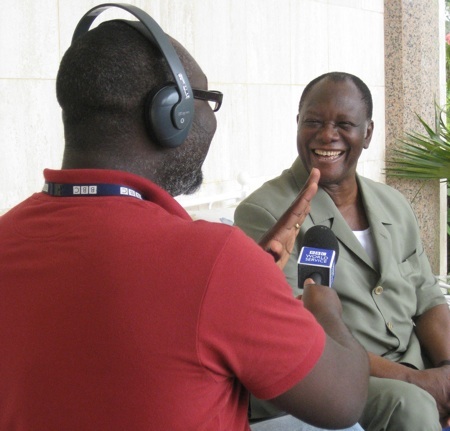
Events are moving fast in Ivory Coast, with a ceasefire reportedly being negotiated and suggestions that the besieged incumbent Laurent Gbagbo who has stubbornly refused to cede the presidency to Alassane Ouattara may now be considering surrender.
At our event on 20 April we will be discussing what message the events in Ivory Coast will send to Africa’s strongmen. With a number of elections due in in Africa in the coming year, the dispute in Ivory Coast took on added significance.
But news of a possible ceasefire comes as the UN announced the discovery of a mass grave with nearly 200 bodies. Sky News’ Emma Hurd puts the number of bodies at more than 300 and writes that the massacre in the western town of Duekoue last week shows that there are "no good guys in this conflict".
At least 800 people were killed in intercommunal violence in Duekoue last week and UN investigators believe president elect Alassane Ouattara‘s fighters were responsible for at least 220 of the deaths.
The warnings had been there for months – a disputed election, an illegitimate president clinging to power through force, and the rightful claimant arming his supporters for a battle.
But the world was focusing on Libya and Colonel Gaddafi as the simmering violence erupted into a full-scale war.
There seems no doubt now, Hurd concludes that Alassane Ouattara will win this battle.
But the atrocities committed by his fighters will taint his presidency and leave the country deeply divided.
The "robust" position taken by UN peacekeeping force which, supported by the French military, targeted forces loyal to Laurent Gbagbo after itself coming under attack, appears to have broken the impasse, writes the Guardian’s Africa correspondent David Smith.
He also highlights concerns about the role of the UN "if they are seen to be co-ordinating with the rebels to topple Gbagbo". And what if Gbagbo has stepped down?
Human Rights Watch worker Corinne Dufka, on Channel 4 News warned that even if if Abidjan and Laurent Gbagbo fall quickly, violence may continue:
A few things raise alarm bells: Ouattara’s forces the RFCI are a loose coalition from different rebel forces, Gbagbo defectors, and decommissioned soldiers, so there is a high potential for undisciplined members to commit abuses" she said
Many of them have committed war crimes in the past, which they have not been prosecuted for. And given the level of brutality of Gbagbo’s side in Abidjan, there is a very high possibility of reprisal killings by Ouattara’s forces were they to take the city.
What role should UN play in disputed elections? What role has the Economic Community of West African States (ECOWAS) and the African Union played and how effective has it been in its handling of the conflict? Join us at the Frontline Club on 20 April to discuss events in Ivory Coast and the implications for future elections in Africa. You can book tickets here.
Picture credit: bbcworldservice via a creative commons licence.
]]>They are now in Nadi Ali, in Helmand province, Afghanistan. I was there for a month, but my computer got waterlogged and so I haven’t posted anything to my blog from there so far. However, I am going to push out my material here over the next couple of weeks.
My first piece is about 2 Section of 6 Platoon, C Company, 1 Royal Anglians. They patrol out of Patrol Base Paraang on the southern edge of a village in Nadi Ali district called Kushal Kalay. They are tasked with keeping the Taliban out of Kushal Kalay so that other soldiers can more safely clear it of IED’s. The section commander is 22 years old.
The story was on Channel 4 News last Saturday evening. You can watch it above or follow the link. As Nico Pitney comments on the Huffington Post,
One hesitates to extrapolate much from one brief glimpse into the fighting in Afghanistan. But this clip does give some sense of why the world’s most advanced militaries are so challenged by these Taliban fighters. link
I plan to put up an extended version over the coming days. But next is another film going out on Channel 4 News, probably tonight, Thursday 18th February so keep watching this blog for more.
]]>