What is the revised strategy in place to end the conflict? With the Taliban active in 70% of the country, has the West lost the battle for hearts and minds? What are the intentions of America and the UK in pushing a liberal agenda in the country and who is paying the price for this conflict? Our panel will discuss.
Chair
Jonathan Beale is the BBC Defence correspondent. Before joining the BBC in 1999 Beale had been an assistant to a Member of Parliament. Beale also spent two years in Brussels as the BBC’s regional Europe correspondent and Europe political correspondent, before returning to London to become one of the BBC’s political correspondents at Millbank. He’s also presented political programmes, such as The Westminster Hour on BBC Radio 4. He served in Washington DC covering the 2006 midterm elections. In 2009 he covered the Guantanamo military commissions.
Speakers
Christina Lamb is chief foreign correspondent for the Sunday Times and been reporting on Afghanistan for 30 years since the Soviet Occupation, with unparalleled access to all key decision makers. She has developed an extensive understanding of the country, its people and the ongoing conflict. Christina has been a foreign correspondent for more than twenty five years, living in Pakistan, Brazil and South Africa first for the Financial Times then The Sunday Times. She is the author of The Africa House, House of Stone: The True Story of a Family Divided in War-torn Zimbabwe, Waiting For Allah: Pakistan’s Struggle for Democracy, The Sewing Circles of Herat, My Afghan Years. Farewell Kabul and co-author of I Am Malala.
Sahr Muhammedally is a Director for MENA and South Asia at the Center for Civilians in Conflict (CIVIC). She manages research, advocacy, and trainings on civilian protection and harm mitigation and advises governments and armed actors on civilian protection during all phases of operations. Sahr has worked for over 15 years in the fields of armed conflict, human rights, and counterterrorism and undertaken field work in Afghanistan, China, Indonesia, Iraq, Malaysia, Pakistan, Syria, and Yemen. Prior to joining CIVIC, Sahr worked at Human Rights Watch covering armed conflict and counterterrorism policies and practices in Afghanistan, Indonesia, Malaysia, and Pakistan, and at Human Rights First on US detention practices in Bagram, Guantanamo, and targeted killings. Sahr was a consultant with Human Rights in China examining the right to fair trial under Chinese laws and authored the American Civil Liberties shadow report to the UN Committee on the Convention against Torture on the United States’ second periodic review to the committee.
Kawoon Khamoosh works for the BBC World Service as a TV Journalist. He has been covering Afghanistan since 2008, including six years as a BBC Persian correspondent for Afghanistan based in Kabul.
Targeting mainly Afghan and Persian speaking audience, Kawoon has been telling stories not only about politics and conflicts but also life beyond war and battlefields. Kawoon was inspired to start work as a journalist when he finished high school, telling everyday life stories of the people suffering from suicide attacks and bombings, for a small radio station in 2008, where he found his way to work as an investigative journalist for Afghanistan’s 1tv media and some other local newspapers and TVs before joining BBC. He is currently based in London and work as a journalist for the BBC World Service.
Nick McDonnell is a novelist, journalist, and political theorist. Born in New York City in 1984, he studied at Harvard and St. Antony’s College, Oxford. His work has been published in twenty three countries and appeared on bestseller lists around the world. His new book, The Bodies In Person: An Account of Civilian Casualties in American Wars, will be published in the U.S. on September 18, 2018.
]]>
In 2014, western troops drew down combat operations after 13 years of fighting against the Taliban in Afghanistan. This left the Afghan Army to cope with an enemy that some of the most powerful militaries on earth have failed to defeat.
In their new documentary Tell Spring Not to Come This Year, screened at the Frontline Club on Monday 18 May, directors Michael McEvoy and Saeed Taji Farouky follow an Afghan National Army (ANA) battalion for a year as they confront the transition of power in Helmand Province — one of the most unstable areas of the country.
This intimate portrayal, which saw the filmmakers taking fire from the Taliban alongside their subjects, was made possible by McEvoy’s work as a liaison officer for the British Army in Helmand. The film has already gathered the International Human Rights award and Audience Award for Best Documentary during its world premiere at the Berlinale in February, and will screen again in the UK on Saturday 6 June at the Sheffield Doc/Fest.
Missing Afghan Voices
Almost everything Western audiences see from Afghanistan is about foreign troops, said Taji Farouky, arguing that now that chapter is over “we know almost nothing about who’s going to inherit that war.”
Those are the people the filmmakers wanted to make a film about. “The whole point was that for the past 14 years we’ve heard almost nothing from, not only the Afghans, but particularly the Afghan army,” said Taji Farouky. That’s why, he explained, there’s no voiceover in the film, which is told completely by Afghan soldiers. “It would be unjust for us to now speak on their behalf,” he said.
Full house @frontlineclub at @saeedtaji film premiere http://t.co/c4xUd5VcNj and a great Q&A session with filmmakers pic.twitter.com/AWm4S1pDv8
— Usama Fayyad (@usamaf) May 18, 2015
Amazing Access
McEvoy is what you would call a “linguistic genius,” Taji Farouky said, citing the fact that he breezed through a 15-month military college course to learn Farsi in only four months. He also speaks Arabic and had a good grasp of Pashto before shooting wrapped up.
But it wasn’t only his language skills that allowed the two to create such an intimate film.
“The battalion was one of six that I worked with, and I actually spent quite a lot of time with that particular unit,” said McEvoy of his time in Helmand as a liaison officer. “The captain that you see, we spent a lot of time together. We got to know each other really well,” he said. “He was the first person I approached with the idea about the film. Once he understood the reason [for making the film], he was quite keen to help out.”
Why they fight
Even though a soldier in the film complains at one point that he hasn’t been paid for nine months, and another says he hasn’t been on leave in four or five months, the battalion appears to remain committed to their mission.
“Unemployment is obviously pretty big in Afghanistan. Many of the soldiers are from the north and they would join up in big groups of lads from their villages just to find work,” McAvoy said, adding that the ANA is one of the most stable employers in the entire country.
Although that’s a big part of why many join up, “there is a genuine sense of national pride: ‘We are Afghan, the Taliban are enemies of Afghanistan. We genuinely want to be here to defend our country,’” he said. “I think it’s simpler when you’re fighting in your own country and you feel like you’re defending your own home than if you go on some foreign campaign.”
It’s a testament that they stick on, he continued. “They’re not paid very well, they don’t go on leave for ages, the food sucks — big time. The U.S. stopped paying for their food budget and the ministry of finance turned to the ministry of defence and said ‘well, we haven’t got any money.’ So basically they just cut the food budget in half. By the end it was a piece of bread for breakfast, a plate of plain rice for lunch, and then for dinner some sort of watery soup with essence of meat.”
What about the civilians?
Although McEvoy and Taji Farouky couldn’t go anywhere without soldiers in tow, Taji Farouky said that he got the sense there was “a fairly functional relationship” between the army and the population. “Yes the army was asserting itself and could be quite aggressive,” he said. “But generally… there seemed to be a fairly good balance. I think there’s a lot of confusion from the military because they never know who’s with them and who’s against them.”
The conflict, as it stands, has the greatest impact on the civilians who are stuck between areas controlled by the Taliban and those controlled by the Afghan Army. “Where there’s conflict or contested areas, life is pretty hellish for people,” McEvoy said. “Because you sit in your village or your farm and one day the army walks up and they tell you ‘why are you supporting the Taliban?’ As soon as they leave, the Taliban come straight back and beat the hell out of you or intimidate you and say ‘why are you colluding with the army?’”
In reality, he said, the army really can’t offer much to the local population in these areas. “They’re not building roads, there’s no schools, no facilities, and the government isn’t really interested in some farmer” in Helmand Province.
Visit the Tell Spring Not to Come website for more information on the film and upcoming screenings.
]]>In late October, Camp Bastion, Britain’s biggest overseas base since World War Two, was handed over to Afghan control, marking the end of 13 years of British combat operations in Afghanistan. With countless civilian and military casualties, many will now be asking what has been achieved.
We will be joined by those who served in Afghanistan and the journalists who covered the country, to take a comprehensive view of the conflict from its inception after 9/11 to the withdrawal. Looking at the decisions that were made and the consequences of those actions, we will be examining the lessons that should be learned by British and coalition forces.
Chaired by David Loyn, the Afghanistan correspondent for the BBC. He is the author of Frontline: Reporting from the World’s Deadliest Places and Butcher and Bolt: Two Hundred Years of Foreign Engagement in Afghanistan.
The panel:
Jack Fairweather is currently a fellow of the Centre for Middle Eastern Studies, Harvard University. He was the Daily Telegraph’s Baghdad and Gulf correspondent for five years. He is an expert on the American and British military campaigns in Iraq and Afghanistan, and author of A War of Choice: Britain in Iraq 2003-9 and The Good War: Why We Couldn’t Win the War or the Peace in Afghanistan.
Mike Martin is a former pushtu-speaking British Army officer who spent almost two years in Helmand both serving and researching. During that time he also worked as an advisor to four senior British officers in charge of the British Helmand campaign. Last April, he published his history of the conflict, An Intimate War, in the face of an attempted ban by the Ministry of Defence.
Major General Jonathan Shaw recently retired from the British Army after 32 years during which time he commanded operations at every rank up to Major General. He has gained extensive operational experience in the Falklands, Bosnia, Kosovo, Iraq and Afghanistan. He is author of Britain in a Perilous World: The Strategic Defence and Security Review we need.
Jawed Nader is the director of the British & Irish Agencies Afghanistan Group (BAAG). He has extensive experience of working with both Afghan civil society and the Afghan Government. Since 2002, he has been working on promoting civil society and good governance in Afghanistan. He has worked as Programme Adviser and Director of the Afghanistan Land Authority in the Afghan Ministry of Agriculture (2009-2011), and as Advocacy Manager with the Afghan Civil Society Forum (2002-2006).
Picture: UK Ministry of Defence
]]>
For eight years Camp Bastion was the power-house of the British Army’s military operations in Afghanistan. Britain’s biggest overseas base since World War Two has now closed down for good. Channel 4 was given exclusive access to the men and women whose job it was to pack up this giant jigsaw puzzle.
A town the size of Reading with a massive infrastructure – airport, hospital, fast food restaurants – is dismantled bolt by bolt and sent back to the UK. What is left is handed over to the Afghans. But with defences and manpower depleting daily, in the face of a constant threat from the Taliban, it is a dangerous race against time to close this city in the sand.
Directed by Richard Parry produced by Leslie Knott
Duration: 47′
Year: 2014

 Allen subsequently complained to the British Army indicating that Wilson should be "disciplined".
 ]]>
I’ve spoken to him previously for the Frontline Club about his Frontline bloggers project.
In this interview with David Bailey, Maj. Smyth talks in some detail about how he used social media to tell the story of British military deployments from Kosovo to Afghanistan.
These are a few of the things that caught my eye (after I’d spent a few moments puzzling over the indoor brick wall):
1. In Kosovo, Maj. Smyth began making 2 minute YouTube videos and sending the URLs to journalists in Sarajevo to try to capture their interest. Putting these videos online meant they could also be viewed by military wives, girlfriends and families in the UK.
2. He says that in order to get coverage in national newspapers or on the BBC, he needed an "incredible story". But a blog allowed him to provide "behind the scenes" footage and to publish smaller stories for interested audiences on a regular basis.
3. He targeted influential defence correspondents and outlets such as CNN’s i-Report spreading his news "footprint over a wider area".
4. He describes how his blogging team inadvertently trumped the established news procedures of Buckingham Palace and the MoD Press Office.
The team had published a blog post revealing a visit by Princess Anne to Camp Bastion an hour too early. He claims the subsequent coverage of the post on the BBC and in The Times and The Telegraph "surprised a few people".
]]>‘British forces in Afghanistan have launched their first-ever mass blogging initiative, with dozens of personnel writing from the frontline on the Army, Navy and RAF websites.’
“We want more people back home to know what it is our men and women are doing in Afghanistan,” said Lt Col Carr-Smith. “And who better to tell those stories than the men and women themselves who [are] at the forefront of our effort, who operate in very demanding conditions with extremely difficult jobs.”
These blogs have already been available online for a few weeks now, but this is the official launch.
Hopefully I’ll be able to get back to this later this afternoon because I do have just one or two thoughts on the initiative.
]]>Yesterday, the leader of the opposition, David Cameron used his first question to the Prime Minister in Parliament to challenge him on his record of equipping British forces with helicopters in Afghanistan:
"Will he start by admitting that when British forces were sent into Helmand, they did not have sufficient helicopters to protect themselves and get the job done?"
He was revisiting an issue that had blown up in July last year when General Richard Dannatt (the already outgoing and subsequently Conservative Party bound head of the British Army) said he had to borrow a US helicopter to travel around in theatre.
Perhaps even more damningly the 11th report of the Defence Committee revealed that a "lack of helicopters is having adverse consequences for operations".
Yesterday, Cameron cited Colonel Stuart Tootal, former commander of 3 Para, and Lord Malloch-Brown, the former Foreign Office Minister to back up his point.
Brown has three lines on helicopter provision. First, he says that commanders always said they had enough helicopters to do the operation in question.
This is a rather clever way of giving the impression that there are always enough helicopters because no commander worth their salt would design any operation on the basis of having helicopters that they don’t have.
Brown’s second line is to point to recent improvements in the provision of helicopters to Afghanistan and mention spending:
"We have increased the flying time by more than 100 per cent [is he right?]…the Merlins were adapted, and are now in Afghanistan…the Chinooks were also adapted…I have to say to him that the amount of money spent in Afghanistan now is £5 billion a year"
Third, Brown reminds us that "we are part of an international operation in Afghanistan, where we share equipment with our coalition partners." (And this is not limited to foreign militaries. NATO and the MoD also have contracts with civilian firms like Skylink to provide them with additional helicopter lift.)
Of course, PMQs is all about political posturing not the nitty-gritty of policy. The government’s difficulties with helicopters fitted David Cameron’s theme for the day: he wanted to portray the Prime Minister as unwilling to take responsibility for the big decisions. The Prime Minister, on the other hand, claimed quite the opposite by insisting he had significantly increased spending on front line equipment.
Verbal jousting over helicopters in Prime Minister’s Questions does point to serious procurement problems within the Ministry of Defence. According to Rob Dover at King’s College London, "avionics is a particularly rich source of problems in UK defence procurement". He documents various delays as American-bought avionic square pegs for the Chinook and Nimrod helicopters were fitted into British round holes.
But it also perhaps masks much deeper problems facing the defence budget which is in line to be cut (whisper it) by at least 11% in real terms between 2010 and 2016.
This figure comes from a RUSI report which suggests tough choices will have to be made over expensive long term projects such as replacing Britain’s nuclear submarines, and the building of two new aircraft carriers. If these were to be cut, or delayed that could mean job losses in the Defence industry.
In addition, operations in Afghanistan cost £4.5 billion in 2008/9. The only way that could be significantly reduced would be by scaling down Britain’s military presence. Britain’s tight financial situation is a serious consideration in its continued participation in NATO’s operation in Afghanistan.
More generally, the direction of defence spending and the issue of Britain’s military role in the world is up for review almost as soon as the new MPs take their seats.
In subsequent posts, we’ll have a look at some of these issues in more detail. This is a little out of my usual sphere of reading so if you think I’m missing something or just plain wrong…get commenting!
]]>
Independent journalist Michael Yon, whose vivid dispatches from Frontline military embeds have proved popular both in the United States and Britain, has said that a return to covering British forces in Afghanistan later in the year is a strong possibility.
A few weeks ago, on his Facebook fan page (one of those new news sources we hear so much about) Yon said he had received "a positive response" from the British Ministry of Defence about "a possible embed" with the Gurkhas.
He said organising the embed might "require a trip to London to meet with a key person".
Yon has embedded with the British Army in the past, notably with The Rifles Regiment, but there was something of a disagreement between Yon and the MoD over the end of an embed in September 2009 which suggested Yon might not cover British forces again.
Having said that, a rapprochement always looked possible given the popularity of Yon’s dispatches and his admiration for British troops.
]]>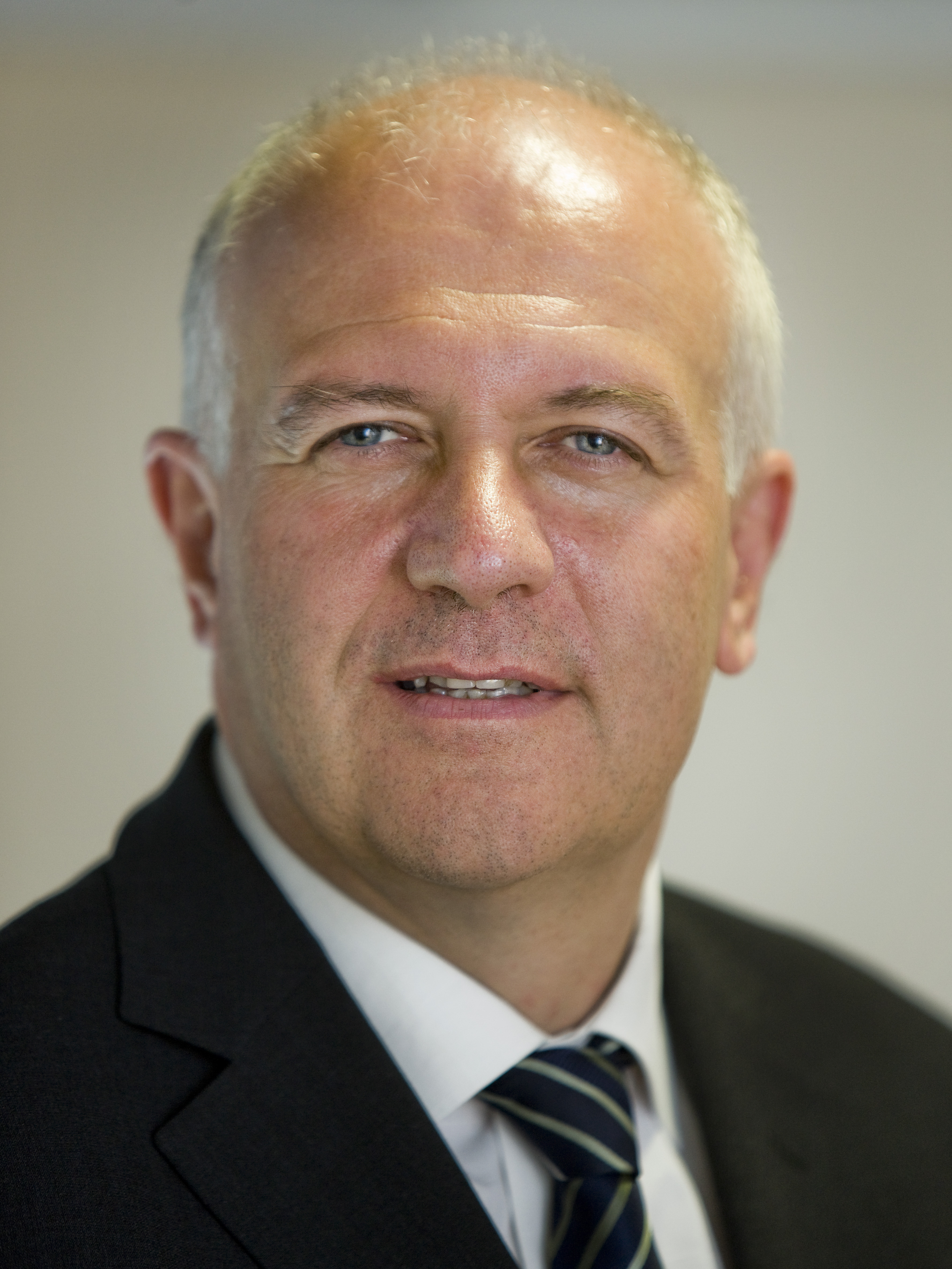
The Armed Forces Minister, Bill Rammell, delivered a speech yesterday in which he expressed his concern that the information age had fundamentally altered the conditions in which Britain could "project power" in the world.
Talking at the Institute of Public Policy Research, Rammell noted that there were many positive benefits from the development of "access to worlds of information" and the ability to instantly contest knowledge on comment streams, blogs and chat rooms.
But he referred to the significant difficulties created by a culture of real-time media, "blanket cynicism", and "individual rights":
"To a public that is used to getting answers at the click of a button, when the answers from government are complex, take time coming or are incomplete in order to protect sensitive security details, the response is too often cynical and disbelieving."
He said there was a particular problem for Defence when it comes to tackling crisis situations where the response might impact on the safety of military personnel, "issues of operational security" or "the success of a mission".
Paradoxically, he claimed that despite increased access to information and respect for the Armed Forces, the public lacked understanding of "the reality of how they [the Armed Forces] need to operate as an effective military force".
Contrasting Britain’s risk-averse domestic culture with the inherent dangers of military operations, he said "this is particularly true when it comes to understanding how decisions are made on where, when and how British forces are deployed, and understanding how the Armed Forces face and manage the risk of death and injury on operations".
If the gap in understanding was not bridged, Rammell claimed, Britain would not be able to rely on public support to sustain wars in the national interest in the future.
To address these problems, Rammell believed the media had a responsiblity "to set out properly the complexity of the situation our forces face and consider carefully how to protect information that could prejudice the success of military operations or endanger our personnel".
He said much of what correspondents say is absorbed by a relentless 24/7 media cycle which is always looking for new information and alternative angles.
Rammell also admitted more "cultural change in the MoD" is needed in the way it "responds to events" and "manages information".
He urged the MoD to "embrace more readily and more rapidly the new dynamics of transparency that new technology and new mediums provide".
While there have been some interesting experiments in this area, there is much ground to be made up.
A recent Defence Academy paper written by MacKay and Tatham stated, for example, that institutional learning within the MoD "is not helped by regulations that prevent senior officers from sharing information and ideas through external new media such as blogs and websites, and the architecture of internal MoD computer networks that do not facilitate blog type discussion".
Rammell might also have made a case for employing some media specialists, or re-allocating some resources to these communication roles (as I understand the defence budget is very tight at the moment).*
Again, to quote Mackay and Tatham:
"UK Armed Forces have no professional information operations practitioners, no media operators or professional psychological specialists. In their place, well meaning and enthusiastic amateurs are seconded from every branch of the military for two- or three-year tours, who do their best with minimal training but who are unlikely to return to such duties again."
Looking at this issue from outside the MoD it is important not to underestimate the challenges of institutional change, and those of the real-time media world, to military organisations. They are significant.
But with the problems adequately identified is not time to accelerate the pace of change, not least because the US Military has already shown how some of it might be achieved, and perhaps more importantly because it might play a role in the success of British operations?
Updated:
*One of my colleagues at King’s disagrees. He says "the military doesn’t need better media officers, it needs officers, especially senior ones, with a good understanding of influence."
Photo: MoD/Crown Copyright
]]>