On Tuesday 21 April, the Frontline Club hosted a panel to discuss the water crisis in Brazil and the world’s largest green area, the Amazonian rainforest. Chaired by Andrew Mitchell, chairman of the Scientific Exploration Society, the event was the second in a series entitled ‘Exploration of the Frontline,’ a collaboration between the Scientific Exploration Society and the Frontline Club that aims at bringing together journalists, explorers and academics for an evening of informed debate.

l-r: Andrew Mitchell , Sue Cunningham, Nixiwaka Yawanawa, Peter Bunyard, Dr Friederike Otto, Rogerio Simoes
As Mitchell detailed, Brazil is currently suffering a staggering water crisis, despite the fact that it holds approximately 12% of the world’s fresh water reserves, four fifths of which are in the Amazonian river basin.
“In Sao Paulo you have a city of 22 million people facing chronic droughts, a situation unique in the history of Brazil,” Mitchell said. This drought is largely the result of wide-scale deforestation, and of changes to the ecosystems in the Amazonian area, hundreds of miles north of Sao Paulo, Rio de Janeiro, and Brazil’s coastline.
Sue Cunningham, an author and photographer with more than 20 years of experience in Brazil, illustrated the consequences of the massive deforestation that she had been witness to during a 2007 expedition on the Xingu river in the heart of the rainforest. Travelling by boat and small planes, the group visited 48 different tribes living along the river.
“When you fly over the forest, you can see when the pollution happens from a pristine river to a contaminated river,” said Cunningham, showing an aerial picture of the polluted Xingu where mercurial refuse had caused a significant change in the colour of the water.
Nixiwaka Yawanawá, a member of the Yawanawá tribe currently working with Survival International to raise awareness about the Amazon and the rights of tribal communities, showed the Frontline Club audience a video of the latest flood that had hit his indigenous community in the Brazilian state of Acre.
Up to 80% of the villages and settlements of the Yawanawá community were swept away. “We never thought that this would happen,” said Yawanawá. “One of our shamans, and they usually are the oldest people in a tribe, he said that in one hundred years we have never seen this kind of flood. Everyone was very shocked and surprised, but we have to carry on.”
@SES_explore @frontlineclub @Survival Great event on water crisis in Brazil.Local impacts but truly global problem! pic.twitter.com/iHEqU0J0lx
— Peter Kohler (@P_Kohler) April 21, 2015
The task of explaining the meteorological dynamics of the issue was assumed by panelists Peter Bunyard and Dr Friederike Otto.
Peter Bunyard, founder of The Ecologist, explained the role of trade winds that flow from Africa and the Atlantic over the Amazonian basin. These winds create a mechanism called the ‘biotic pump’, a natural phenomenon that influences the climate of the entire Latin American region, from Panama to Patagonia.
Otto, a senior researcher at the Environmental Change Institute, University of Oxford, linked the occurrence of drastic climate events such as droughts, typhoons and hurricanes to longterm climate change and the consequential rise in temperature of the planet. “This is a longterm change, and all of these events play together.”
Rogerio Simoes, a Brazilian journalist based in London and former head of the Brazilian Service at the BBC World Service, explained that the rising population of Sao Paulo was a major game-changer in environmental terms.
“Brazil just cannot cope with the population growth,” said Simoes. “According to the latest census in Brazil, there are 11.6 million people living in slums, illegal slums.”
Simoes finished by adding that the short-sightedness of Brazilian politicians was leading to a worsening of the situation. For example, the governor of Sao Paulo state, Geraldo Alckmin, repeatedly denied any issue of water shortage during the 2014 election campaign, at a time when the main water reservoir was at just 7.2% of its total capacity.
]]>Sao Paulo, one of the largest cities in the world, may run out of water in the next few months leaving 20 million people high and dry. Who is to blame? Incompetent politicians, unpredictable weather patterns or the wholesale destruction of Amazonia’s rainforests?
How does a country that produces an estimated 12% of the world’s fresh water end up with a chronic shortage of this most essential resource?
Join us for the second in a series of events held in partnership with The Scientific Exploration Society, as we bring together explorers, scientists and journalists to examine the water shortage in Brazil and debate the wider questions about global water security.
Chaired by Andrew Mitchell, a rainforest explorer & advocate. He is the chairman of the Scientific Exploration Society, a forest canopy explorer, founder of the Global Canopy Programme, co-founder of Earthwatch Europe, and Personal Advisor to HRH The Prince of Wales’ Rainforest Project.
The panel:
Peter Bunyard is an author, journalist and founder of The Ecologist. He spent many years exploring and lecturing on the subject of indigenous responsibilities in the Colombian Amazon. More recently, having been alerted to the Biotic Pump theory, he carried out studies in Costa Rica and back home in Cornwall to test the physics of the theory, amassing evidence to challenge current climate modelling on the impact of deforestation in the Amazon Basin.
Sue Cunningham is a photographer, author and trustee of Tribes Alive/Indigenous People’s Cultural Support Trust. She and her husband Patrick Cunningham were awarded the Neville Shulman prize by the Royal Geographical Society for their Heart of Brazil Expedition travelling on the Xingu river by boat, visiting 48 tribal villages and documenting the affects of climate change and man’s dramatic impact on the rain forest.
Rogerio Simoes is a Brazilian journalist based in London. He is a former head of the BBC’s Brazilian Service and has written about Brazil for the CNN website. He was also executive-editor at Brazilian weekly news magazine Epoca and opinion editor and London correspondent at Folha de S.Paulo newspaper.
Nixiwaka Yawanawa, represents the 900 strong Yawanawa tribe, the ‘People of the Wild Boar’ of Acre within the western Amazon rainforest of Brazil, an area recently decimated by terrible flooding. He is currently working for Survival International, the global movement for tribal peoples’ rights
Dr Friederike Otto is a senior researcher at the Environmental Change Institute, University of Oxford, leading the distributed volunteer computing project climateprediction.net. Her main research interest is the attribution of extreme weather events to external climate drivers. A major focus of this work is to explore the propagation of uncertainty from external drivers to actual impacts of climate change and assess associated risks.


Monday 4 March
Monday will see the long-awaited opening of the Al Sweady inquiry, examining the circumstances surrounding a 2002 incident in Maysan province, Iraq, involving British security forces. Following a firefight on 14 May at a vehicle checkpoint known as Danny Boy, a number of Iraqis were taken to UK detention facility, Camp Abu Naji. There is a dispute over how many Iraqis were killed in the firefight, but the following day the British soldiers returned 20 bodies to the Iraqi authorities. There are accusations that several of the Iraqis may have died while in custody.

Meanwhile, eurozone finance ministers will meet in Brussels on Monday, with a bailout package for Cyprus high on the agenda now that elections there have been completed. The politics of a financial aid package are complicated by the fact that Cyprus is home to significant amount of Russian money, which many suspect is being laundered on the island.
Finally Monday, the posthumous trial of whistleblowing lawyer Sergey Magnitsky on tax evasion charges is scheduled to resume. Magnitsky died aged 37 in prison in November 2009 as he awaited trial. Critics suggest the charges were trumped up in retaliation for Magnitsky’s role in exposing an alleged $230m fraud that was linked to a Russian Interior Ministry official.
Tuesday 5 March
On Tuesday, the once-a-decade political transition that will see Xi Jinping formally appointed China’s President will reach its final stage when a two-week session of the National People’s Congress opens in Beijing.

Lastly, elections are scheduled to take place in the Federated States of Micronesia. Refreshingly, all candidates are non-partisan, since the country has no formal political parties.
Wednesday 6 March
On Wednesday, in Brasilia four of Brazil’s five main unions are scheduled to start a march to protest sluggish growth and to call for labour market reforms.
In Cairo, the once-high-profile trial of NGO workers charged with working for “illegal” civil society organisations will continue. The case disappeared from mainstream coverage once the 19 American citizens accused in the case were allowed to return to the US last March.

Finally, Israeli President Shimon Peres will be in Brussels on Wednesday, where he will meet with Herman Van Rompuy.
Thursday 7 March
On Thursday, British Foreign Secretary William Hague will host a Friends of Yemen meeting in London co-chaired by representatives from the Yemeni and Saudi governments. Other members of the grouping include Gulf Co-operation Council, G8 member states, the UN, EU, Arab League, IMF and the World Bank.
In finance, both the Bank of Japan and the European Central Bank are scheduled to announce interest rate decisions.
Finally, in Brussels, Irish Taoiseach Enda Kenny and European Commission President Jose Manuel Barroso are scheduled to speak at a conference on the future of Europe, titled Europe 2020.
Friday 8 March

Following his 9 January sentencing, jailed businessman Christopher Tappin is due to begin serving a 33-month sentence relating to the sale of batteries used in Iranian missiles. He entered a guilty plea on 1 November 2012 to one count of aiding and abetting the illegal export of defence articles. Tappin may be allowed to serve his sentence in the UK; however a final ruling from the US Bureau of Prisons remains pending.
Lastly. the US will on Friday release its latest monthly unemployment figures, provoking the usual blame-game between Democrats and Republicans.
Weekend
On Saturday, nine policemen, including the former head of Port Said Security Directorate General Essam Samak, are among the remaining 54 defendants due to be sentenced over the 1 February violence at a match between Al Masry and Al Ahly football teams, which saw 74 Al Ahly supporters killed. The civilian defendants face charges of premeditated murder, while the police face charges of aiding the attackers. On 26 January, the court handed down 21 death sentences in connection to the incident, sparking widespread violence.

Finally, Sunday is the deadline for US special forces to leave Wardak province following President Hamid Karzai’s announcement on 24 February that they must leave over allegations of torture and murder. Previous such deadlines issued by Karzai have subsequently been revised.
Images Courtesy of Featureflash / ID1974 / Shutterstock.com
]]>
Lydia Cacho will be joining us at the Frontline Club in conversation with executive director of Article 19, Dr Agnès Callamard to talk about her expansive investigation into this world and the work she does reporting on domestic violence, child prostitution, organised crime and political corruption, whilst teaching workshops on how to help victims of trafficking.
]]>The international sex trade criss-crosses the globe using a sinister network made up of criminal masterminds, local handlers, corrupt policemen, wilfully blind politicians, eager consumers, and countless hapless women and children.
In a ground-breaking new work of investigative reporting internationally renowned Mexican journalist and campaigner Lydia Cacho follows the trail of the traffickers and their victims from Mexico to Turkey, Thailand to Iraq, Georgia to the UK. She exposes the trade’s hidden links with the tourist industry, internet pornography, drugs and arms smuggling, the selling of body organs, money laundering, and even terrorism.
Lydia Cacho will be joining us at the Frontline Club in conversation with executive director of Article 19, Dr Agnès Callamard to talk about her expansive investigation into this world and the work she does reporting on domestic violence, child prostitution, organised crime and political corruption, whilst teaching workshops on how to help victims of trafficking.
]]>
By Nicole Hunt
The UN Human Rights Committee session opens on Monday in Geneva, with the situation in Iran on the agenda for the first two days.
Meanwhile, Under Secretary General for Humanitarian Affairs and Emergency Relief Coordinator Valerie Amos begins a five day visit to North Korea, which is currently suffering through a major food crisis.
A judge in Courbevoie, France is due to rule on whether L’Oréal heiress Liliane Bettencourt should be made a ward of the state following accusations by her daughter Françoise that she is mentally unfit to manage her €17bn fortune.
South African President Jacob Zuma hosts Brazilian President Dilma Rousseff and Indian Prime Minister Manmohan Singh in Pretoria on Tuesday for a trilateral summit, expected to focus mostly on trade.
The meeting comes on the same day that fellow BRICS country China releases its third quarter GDP figures.
In London, judges reveal the winner of this year’s Man Booker Prize for Fiction; nominees include Julian Barnes, Carol Birch, Patrick deWitt, Esi Edugyan and Stephen Kelman.
The Queen and the Duke of Edinburgh begin a 10-day trip to Australia on Wednesday, heading first to Canberra. During their visit, the royal couple will also take in Brisbane and Melbourne before heading to Perth for the Commonwealth Heads of Government Meeting on 28 October.
Greek public and private sector unions hold a 24-hour strike to protest what they say are ‘barbaric’ austerity measures being introduced as part of the Government’s efforts to meet the conditions of its €110bn bailout from the IMF, the EU and the European Central Bank.
EU Commissioner for Internal Markets Michel Bernier holds a press conference in Brussels on Thursday to present the Commission’s proposals for reforms to the Markets in Financial Instruments Directive and the Market Abuse Directive. The reforms are aimed at strengthening the EU regulatory system and increasing oversight in the wake of the financial crisis.
The European Space Agency is having a more exciting day in Kourou, French Guiana, where the first two Galileo satellites are being test-launched at 12:34pm. The full satellite project is expected to be operational by 2014.
News Corporation holds its annual general meeting in Los Angeles on Friday, amid calls from some shareholder groups to vote against the re-election of CEO Rupert Murdoch’s sons James and Lachlan to the company’s board in the wake of the UK phone hacking scandal.
In Abu Dhabi, Finance Ministers from the Gulf Cooperation Council begin a two-day meeting where they discuss proposals for a single Gulf currency. IMF Managing Director Christine Lagarde attends on the second day.
Remember the apocalypse hysteria back in May? When the world failed to end, preacher Harold Camping revised his prediction, and is now confident that the world will in fact end on 21 October.
Assuming we’re still here, attention turns to Cairo on Saturday where the court hearing resumes for two police officers charged over the death of Khaled Said. The verdict in the case, which prompted widespread protests against police impunity last year, has been delayed twice, most recently from 24 September after new evidence emerged.
Unusually, there’s quite a lot going on on Sunday, beginning with the delayed European Council and Eurogroup meetings in Brussels. Predictably, Greece and the euro debt crisis are at the top of the agenda, with leaders focusing on economic governance and financial regulation.
Following an international uproar over five to 15 year sentences for Bahraini medical staff convicted of inciting hatred against the regime and attempting to topple the monarchy during anti-government protests earlier this year, a civil re-trial ordered by the country’s Attorney General begins in Manama.
There are also four elections taking place across the world: parliamentary polls in Tunisia, which were scheduled in the wake of President Zine al Abidine Ben Ali’s resignation back in January; a general election in Argentina, where incumbent Cristina Fernandez de Kirchner is expected to win a second term; a presidential election in Bulgaria, where current President Georgi Parvanov is not eligible for a third term; and federal elections in Switzerland, where 13 parties are currently represented in parliament.
To top it off, the Rugby World Cup final takes place in Auckland.
]]>Once a year, the world’s leaders descend on New York for the UN’s blue ribbon event, the cumbersomely-titled UN General Assembly’s General Debate.
This year, the build-up has been dominated by the Palestinian Authority’s planned bid to become the 194th member of the UN, following South Sudan’s incorporation earlier in the year.
Notwithstanding any last minute deals, Palestinian Authority President Mahmoud Abbas will personally submit the application to Secretary-General Ban Ki-moon on Friday, September 23, after Abbas has delivered his speech to assembled leaders.
Indeed, Friday’s session is set to be a cracker, since it also features Israeli Prime Minister Benyamin Netanyahu’s speech, in which he must surely address the issue. And yet while the Palestinian membership-issue is grabbing all the headlines, there’s plenty of other highlights.
Ahead of the formal UNGA opening today, there was a high-level meeting on Libya yesterday, the first since the UN formally recognised the Transitional National Council as the official representative of Libya last Friday.
US President Barack Obama met privately for the first time with TNC Chairman Mustafa Abdel Jalil, and held separate summits with President Hamid Karzai before he returned to Aghanistan to join the mourning of the assassinated leader Burhanuddin Rabbani.
Tuesday also saw French Foreign Minister Alain Juppe host a ministerial-level meeting of the so-called Deauville Partnership, a G20-offshoot dedicated to supporting fledgling Arab democracies.
The Debate kicks off today with an address by the Brazilian President, the first for Dilma Rousseff since she took office in January and no doubt a welcome relief from domestic troubles.
A notable absence, though, is Russian leader Dmitry Mevedev, who has chosen to delegate responsibilities this year to Foreign Minister Sergey Lavrov.
In the afternoon South Africa’s Jacob Zuma will be speaking. On Thursday morning, Mahmoud Ahmadinejad gives his traditionally polemical speech (who can forget last year, when he alluded to the 9/11 attacks being a conspiracy). British Prime Minister David Cameron also speaks that session.
Highlights from the afternoon session on Thursday include an inaugural address by newly-elected Peruvian President Ollanta Humala, an address from ageing despot Robert Mugabe, and also remarks from Turkish Prime Minister Recep Tayyip Erdogan, whose star is in the ascendancy amid Turkey’s role in the Arab Spring.
On the sidelines that day, UN Secretary General Ban Ki-moon is hosting a UN High-Level Meeting on Nuclear Safety and Security, likely to focus significantly on lessons to be learned from the crisis at Japan’s Fukushima Daiichi plant back in March. Friday, as we’ve seen, is all about the Palestinian-membership issue.
But in the morning there is also a first-time address from new Japanese Prime Minister Yoshihiko Noda , who is expected to put in appearance also at the nuclear safety meeting. That afternoon South Sudanese President Salva Kiir – who meets one on one with President Obama earlier in the week – will give his country’s address for the first time since it became member number 193 last July
Sadly, one of the traditionally more entertaining speakers – Venezuela’s Hugo Chavez – is not expected to make the journey to New York this time, as he is recovering from a fourth round of chemotherapy for cancer discovered earlier in the year.
]]>By Nicole Hunt
The International Atomic Energy Agency (IAEA) Board of Governors meets in Vienna on Monday, with Iran likely to be high on the agenda following last week’s report expressing increased concerns over ‘undisclosed nuclear related activities’ in the country.
Bouthaina Shaaban, political adviser to Syrian President Bashar al Assad, is in Moscow, where she is scheduled to meet with Foreign Minister Sergey Lavrov and hold a press conference for international media. Shaaban was one of three Syrian officials slapped with sanctions by the US Treasury Department at the end of August.
The African National Congress is expected to wrap up disciplinary proceedings against controversial ANC youth leader Julius Malema on Tuesday, having recently moved the hearing from the ANC headquarters at Luthuli House to an undisclosed location in Johannesburg following violent protests last week. Malema is accused of bringing the ANC into disrepute and sowing divisions within ANC ranks after he encouraged the overthrow of Botswana’s government.
In Brussels, the OECD publishes its annual Education at a Glance report, analysing the education systems and performances in member states. For the first time, this year’s report also looks at education in Brazil, China, India, Indonesia, Russia and South Africa.
The European Court of Human Rights in Strasbourg hears a complaint on Wednesday brought by four people who say they were illegally deprived of their liberty without justification while they were held in a police ‘kettle’ during the 2001 May Day protests in London.
In New York, the UN Security Council holds a debate on drought-stricken Somalia, where security issues have compounded problems as aid struggles to get into the country and people struggle to get out.
Parliamentary elections take place in Denmark on Thursday. Recent polls say Helle Thorning-Schmidt could be the country’s next Prime Minister, as her opposition Social Democrat party looks poised to win the most seats.
A court in The Hague is due to rule on Apple’s application to ban sales of Samsung’s Galaxy phones. A temporary injunction banning sales and distribution throughout much of Europe was issued on 11 August, but is not due to come into effect until 13 October.
Following debates this week in several European parliaments on new powers for the European Financial Stability Fund, European finance ministers begin a two-day meeting on Friday.
The International Criminal Court in The Hague holds a confirmation of charges hearing for Callixte Mbarushimana, a former UN employee charged with crimes against humanity and war crimes in the Democratic Republic of Congo in 2009. Mbarushimana is alleged to have been the executive secretary of the Democratic Forces for the Liberation of Rwanda and directly responsible for at least 32 deaths in Rwanda during the 1994 genocide while still employed by the UN, but has never been charged.
Libyan schools are scheduled to re-open on Saturday, with a brand new curriculum devoid of Gaddafi-era subjects such as the Green Book.
At the Dead Sea in Israel, photographer Spencer Turnick stages another mass nude photoshoot, hoping to bring awareness to the fact that the famously salty lake is drying up.
The week wraps up with state elections in Berlin, the sixth in Germany this year. The regional elections have generally proven disastrous for Angela Merkel’s CDU party, which has suffered losses country-wide to the Social Democrats, a trend that many expect to continue into the 2013 federal election.
]]>The Frontline Club starts the Narco Wars season on the War on Drugs on June 23rd. The season is packed with films, discussions and events focussed on the topic of drugs from Colombia to Afghanistan and into South East Asia. Here’s what’s coming up,
– June 23 – Photojournalist Jason P. Howe talks drugs in Colombia
– June 24 – Panel discussion about the impact of the Narco Wars in Mexico and around the world
– June 25 – Screening – Dancing with the Devil by Jon Blair in Rio de Janeiro
– June 30 – Colombia’s parapolitica
– July 3 – Screening – Mexico – Seven days in hell – Alex Nott and Siobhan Sinnerton
If the Narco Wars season is anything as good as the short promo film above, put together by Leona Chaliha at the Frontline Club, this looks like a great month of drug discussion and films. Book your tickes early.
]]>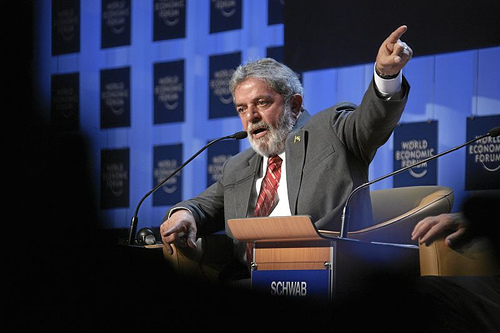
The President Luiz Inácio Lula da Silva announced today that Brazil will lend 10 billion dollars to the International Monetary Fund. The money is part of a $1.1 trillion package agreed at the end of the G20 summit in April to boost international financial institutions, international trade and economies that are struggling with the economic crisis.
Lula told Reuters agency that the deal was settled with the Treasury Minister Guido Mantega on Tuesday. According to Lula, the action will give Brazil the "moral authority" to demand changes "much needed" in the IMF and other multilateral organisms.
Lula advocates for a stronger voice for the emerging economies in organizations such as the IMF and World Bank in order to make them truly multilateral.
The negotiations had been going on for some time. At the G20 meeting, Lula had said he wanted to be the first Brazilian president to be able to lend money to the IMF. "Don’t you guys think it’s very ‘chic’ for Brazil to lend money to the IMF?", he asked reporters.
In 2005, Brazil paid off its $5.5 billion debt to the IMF two years ahead of schedule.
Photograph of President Luiz Inácio Lula da Silva by World Economic Forum
]]>One aspect of this drama, however, remains largely unnoticed. It struck me as quite surreal to read the list of passengers: abroad the plane were,
58 Brazilian, 61 French, 26 German, 2 American, 1 South African, 1 Argentinian, 1 Austrian, 1 Belgian, 5 British, 1 Canadian, 9 Chinese, 1 Croatian, 2 Spanish, 4 Hunagrian, 3 Irish, 1 Icelandic, 9 Italian, 5 Lebanese, 2 Morroccan, 1 Filipino, 2 Polish, 1 Romanian, 1 Russian, 3 Slovakian, 1 Danish, 1 Estonian, 1 Gambian, 1 Swedish, 6 Swiss, 1 Dutch, 3 Norwegian and 1 Turk.
Yes, that’s right: no less than 32 nationalities were abroad that plane, flying from Rio to Paris, two main tourist destinations. A significant portion of the world! The plane carried a mix of businessmen – senior executives of French tire maker Michelin SA and German steelmaker ThyssenKrupp were on board – and regular tourists flying to one wonderful city to another.
In any case, the fact that all these nationalities were victims is food for thought. This was clearly an event that could only happen in globalized times. Right now citizens of countries in all 5 continents are following with anxiety the search for any trace of the plane that carried their fellow citizens.
The fact that the drama is being monitored by 24 hour news channels in (at least) every one of those countries makes the tragedy even greater, in an ever smaller world. Irreversibly, more and more tragedies will affect people from different countries.
But while the national media of these countries focuses on their own citizens, international journalism is missing a great chance to take in the great side of globalization: the fact that it shows that people are mixed, are everywhere, and are equal. Unfortunately, the Airbus disaster seems to prove exactly this.
A transnational journalistic approach to events in this new era is still to be developed.
]]>