“J. Edgar Hoover was apoplectic.”
On Monday 29 September 2014, the Frontline Club screened 1971, the incredible story of eight US citizens whose courage – both moral and physical – led them to break into an FBI office to confiscate evidence of the bureau’s grave abuses of power.
The self-incriminating documents revealed the existence of COINTELPRO (Counter Intelligence Program), the remit of which ranged from spying on women’s tea parties to what Noam Chomsky described as the, “Gestapo-style assassination”of Black Panther leaders.
In the post-screeening Q&A we were joined by director Johanna Hamilton via video link.

“It’s the FBI!” exclaimed a member of the audience, when the video programme experienced a slight delay in connection.
Hamilton began by outlining the two main challenges she faced in documenting a story hidden for 40 years:
“One, that they had never been found. They never revealed themselves. They were talking to Betty Medsger, The Washington Post journalist, she was writing a book and that is how I gained access to the story.
“The other real substantive thing is was that because they had never come out, we weren’t sure how the government would react. It was one of the largest FBI investigations that the bureau had ever undertaken. That’s a very little know fact, obviously because it was such a public embarrassment. . . . This was really a we did it as opposed to a whodunit.”
Hamilton then quoted the FBI’s response to reporters covering the film:
“We’re a different institution today than we were in the 70s. We’re reformed. We’ve reformed ourselves partially as a result of the revelations that happened in the 70s.”
“They didn’t reference the burglary directly,” noted Hamilton, “but obviously that was a great relief that the Citizens’ Commission was not going to go to jail.
“President Obama has become known for prosecuting whistleblowers,” she continued, “and obviously the film was coming out in the wake of the Edward Snowden revelations so there was a lot of hoopla surrounding that.”

Director Johanna Hamilton
“I really did want to be able to tell the full personal story and the political aftermath of the story,” said Hamilton, on her decision to use recreations:
“I wanted it to be cinematic, and for people to really be able to put themselves in their shoes. And they’re very unconventional whistleblowers. They’re very non-traditional, they’re not insiders. They were outsiders, so they do have to do this quite extraordinary thing. It was really improbable that they would pull it off, number one, and that they would find what they were looking for, and that they would remain undetected all that time.”
A member of the audience commented that he had left the states as a student in 1967: “What I found in your film, that very few people who are not of my generation may not feel so much, is how innocent we all are. . . . The brutishness of it is still active today. I see Laura Poitras is in your production credits. She’s got an indictment against her . . . and I think the situation has got much worse.”

Future screenings and workshops can be found on the film’s official website and Twitter account.
]]>On Friday 28 June there was a palpable sense of anticipation among the Frontline Club audience, ahead of the preview screening of Alex Gibney’s most recent documentary We Steal Secrets: The Story of WikiLeaks. The film chronicles the history of WikiLeaks and looks at the roles Bradley Manning and Julian Assange played in what was referred to as the biggest leak of state secrets in the history of the United States.

Documentary filmaker Alex Gibney and moderator Owen Bennett Jones listen to questions from the audience. Photo: Alex Glynn
 Before moderator and freelance journalist Owen Bennett Jones opened the floor for audience questions, Gibney explained that he was approached to make the film and “jumped at the opportunity”. The winner of the 2008 Academy Award for Taxi to the Dark Side pointed out he has ‘done a number of films about events that were prominently featured in the mass media and had gone into those stories after they had occurred in order to “try to understand better what had actually happened”. On his decision to make a film about the well-known story of WikiLeaks he said:
“It seemed to me it was a very important story, a story I was very interested in. And I was interested in Julian Assange as a tremendously powerful figure – a man with a computer and a laptop setting out to expose abuses of power.”
Despite a one-year period of negotiations, Assange did not agree to be interviewed.
“When I first met Julian, I told him frankly that I was going to do the film whether he agreed to participate or not, so he didn’t like that very much. I told him I hoped he would participate. He felt that somehow he should have more control over the process.”
After the world premiere of the film, WikiLeaks released an annotated transcript of the film. Gibney explained:
“Someone had a tape recorder at a screening of the film at Sundance, tape-recorded the film and transcribed it. Unfortunately that meant that one quarter of the film was left out of the annotated transcript because, as you know from having seen the film, all of Bradley Manning’s chats are written, but not spoken.”
The annotated transcript has been updated in the meantime:
“I have read the annotations and there is not one in there that makes me feel that we were factually incorrect in any way.”
A vocal part of the audience perceived the representation of Assange in the film as unflattering, but Gibney defended his portrayal:
“I believe that we’re all entitled to an opportunity to look at the whole truth. Just because somebody tries to right a wrong, or tries to hold powerful people to account, it doesn’t mean that person is above the law, or is entitled to speak lies to power instead of truth to power. I believe this film tried to disentangle these issues.
“I believe there were a number of people who were giving Assange too much of a break and allowing us to believe that it’s ok to endorse the vilification of two Swedish women because we stand for transparency.”
One audience member voiced a counterweight to some of the criticism of Gibney’s portrayal of Assange, striking a cord with others in the room:
“I just wanted to say – because there have been such extremes of opinions expressed – that I came to this film with an open mind about Julian Assange and I leave with an open mind. The film just makes me want to read some more – so thank you.”
With regards to Bradley Manning, the film not only looked at his role in releasing the classified files, but also his personal background. Some in the audience felt that this may have been an unnecessary dramatic tool, but Gibney defended its inclusion as crucial to the story, saying that it’s terribly important that we do not regard whistleblowers and people of conscience – such as Manning – as superhuman, but as human beings.
“I don’t believe what the military said about Manning, that he leaked because he was troubled. I believe he leaked because he had a political conscience and he felt this material should be seen, and that he was doing a larger good. But I also think he’s a human being with flaws and in some ways deeply inspiring. I think for us to ignore that would be to end up playing into the hand of those who attempt to silence people. The idea that we need to be Nelson Mandela or Martin Luther King in order to do something great [is incorrect]. I think average people can do extra ordinary things, no matter what their flaws.”
You can find further information about the film’s release dates here.
]]>In 2010 U.S. Army Private Bradley Manning committed the largest security breach in US history, handing the classified Afghan War Diary, Iraq War Logs, and 250,000 State Department cables to Wikileaks. Imagery like that of an American helicopter team gunning down citizens and journalists on a Baghdad street in 2007 has been lodged in the global consciousness.
With Manning standing trial before a military court in June, the Frontline Club engaged an expert panel on Monday 15 May to ask what lies ahead for the whistleblower, along with what his experience might mean to governments and the media.

(L-R): Naomi Colvin, Chase Madar, Richard Gizbert and David Leigh. Photo credit: Jim Treadway
Naomi Colvin, a writer, activist and founder of UK Friends of Bradley Manning, declared him a “touchstone for people involved in social justice movements.”
“2011 is one of those years that will go down in history, like 1989, or 1968, or 1848,” she said. “Political action was on a worldwide scale. . . . That spark of enthusiasm started in the Middle East, and the [documents that Manning released] are at least a contributing factor to that.”
Chase Madar, a New York attorney who has written a book detailing Manning’s experience, agreed:
“The State Department cables [were] just a very brutal and candid assessment of corruption in the Ben Ali government . . . Tunisian intellectuals I’ve spoken with have said you really can’t tell the story of the uprising there without at least mentioning Bradley Manning and his leaks.”

The panel rang of frustration with the American media’s failure to cover the Manning story in fairness or depth. Americans “know very little” about his case, Madar observed.
“The New York Times fails to send a journalist to cover the first public hearing with Manning,” lamented Richard Gizbert, Presenter for al Jazeera’s Listening Post, “which even the Times’ own ombudsman said was ridiculous.”
“I got adopted by the staff of a fish restaurant in Glasgow [recently],” Madar recounted. “The bartender and the waiter knew all about [Manning’s case], and it’s because The Guardian’s coverage [has been] much better than anything in the United States.”
David Leigh, the Guardian‘s investigations editor until 2013 and co-author of a book on Julian Assange and Wikileaks, reduced Manning’s trial to “a piece of theatre by the American military to expose, dramatise, penalise and terrorise whistleblowers.”

Even still, Madar harbored optimism for what Manning will ultimately represent:
“He delivered a 35-page statement of intent in court a couple of months ago… it was very impressive… poised, very self-possessed, very thoughtful and reflective, as opposed to the way he’d been demonised as some naricissistic little punk… The more people hear from Bradley Manning in his own words and in his own voice – because someone smuggled a recorder into the courtroom, you can hear him with his own voice – the more they’re going to realise that Bradley Manning is the responsible, ethical citizen; that it’s his detractors in government and the media who are the narcissistic, little, punks.”
You can watch a recording of the event or listen to the audio podcast below:
https://soundcloud.com/frontlineclub/the-case-of-the-us-vs-bradley
In February this year Private First Class Bradley Manning pleaded guilty to sending restricted documents to Wikileaks in violation of military regulations, making him the source of the largest intelligence leak in US history. Ahead of his trial in June we will be examining the charges he faces and the implications if he is found guilty.
In his statement to the court he talked about “revealing the true costs of war” and how he “believed that if the general public, especially the American public, had access to the information… this could spark a domestic debate on the role of the military and our foreign policy in general”.
Manning has denied some of the most serious charges such as “aiding the enemy” which would see him face a life sentence, but has pleaded guilty to 10 out of 22 charges, which could carry a sentence of up to 20 years.
We will be discussing the questions raised by this case about the fate of whistleblowers and the future of relationships between journalists and their sources.
Chaired by Richard Gizbert, presenter of The Listening Post on Al Jazeera English.
The panel:
Naomi Colvin is a London-based writer and activist. In late 2010 she founded UK Friends of Bradley Manning, which successfully lobbied the UK government to recognise Bradley Manning’s dual citizenship status.
Professor David Leigh was the Guardian‘s investigations editor until 2013 and is a professor of journalism at City University. He is one of Britain’s leading investigative journalists, and winner of the 2007 Paul Foot Award for Campaigning Journalism. He is co-author of WikiLeaks: Inside Julian Assange’s War on Secrecy.
Chase Madar is a human rights attorney in New York, where he specializes in youth law, LGBT law and disability law. He reports and reviews for the London Review of Books, Le Monde diplomatique, CounterPunch, Al Jazeera, and the TLS. He is author of The Passion of Bradley Manning: The Story Behind the Wikileaks Whistleblower.
]]> A special round up of world events from January – June 2013, from journalist resource ForesightNews.
January
Beyond the ‘fiscal cliff’ in the United States, there is plenty of international news taking place in January.
On 10 January, Venezuelan President Hugo Chavez is due to commence his third term in office amid increased concerns about his health. Concerns are exacerbated by his decision to nominate his Vice President and Foreign Minister Nicolás Maduro to succeed him should anything happen to the firebrand former army colonel.

Barack Obama, meanwhile, is due to commence his second and final term as US President on 21 January when he delivers his inaugural address. Although there is a ceremonial swearing-in on the big day, he will actually take the office a day earlier in a private ceremony.
In Israel, Prime Minister Binyamin Netanyahu will be hoping to emerge victorious from parliamentary elections, due 22 January. Former Foreign Minister Tzipi Livni has returned to politics ahead of the poll, abandoning Kadima and founding a new party Hatnua.
Finally, in Addis Ababa, African leaders convene for the African Union’s leaders’ summit. They will have plenty to talk about, from Islamist militants in northern Mali, foreign backed militants in eastern DR Congo and ongoing tensions between Sudan and South Sudan, to name but a few.
February
Viewers worldwide will struggle to understand once again the rules of American Football when the Super Bowl takes place on 3 February. Expect much chat too about the adverts between the match’s interminable breaks.
On 10 February, it is the Chinese New Year, this year being the Year of Snake.

Ecuadorians will cast their votes in presidential and parliamentary elections on 17 February, with incumbent Rafael Correa seeking re-election.
Finally, the first part of the long-awaited civil trial over the Deepwater Horizon oil spill in the Gulf of Mexico back in 2010 is scheduled to begin 25 February.
March
Assuming he is re-elected, March will see Israeli Prime Minister travel to the United States to address the American Israeli Political Action Committee (AIPAC) Policy Conference, the highlight of the influential lobby group’s calendar. Addresses by President Obama and his new Secretary of State are all but inevitable. The conference runs 3-5 March.
In the UK, the long-awaited Al-Sweady Inquiry is scheduled to open on 04 March. The inquiry relates to the detention of Iraqis on 14 May 2002 following a firefight at a vehicle checkpoint known as Danny Boy. Some 20 bodies were returned the following day but it is unclear how many were killed in the firefight.
Kenyans go to the polls to elect a new president on 04 March. Last time around, the election resulted in widespread violence as the then-incumbent Mwai Kibaki refused to concede to challenger Raila Odinga. The region will be hoping for a more peaceful process this time around.
Finally, back in the United States, Private First Class Bradley Manning’s court martial is scheduled to get underway over allegations that he was responsible for divulging vast swathes of confidential information to the whistleblowing website WikiLeaks.

April
British Foreign Secretary William Hague will host his counterparts from the G8 on 10 April, with a summit following later in the year.
With global economic woes set to continue in 2013, the World Bank and IMF Spring Meetings will see the world’s top financial experts convene in Washington DC from 19-21 April to discuss possible remedies. A slew of economic forecasts will come out in the days leading up to the formal meetings.
On 21 April, Paraguay holds presidential and legislative elections that follow the ousting of then-President Fernando Lugo in June 2012 over a botched operation to evict landless farmers from land they were occupying. The so-called ‘mini-coup’ was widely condemned by Paraguay’s regional neighbours.
May
An inquest opens 1 May into the death of Russian spy Alexander Litvinenko, who died on 23 November 2006 in London after being poisoned with the now-infamous Polonium-210. Many suspect Russian governmental involvement.

On 8 May, Madagascans will elect a new President in delayed elections. Newsreaders will once again have to get their heads around such names as Marc Ravalomanana – the former President – and Antonanarivo – the island’s capital.
The Cannes Film Festival begins on 15 May, where Hollywood A-listers mix with unknown actors to compete for the prestigious Palm D’Or, which will be awarded on 26 May.
Finally, politics and entertainment collide on 18 May when the grand final of the Eurovision song contest takes place. The Swiss entry this year features a 94-year-old, yes, 94.
June
With Iran’s nuclear programme likely to feature prominently in 2013, amid talk of an impending Israeli attack, there will be intense interest in who will be elected to replace Mahmoud Ahmadinejad as president when vote opens on 14 June. In reality, the outcome is unlikely to make much difference since the country’s nuclear policy is widely thought to be controlled by Supreme Leader Ayatollah Khamenei.
Three days later, on 17 June, the G8 summit takes place in Northern Ireland, hosted by British Prime Minister David Cameron. It represents a historic moment for the once-troubled province.
Finally, Prince William, the Duke of Cambridge, turns 31 on 21 June. Of course, this will be dwarfed by interest in the Duchess of Cambridge’s pregnancy, which will have reached hysterical levels by this point. Expect wall-to-wall coverage.

Images courtesy of Mark III Photonics / Shutterstock.com
]]>By Nicole Hunt
The day after the Bahrain Grand Prix, 21 Bahraini activists, including hunger striker Abdulhadi al Khawaja, are due in court in Manama on Monday to hear the outcome of their appeal against life sentences handed down in June 2011 for conspiring to overthrow the government during last year’s protests. The decision to schedule the hearing after the Grand Prix was a controversial one, as al Khawaja’s deteriorating health two months into his hunger strike raised the very real possibility that he could die before the race took place. UK supporters said al Khawaja’s death would be a ‘stain on Bahrain’.
Burmese democracy leader Aung San Suu Kyi is set to take up her seat in the Pyithu Hluttaw (House of Representatives), following a landslide victory by her National League for Democracy in 1 April by-elections, though there have been suggestions that NLD MPs will boycott the opening over an oath of allegiance that forces them to swear to safeguard the constitution. Suu Kyi’s parliamentary debut comes amid news that she may travel to the UK and Norway in June, where she would be able to see her grandchildren for the first time and finally pick up her Nobel Peace Prize, awarded in 1991.
The late Malawian President Bingu wu Mutharika, who died of a heart attack on 5 April, is laid to rest at his family farm in Thyolo. There is speculation that close ally Robert Mugabe and Sudanese President Omar al Bashir could be among attendees at the state funeral; Malawi came under fire from the International Criminal Court last year when it failed to arrest Bashir during a visit to the country for a regional summit. Bashir is wanted by the court for alleged war crimes in Sudan’s Darfur region.
All eyes stateside on Tuesday as a pre-trial hearing begins at Fort Meade, Maryland, for Private First Class Bradley Manning, who has been charged with a variety of offences, including aiding Al Qaeda, for his alleged role in leaking sensitive military material to WikiLeaks, among which was a video which later became WikiLeaks’ Collateral Murder film.
In New York, Secretary of State Hillary Clinton is due to give the keynote speech at the Time 100 Gala Dinner, being held in honour of those named to Time’s 100 Most Influential People list on 18 April. In addition to Clinton and President Barack Obama, this year’s list also included the likes of Syrian President Bashar al Assad, North Korean leader Kim Jong-un, Italian Prime Minister Mario Monti and, of course, Kate and Pippa Middleton.
And, just for good measure, Republican primaries also take place in New York, Pennsylvania, Rhode Island, Delaware, and Connecticut, though now that everyone is agreed that Mitt Romney will win everything, it’s a less exciting race.
Why will journalists be fighting for a place at the Scottish Parliament’s Economy, Energy and Tourism Committee meeting on Wednesday? Because US property tycoon Donald Trump – who at one point pictured himself being the focus of those Republican primaries – is scheduled to appear to give evidence on government plans to build an offshore windfarm near his £1bn golf resort. In written evidence submitted ahead of his appearance, Trump said the plan would destroy Scotland’s countryside and coastline, and was tantamount to ‘committing financial suicide’ – a jibe that would have stung even more after the controversial Skintland issue of the Economist.
Charles Taylor’s nine-year war crimes case comes to a head on Thursday as the Special Court for Sierra Leone announces its verdict. While media coverage in the summer of 2010 suggested that perhaps Taylor was on trial for giving Naomi Campbell a diamond or two, the former Liberian President has actually been tried for crimes against humanity, violations of Article 3 of the Geneva Convention, and other serious violations of international humanitarian law – including, of course, allegedly giving Sierra Leonean rebels arms in exchange for so-called ‘blood diamonds’.
In a less groundbreaking trial – though one that receives headlines whether models are involved or not (and they frequently seem to be) – former Italian Prime Minister Silvio Berlusconi returns to court in Milan on Friday to face charges of paying for underage sex. While the trial is now over a year old and coverage has been relegated to the Italian press for some time, recent hearings have reignited international interest as the lurid details of Berlusconi’s ‘bunga bunga’ parties have been disclosed.
EU High Representative for Foreign Affairs Catherine Ashton begins a three day trip to Myanmar on Saturday, where she is scheduled to meet with government officials and opposition members (including Aung San Suu Kyi) and is expected to open the EU’s new embassy in Yangon. Her visit follows a meeting on Monday of EU foreign ministers, during which they are expected to relax sanctions on Myanmar in the wake of recent political improvements.
Guinea-Bissau had been scheduled to hold its presidential run-off vote on Sunday, following first round polls on 18 March, but as front-runner Carlos Gomes Junior was arrested as part of a military coup d’état on 12-13 April, the election will not be going ahead. The military junta has announced a two-year timeframe for new elections, which has been agreed by opposition parties but not Gomes’ ruling party.
Sunday also marks the 20th anniversary of the beginning of the Los Angeles riots, which left 53 people dead and over 2,000 in three days of violence following the acquittal, by an all-white jury, of four police officers who were videotaped beating black motorist Rodney King. The anniversary comes amid heightened racial tensions in the US following the delayed arrest of George Zimmerman for the murder of Trayvon Martin.
]]>By Nicole Hunt
US President Barack Obama hosts Iraqi Prime Minister Nuri al Maliki for talks in Washington on Monday, with discussions focusing on strengthening the ‘strategic partnership’ between the two countries. The summit comes ahead of a looming 31 December deadline for the withdrawal of US troops from Iraq.
Following last week’s European Council meetings, the focus early this week is, predictably, still the euro zone debt crisis. Experts from the IMF, the European Central Bank and the EU begin their sixth review mission to Athens, hoping that this time around they’ll be able to stick around until the scheduled end of the visit on Friday.
The venue changes but the topic stays the same on Tuesday, with Spain, Italy and France in the limelight. Spain’s Congreso de los Diputados convenes for the first time since elections on 20 November, though new Prime Minister Mariano Rajoy won’t formally take up his post until he’s sworn in by King Carlos later this month.
In Rome, Parliament is scheduled to begin debating Prime Minister Mario Monti’s austerity measures, which he issued by decree on 4 December. MPs are expected to approve the measures well before the 60-day deadline.
Meanwhile, French unions have planned a nationwide day of protests against their government’s austerity measures. Thousands are expected to take the streets in Paris, where the largest demonstration takes place outside of the Assemblée Nationale.
Under Egypt’s complicated election laws, another parliamentary vote is held on Wednesday, with polling taking place in nine governates, including Giza and Suez. The elections on 28 November, which were held despite violent protests only days before, covered nine provinces, including Cairo and Alexandria. A third round of voting takes place on 3 January.
In New Orleans, the Bureau of Ocean Energy Management holds the first oil and natural gas lease sale in the Gulf of Mexico since the April 2010 Deepwater Horizon disaster.
A Paris court is expected to issue its verdict on Thursday in the long-running corruption trial of former French President Jacques Chirac. Chirac is accused of misusing public funds and creating false job contracts during his time as Mayor of Paris. He settled a €2.2m civil suit with the city of Paris in August 2010.
Thursday also sees two meetings taking place which will be viewed very differently by Russia. President Dmitry Medvedev attends the EU-Russia Summit in Brussels, but the visit will be coloured by expressions of concern from the EU over allegations of unfair voting practices in Russia’s 4 December parliamentary elections, which saw Medvedev’s United Russia party win a majority despite heavy losses.
Over in Geneva, the World Trade Organisation holds its eighth Ministerial Conference, where delegates are expected to hold a long-awaited vote on Russian accession to the WTO.
TIME Magazine announces its annual Person of the Year on Friday. Facebook creator Mark Zuckerberg was 2010’s winner; leaders in this year’s online poll (which don’t have any bearing on the final choice) include Turkish Prime Minister Recep Tayyip Erdogan, footballer Lionel Messi, The 99%, Anonymous, Steve Jobs, and the Arab Youth.
The US army begins an Article 32 hearing for Private First Class Bradley Manning, which is expected to last just over a week. The hearing is to determine whether there is enough evidence to proceed with a court martial against Manning, who is accused to leaking a 2007 video to WikiLeaks which showed a military operation in Baghdad in which two Reuters reporters were killed.
As Saturday happens to be Manning’s 24th birthday, an international day of solidarity has been organised, with protests planned worldwide. Occupy London protesters have already pledged to take part.
Though it hardly seems possible as Egypt works through elections and protests and killings rage on in Syria, Saturday also marks the one year anniversary of the self-immolation of Tunisian fruit and vegetable seller Mohamed Bouazizi, an event that has been singled out as the catalyst for the Arab Spring movement as it kicked off Tunisia’s Jasmine Revolution.
]]>House refused to testify last month in Alexandria, Virginia, before a grand jury hearing on WikiLeaks and the disclosure of thousands of classified US diplomatic cables. Democracy Now! spoke to House at the Frontline Club about the significance of WikiLeaks, how he helped found the Bradley Manning Support Network, his visits with Manning at the Quantico Marine Base in Virginia, the federal surveillance he and his associates have come under, and his experience before the grand jury.
“In my mind, this reeks of the Pentagon Papers investigation,” says House. “Richard Nixon’s [Department of Justice] 40 years ago attempted to curtail the freedoms of the press and politically regulate the press through the use of policy created around the espionage investigation of the New York Times. I feel the WikiLeaks case we have going on now provides Obama’s DOJ ample opportunity to continue this attempt to politically regulate the U.S. media.”
The full transcript of the interview can be found here.
]]>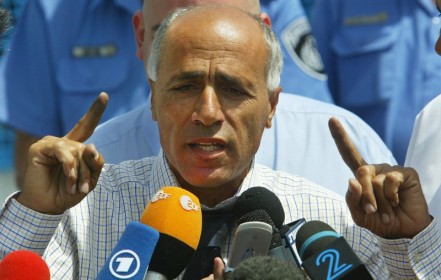
Mordechai Vanunu talks to the press after winning his freedom in 2004. Credit: Getty Images
Concluding our run-down of some of the most prominent whistleblowers in recent memory…..
Clive Ponting
A former senior civil servant at the Ministry of Defence, Clive Ponting leaked information about the sinking of Argentine warship General Belgrano in 1984. The classified documents leaked by Ponting revealed that, contrary to official accounts of the incident, the ship was outside of an exclusion zone and was moving away from a Royal Navy taskforce when it was sunk by submarine HMS Conqueror, resulting in the loss of 323 lives. Ponting was charged with breaching the Official Secrets Act (1911) after the leak, but was later acquitted by a jury who decided, against the direction of the presiding judge, that it was in the "public interest" for the documents to be released. In the years following Ponting’s acquittal, the Thatcher government introduced the Official Secrets Act (1989), which effectively removed the public interest defence. Ponting has since written 13 books. His latest, A New Green History of the World: The Environment and the Collapse of Great Civilisations, was published in 2007 by Penguin.
Frank Serpico
Frank Serpico’s story was immortalised in 1973, after the release of a film depicting his time as a New York cop. Starring Al Pacino, the film — titled, simply, Serpico — detailed the true story of a principled young policeman’s battle against endemic corruption in the NYPD. Serpico was appalled by what he saw: drug deals, bribes and various other criminal dealings, involving colleagues at the highest levels of the force. With no other option, eventually he blew the whistle, reporting the corruption to journalists at the New York Times. In the weeks that followed he was subject to intense intimidation by officers at all levels of the NYPD, and at one point was shot in the face in what was rumoured to have been an attempted "execution". Serpico was eventually awarded an NYPD Medal of Honour in 1972, but claims he has continued to be shunned by the NYPD. Married four times and having travelled Europe for several years in a campervan, Serpico today lives in a cabin in relative seclusion near New York. Now aged 74, he remains vocal in his condemnation of police corruption.
Mordechai Vanunu
Between 1975-1985, Mordechai Vanunu worked as a nuclear technician for the Israeli government. Throughout this period, Israel claimed it would not be the first to introduce nuclear weapons to the Middle East. But in 1986, Vanunu leaked information to the British press revealing that the country had in fact manufactured between 150 and 200 nuclear bombs and were also attempting to produce a hydrogen bomb, the most destructive of all. After the publication of Vanunu’s leaked information in the Sunday Times on 5 October 1986, he was lured from London to Italy by an American citizen doubling as an Israeli intelligence agent, Cheryl Bentov. He was then taken by boat to Israel, where he was sentenced to 18 years imprisonment, 11 of which he spent in solitary confinement. Released in 2004 after serving 16 years of his sentence, Vanunu today remains subject to strict conditions that forbid him from leaving Israel, using the internet or the telephone. He has been nominated for the Nobel Prize on more than 16 occasions, and served as Rector of Glasgow University for three years from 2004-2007 while still confined in Israel, risking imprisonment to remain in regular contact with students.
Bradley Manning (?)
Private First Class Bradley Manning is the 23-year-old US soldier accused of leaking more than 720,000 diplomatic and military documents to the whistleblower website, WikiLeaks. Manning was arrested in May 2010 by US authorities in Iraq, after he allegedly confessed to a friend that he had obtained and released classified files. An avid and proficient computer user, Manning reportedly discovered instances of war crimes while serving in Iraq and was told to "shut up" by his commanding officer when he tried to have something done about it. According to unverified chat logs, he then took it upon himself to "blow the whistle" by leaking classified files to WikiLeaks in order to expose instances of wrong doing — such as a video depicting the killing of 12 civilians (including two Reuters journalists) by US Apache helicopters in 2007. Manning, who has not yet faced trial, has since been in solitary confinement for over 300 days in conditions that have been widely condemned by campaigners and human rights groups. Critics say Manning — if he is indeed the leaker — is a traitor who has endangered the lives of American soldiers. He faces 34 charges, the most serious of which, known as "aiding the enemy", could see him face the death penalty.
Read Eight modern-day whistleblowers (part I)
]]>